

Free Podujevo Travel Guide & Mobile App
Plan your Podujevo trip with Evendo. Get free guides to top attractions, restaurants, hotels, and bars. Web access or download the mobile app.


Podujevo, Kosovo, combines Llapi Valley landscapes, Batllava Lake, local history and everyday culture near Pristina and the Merdare border crossing.
A Town Shaped by the Llapi Valley
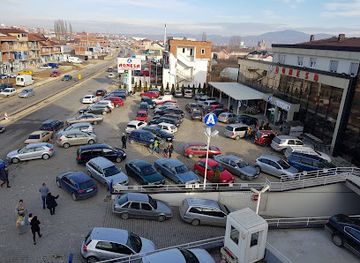
Podujevo, known in Albanian as Besiana, stands in northern Kosovo along the Llapi River, between Pristina and the Merdare crossing towards Serbia. It is a practical, provincial town rather than a grand historic centre, with its character found in the surrounding valley, busy everyday streets and close-knit communities. The town is the administrative centre of Podujevo Municipality, whose broad territory includes agricultural land, foothills and the waters of Batllava Lake.Read more about Podujevo
Everyday Kosovo Beyond the Capital
Lake, Hills and Regional Connections
When is the best time to visit Podujevo?
Best: June–August · 24–27°C| Month | High (°C) | Rainfall (mm) |
|---|---|---|
| January | 3 | 42 |
| February | 3 | 37 |
| March | 8 | 37 |
| April | 14 | 36 |
| May | 20 | 54 |
| June (best) | 24 | 52 |
| July (best) | 27 | 46 |
| August (best) | 27 | 44 |
| September | 21 | 42 |
| October | 15 | 43 |
| November | 9 | 49 |
| December | 5 | 48 |
Getting to and around Podujevo
How to get there
Transportation
Best attractions in Podujevo
Podujevo’s attractions are closely tied to its valley setting rather than a dense collection of major monuments. Batllava Lake, within the municipality, is the principal leisure destination, offering broad water views, wooded surroundings and seasonal opportunities for picnicking, walking and informal recreation. Along the Llapi River, the town and its outskirts reveal the agricultural landscape that has long shaped local life. The central streets, cafés and market areas provide a grounded view of contemporary Kosovo, while village mosques, family farms and roadside settlements show the region’s rural character. Visitors interested in recent history can seek out local memorial sites connected with the Kosovo War, approaching them with appropriate respect. The road towards Merdare also gives access to the changing scenery of the northern Llapi Valley, although border facilities themselves are functional rather than tourist attractions. Podujevo is best experienced as a place for landscape, local encounters and regional context rather than rapid monument-hopping.
-
Monastery
Serbian Orthodox Monastery Gračanica
Discover the serene beauty and rich history of the Serbian Orthodox Monastery Gračanica, a spiritual gem in Kosovo's cultural landscape.
55 min drive · 35 km from city centre
-
Nature preserve
Devil's Town
Explore the stunning landscapes and rich folklore of Devil's Town, a natural wonder in Serbia that captivates travelers with its unique geological formations and serene beauty.
39 min drive · 19 km from city centre
-
Catholic cathedral
Cathedral of Saint Mother Teresa
Explore the architectural beauty and cultural significance of the Cathedral of Saint Mother Teresa in Pristina, a must-see landmark for every tourist.
48 min drive · 28 km from city centre
-
Mosque
The Great Mosque
Explore the Great Mosque in Pristina, a stunning example of Ottoman architecture and a cultural symbol of Kosovo's rich heritage.
47 min drive · 27 km from city centre


Best landmarks in Podujevo
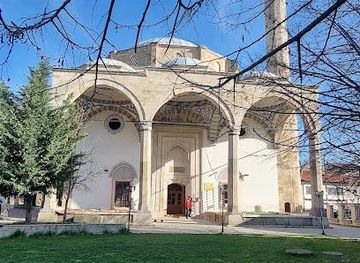
Podujevo’s principal landmarks are modest but closely connected with the municipality’s geography and recent history. Batllava Lake is the most recognisable natural landmark, its reservoir and surrounding hills forming a defining feature of the local landscape. The Llapi River gives the town its valley setting and helps explain the agricultural pattern of nearby settlements. In the urban centre, the town mosque and civic spaces reflect the continuing religious and administrative life of the municipality, while local memorials commemorate civilians and community members affected by the Kosovo War. The Merdare crossing, on the northern route, is a significant geographical and logistical landmark rather than a sightseeing site, marking Podujevo’s position on a major connection towards Serbia. Together these places illustrate a town shaped by water, transport, faith, municipal life and the memory of conflict.
-
Sculpture
Newborn Monument
Discover the Newborn Monument in Pristina, a powerful symbol of Kosovo's independence and a vibrant testament to its cultural identity.
48 min drive · 28 km from city centre
-
Park
Gërmia Park
Discover the serene beauty of Gërmia Park in Pristina, a perfect blend of nature, recreation, and local culture.
46 min drive · 26 km from city centre
-
Historical place
Adem Jashari Memorial Complex
Explore the Adem Jashari Memorial Complex, a historical gem in Prekaz that honors the spirit of Kosovo's fight for independence.
56 min drive · 36 km from city centre
-
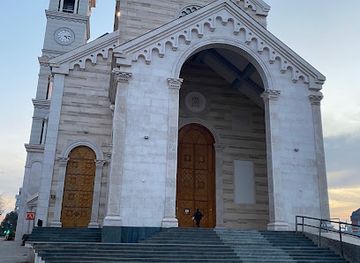
Catholic cathedral
Cathedral of Saint Mother Teresa
Explore the Cathedral of Saint Mother Teresa in Pristina, a stunning architectural wonder and a significant spiritual site in Kosovo's capital.
48 min drive · 28 km from city centre
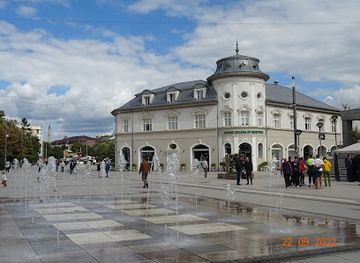
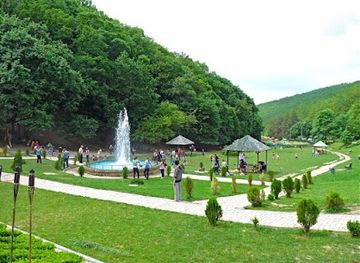
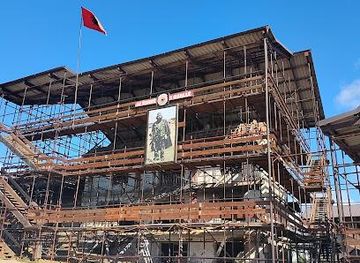
Explore Podujevo on the map
Plan your Podujevo trip on one map. See where the top attractions, landmarks, restaurants, bars and hotels are, find what's near where you're staying, and book hotels and experiences in a few clicks.
Best hotels in Podujevo
Best restaurants in Podujevo
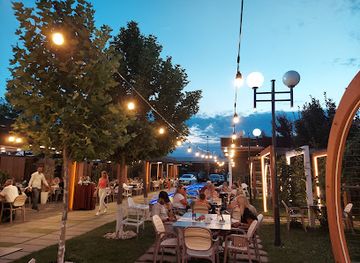
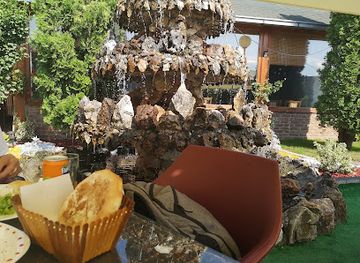
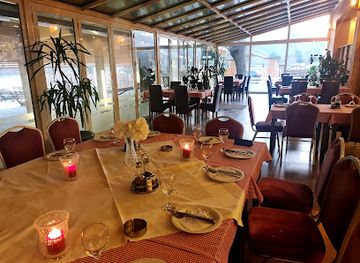
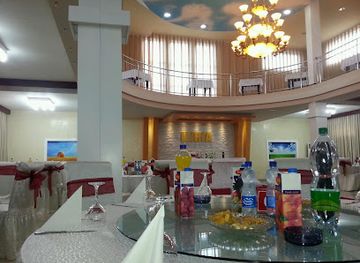
Podujevo’s dining culture reflects the home-style cooking of Kosovo and the agricultural traditions of the Llapi region. Menus commonly centre on grilled meats, qebapa, hearty stews, filled pastries and pite, while flija—a layered pancake-like dish traditionally cooked slowly over embers—belongs to the wider culinary heritage of Kosovo. Bread, dairy products, seasonal vegetables and pickled foods remain important elements of everyday meals. Small grills, family-run restaurants, cafés and bakeries provide the most characteristic settings, with Turkish-style coffee often accompanying long conversations. Around the town and on roads leading towards Batllava Lake, food options tend to be informal and may vary with the season. Restaurant choices are more concentrated in the centre than in outlying villages, where hospitality may be offered through family networks rather than a formal dining scene.
-
Restaurant
Restaurant ORA since
Discover authentic local flavors at Restaurant ORA – an inexpensive dining experience near Magjistralja Podujeve - Merdare.
11 min drive · 3.6 km from city centre
-
Barbecue
Europa Restaurant
Discover authentic barbecue delights at Europa Restaurant in Besianë, where tradition meets flavor in every bite.
6 min drive · 2.1 km from city centre
-
Restaurant
Restorant Mileniumi i Ri
Experience authentic Albanian cuisine at Restorant Mileniumi i Ri in Orllan – where every meal tells a story.
36 min drive · 16 km from city centre
-
Restaurant
Iliria Restaurant
Experience authentic local flavors at Iliria Restaurant in Besianë - where tradition meets taste in every dish.
14 min walk · 1.2 km from city centre
Best bars in Podujevo
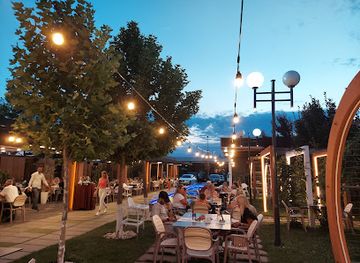
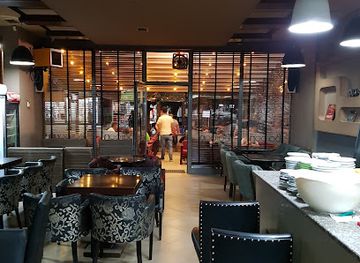
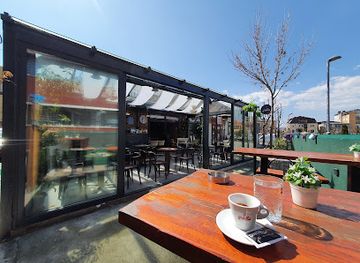
Podujevo’s evening life is modest and primarily social rather than centred on large nightclubs. Cafés in and around the town centre stay active with coffee, conversation and televised sport, while casual restaurants and small bars provide a relaxed setting after work. Younger residents often travel to Pristina for a broader choice of clubs, concerts and late-night entertainment, making the capital an important part of the area’s nightlife orbit. Seasonal activity around Batllava Lake can bring a more leisurely evening atmosphere, though lakeside facilities and opening patterns vary. Alcohol is available in appropriate venues, but coffeehouses remain central to public life, and visitors should follow local expectations around noise, dress and respectful behaviour in a relatively close-knit town.
-
Restaurant
Restaurant ORA since
Discover the flavors of Kosovo at ORA Restaurant, where traditional dishes meet modern dining in an inviting atmosphere.
11 min drive · 3.6 km from city centre
-
Bar
Baroon
Discover Baroon, a cozy bar and café in Besianë offering a delightful selection of drinks, snacks, and a welcoming atmosphere for tourists.
3 min walk · 0.3 km from city centre
-
Bar
KINO caffe
Discover the vibrant atmosphere of KINO caffe in Besianë, offering exquisite drinks and a warm local experience in a cozy bar setting.
1 min walk · 0.1 km from city centre
-
Bar
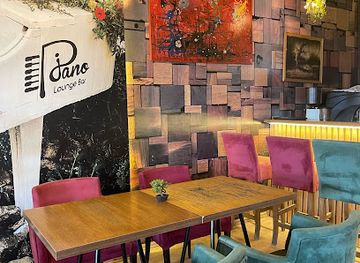
Piano Lounge Bar
Experience the enchanting ambiance and live music at the Piano Lounge Bar in Podujeve - a perfect retreat for relaxation and entertainment.
7 min walk · 0.5 km from city centre
Best nightclubs in Podujevo
Podujevo’s evening life is modest and primarily social rather than centred on large nightclubs. Cafés in and around the town centre stay active with coffee, conversation and televised sport, while casual restaurants and small bars provide a relaxed setting after work. Younger residents often travel to Pristina for a broader choice of clubs, concerts and late-night entertainment, making the capital an important part of the area’s nightlife orbit. Seasonal activity around Batllava Lake can bring a more leisurely evening atmosphere, though lakeside facilities and opening patterns vary. Alcohol is available in appropriate venues, but coffeehouses remain central to public life, and visitors should follow local expectations around noise, dress and respectful behaviour in a relatively close-knit town.
-
Night club
Venom Nightclub
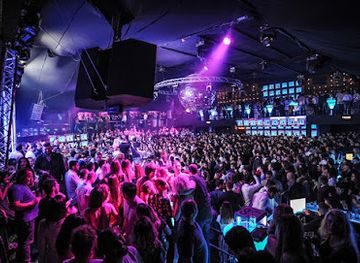
Venom Nightclub: The ultimate nightlife destination in Prishtina, where unforgettable nights and electric vibes come together.
56 min drive · 36 km from city centre
-
Night club
ZONE Club
Dive into the heart of Pristina's nightlife at ZONE Club, where unforgettable nights of dancing and music await.
49 min drive · 29 km from city centre
-
Night club
Zanzi Bar
Experience the vibrant nightlife of Pristina at Zanzi Bar, where music, dancing, and drinks come together for an unforgettable night out.
48 min drive · 28 km from city centre
-
Night club
Bab Club Premium
Discover the vibrant nightlife of Pristina at Bab Club Premium, where music, dance, and unforgettable memories await you.
48 min drive · 28 km from city centre

Best shops in Podujevo
Shopping in Podujevo is practical and locally oriented, with small supermarkets, independent shops, bakeries, cafés and market stalls serving residents from the town and surrounding villages. The central commercial streets are the most convenient area for everyday purchases, while periodic market activity brings seasonal fruit and vegetables, household goods, clothing and produce from the surrounding agricultural region. Visitors may find Kosovo food products, honey, dairy goods and packaged specialities, although the selection changes by season and seller. Shopping is less focused on designer retail or large malls than in Pristina, and bargaining is not a universal expectation in ordinary shops. The town is a useful place to buy provisions before heading towards Batllava Lake or rural areas, while distinctive craft shopping is more likely to be found through local contacts than in a dedicated tourist quarter.
-
Shopping mall
Agnesa Shop
Explore the vibrant Agnesa Shop in Besianë for an unforgettable shopping experience filled with local culture and delightful dining options.
6 min drive · 2.1 km from city centre
-
Store
ETC - Elkos Trading Center, Besianë
Experience the vibrant shopping and local culture at Elkos Trading Center in Besianë, a must-visit destination for every traveler.
5 min drive · 1.6 km from city centre
-
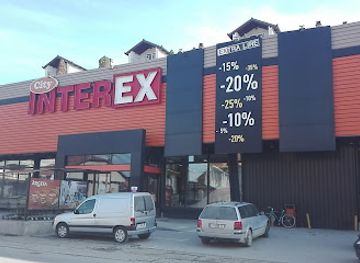
Shopping mall
Interex
Discover the vibrant shopping experience at Interex in Besianë, a must-visit destination for fashion, dining, and family fun.
10 min walk · 0.8 km from city centre
-
Shopping mall
Park Plazza
Explore the bustling Park Plazza in Besianë, a premier shopping destination offering diverse stores, delicious dining, and vibrant local culture.
18 min walk · 1.4 km from city centre
Get your free copy of our complete guide to Podujevo, delivered straight to you.
Everything on this page, from attractions and restaurants to essentials and local phrases, in one PDF you can read offline, print or share.
Already have an account? Sign in
Your Podujevo guide is ready.
We'll send it to · Not you? Sign out

Getting your guide ready…
We are putting together a fresh copy of the Podujevo guide. This can take up to a minute.
This can take a few moments. If your browser asks, choose Allow so the download can start. You'll find the guide in your Downloads folder.
Nothing happened? Download it again
Sorry, the guide is taking longer than usual. Please try again in a minute, or get it by email instead.
Podujevo essentials
Currency and Payment
Safety
Emergency Situations
Do's and Don'ts
Local Tips
From Eve
Local phrases worth knowing
You don't need to get them perfect. A few words go a long way, and locals appreciate the effort.
Basics
| English | Local | Say it |
|---|---|---|
| Hello | Tungjatjeta | [toon-jah-tyeh-tah] |
| Goodbye | Mirupafshim | [meer-oo-pahf-sheem] |
| Yes | Po | [poh] |
| No | Jo | [yoh] |
| Please/You're welcome | Ju lutem | [yoo loo-tehm] |
| Thank you | Faleminderit | [fah-leh-meen-deh-reet] |
| Excuse me/Sorry | Më falni | [muh fahl-nee] |
| How are you? | Si jeni? | [see yeh-nee] |
| Fine. And you? | Mirë. Po ju? | [mee-ruh. poh yoo?] |
| Do you speak English? | Flisni anglisht? | [flees-nee ahng-lee-sht] |
| I don't understand | Nuk kuptoj | [noohk koop-toy] |
Eating & Drinking
| English | Local | Say it |
|---|---|---|
| I'd like to see the menu, please | Do të doja të shikoja menunë, ju lutem | [doh tuh doh-yah tuh shee-koh-yah meh-noo-nuh, yoo loo-tehm] |
| I don't eat meat | Unë nuk ha mish | [oo-nuh nook hah meesh] |
| Cheers! | Gëzuar! | [geh-zoo-ahr] |
| I would like to pay, please | Do të doja të paguaja, ju lutem | [doh tuh doh-yah tuh pah-gwah-yah, yoo loo-tehm] |
Emergencies
| English | Local | Say it |
|---|---|---|
| Help! | Ndihmë! | [ndee-muh] |
| Go away! | Shko larg! | [shkoh lahr-g] |
| Call the Police! | Thirrni policinë! | [thir-nee poh-lee-tsee-nuh] |
| Call a doctor! | Thirrni një mjek! | [thir-nee nyuh myek] |
| I'm lost | Jam humbur | [yahm hoom-boor] |
| I'm ill | Jam i sëmurë | [yahm ee suh-moo-ruh] |
Shopping
| English | Local | Say it |
|---|---|---|
| I'd like to buy... | Do të doja të blenia... | [doh tuh doh-yah tuh bleh-nyah] |
| I'm just looking | Po vetëm shikoj | [poh veh-tehm shee-koy] |
| How much is it? | Sa kushton? | [sah kooshtohn] |
| That's too expensive | Është shumë e shtrenjtë | [uhsh-tuh shoo-muh eh shtreh-nytuh] |
| Can you lower the price? | A mund të ulni çmimin? | [ah moon-duh tuh ool-nee chmee-meen] |
Time & Numbers
| English | Local | Say it |
|---|---|---|
| What time is it? | Sa është ora? | [sah uhsh-tuh oh-rah] |
| It's one o'clock | Është një e orës | [uhsh-tuh nyuh eh oh-ruhs] |
| Half past (10) | Njëmbëdhjetë | [nyuhm-behd-tyet] |
| Morning | Mëngjes | [muhn-jehs] |
| Afternoon | Pasdite | [pahs-dee-teh] |
| Evening | Mbrëmje | [mbruhm-yeh] |
| Yesterday | Dje | [djeh] |
| Today | Sot | [soht] |
| Tomorrow | Nesër | [neh-suh] |
| 1 | Një | [nyuh] |
| 2 | Dy | [duh] |
| 3 | Tre | [treh] |
| 4 | Katër | [kah-tuhr] |
| 5 | Pesë | [peh-suh] |
| 6 | Gjashtë | [gyahsht] |
| 7 | Shtatë | [shtah-tuh] |
| 8 | Tetë | [teh-tuh] |
| 9 | Nëntë | [nuhntuh] |
| 10 | Dhjetë | [thyeh-tuh] |
Transport & Directions
| English | Local | Say it |
|---|---|---|
| Where's a/the...? | Ku është një/...? | [koo uhsh-tuh nyuh/...?] |
| What's the address? | Cila është adresa? | [chee-lah uhsh-tuh ah-dreh-sah?] |
| Can you show me (on the map)? | A mund të ma tregoni (në hartë)? | [ah moon-duh tuh mah troh-goh-nee (nuh hahr-tuh)?] |
| When's the next (bus)? | Kur është autobusi i ardhshëm? | [koor uhsh-tuh ahoo-boh-soo ee ah-rdhshehm?] |
| A ticket (to ....) | Një biletë (për ....) | [nyuh bee-leh-teh (puhr ....)] |
History of Podujevo
The Ancient Llapi Region
Podujevo lies within the historical Llapi region, a valley used for settlement, farming and movement between central Kosovo and the northern routes towards the Balkans. Archaeological traces across the wider area testify to settlement in antiquity, although the modern town does not present a large, concentrated ancient site comparable with Kosovo’s principal archaeological parks. The valley’s rivers and fertile land helped sustain rural communities over successive periods. Its geographical position, linking the interior of Kosovo with routes towards Nis and the Morava basin, also gave the area strategic importance long before the emergence of the present urban settlement.
Medieval and Ottoman Legacies
During the medieval period, the Llapi area formed part of the shifting political and religious landscape of the central Balkans, with settlement patterns shaped by farming, local estates and routes between important regional centres. Ottoman rule introduced new administrative arrangements and strengthened the role of market towns, mosques and roadside commerce. Podujevo developed within this wider Ottoman environment as a local centre serving surrounding villages. The town’s present built fabric has been extensively altered, but the region’s Muslim religious traditions, coffee culture, agricultural economy and village networks retain elements of the social patterns established during the Ottoman centuries.
A Market Town in Modern Kosovo
In the nineteenth and early twentieth centuries, Podujevo’s importance was closely tied to its position on routes through the Llapi Valley and to trade with nearby settlements. The area remained predominantly rural, while the town expanded as an administrative and commercial centre. Under Yugoslav rule, roads, public institutions and modern municipal administration altered the scale of local life, connecting Podujevo more closely with Pristina and northern Kosovo. Agriculture continued to underpin the surrounding economy, while education, public employment and migration contributed to the gradual growth of the urban population.
War and Civilian Loss
Podujevo Municipality was heavily affected by the Kosovo War of 1998–99. Villages and roads in the area experienced displacement, violence and disruption, and the town became associated internationally with the massacre of Albanian civilians in Podujevo in March 1999. The conflict caused deep social and demographic consequences across the municipality. NATO intervention, the withdrawal of Yugoslav forces and the establishment of international administration in Kosovo transformed the political environment. Memorials and family remembrance remain important within local society, while the post-war period brought reconstruction and the return or resettlement of many residents.
Post-War Reconstruction and Municipal Life
Since 1999, Podujevo has developed as a growing municipality within the institutions of the Republic of Kosovo, while maintaining strong ties with villages throughout the Llapi Valley and with Pristina. Rebuilt roads, schools, homes and commercial streets have changed the appearance of the town, though uneven development and migration remain part of its contemporary story. Batllava Lake has gained importance as a regional leisure landscape, and the Merdare route continues to give Podujevo economic and strategic relevance. Its modern identity therefore combines post-war reconstruction, family networks, agricultural surroundings and everyday urban growth.
Podujevo in Photos
Browse through our photo collection highlighting the charm and character of the destination.
Cities near Podujevo
The closest cities to Podujevo, if you have time for more than one stop.
-

-
-

-

-


Swipe for more cities
Explore more
Explore more of Kosovo
Discover Kosovo: A Blend of Ancient History, Vibrant Culture, and Stunning Natural Beauty in the Heart of the Balkans.
Explore Kosovo