

Free Vushtrri Travel Guide & Mobile App
Plan your Vushtrri trip with Evendo. Get free guides to top attractions, restaurants, hotels, and bars. Web access or download the mobile app.


Vushtrri, Kosovo, reveals ancient Viciana, Ottoman heritage, stone bridges, lively cafés and northern Kosovo culture beyond Pristina for curious travellers.
Ancient Crossroads
Vushtrri, known as Vučitrn in Serbian and associated with the ancient settlement of Viciana, stands in northern Kosovo between Pristina and Mitrovica. Its relatively modest modern centre contains an unusually concentrated record of the region’s past: Roman-era associations, medieval fortifications, Ottoman religious buildings and the celebrated Stone Bridge. The town is best understood as a historic crossroads, shaped by movement along routes linking the Kosovo Plain with the valleys and settlements farther north.Read more about Vushtrri
Ottoman-Era Townscape
Life Beyond the Monuments
When is the best time to visit Vushtrri?
Best: May–June, September · 24–28°C| Month | High (°C) | Rainfall (mm) |
|---|---|---|
| January | 6 | 45 |
| February | 7 | 45 |
| March | 12 | 40 |
| April | 18 | 35 |
| May (best) | 24 | 30 |
| June (best) | 28 | 25 |
| July | 31 | 25 |
| August | 30 | 25 |
| September (best) | 24 | 30 |
| October | 17 | 40 |
| November | 10 | 45 |
| December | 6 | 45 |
Getting to and around Vushtrri
How to get there
Transportation
Best attractions in Vushtrri
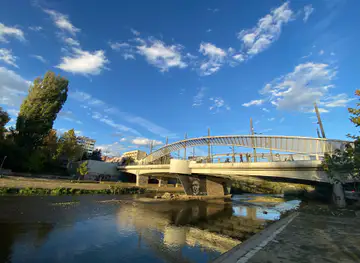
Vushtrri’s principal attractions are concentrated within and around its historic centre. The Stone Bridge, spanning the Sitnica River, is the town’s most recognisable structure and a reminder of the routes that once carried people and goods across the region. Nearby, the remains of Vushtrri Castle offer a glimpse of the settlement’s medieval defensive role, even though the site is largely archaeological rather than a restored fortress. The historic hamam introduces the architectural and social world of the Ottoman period, while local mosques and older streets add further layers to a compact walking circuit. Everyday life is part of the sightseeing experience: cafés, bakeries and small shops occupy streets shaped by older urban patterns. Visitors interested in archaeology can place Vushtrri within the broader story of ancient Viciana and Dardanian Kosovo, while the surrounding plain provides a quieter rural counterpoint to the town’s monuments.
-
Catholic cathedral
Cathedral of Saint Mother Teresa
Explore the beauty and spirituality of the Cathedral of Saint Mother Teresa in Pristina, a stunning architectural landmark and cultural hub.
44 min drive · 24 km from city centre
-
Mosque
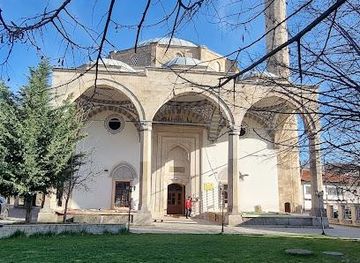
The Great Mosque
Explore the Great Mosque of Pristina, a stunning Ottoman architectural gem and a vibrant cultural hub in Kosovo's capital.
44 min drive · 24 km from city centre
-
Stadium
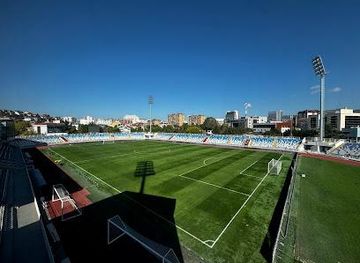
Fadil Vokrri Stadium
Explore Fadil Vokrri Stadium in Pristina, where football passion meets local culture in an electrifying atmosphere.
44 min drive · 24 km from city centre
-
Tourist attraction
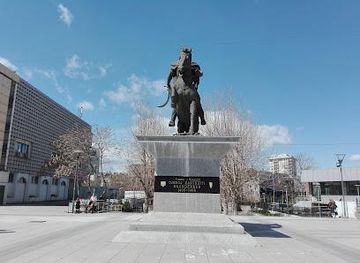
Sheshi "Skënderbeu", Prishtinë
Experience the vibrant heart of Pristina at Sheshi Skënderbeu, home to the iconic Skanderbeg statue and a hub of local culture and energy.
44 min drive · 24 km from city centre

Best landmarks in Vushtrri
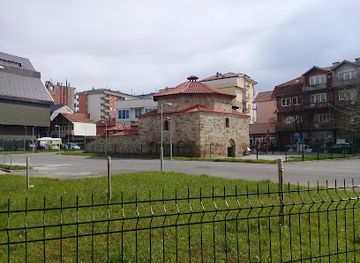
The Stone Bridge is Vushtrri’s defining landmark, its broad masonry structure expressing the town’s enduring role on regional routes and its connection with Ottoman-era infrastructure. Vushtrri Castle, surviving in fragmentary form, represents the defensive importance of the medieval settlement and offers a physical link with the period before Ottoman urban development. The historic hamam reflects the public architecture of Ottoman town life, when bathing, commerce and religious institutions helped organise the urban community. Local mosques, including the Gazi Ali Bey Mosque, contribute to the town’s religious and architectural inheritance, while the older street pattern helps place these buildings within a lived historic environment rather than as isolated monuments. Together, the bridge, fortification, bathhouse and religious structures show how Vushtrri’s identity was formed by successive layers of ancient, medieval and Ottoman history.
-
Sculpture
Newborn Monument
Discover the Newborn Monument in Pristina, a vibrant symbol of Kosovo's independence and a must-visit cultural landmark for every traveler.
44 min drive · 24 km from city centre
-
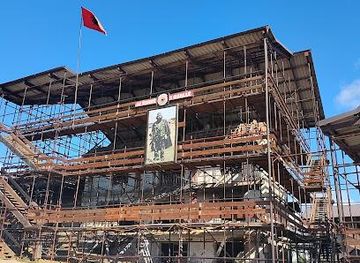
Historical place
Adem Jashari Memorial Complex
Explore the Adem Jashari Memorial Complex in Prekaz, a historical site honoring Kosovo's national hero and offering deep insights into the region's struggle for freedom.
35 min drive · 15 km from city centre
-
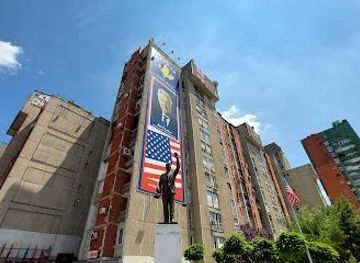
Historical landmark
Bill Clinton Statue
Explore the Bill Clinton Statue in Pristina, a powerful symbol of Kosovo's independence and gratitude towards its American allies.
44 min drive · 24 km from city centre
-
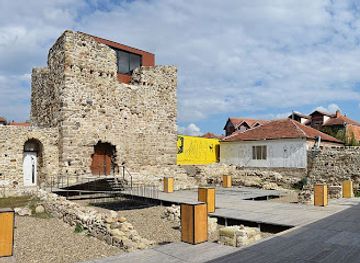
Historical place museum
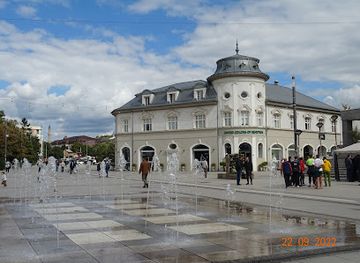
Kalaja e Vjetër e Vushtrrisë
Explore the historical marvel of Kalaja e Vjetër e Vushtrrisë, a medieval castle that tells the tales of Kosovo's rich heritage and offers stunning views.
1 min walk · 0.1 km from city centre
Explore Vushtrri on the map
Plan your Vushtrri trip on one map. See where the top attractions, landmarks, restaurants, bars and hotels are, find what's near where you're staying, and book hotels and experiences in a few clicks.
Best hotels in Vushtrri
Best restaurants in Vushtrri
Vushtrri’s dining scene is rooted in the everyday cooking of Kosovo rather than in a large short-list of destination restaurants. Grilled meats, qofte, baked pastries, savoury pies and soups are common features of local eating, alongside bread, dairy products, beans and seasonal vegetables. Flija, a layered pastry traditionally cooked slowly over an open heat, is associated with Kosovo’s wider culinary culture and may require advance planning rather than appearing on every menu. Bakeries are useful for a quick burek or other pastry, while cafés often serve strong coffee and simple refreshments throughout the day. Family-run eateries and casual grills tend to provide the most characteristic atmosphere, with menus reflecting Albanian and broader Balkan traditions. Food shopping and produce stalls also reveal the agricultural character of the surrounding Kosovo Plain, particularly when seasonal fruit and vegetables are available.
-
Restaurant
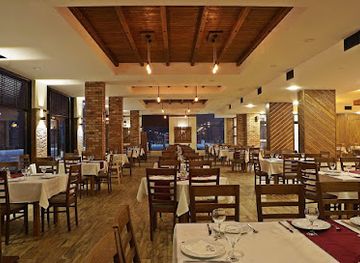
RESTAURANT IBRI
Experience authentic local cuisine and warm hospitality at Restaurant Ibri in Koshtovë - A must-visit for every traveler.
34 min drive · 14 km from city centre
-
Restaurant
Restaurant Vigu
Experience the vibrant flavors of Kosovo at Restaurant Vigu - where tradition meets modern culinary artistry.
35 min drive · 15 km from city centre
-
Restaurant
Ura
Experience authentic Kosovar cuisine at Ura in Mitrovica—where local flavors meet warm hospitality in a cozy atmosphere.
31 min drive · 11 km from city centre
-
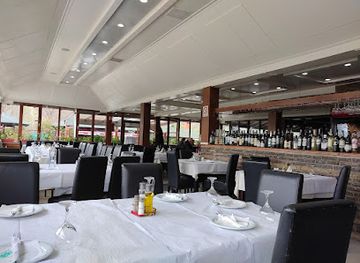
Traditional restaurant
Illyrian Castle Restaurant
Discover authentic Albanian flavors at Illyrian Castle Restaurant - where tradition meets exceptional dining in Pristina.
46 min drive · 26 km from city centre


Best bars in Vushtrri
Vushtrri has a modest evening scene centred more on cafés, coffee houses and informal socialising than on large nightclubs. In the central streets, cafés provide places to meet over coffee, soft drinks or a late snack, and evenings are often shaped by conversation and family or friendship groups rather than a formal entertainment district. Restaurants and grills may remain active later than the town’s daytime shops, while televised sport is a familiar part of social life. Cultural events and public celebrations can add music to the town at particular times of year, but schedules are not necessarily aimed at international visitors. Those seeking a broader choice of live music, nightclubs or late-night venues generally look towards Pristina, while Vushtrri is better suited to a relaxed evening after exploring its historic centre.
-
Lounge
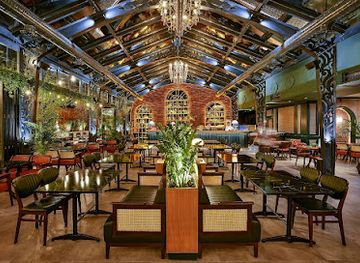
Friends Lounge
Experience the cozy charm of Friends Lounge in Vushtrri, the perfect spot for relaxation and socializing with a vibrant atmosphere.
1 min walk · 0.1 km from city centre
-
Restaurant
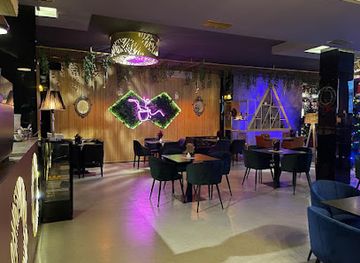
Onte bar & lounge
Discover the vibrant flavors of Vushtrri at Onte Bar & Lounge, where local meets international in a cozy and stylish setting.
2 min walk · 0.2 km from city centre
-
Family-friendly
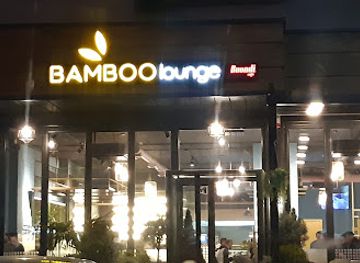
Bamboo Lounge
Discover the family-friendly charm of Bamboo Lounge in Vushtrri, where delicious food and a welcoming atmosphere await you and your loved ones.
7 min walk · 0.5 km from city centre
-
Restaurant
Açik lounge
Discover the flavors of Vushtrri at Açik Lounge, a culinary gem offering a delightful dining experience with a blend of local and contemporary dishes.
8 min walk · 0.6 km from city centre
Best nightclubs in Vushtrri
Vushtrri has a modest evening scene centred more on cafés, coffee houses and informal socialising than on large nightclubs. In the central streets, cafés provide places to meet over coffee, soft drinks or a late snack, and evenings are often shaped by conversation and family or friendship groups rather than a formal entertainment district. Restaurants and grills may remain active later than the town’s daytime shops, while televised sport is a familiar part of social life. Cultural events and public celebrations can add music to the town at particular times of year, but schedules are not necessarily aimed at international visitors. Those seeking a broader choice of live music, nightclubs or late-night venues generally look towards Pristina, while Vushtrri is better suited to a relaxed evening after exploring its historic centre.
-
 Lounge
Friends Lounge
Discover the cozy ambiance of Friends Lounge in Vushtrri, where relaxation meets local culture, perfect for unwinding after a day of exploration.
1 min walk · 0.1 km from city centre
-
Night club
VOX
Join the vibrant nightlife at VOX, Vushtrri's top night club, where music, dance, and unforgettable experiences await every night.
3 min walk · 0.2 km from city centre
-
Night club
KOMETTA CLUB
Experience the vibrant nightlife of Vushtrri at Kometta Club, where music and dance come alive in an unforgettable setting.
15 min walk · 1.2 km from city centre
-
Disco club
MORENA ERIONZYMERI
Dive into the electrifying nightlife of Vushtrri at Morena Erionzymeri, where music, dancing, and unforgettable moments await.
2 min walk · 0.1 km from city centre
Best shops in Vushtrri
Shopping in Vushtrri is chiefly local and practical, with small shops, bakeries, cafés, produce sellers and market-style businesses supplying residents rather than a purpose-built tourist retail quarter. Fresh fruit and vegetables, dairy products, bread and other Kosovo foodstuffs offer a more authentic sense of place than generic souvenirs. Visitors may also find locally made textiles, embroidered items and modest handicrafts through small retailers or seasonal market activity, although availability varies. The central streets are the most convenient area for browsing everyday commerce, while larger shopping choices are available in nearby Pristina and Mitrovica. Kosovo’s coffee culture is reflected in the number of cafés, but shopping is generally woven into ordinary town life rather than separated into a dedicated visitor district. Bargaining should be restrained and used only where it is customary, not in ordinary fixed-price shops.
-
Shopping mall
ETC - Elkos Trading Center, Vushtrri
Explore ETC - Elkos Trading Center in Vushtrri for a diverse and exciting shopping experience with dining and entertainment options.
10 min walk · 0.8 km from city centre
-
Shopping mall
Emona City 5
Explore Emona City 5 in Vushtrri for a unique shopping experience with local flavors, entertainment, and a vibrant atmosphere.
3 min walk · 0.3 km from city centre
-
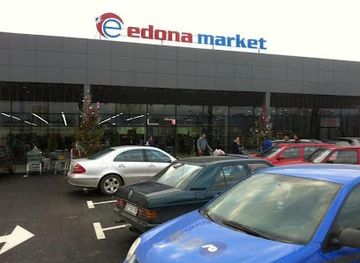
Supermarket
Edona
Explore Edona Supermarket in Mitrovica for a taste of local goods and a convenient shopping experience.
10 min walk · 0.8 km from city centre
-
Shopping mall
Vali Comm
Explore Vali Comm, Vushtrri's vibrant shopping mall with diverse stores, delicious dining, and lively events for an unforgettable experience.
9 min walk · 0.7 km from city centre
Get your free copy of our complete guide to Vushtrri, delivered straight to you.
Everything on this page, from attractions and restaurants to essentials and local phrases, in one PDF you can read offline, print or share.
Already have an account? Sign in
Your Vushtrri guide is ready.
We'll send it to · Not you? Sign out

Getting your guide ready…
We are putting together a fresh copy of the Vushtrri guide. This can take up to a minute.
This can take a few moments. If your browser asks, choose Allow so the download can start. You'll find the guide in your Downloads folder.
Nothing happened? Download it again
Sorry, the guide is taking longer than usual. Please try again in a minute, or get it by email instead.
Vushtrri essentials
Currency and Payment
Safety
Emergency Situations
Do's and Don'ts
Local Tips
From Eve
Local phrases worth knowing
You don't need to get them perfect. A few words go a long way, and locals appreciate the effort.
Basics
| English | Local | Say it |
|---|---|---|
| Hello | Tungjatjeta | [toon-jat-yet-a] |
| Goodbye | Mirupafshim | [meer-oo-paf-sheem] |
| Yes | Po | [poh] |
| No | Jo | [yoh] |
| Please/You're welcome | Ju lutem | [yoo loo-tem] |
| Thank you | Faleminderit | [fa-le-min-deh-reet] |
| Excuse me/Sorry | Më falni | [muh fahl-nee] |
| How are you? | Si jeni? | [see yeh-nee] |
| Fine. And you? | Mirë. Dhe ju? | [meer-uh. thuh yoo] |
| Do you speak English? | A flisni anglisht? | [ah flees-nee ahn-gleesht] |
| I don't understand | Nuk kuptoj | [nook kook-toy] |
Eating & Drinking
| English | Local | Say it |
|---|---|---|
| I'd like to see the menu, please | Do të doja të shihja menunë, ju lutem | [doh tuh doh-ya tuh shee-ya meh-noo-nuh, yoo loo-tem] |
| I don't eat meat | Nuk ha mish | [nook hah meesh] |
| Cheers! | Gëzuar! | [geh-zoo-ar] |
| I would like to pay, please | Do të doja të paguaja, ju lutem | [doh tuh doh-ya tuh pah-goo-ah, yoo loo-tem] |
Emergencies
| English | Local | Say it |
|---|---|---|
| Help! | Ndihmë! | [ndee-muh] |
| Go away! | Shko larg! | [shkoh lahrg] |
| Call the Police! | Thirrni policinë! | [theer-nee poh-lee-see-nuh] |
| Call a doctor! | Thirrni një mjek! | [theer-nee nyuh myek] |
| I'm lost | Jam humbur | [yam hoom-boor] |
| I'm ill | Jam i sëmurë | [yam ee suh-moo-ruh] |
Shopping
| English | Local | Say it |
|---|---|---|
| I'd like to buy... | Do të doja të blija... | [doh tuh doh-ya tuh bleeh-ya] |
| I'm just looking | Po shikoj vetëm | [poh shee-koy vet-um] |
| How much is it? | Sa kushton? | [sah koosh-ton] |
| That's too expensive | Kjo është shumë e shtrenjtë | [kyoh eshtuh shoo-muh eh shtrenj-teh] |
| Can you lower the price? | A mund të zbresni çmimin? | [ah moon-duh tuh zbres-nee chmee-meen] |
Time & Numbers
| English | Local | Say it |
|---|---|---|
| What time is it? | Sa është ora? | [sah eshtuh oh-rah] |
| It's one o'clock | Është një ora | [eshtuh nyuh oh-rah] |
| Half past (10) | Njëzeti e gjysmë | [nyuh-zeh-tee eh gjee-smuh] |
| Morning | Mëngjes | [muhn-jes] |
| Afternoon | Pasdite | [pahs-dee-teh] |
| Evening | Mbrëmje | [mbruhm-yeh] |
| Yesterday | Dje | [djeh] |
| Today | Sot | [sot] |
| Tomorrow | Nesër | [neh-ser] |
| 1 | Një | [nyuh] |
| 2 | Dy | [duh] |
| 3 | Tre | [treh] |
| 4 | Katër | [kah-ter] |
| 5 | Pesë | [peh-seh] |
| 6 | Gjashtë | [gyahsh-teh] |
| 7 | Shtatë | [sh-taht] |
| 8 | Tetë | [tuh-tuh] |
| 9 | Nëntë | [nuhn-tuh] |
| 10 | Dhjetë | [dye-tuh] |
Transport & Directions
| English | Local | Say it |
|---|---|---|
| Where's a/the...? | Ku është një/...? | [koo eshtuh nyuh/...?] |
| What's the address? | Cila është adresa? | [chee-lah eshtuh ah-dreh-sah] |
| Can you show me (on the map)? | A mund të më tregoni (në hartë)? | [ah moon-duh tuh muh troh-goh-nee (nuh hahr-tuh)?] |
| When's the next (bus)? | Kur është autobusi tjetër? | [koor eshtuh ow-toh-boo-see tyet-er] |
| A ticket (to ....) | Një biletë (për ....) | [nyuh bee-leh-teh (puhr ....)] |
History of Vushtrri
Viciana and the Ancient Settlement
Vushtrri is commonly identified with Viciana, an ancient settlement recorded in the Roman world and associated with the wider Dardanian region. The town’s position near routes across the Kosovo Plain helped give it continuing importance, although the precise relationship between ancient Viciana and the later urban settlement is not completely visible in the modern town. Roman administration, trade and movement connected the area with other settlements in the Balkans, while the surrounding agricultural land supported permanent communities. Ancient references are therefore important not simply as an origin story, but as evidence of the long strategic and economic significance of this location.
Medieval Fortification and Regional Power
During the medieval period, the settlement developed within the political world of the Serbian states and the wider contested landscape of the Balkans. Vushtrri Castle, now surviving mainly in ruins, reflects the defensive importance of the town and its position near routes crossing the central Kosovo region. Medieval political authority brought changes in administration, religious life and settlement patterns, while Orthodox Christian institutions formed part of the area’s cultural landscape. The town later became involved in the wider struggles that affected Kosovo in the late fourteenth and fifteenth centuries, as regional powers competed for control of its roads, towns and productive plain.
Ottoman Incorporation and Urban Growth
Vushtrri became part of the Ottoman Empire during the Ottoman expansion into Kosovo in the fifteenth century. Under Ottoman rule, it developed as an administrative and commercial centre, and its townscape acquired features still recognised today. Mosques, the hamam, market activity and the Stone Bridge belonged to an urban system that connected religious, civic and trading life. The Ottoman period also brought demographic and cultural changes, including the growth of Muslim communities and the strengthening of Albanian-speaking populations in the surrounding region. Many surviving historic structures date from this long phase of urban development, even when their exact construction histories are uncertain.
Late Ottoman Change and New Borders
In the nineteenth century, Vushtrri experienced the political and economic pressures affecting Ottoman Kosovo, including administrative reform, changing trade patterns and rising national movements. The town remained connected to agriculture and regional commerce, but authority and identity were increasingly contested. The Balkan Wars brought the end of Ottoman rule, followed by incorporation into the Kingdom of Serbia and, after the First World War, the Kingdom of Serbs, Croats and Slovenes, later known as Yugoslavia. These changes altered administration, migration and public life, while the older Ottoman urban fabric continued to shape the town.
Twentieth-Century Kosovo and the Present
The twentieth century brought periods of Yugoslav rule, economic and social change, and growing political tension in Kosovo. Vushtrri’s Albanian-majority population experienced the pressures that marked Kosovo’s late Yugoslav history, culminating in the conflict of 1998–99 and the international administration that followed. The town, like much of Kosovo, has since developed within the institutions of the Republic of Kosovo, declared in 2008. Contemporary Vushtrri combines expanding residential areas and everyday commerce with a historic core whose bridges, religious buildings, hamam and castle remains preserve evidence of successive cultural and political eras.
Vushtrri in Photos
Browse through our photo collection highlighting the charm and character of the destination.
Cities near Vushtrri
The closest cities to Vushtrri, if you have time for more than one stop.
-
-

-

-

-


Swipe for more cities
Explore more
Explore more of Kosovo
Discover Kosovo: A Blend of Ancient History, Vibrant Culture, and Stunning Natural Beauty in the Heart of the Balkans.
Explore Kosovo