

Kuwait Towers Area Travel Guide - Free Web & App
Your ultimate guide to Kuwait Towers Area. Discover top landmarks, proposed trips, and local tips. Free on the web or via the Evendo companion app.


Kuwait Towers Area in Kuwait combines Gulf views, landmark architecture, seaside walks, dining and easy access to Kuwait City attractions.
The Towers and the Gulf
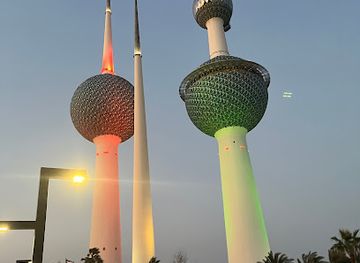
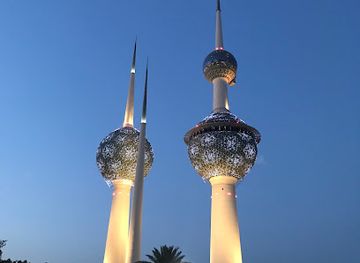
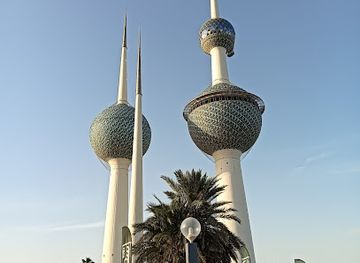
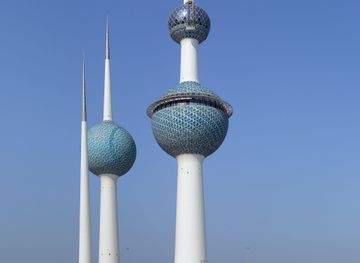
The Kuwait Towers Area occupies a prominent stretch of Kuwait City's eastern waterfront, where the city's modern skyline meets the waters of the Arabian Gulf. Its defining feature is the group of three slender towers opened in 1979: the tallest carries the famous blue-green viewing sphere, while the two smaller structures serve practical water-storage functions. Together they form one of Kuwait's most recognisable national symbols and a useful visual introduction to the country's modern identity.Read more about Kuwait Towers Area
Waterfront Character
A Gateway to Kuwait City
When is the best time to visit Kuwait Towers Area?
Best: February–March, December · 24–27°C| Month | High (°C) | Rainfall (mm) |
|---|---|---|
| January | 23 | 0 |
| February (best) | 24 | 0 |
| March (best) | 27 | 0 |
| April | 32 | 0 |
| May | 39 | 0 |
| June | 42 | 0 |
| July | 44 | 0 |
| August | 44 | 0 |
| September | 39 | 0 |
| October | 34 | 0 |
| November | 29 | 0 |
| December (best) | 25 | 0 |
Getting to and around Kuwait Towers Area
How to get there
Transportation
Best landmarks in Kuwait Towers Area
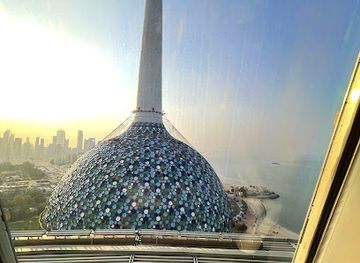
The Kuwait Towers are Kuwait's defining modern waterfront landmark: three narrow structures topped or accented by blue-green spheres that contrast with the pale urban coastline and Gulf horizon. The tallest tower's viewing sphere gives the complex its most familiar profile and, when accessible, frames views over Kuwait City and the sea. The smaller towers are equally important to the design because they reveal the project's original relationship between public architecture and water infrastructure. Their significance is architectural, civic and national rather than purely ornamental; they embody Kuwait's late-twentieth-century modernisation and remain a visual emblem of the country. The surrounding shoreline and open Gulf are natural reference points rather than separate monumental sites, while the broader capital contains additional historic and cultural landmarks beyond this compact area.
-
Historical landmark
Kuwaiti Dinar Monument
Explore the Kuwaiti Dinar Monument, a captivating historical landmark showcasing Kuwait's rich financial heritage and cultural significance.
-
Public parking space
Kuwait Towers Parking
Visit Kuwait Towers Parking for easy access to Kuwait City’s iconic Towers and experience the vibrant culture and attractions surrounding this landmark.
Explore Kuwait Towers Area on the map
Plan your trip on one map. See where the top attractions, landmarks, restaurants and hotels are, and book hotels and experiences in a few clicks.
Best hotels in Kuwait Towers Area
Best restaurants in Kuwait Towers Area
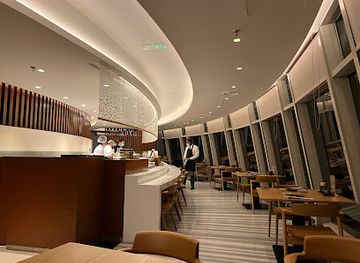
Dining in the immediate Kuwait Towers Area is centred on the facilities associated with the landmark when they are operating, while the wider choice lies in Kuwait City and its commercial districts. Visitors can look for Kuwaiti cooking such as machboos, rice dishes flavoured with spices and served with meat or fish, and harees, alongside Gulf seafood, grilled meats, flatbreads, dates and strong Arabic coffee. The capital also offers restaurants representing the wider region and the many communities that have shaped contemporary Kuwaiti life. Traditional dishes are often available in established city restaurants, casual eateries and hotel dining rooms rather than at the waterfront itself. Since restaurant operations within a landmark can change, checking current information is sensible. The area is therefore better suited to combining a tower visit with a meal elsewhere in Kuwait City than expecting a dense restaurant quarter at the foot of the towers.
-
Seafood
Fish market towers
Experience the freshest seafood in Kuwait at Fish Market Towers—where culinary excellence meets stunning Gulf views.
-
American
TGI Friday's
Experience delicious American cuisine at TGI Friday's in Kuwait Towers - where great food meets stunning views.
-
Japanese
Amimoto
Discover Amimoto in Kuwait City: where authentic Japanese cuisine meets stunning views in an unforgettable dining experience.
-
Restaurant
Horizon Restaurant
Experience exceptional dining with stunning views at Horizon Restaurant in Kuwait Towers - where culinary delights meet breathtaking scenery.


Best bars in Kuwait Towers Area
Kuwait's evening scene is shaped by local law and social customs: the sale and public consumption of alcohol are prohibited, so the Kuwait Towers Area does not offer a conventional bar or nightclub district. After sunset, the waterfront can provide an atmospheric setting for views, photography and a cooler walk, subject to conditions and access arrangements. Evening entertainment in Kuwait City is more likely to take the form of restaurants, cafés, hotel lounges without alcohol, shopping destinations, cinemas and cultural programming than licensed nightlife. The immediate area remains relatively focused on the landmark and open public space rather than late-night venues. Visitors should check current opening information for tower facilities and nearby establishments, and should not assume that a city hotel operates an alcoholic bar merely because it offers evening dining or lounge service.
-
American
TGI Friday's
Experience the taste of America at TGI Friday's in Kuwait Towers, a perfect blend of flavorful cuisine and stunning views.
Get your free copy of our complete guide to Kuwait Towers Area, delivered straight to you.
Everything on this page, from attractions and restaurants to essentials and local phrases, in one PDF you can read offline, print or share.
Already have an account? Sign in
Your Kuwait Towers Area guide is ready.
We'll send it to · Not you? Sign out

Getting your guide ready…
We are putting together a fresh copy of the Kuwait Towers Area guide. This can take up to a minute.
This can take a few moments. If your browser asks, choose Allow so the download can start. You'll find the guide in your Downloads folder.
Nothing happened? Download it again
Sorry, the guide is taking longer than usual. Please try again in a minute, or get it by email instead.
Kuwait Towers Area essentials
Currency and Payment
Safety
Emergency Situations
Do's and Don'ts
Local Tips
From Eve
Local phrases worth knowing
You don't need to get them perfect. A few words go a long way, and locals appreciate the effort.
Basics
| English | Local | Say it |
|---|---|---|
| Hello | مرحبا | [marhaba] |
| Goodbye | وداعا | [wadaa'an] |
| Yes | نعم | [naam] |
| No | لا | [laa] |
| Please/You're welcome | من فضلك | [min fadlik] |
| Thank you | شكرا لك | [shukran lak] |
| Excuse me/Sorry | عذرا | [udhran] |
| How are you? | كيف حالك؟ | [kayf halak?] |
| Fine. And you? | بخير. وأنت؟ | [bukhayr. wa'ant?] |
| Do you speak English? | هل تتحدث الإنجليزية؟ | [hal tatahadath al'injlizia?] |
| I don't understand | أنا لا أفهم | [ana la afham] |
Eating & Drinking
| English | Local | Say it |
|---|---|---|
| I'd like to see the menu, please | أريد أن أرى القائمة، من فضلك | [uriidu 'an 'ara alqa'imah, min fadlik] |
| I don't eat meat | أنا لا آكل اللحم | [ana la aakul allahm] |
| Cheers! | في صحتك! | [fi sahtak!] |
| I would like to pay, please | أود أن أدفع، من فضلك | [awadu 'an 'udfu, min fadlik] |
Emergencies
| English | Local | Say it |
|---|---|---|
| Help! | النجدة! | [alnajdah!] |
| Go away! | انصرف! | [ansarif!] |
| Call the Police! | اتصل بالشرطة! | [iatisal bialshurtah!] |
| Call a doctor! | اتصل بطبيب! | [iatisal bitabib!] |
| I'm lost | لقد ضللت | [laqad dalalt] |
| I'm ill | أنا مريض | [ana mareed] |
Shopping
| English | Local | Say it |
|---|---|---|
| I'd like to buy... | أود أن أشتري... | [awadu 'an 'ashtari...] |
| I'm just looking | أنا فقط أتفرج | [ana faqat atafarraj] |
| How much is it? | بكم هذا؟ | [bikam hatha?] |
| That's too expensive | هذا غالي جدا | [hatha ghali jiddan] |
| Can you lower the price? | هل يمكنك تخفيض السعر؟ | [hal yumkinuka takhfid als'ar?] |
Time & Numbers
| English | Local | Say it |
|---|---|---|
| What time is it? | كم الساعة؟ | [kam alsaa'ah?] |
| It's one o'clock | الساعة الواحدة | [alsaa'ah alwahidah] |
| Half past (10) | النصف بعد العاشرة | [alnissf ba'd al'ashirah] |
| Morning | الصباح | [alsabah] |
| Afternoon | العصر | [ala'sr] |
| Evening | المساء | [almasa'] |
| Yesterday | أمس | [ams] |
| Today | اليوم | [alyawm] |
| Tomorrow | غدا | [ghadan] |
| 1 | واحد | [wahid] |
| 2 | اثنان | [ithnan] |
| 3 | ثلاثة | [thalatha] |
| 4 | أربعة | [arba'ah] |
| 5 | خمسة | [khamsah] |
| 6 | ستة | [sittah] |
| 7 | سبعة | [sab'ah] |
| 8 | ثمانية | [thamania] |
| 9 | تسعة | [tis'ah] |
| 10 | عشرة | [asharah] |
Transport & Directions
| English | Local | Say it |
|---|---|---|
| Where's a/the...? | أين ال... | [ayn al...] |
| What's the address? | ما هو العنوان؟ | [ma huwa al'unwan?] |
| Can you show me (on the map)? | هل يمكنك أن تريني (على الخريطة)؟ | [hal yumkinuka 'an tureeni (ala alkharyata)?] |
| When's the next (bus)? | متى يأتي الحافلة التالية؟ | [mata ya'ti alhafilat altaliat?] |
| A ticket (to ....) | تذكرة (إلى ...) | [tadhkirat (ila ...)] |
History of Kuwait Towers Area
A Modern Water Infrastructure Project
The Kuwait Towers were conceived as part of Kuwait's expanding modern water-distribution system during a period of rapid urban and economic development. Their practical purpose was to store water, but the project also sought to create a memorable architectural statement on the coast. The design was produced by the Swedish engineering and architectural practice VBB, with the Danish architect Malene Bjørn responsible for the visual concept. Their spherical forms and coloured ceramic discs gave an essential utility a public and symbolic presence.
Opening in 1979
The towers opened in 1979 and quickly became associated with Kuwait's modern national image. The tallest tower combined its water-storage role with observation and hospitality facilities, allowing visitors to view Kuwait City and the Gulf from above. The smaller towers were primarily functional, yet their clustered composition made them an immediately recognisable feature of the shoreline. At a time when Kuwait was transforming rapidly through oil wealth, the complex expressed confidence in engineering, infrastructure and an outward-looking urban future.
Occupation and Restoration
During Iraq's occupation of Kuwait from 1990 to 1991, the Kuwait Towers were damaged, as were many elements of the country's infrastructure and public realm. Their survival and subsequent restoration gave the complex additional national significance. Reopening formed part of Kuwait's wider process of repairing public landmarks and recovering visible symbols of sovereignty after liberation. The towers therefore represent more than a viewing point: they are also reminders of the disruption caused by the occupation and the restoration of civic life that followed.
A National Landmark Today
The towers remain among Kuwait's best-known works of modern architecture and continue to function as a prominent coastal reference point. Their significance is reinforced by their inclusion in Kuwait's visual identity, where the blue-green spheres are used to represent the country's connection with the Gulf and its modern built environment. Today the area belongs to Kuwait City's public waterfront and tourism landscape, linking a late-twentieth-century infrastructure project with contemporary sightseeing, urban photography and views across the capital.
Kuwait Towers Area in Photos
Browse through our photo collection highlighting the charm and character of the destination.
Neighbouring destination travel guides
The closest destinations to Kuwait Towers Area, if you have time for more than one.
-

-

-

-

-


Swipe for more destinations
Explore more
Explore more of Al Asimah Governorate
Explore Al Asimah Governorate in Kuwait: A vibrant mix of modern architecture, rich history, cultural landmarks, and culinary delights in the heart of the Arabian Gulf.
Explore Al Asimah Governorate
Explore more of Kuwait
Discover the blend of modernity and tradition in Kuwait, a vibrant gem in the Arabian Gulf, offering cultural heritage, luxury shopping, and diverse culinary delights.
Explore Kuwait