

National Museum, Phonsavan Travel Guide
Free Guide: Explore the former Royal Palace of Luang Prabang, now a museum showcasing Lao history, culture, and royal life.


A brief summary of National Museum
Explore the former Royal Palace of Luang Prabang, now a museum showcasing Lao history, culture, and royal life.
Housed in the former Royal Palace, the National Museum of Luang Prabang offers a fascinating look into the lives of Lao royalty and the country's rich history. Built in the early 20th century, the palace showcases a blend of traditional Lao and French colonial architectural styles. Visitors can explore well-preserved rooms filled with royal artifacts, religious treasures, and a collection of vintage cars.
Opening hours
- Every day8 am–11:30 am, 1:30 pm–4 pm
Opening hours as listed on the venue’s Google Business Profile. Hours can change for services and special events, so check with the venue before you go.
- Address
- 27 Ounheun Rd, Luang Prabang
- Phone
- Website
Getting there
Walking
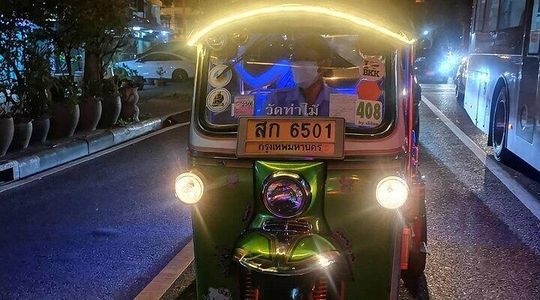
Tuk-tuk
Discover more about National Museum
Overview
The National Museum of Luang Prabang, also known as Haw Kham or the Golden Hall, was once the Royal Palace, offering a unique window into Lao history and culture. Constructed in 1904 during the French colonial era, it served as the residence for King Sisavang Vong and his family. The location was strategically chosen to allow official visitors arriving by river to disembark directly below the palace.The palace's architecture is a blend of traditional Lao and French Beaux-Arts styles. Above the entrance, a three-headed elephant sheltered by a sacred white parasol, symbolizes the Lao monarchy. Inside, the museum displays royal religious objects, weapons, statues, screens, and paintings from centuries past. The King's reception hall features busts and paintings of Lao monarchs, along with gilded Ramayana screens crafted by local artisans. Murals painted by a French artist in the 1930s depict scenes of traditional Lao life.The back wing of the palace, once the royal family's living quarters, includes bedrooms, a dining room, a library, and a music and dance exhibit area. These rooms have been preserved to reflect their appearance in 1975, before the monarchy was overthrown. The throne room displays the crown jewels of Laos, offering a glimpse into the opulence of the past. The palace grounds also contain the Royal Barge Shelter, a conference hall, and Haw Pha Bang, an ornate pavilion housing the Prabang Buddha statue, which is considered the most important Buddha image in Laos. A collection of royal cars from the 1950s to 1970s is also on display.After the revolution in 1975, the palace was taken over by the government and converted into a national museum, opening to the public in 1995. Today, the National Museum stands as a testament to Lao history, art, and culture, offering visitors a chance to learn about the country's royal past and its rich heritage.
Evendo Review Centre
 Google
Guest reviews
Explore National Museum on the map
A handpicked selection of must-see spots near National Museum, mapped for you.
Get your free copy of our complete guide to National Museum, delivered straight to you.
Everything on this page, from opening hours and how to get there to Eve’s tips and the best time to go, in one PDF you can read offline, print or share.
Already have an account? Sign in
Your National Museum guide is ready.
We'll send it to · Not you? Sign out

Getting your guide ready…
We are putting together a fresh copy of the National Museum guide. This can take up to a minute.
This can take a few moments. If your browser asks, choose Allow so the download can start. You'll find the guide in your Downloads folder.
Nothing happened? Download it again
Sorry, the guide is taking longer than usual. Please try again in a minute, or get it by email instead.
Unlock the best of National Museum
Skip-the-line tickets, guided tours with entry, and walking tours of the area, booked in a few clicks.



Other nearby places you may find interesting
The closest places of the same kind, if this one is not quite what you had in mind.
-
-

-
-
-


Swipe for more places
More to explore near National Museum

 Best experiences near National Museum
 Best hotels near National Museum
 Best landmarks near National Museum
 Best attractions near National Museum
 Best shops near National Museum
 Best restaurants near National Museum
 Best bars near National Museum
Do you manage this location?
Take control to get all the benefits, like improved information, better appearance, and stronger visibility across AI-powered discovery.
Explore more

Explore more of Phonsavan
Discover the enigmatic Plain of Jars, immerse yourself in Lao culture, and explore the resilient spirit of Phonsavan in the highlands of Laos.
Explore Phonsavan
Explore more of Laos
Discover Laos: A tranquil escape with breathtaking landscapes, rich culture, and warm hospitality. Perfect for adventure seekers and those craving serene beauty.
Explore Laos
