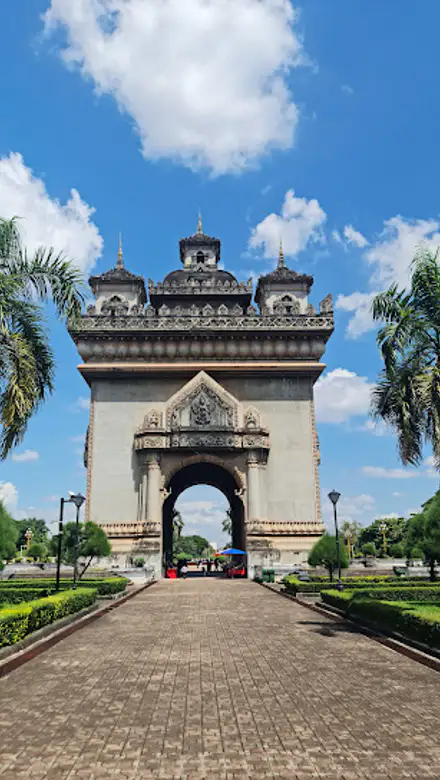
Patuxay - Victory Monument, Vientiane Travel Guide
Free Guide: A symbol of Laotian independence, Patuxay blends French inspiration with traditional Lao design, offering panoramic views of Vientiane.


A brief summary of Patuxay - Victory Monument
A symbol of Laotian independence, Patuxay blends French inspiration with traditional Lao design, offering panoramic views of Vientiane.
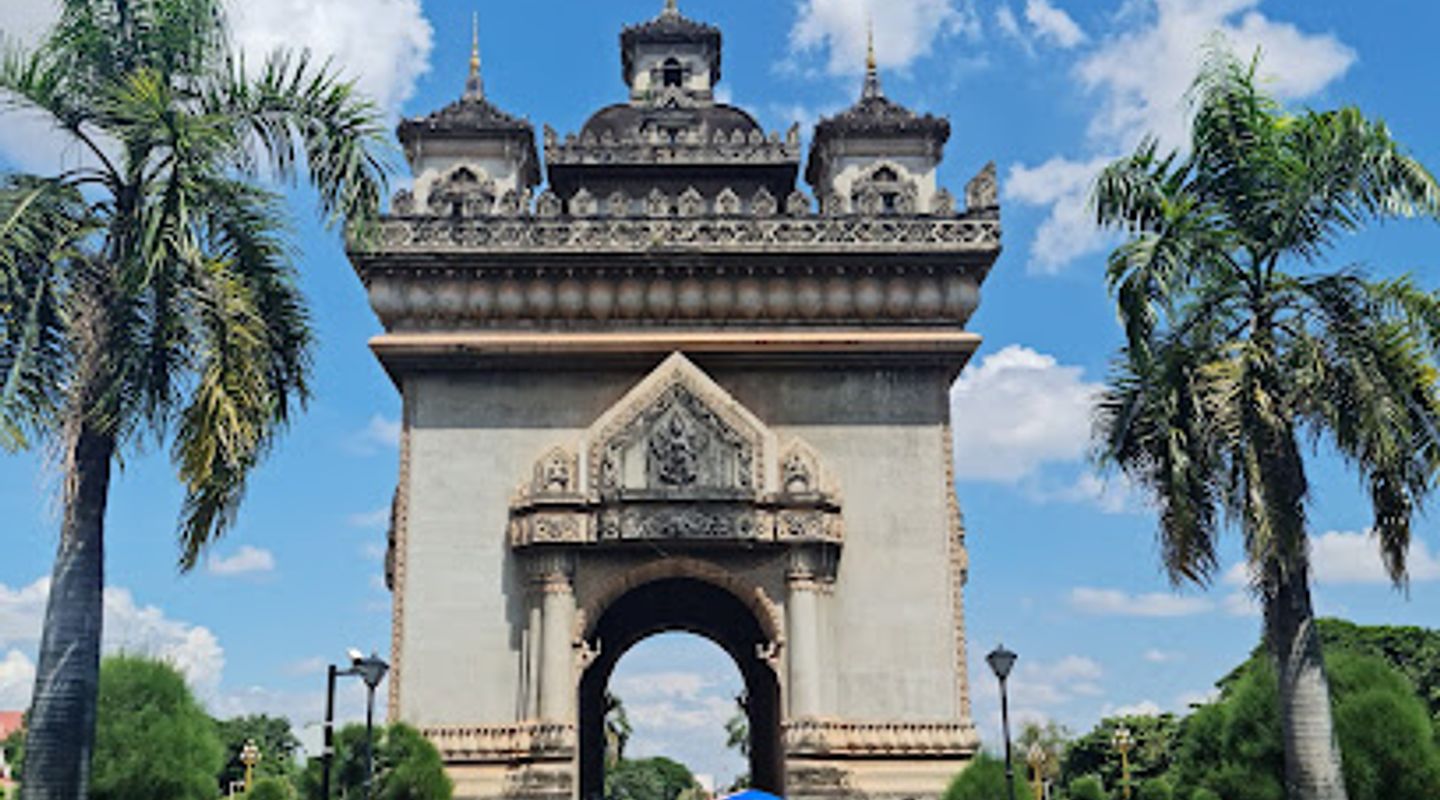
Patuxay, also known as Victory Gate, is a war monument in Vientiane, Laos, built between 1957 and 1968 to commemorate those who fought for independence from France. Inspired by the Arc de Triomphe in Paris, it incorporates traditional Laotian motifs and offers panoramic city views.
Opening hours
- Every day8:30 am–5 pm
Opening hours as listed on the venue’s Google Business Profile. Hours can change for services and special events, so check with the venue before you go.
- Address
- XJC9+7C3 P.D.R, Vientiane
Getting there
Walking
Public Transport
Taxi/Tuk-tuk
Discover more about Patuxay - Victory Monument
Overview
Patuxay, meaning "Victory Gate" or "Gate of Triumph", is a prominent war monument in the heart of Vientiane, Laos. Constructed between 1957 and 1968, it stands as a tribute to the Laotian people who struggled for independence from French colonial rule. The monument is also dedicated to the soldiers who died during World War II.While its design was inspired by the Arc de Triomphe in Paris, Patuxay incorporates traditional Laotian architectural elements, giving it a unique local flavor. The monument features four arches facing the cardinal directions. The five towers that crown the arch symbolize the five Buddhist principles of thoughtful amiability, flexibility, honesty, honor, and prosperity. The exterior is adorned with traditional Lao motifs, including Buddhist symbols, Hindu deities, and mythological creatures.Inside Patuxay, visitors can explore its seven floors, which house administrative offices, shops selling souvenirs, and a small museum showcasing artifacts related to the independence struggle. For a small fee, visitors can ascend to the top of the monument to enjoy panoramic views of Vientiane. From this vantage point, one can see the city's low-rise skyline, temples, and the Mekong River.Surrounding Patuxay is the Patuxay Park, featuring palm trees, lotus ponds, and a musical fountain donated by China. The park provides a serene space for locals and tourists alike to relax and enjoy the outdoors.
Evendo Review Centre
 Google
Guest reviews
Explore Patuxay - Victory Monument on the map
A handpicked selection of must-see spots near Patuxay - Victory Monument, mapped for you.
Get your free copy of our complete guide to Patuxay - Victory Monument, delivered straight to you.
Everything on this page, from opening hours and how to get there to Eve’s tips and the best time to go, in one PDF you can read offline, print or share.
Already have an account? Sign in
Your Patuxay - Victory Monument guide is ready.
We'll send it to · Not you? Sign out

Getting your guide ready…
We are putting together a fresh copy of the Patuxay - Victory Monument guide. This can take up to a minute.
This can take a few moments. If your browser asks, choose Allow so the download can start. You'll find the guide in your Downloads folder.
Nothing happened? Download it again
Sorry, the guide is taking longer than usual. Please try again in a minute, or get it by email instead.
Unlock the best of Patuxay - Victory Monument
Skip-the-line tickets, guided tours with entry, and walking tours of the area, booked in a few clicks.


Other nearby places you may find interesting
The closest places of the same kind, if this one is not quite what you had in mind.
-
-
-
-
-


Swipe for more places
More to explore near Patuxay - Victory Monument
-
 Best experiences near Patuxay - Victory Monument
-
 Best hotels near Patuxay - Victory Monument
-
 Best landmarks near Patuxay - Victory Monument
-
 Best attractions near Patuxay - Victory Monument
-
 Best shops near Patuxay - Victory Monument
-
 Best restaurants near Patuxay - Victory Monument
-
 Best bars near Patuxay - Victory Monument


Do you manage this location?
Take control to get all the benefits, like improved information, better appearance, and stronger visibility across AI-powered discovery.
Explore more

Explore more of Vientiane
Discover Vientiane, the peaceful capital of Laos, where ancient temples, colonial architecture, and a vibrant culinary scene await amidst the tranquil flow of the Mekong River.
Explore Vientiane
Explore more of Laos
Discover Laos: A tranquil escape with breathtaking landscapes, rich culture, and warm hospitality. Perfect for adventure seekers and those craving serene beauty.
Explore Laos