

Free Qacha's Nek Travel Guide & Mobile App
Explore Qacha's Nek with free travel guides. Discover regional history, expert tips, proposed trips, and audio guides on web or mobile app.


Explore Qacha's Nek in Lesotho for highland scenery, Sehlabathebe National Park, Basotho heritage and remote borderland journeys.
Read more about Qacha's Nek
When is the best time to visit Qacha's Nek?
Best: February, November–December · 21–23°C| Month | High (°C) | Rainfall (mm) |
|---|---|---|
| January | 23 | 100 |
| February (best) | 23 | 90 |
| March | 21 | 80 |
| April | 17 | 60 |
| May | 13 | 40 |
| June | 9 | 20 |
| July | 8 | 20 |
| August | 11 | 40 |
| September | 15 | 50 |
| October | 19 | 60 |
| November (best) | 21 | 70 |
| December (best) | 23 | 90 |
Getting to and around Qacha's Nek
How to get there
Transportation
Best attractions in Qacha's Nek
Qacha's Nek's attractions are concentrated in highland landscapes and cultural heritage rather than in large urban museums or purpose-built entertainment venues. Sehlabathebe National Park is the district's principal destination, offering sandstone arches and towers, open grassland, wetlands, natural pools, mountain views and habitats for birds and other highland wildlife. Hiking and landscape photography are central activities, while the park's rock-art sites add an important archaeological dimension. Access is remote, so excursions require more preparation than a conventional national-park visit. Around Qacha's Nek town, visitors encounter the everyday character of a Lesotho border and administrative centre, with local markets, services and roads leading into rural communities. The wider district offers opportunities to observe traditional homesteads, cultivated valleys, grazing areas and mountain routes, preferably with local guidance. Cultural interest comes from Sesotho language, blanket traditions, village life and the continuing role of chiefs and livestock. Those seeking variety should combine a town stay with time in the countryside, remembering that attractions are widely dispersed and that weather can alter travel plans.
-
Tourist attraction
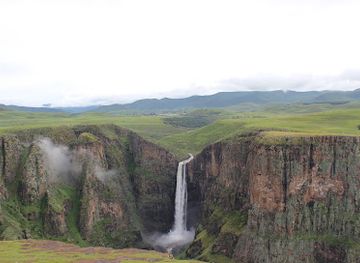
Maletsunyane Falls
Experience the breathtaking Maletsunyane Falls, one of Africa's tallest waterfalls, near the culturally rich village of Semonkong, Lesotho.
-
Nature preserve
Qacha's Nek Snake Park
Discover Lesotho's only snake park in Qacha's Nek: a unique blend of wildlife and education in a serene, natural setting.
-
Tourist attraction
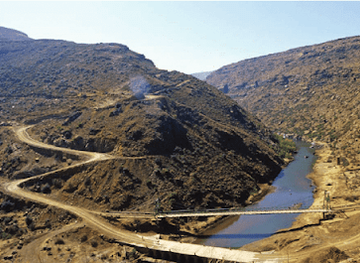
Tsoelike Suspension Bridge
Experience breathtaking views and thrilling heights at the Tsoelike Suspension Bridge in Qachas Nek, Lesotho. A must-see destination!
Best landmarks in Qacha's Nek
The most recognisable landmark in Qacha's Nek is the landscape of Sehlabathebe National Park, where weathered sandstone formations rise from open highland grasslands and valleys. Natural pools, wetlands and rock shelters give the park a distinctive geological and cultural profile, while San rock art makes several shelters important records of earlier human activity. As part of the Maloti-Drakensberg Transfrontier World Heritage property, Sehlabathebe also represents the cross-border significance of the region's mountain environment. Qacha's Nek town itself is a more modest landmark: its position beside the South African frontier and its role as the district's administrative centre explain its importance in local geography. Beyond the town, traditional rondavels, stone boundaries, cultivated slopes and high passes form a dispersed cultural landscape rather than a single monumental sight. The value of these places lies in the relationship between geology, settlement, livestock and history.
-
Tourist attraction
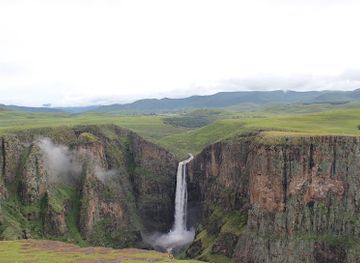
Maletsunyane Falls
Experience the breathtaking beauty of Maletsunyane Falls, one of Southern Africa's tallest waterfalls, set in the captivating landscapes of Lesotho.
-
Nature preserve
Mafika Lisiu Pass View Point
Explore the stunning vistas of Mafika Lisiu Pass View Point, a natural preserve in Lesotho offering breathtaking landscapes and cultural experiences.
-
 Hotel
New Central Hotel
Stay at New Central Hotel in Qachas Nek for a blend of comfort, local charm, and easy access to Lesotho's stunning landscapes.
-
Tourist attraction
The Lion Rock Mountain
Discover the breathtaking vistas and rich biodiversity at Lion Rock Mountain, a must-visit natural landmark near Maseru, Lesotho.
Explore Qacha's Nek on the map
Plan your trip on one map. See where the top cities, national parks and sights are, and book hotels and experiences in a few clicks.
Best hotels in Qacha's Nek
Best restaurants in Qacha's Nek
Dining in Qacha's Nek is generally low-key and practical, centred on local eateries, cafés, guesthouse kitchens and informal food prepared for community and transport markets rather than a formal restaurant scene. Meals commonly draw on Lesotho's staple foods, including maize and sorghum preparations, beans, vegetables and meat, with bread and tea also widely available. Rural households and small establishments may offer food according to seasonal supply, so choices can be simpler away from the town. Travellers should look for opportunities to try locally prepared dishes while recognising that recipes and names vary between households. Markets and small shops are useful for fruit, baked goods, snacks and provisions before heading into the mountains. Dining in the district is as much about understanding the seasonal, agrarian setting as seeking elaborate menus; advance arrangements are sensible for visitors staying near Sehlabathebe or travelling on a tight schedule.
-
Restaurant
Sani Mountain Lodge
Discover breathtaking mountain views and delicious local cuisine at Sani Mountain Lodge in Lesotho's majestic Drakensberg Mountains.
-
Restaurant
The Market
Experience the flavors of Lesotho at The Market in Maseru Mall - where local meets international in a vibrant dining setting.
-
Restaurant
No.7 Restaurant
Experience the rich flavors of Lesotho at No.7 Restaurant in Maseru – where every meal tells a story.
-
African
Café What?
Discover authentic African cuisine at Café What? in Maseru - where every dish tells a story.
Best bars in Qacha's Nek
Qacha's Nek does not have a major nightclub circuit. Evening life is more likely to centre on local pubs, small bars, guesthouse lounges and informal social spaces in and around the town, with music and conversation providing the main setting. In rural parts of the district, evenings are quiet and shaped by distance, weather and household life rather than by a visitor-oriented entertainment programme. Some accommodation providers may serve drinks or arrange simple meals, but facilities and hours vary and should not be assumed. Visitors should avoid treating drinking as the principal way to engage with local culture, respect community surroundings and arrange transport before going out. The contrast between modest town nightlife and the silence of the mountain areas is part of the district's character.
-
Self-catering accommodation
Sani Mountain Lodge
Discover the breathtaking beauty of Sani Mountain Lodge, the highest pub in Africa, offering self-catering accommodation and local dining in stunning Drakensberg.
-
Hotel
New Central Hotel
Experience warm hospitality and comfort at New Central Hotel in Qachas Nek, your gateway to exploring the beauty of Lesotho.
-
Border crossing station
Qacha's Nek Border control (RSA)
Experience the gateway to Lesotho at Qacha's Nek Border Control, where stunning landscapes meet vibrant local culture.
-
Lounge
Lephallo's Palace Village Tavern. Mountain Rise.
Discover the vibrant culture and delicious local cuisine at Lephallo's Palace Village Tavern in beautiful Maluti, South Africa.
Best nightclubs in Qacha's Nek
Qacha's Nek does not have a major nightclub circuit. Evening life is more likely to centre on local pubs, small bars, guesthouse lounges and informal social spaces in and around the town, with music and conversation providing the main setting. In rural parts of the district, evenings are quiet and shaped by distance, weather and household life rather than by a visitor-oriented entertainment programme. Some accommodation providers may serve drinks or arrange simple meals, but facilities and hours vary and should not be assumed. Visitors should avoid treating drinking as the principal way to engage with local culture, respect community surroundings and arrange transport before going out. The contrast between modest town nightlife and the silence of the mountain areas is part of the district's character.
-
Night club
Khubetsoana
Experience the lively nightlife at Khubetsoana in Maseru, where music, dance, and culture come together for an unforgettable night out.
-
Lounge
ba.one
Discover the vibrant atmosphere and local flavors at ba.one Lounge in Maseru, the perfect spot to unwind and socialize.
-
Border crossing station
Qacha's Nek Border control (RSA)
Experience the breathtaking landscapes and rich culture of Lesotho at Qacha's Nek Border Control, your gateway to adventure.
-
Nature preserve
Qacha's Nek Snake Park
Explore the first snake park in Lesotho, where education meets adventure amidst stunning natural landscapes.
Best shops in Qacha's Nek
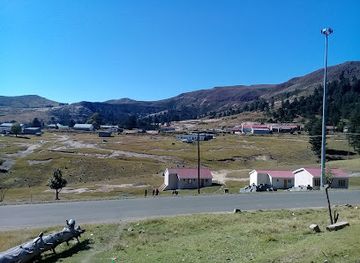
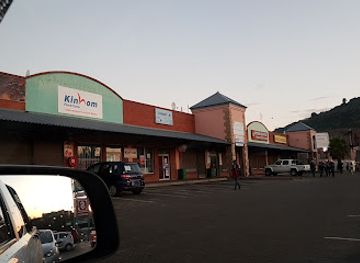
Shopping in Qacha's Nek is mainly local and utilitarian, with small shops, market stalls and trading areas supplying food, clothing, household necessities and travel provisions. Visitors may find Sesotho blankets, woven goods, beadwork or other locally made items, although availability and quality vary and purchases should be made respectfully rather than treating village life as a marketplace. Fresh produce and simple baked goods are useful for journeys into the mountains, particularly because retail options become limited beyond the town. Regional souvenirs can include craftwork and practical textiles associated with Basotho culture; ask about prices and provenance when buying handmade goods. Qacha's Nek is not a major destination for luxury retail or large shopping centres, and the most meaningful shopping tends to support small traders and makers. Carry cash, as smaller businesses may not accept cards, and allow time for market activity to follow local rather than tourist schedules.
-
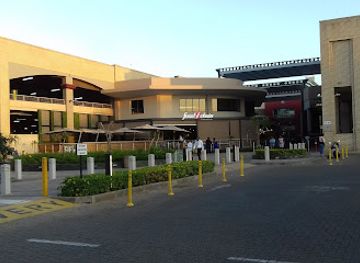
Shopping mall
Sefika Shopping Centre
Explore the vibrant Sefika Shopping Centre in Maseru for a delightful shopping experience featuring local and international brands, dining, and entertainment.
-
Hotel
New Central Hotel
Experience the warmth and comfort of New Central Hotel in Qachas Nek, a perfect blend of hospitality and local charm for travelers.
-
Border crossing station
Qacha's Nek Border control (RSA)
Discover the cultural crossroads and stunning landscapes at Qacha's Nek Border Control, your gateway to Lesotho's breathtaking adventures.
-
Nature preserve
Qacha's Nek Snake Park
Explore the fascinating world of reptiles at Qacha's Nek Snake Park, a nature preserve offering encounters with diverse snake species and wildlife.
Get your free copy of our complete guide to Qacha's Nek, delivered straight to you.
Everything on this page, from attractions and restaurants to essentials and local phrases, in one PDF you can read offline, print or share.
Already have an account? Sign in
Your Qacha's Nek guide is ready.
We'll send it to · Not you? Sign out

Getting your guide ready…
We are putting together a fresh copy of the Qacha's Nek guide. This can take up to a minute.
This can take a few moments. If your browser asks, choose Allow so the download can start. You'll find the guide in your Downloads folder.
Nothing happened? Download it again
Sorry, the guide is taking longer than usual. Please try again in a minute, or get it by email instead.
Qacha's Nek essentials
Currency and Payment
Safety
Emergency Situations
Do's and Don'ts
Local Tips
From Eve
Local phrases worth knowing
You don't need to get them perfect. A few words go a long way, and locals appreciate the effort.
Basics
| English | Local | Say it |
|---|---|---|
| Hello | Lumela | [loo-meh-lah] |
| Goodbye | Tsamaya hantle | [tsah-mah-yah hahn-tleh] |
| Yes | Ee | [eh] |
| No | Che | [cheh] |
| Please/You're welcome | Ka kopo | [kah koh-poh] |
| Thank you | Kea leboha | [keh-ah leh-boh-hah] |
| Excuse me/Sorry | Ntšoare | [n-tsoh-ah-reh] |
| How are you? | O kae? | [oh kah-eh] |
| Fine. And you? | Ke hantle. Wena u kae? | [keh hahn-tleh. weh-nah oo kah-eh] |
| Do you speak English? | Na u bua Senyesemane? | [nah oo boo-ah sen-yeh-seh-mah-neh] |
| I don't understand | Ke sitwa ho utloisisa | [keh see-twah ho oot-loh-ee-sah] |
Eating & Drinking
| English | Local | Say it |
|---|---|---|
| I'd like to see the menu, please | Ke kopa ho bona menyu | [keh koh-pah ho boh-nah men-yoo] |
| I don't eat meat | Ke sitwa ho ja nama | [keh see-twah ho jah nah-mah] |
| Cheers! | Tshelete! | [tseh-leh-teh] |
| I would like to pay, please | Ke kopa ho lefa | [keh koh-pah ho leh-fah] |
Emergencies
| English | Local | Say it |
|---|---|---|
| Help! | Thusa! | [thoo-sah] |
| Go away! | Tšoha! | [tsoh-hah] |
| Call the Police! | Call the Police! | [Call the Police!] |
| Call a doctor! | Call a doctor! | [Call a doctor!] |
| I'm lost | Ke sitwa ho lahleha | [keh see-twah ho lah-leh-hah] |
| I'm ill | Ke bolava | [keh boh-lah-vah] |
Shopping
| English | Local | Say it |
|---|---|---|
| I'd like to buy... | Ke kopa ho reka... | [keh koh-pah ho reh-kah] |
| I'm just looking | Ke sheba feela | [keh sheh-bah feh-lah] |
| How much is it? | Ke bokae? | [keh boh-kah-eh] |
| That's too expensive | Ke boima haholo | [keh boh-ee-mah yah-hol-oh] |
| Can you lower the price? | U ka fokotsa theko? | [oo kah fo-kot-sah teh-koh] |
Time & Numbers
| English | Local | Say it |
|---|---|---|
| What time is it? | Nako ke eng? | [nah-koh keh ehng] |
| It's one o'clock | Ke hora e le 'ngoe | [keh ho-rah eh leh 'ngoh-eh] |
| Half past (10) | Hlotse (10) | [hloh-tseh (10)] |
| Morning | Mosong | [moh-sohng] |
| Afternoon | Mantsiboea | [mahn-tsih-boh-eh] |
| Evening | Mantsiboea | [mahn-tsih-boh-eh] |
| Yesterday | Maobane | [mah-oh-bah-neh] |
| Today | Kajeno | [kah-jeh-no] |
| Tomorrow | Kamoso | [kah-moh-so] |
| 1 | 1 | [1] |
| 2 | 2 | [2] |
| 3 | 3 | [3] |
| 4 | 4 | [4] |
| 5 | 5 | [5] |
| 6 | 6 | [6] |
| 7 | 7 | [7] |
| 8 | 8 | [8] |
| 9 | 9 | [9] |
| 10 | 10 | [10] |
Transport & Directions
| English | Local | Say it |
|---|---|---|
| Where's a/the...? | E kae...? | [eh kah-eh] |
| What's the address? | Aterese ke efe? | [ah-teh-reh-seh keh eh-feh] |
| Can you show me (on the map)? | U ka mpontša (mapeng)? | [oo kah em-pon-tsah (mah-pehng)] |
| When's the next (bus)? | Bus e latelang neng? | [boos eh lah-teh-lang nehng] |
| A ticket (to ....) | Thekiso (ho ....) | [theh-kee-so (ho ....)] |
History of Qacha's Nek
Early San Rock Art and Highland Settlement
The mountains and sandstone shelters of southeastern Lesotho preserve evidence of long human occupation, including rock art associated with San hunter-gatherer communities. In and around the Sehlabathebe landscape, paintings provide an important record of earlier beliefs, animals and ways of seeing the highlands. Later communities used the same wider region for settlement, cultivation and livestock keeping. These traces are not isolated curiosities: they show that the Maloti highlands formed part of a much older cultural landscape before the emergence of the modern Basotho kingdom.
The Formation of the Basotho Kingdom
During the nineteenth century, Moshoeshoe I brought diverse communities together around the mountain stronghold of Thaba Bosiu and established the foundations of the Basotho nation. The political and cultural developments associated with his reign affected the whole territory that became Lesotho, including the southeastern districts. Communities in the Qacha's Nek area were drawn into the wider Basotho kingdom through alliances, chiefly authority and the pressures of regional conflict. The enduring importance of chiefs, village networks, cattle and the Sesotho language reflects this period of state formation.
Qacha and the District's Name
Qacha's Nek takes its name from Chief Qacha, a member of the ruling Moshoeshoe dynasty and a son of King Letsie I. The name can be understood as referring to Qacha's place or settlement. As chiefly and administrative arrangements developed, the name became associated with the town and surrounding district. This history is part of the wider pattern through which Lesotho's places preserve the memory of royal relatives, chiefs and political relationships rather than simply reflecting modern administrative boundaries.
The Colonial and Borderland Period
Lesotho became the British protectorate of Basutoland in 1868, and colonial administration gradually formalised districts, roads, posts and border controls. Qacha's Nek developed as an administrative centre in the southeastern part of the territory, while its frontier position gave it enduring importance for movement and trade with South Africa. Colonial rule altered systems of authority and land administration, but it did not erase chiefly structures or local rural practices. The present border landscape, including the route towards the South African Eastern Cape, is partly a legacy of these political arrangements.
Livestock, Agriculture and Labour Migration
For generations, households in Qacha's Nek have combined small-scale cultivation with livestock keeping, adapting to cold winters, thin mountain soils and variable rainfall. Like other parts of Lesotho, the district was also affected by labour migration to South African mines and towns. Remittances, absent workers and cross-border family connections influenced household economies and social life. Roads, trading centres and border facilities subsequently became important links between mountain communities and regional markets, although rural livelihoods remain vulnerable to drought, severe weather and limited employment.
Sehlabathebe National Park and Conservation
Sehlabathebe National Park was established in 1969 as Lesotho's first national park, protecting a high-altitude environment of sandstone formations, grasslands, wetlands and unusual natural pools. Its value is both ecological and cultural, since the protected area contains rock art and archaeological evidence alongside habitats for mountain wildlife and birds. In 2013, Sehlabathebe became part of the Maloti-Drakensberg Transfrontier World Heritage property with protected areas in South Africa. Conservation has made the park a central part of Qacha's Nek's identity and tourism potential.
Qacha's Nek in Photos
Browse through our photo collection highlighting the charm and character of the destination.
Neighbouring regions of Qacha's Nek
The closest regions to Qacha's Nek, if you have time for more than one.

Swipe for more regions
Explore more

Explore more of Lesotho
Lesotho, the Kingdom in the Sky, offers stunning mountain landscapes, rich cultural heritage, and thrilling outdoor adventures for an unforgettable travel experience.
Explore Lesotho