

Cape Mount Travel Guide - Free Web & App
Your ultimate guide to Cape Mount. Discover top landmarks, proposed trips, and local tips. Free on the web or via the Evendo companion app.


Cape Mount, Liberia, combines Atlantic beaches, Lake Piso wetlands, Vai heritage and Robertsport’s surf culture in a remote north-western landscape.
Coast, Wetlands and Forest
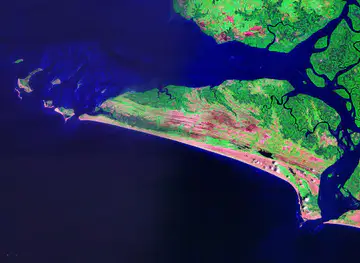
Cape Mount occupies Liberia’s north-western corner, where the Atlantic Ocean meets the forested landscapes and waterways of Grand Cape Mount County. The region is best understood through its connected environments: the rocky and sandy coast around Robertsport, the broad Lake Piso wetlands, the forested Cape Mount peninsula and the rural communities extending towards the Sierra Leone border. Rather than a single compact attraction, Cape Mount is a lightly developed destination whose appeal lies in the relationship between ocean, lake, forest and village life.Read more about Cape Mount
Robertsport and Lake Piso
Culture and Regional Character
When is the best time to visit Cape Mount?
Best: January, August–September · 31°C| Month | High (°C) | Rainfall (mm) |
|---|---|---|
| January (best) | 31 | 1 |
| February | 32 | 1 |
| March | 32 | 2 |
| April | 32 | 3 |
| May | 32 | 4 |
| June | 32 | 5 |
| July | 31 | 6 |
| August (best) | 31 | 6 |
| September (best) | 31 | 5 |
| October | 31 | 4 |
| November | 32 | 3 |
| December | 32 | 2 |
Getting to and around Cape Mount
How to get there
Transportation
Best attractions in Cape Mount
Robertsport’s Atlantic shoreline is Cape Mount’s best-known attraction, with broad beaches and surf breaks that have drawn a small but growing community of visiting surfers. Inland and east of the town, Lake Piso opens into a broad wetland landscape of water, channels, low forest and fishing settlements, offering opportunities for birdwatching, photography and locally guided exploration rather than developed sightseeing infrastructure. The Cape Mount peninsula provides changing views between ocean and inland waters, while rural villages reveal the region’s agricultural and fishing life. Robertsport itself is worth exploring slowly for its coastal setting, nineteenth-century Liberian history and connections with Vai culture. Visitors interested in the borderland character of the region can learn about communities and trade routes extending towards Sierra Leone, although border travel requires current local and official advice. The destination’s attractions are dispersed and lightly serviced, making local knowledge as important as any formal visitor facility.
-
Tourist attraction
National Museum of Liberia
Explore Liberia's heritage at the National Museum of Liberia in Monrovia, showcasing the nation's history, culture, and artistic achievements.
-
Tourist attraction
Sacred Heart Cathedral Church
Discover Monrovia's Sacred Heart Cathedral: a blend of Gothic architecture and Liberian spirituality in the heart of the city.
-
Hiking area
Bong Mine Blue Lake
Discover the stunning azure waters of Bong Mine Blue Lake, a Liberian gem offering hiking and serene natural beauty near Camp Watefall.
-
Park
Chevron Park
Escape the city bustle at Chevron Park: a green oasis in Monrovia offering relaxation, recreation, and scenic views.


Best landmarks in Cape Mount
Cape Mount’s defining natural landmark is Lake Piso, Liberia’s largest lake and an internationally recognised wetland whose open water, marshes, channels and surrounding communities form a distinctive ecological and cultural landscape. The Atlantic beaches and headlands around Robertsport provide the region’s most visible coastal landmarks, while the wooded Cape Mount peninsula gives the area its geographical identity. Robertsport itself is significant as a nineteenth-century Liberian settlement associated with Joseph Jenkins Roberts and the history of Americo-Liberian expansion along the coast. The wider county also contains places important to Vai cultural heritage, although many are community settings rather than formally developed monuments. Together, ocean, lake, forest and historic town express Cape Mount’s position as a borderland shaped by water, migration, trade and local tradition.
-
Museum
National Museum of Liberia
Discover Liberia's vibrant history and culture at the National Museum of Liberia, a must-visit for tourists in Monrovia.
-
 Hotel
Nana's Lodge
Discover the tranquility and beauty of Nana's Lodge in Robertsport, Liberia, where stunning coastlines meet warm hospitality and local culture.
-
Lake
Lake Piso
Experience the tranquility of Lake Piso, Liberia's largest lake, surrounded by nature's beauty and rich local culture.
-
Historical landmark
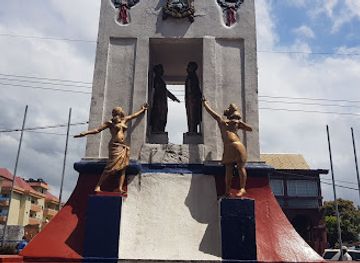
Joseph J. Roberts Monument
Explore the Joseph J. Roberts Monument, a pivotal historical landmark in Monrovia honoring Liberia's first president and showcasing the nation's rich heritage.


Explore Cape Mount on the map
Plan your trip on one map. See where the top attractions, landmarks, restaurants and hotels are, and book hotels and experiences in a few clicks.
Best hotels in Cape Mount
Best restaurants in Cape Mount
Dining in Cape Mount is concentrated in Robertsport and around accommodation providers rather than in a developed restaurant district. Visitors are most likely to encounter simple local meals based on rice, cassava, plantain, vegetables, beans, chicken and fish, with fresh or smoked seafood reflecting the town’s coastal and lake-based livelihoods. Small eateries and informal food sellers may provide the most direct introduction to everyday Liberian cooking, while guesthouses can sometimes arrange meals when notified in advance. Options become scarcer beyond Robertsport, so travellers exploring Lake Piso or rural communities should carry water and suitable provisions rather than expect cafés or shops at every stop. Imported snacks and basic supplies are easier to obtain before travelling from Monrovia or another larger town, and payment is generally made in cash.
-
Restaurant
FuZion D'Afrique Restaurant
Discover the rich flavors of Liberia at FuZion D'Afrique Restaurant - where tradition meets modern dining in Monrovia.
-
Restaurant
Diana Restaurant
Discover authentic Liberian flavors at Diana Restaurant in Monrovia - where every meal is a celebration of culture.
-
Restaurant
Mashariki Restaurant
Discover authentic Liberian flavors at Mashariki Restaurant in Monrovia - where local cuisine meets warm hospitality.
-
Restaurant
The Cape Restaurant
Discover exquisite local cuisine at The Cape Restaurant in Central Monrovia – where every dish tells a story.


Best bars in Cape Mount
Cape Mount does not have a substantial nightclub or late-night entertainment scene. Evening life in Robertsport is generally low-key, centred on small local bars, guesthouse verandas, informal social gathering places and conversations with residents rather than organised nightlife. Music may be part of community celebrations or seasonal events, but performances and opening arrangements should never be assumed. Outside Robertsport, facilities are very limited and settlements become quiet after dark, particularly around the Lake Piso wetlands and rural roads. Visitors should arrange their return transport in daylight, follow accommodation advice and avoid treating beaches or isolated lakeside areas as evening venues. The most characteristic after-dark experience is the relaxed social atmosphere of a local base, not a commercial entertainment district.
-
Bar
Vibes Lounge &Grill
Experience the vibrant nightlife and flavors of Monrovia at Vibes Lounge & Grill, a top bar destination for tourists seeking local culture.
-
Pub
Shisha Cafe
Experience the vibrant culture of Monrovia at Shisha Cafe, where delicious food, flavorful shisha, and a lively atmosphere await.
-
Bar
LOGAN TOWN BROAD STREET
Discover the lively atmosphere of Logan Town Broad Street - a vibrant bar in New Kru Town, Liberia, perfect for nightlife and socializing.
-
Grill
Track Inn Bar And Restaurant
Experience the vibrant flavors of Liberia at Track Inn Bar And Restaurant in New Kru Town, where local cuisine meets a lively atmosphere.


Best nightclubs in Cape Mount
Cape Mount does not have a substantial nightclub or late-night entertainment scene. Evening life in Robertsport is generally low-key, centred on small local bars, guesthouse verandas, informal social gathering places and conversations with residents rather than organised nightlife. Music may be part of community celebrations or seasonal events, but performances and opening arrangements should never be assumed. Outside Robertsport, facilities are very limited and settlements become quiet after dark, particularly around the Lake Piso wetlands and rural roads. Visitors should arrange their return transport in daylight, follow accommodation advice and avoid treating beaches or isolated lakeside areas as evening venues. The most characteristic after-dark experience is the relaxed social atmosphere of a local base, not a commercial entertainment district.
-
Night club
Club Wanwosu
Discover the vibrant nightlife of Liberia at Club Wanwosu, where music, dancing, and unforgettable experiences await.
-
Night club
88 Night Club
Discover the electrifying nightlife of Dabwe Town at 88 Night Club, where music, dance, and entertainment create unforgettable experiences.
-
Night club
Summer Beach
Discover the lively nightlife at Summer Beach in Monrovia, where music, dancing, and unforgettable experiences await every visitor.
-
Night club
Creation Night Club
Dive into the vibrant nightlife at Creation Night Club in Chocolate City, Liberia, where music and dance create unforgettable experiences.


Best shops in Cape Mount
Shopping in Cape Mount is practical and small-scale, with most supplies found in Robertsport’s local shops, market stalls and informal trading areas rather than in dedicated tourist retail streets. Visitors may encounter locally produced food, fish, household goods, clothing and basic travel supplies, while crafts and regional products are best sought through respectful, direct contact with artisans or community sellers. The area’s Vai heritage and coastal livelihoods shape its cultural identity, but visitors should not assume that a permanent craft market or wide selection of packaged souvenirs exists. Stock up on specialist equipment, medicines, cash and many non-perishable goods before leaving Monrovia or another larger Liberian centre. Purchases should support local sellers without encouraging the removal of objects from cultural or natural sites.
-
Grocery store
Noah Saleh’s Liberian banana shop
Explore local flavors at Noah Saleh’s Liberian Banana Shop, your go-to destination for fresh bananas and authentic Liberian produce in Monrovia.
-
Electronics store
Brewerville VOA Electronic Store
Explore the latest in electronics at Brewerville VOA Electronic Store in Lou King, Liberia. A tech haven for all your gadget needs!
-
Store
Diallo Supermarket
Discover local flavors and everyday essentials at Diallo Supermarket in Bo, Liberia, a vibrant hub for shopping and cultural exchange.
-
Bakery
Up Town Bread Shop
Discover the heart of Liberian baking at Up Town Bread Shop, a charming bakery in Robertsport offering fresh bread and delightful pastries.


Get your free copy of our complete guide to Cape Mount, delivered straight to you.
Everything on this page, from attractions and restaurants to essentials and local phrases, in one PDF you can read offline, print or share.
Already have an account? Sign in
Your Cape Mount guide is ready.
We'll send it to · Not you? Sign out

Getting your guide ready…
We are putting together a fresh copy of the Cape Mount guide. This can take up to a minute.
This can take a few moments. If your browser asks, choose Allow so the download can start. You'll find the guide in your Downloads folder.
Nothing happened? Download it again
Sorry, the guide is taking longer than usual. Please try again in a minute, or get it by email instead.
Cape Mount essentials
Currency and Payment
Safety
Emergency Situations
Do's and Don'ts
Local Tips
From Eve
Local phrases worth knowing
You don't need to get them perfect. A few words go a long way, and locals appreciate the effort.
Basics
| English | Local | Say it |
|---|---|---|
| Hello | How dey? | [hao dey] |
| Goodbye | Ora na | [o-ra na] |
| Yes | Eh | [eh] |
| No | Naa | [naa] |
| Please/You're welcome | Ehn kaseh | [en ka-seh] |
| Thank you | Tenki | [ten-ki] |
| Excuse me/Sorry | Sorri | [so-ri] |
| How are you? | How yu dey? | [hao yu dey] |
| Fine. And you? | Ah dey. You? | [ah dey. yu] |
| Do you speak English? | Yu sabi tok Ingglish? | [yu sa-bi tok in-glish] |
| I don't understand | Ah no sabi | [ah no sa-bi] |
Eating & Drinking
| English | Local | Say it |
|---|---|---|
| I'd like to see the menu, please | Ah go lek see menu, ehn | [ah go lek si me-nu, en] |
| I don't eat meat | Ah no dey chop meat | [ah no dey chop meat] |
| Cheers! | Cheers! | [Cheers!] |
| I would like to pay, please | Ah go pay, ehn | [ah go pei, en] |
Emergencies
| English | Local | Say it |
|---|---|---|
| Help! | Help! | [help!] |
| Go away! | Go far way! | [go far way] |
| Call the Police! | Call Police! | [kal po-lis] |
| Call a doctor! | Call dokita! | [kal do-ki-ta] |
| I'm lost | Ah loss | [ah loss] |
| I'm ill | Ah sick | [ah sik] |
Shopping
| English | Local | Say it |
|---|---|---|
| I'd like to buy... | Ah go buy... | [ah go bai...] |
| I'm just looking | Ah jus di luk | [ah jus di luk] |
| How much is it? | How moch? | [hao moch] |
| That's too expensive | Da wan too moch | [da wan tu moch] |
| Can you lower the price? | Yu fit bring am down? | [yu fit bring am daun] |
Time & Numbers
| English | Local | Say it |
|---|---|---|
| What time is it? | Wetin time? | [we-tin time] |
| It's one o'clock | Na one time | [na wan time] |
| Half past (10) | Half past ten | [half past ten] |
| Morning | Mornin | [mor-nin] |
| Afternoon | Aftanun | [af-ta-nun] |
| Evening | Evenin | [e-ven-in] |
| Yesterday | Yestade | [yes-ta-de] |
| Today | Tiday | [ti-day] |
| Tomorrow | Tomoru | [to-mo-ru] |
| 1 | One | [wan] |
| 2 | Two | [tu] |
| 3 | Tiri | [ti-ri] |
| 4 | Fo | [fo] |
| 5 | Five | [faiv] |
| 6 | Six | [siks] |
| 7 | Seven | [se-ven] |
| 8 | Eight | [eit] |
| 9 | Nine | [nain] |
| 10 | Ten | [ten] |
Transport & Directions
| English | Local | Say it |
|---|---|---|
| Where's a/the...? | We deh... | [we deh] |
| What's the address? | Wetin addres? | [we-tin a-dres] |
| Can you show me (on the map)? | Yu fit show me? | [yu fit show mi] |
| When's the next (bus)? | Wen nex wan? | [wen neks wan] |
| A ticket (to ....) | One ticket (go ...) | [wan ti-ket (go ...)] |
History of Cape Mount
A Peninsula Shaped by Sea and Wetlands
Cape Mount’s physical setting has always influenced human life. The peninsula, Atlantic shoreline, lagoons and Lake Piso wetlands form a landscape of beaches, forest, tidal water and navigable channels rather than a heavily urbanised coast. Seasonal rainfall, river movement and coastal processes continue to shape access and settlement. Fishing, small-scale farming and trade developed around these environments, while the lake and adjoining wetlands provided food, transport routes and habitats for wildlife. The region’s history is therefore inseparable from its water systems and from the practical knowledge required to live along a changing tropical coast.
Vai Communities and Coastal Trade
The Vai are the principal historic community associated with the Cape Mount area, and Vai language and cultural traditions remain important to its identity. From the pre-colonial period, communities participated in regional exchange networks linking the coast and the interior of present-day Liberia and Sierra Leone. Coastal commerce later brought the area into wider Atlantic trading systems, with European merchants and shipping operating along the West African coast. These contacts brought new goods, religious influences and political pressures, but they did not replace the region’s established communities or local systems of authority.
Liberia’s Nineteenth-Century Settlement
Robertsport was established in the nineteenth century during Liberia’s period of settlement by formerly enslaved people and their descendants from the United States and the Caribbean. The town was named after Joseph Jenkins Roberts, Liberia’s first president, and became a centre of administration and commerce in Grand Cape Mount County. Its history reflects the interaction between Americo-Liberian institutions and older Vai communities in the surrounding region. The resulting cultural landscape is visible in the town’s colonial-era associations, Christian institutions, local languages and continuing links between coastal settlements and the rural hinterland.
Borders, Administration and Regional Connections
Cape Mount’s position beside Sierra Leone has made the area a borderland as well as a coastal destination. Movement between communities, markets and families has long crossed the modern international boundary, even as administrations and customs controls formalised it. Grand Cape Mount County developed as one of Liberia’s north-western administrative regions, with Robertsport serving as its principal town. Roads, river crossings and coastal routes have remained important to local trade, but limited infrastructure has also kept many settlements relatively remote and shaped the slow development of tourism.
Wetland Conservation and Emerging Tourism
Modern interest in Cape Mount increasingly centres on the ecological importance of Lake Piso and its surrounding wetlands, which are recognised internationally as a Ramsar wetland of importance. Conservation work must balance habitat protection with fishing, farming, transport and other customary uses on which local communities depend. Robertsport has also gained recognition among surfers and independent travellers because of its Atlantic waves and beaches. Tourism remains modest, and the area’s future depends on improving access and services without weakening the coastal, forest and wetland environments that define Cape Mount.
Cape Mount in Photos
Browse through our photo collection highlighting the charm and character of the destination.
Cities in Cape Mount
The towns and cities of Cape Mount, and the easiest places to base yourself.
-

-


Swipe for more cities
Neighbouring destination travel guides
The closest destinations to Cape Mount, if you have time for more than one.
-

-

-
-

-


Swipe for more destinations
Explore more

Explore more of Grand Cape Mount County
Grand Cape Mount County combines Robertsport’s surf beaches, Lake Piso wetlands, Vai heritage and Liberia’s Atlantic frontier landscapes.
Explore Grand Cape Mount County
Explore more of Liberia
Discover Liberia: where pristine beaches meet lush rainforests, and vibrant culture blends with rich history in the heart of West Africa.
Explore Liberia