

Lake Piso Travel Guide - Free Web & App
Your ultimate guide to Lake Piso. Discover top landmarks, proposed trips, and local tips. Free on the web or via the Evendo companion app.


Lake Piso, Liberia’s largest lake, offers mangroves, wetlands, islands, fishing villages, Robertsport heritage and quiet coastal nature experiences.
A Broad Coastal Lagoon
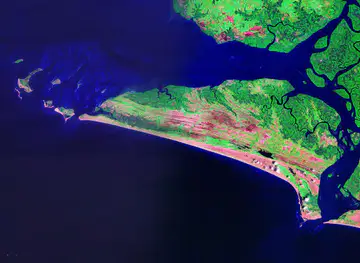
Lake Piso, also known as Piso Lake, is Liberia’s largest lake: a wide coastal lagoon in Grand Cape Mount County, close to the Atlantic Ocean and the town of Robertsport. Its waters spread through an intricate landscape of sandy shores, mangroves, wetlands, forested edges and low-lying islands, with the open sea influencing the lagoon’s ecology and local livelihoods. The surrounding area forms part of the Lake Piso Multiple Use Reserve, a protected landscape whose value lies in the relationship between water, forest, wildlife and human settlement.Read more about Lake Piso
Communities and Coastal Heritage
Wildlife and Slow Exploration
When is the best time to visit Lake Piso?
Best: February–March, December · 32–33°C| Month | High (°C) | Rainfall (mm) |
|---|---|---|
| January | 32 | 75 |
| February (best) | 32 | 65 |
| March (best) | 33 | 65 |
| April | 33 | 85 |
| May | 33 | 125 |
| June | 33 | 175 |
| July | 32 | 225 |
| August | 32 | 225 |
| September | 32 | 175 |
| October | 32 | 125 |
| November | 32 | 85 |
| December (best) | 32 | 75 |
Getting to and around Lake Piso
How to get there
Transportation
Best landmarks in Lake Piso
Lake Piso is the defining natural landmark: Liberia’s largest lake and a broad coastal lagoon whose ecological character comes from its connection with the Atlantic environment. Its mangrove-lined margins, wetland channels, sandy shores and forested backdrop create a distinctive landscape rather than a single monumental viewpoint. The nearby Atlantic coastline forms a contrasting landmark system of open surf beaches and exposed ocean horizons, particularly around Robertsport. Robertsport itself is the principal historic settlement and is associated with Liberia’s nineteenth-century settler history and the country’s first president, Joseph Jenkins Roberts, after whom it was named. The wider Lake Piso Multiple Use Reserve is significant as a protected landscape where conservation and local livelihoods meet. Fishing settlements, boats and working shorelines are cultural landmarks in their own right, illustrating the continuing relationship between communities and the lake, although they should be approached respectfully and with permission.
-
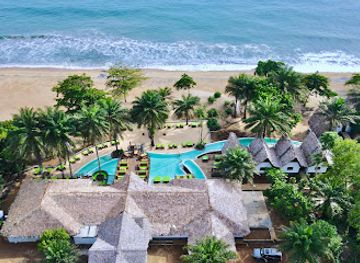
 Hotel
HotelNana's Lodge
Discover tranquility at Nana's Lodge in Robertsport, Liberia - the perfect blend of relaxation, local culture, and stunning ocean views.
-
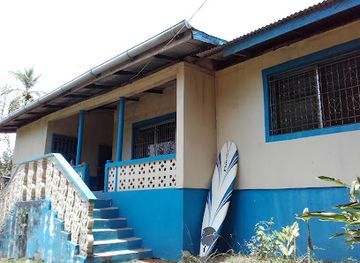
Bed & breakfast
Warkolor Jungle Lodge & Reserve
Discover the tranquil beauty of Warkolor Jungle Lodge & Reserve, a serene escape immersed in the lush landscapes of Liberia's jungles.
-
Hotel
Kwepunha Retreat
Discover the natural beauty and tranquility of Kwepunha Retreat, your perfect escape in Robertsport, Liberia.
Explore Lake Piso on the map
Plan your trip on one map. See where the top attractions, landmarks, restaurants and hotels are, and book hotels and experiences in a few clicks.
Best hotels in Lake Piso
Best nightclubs in Lake Piso
Lake Piso is not a nightlife destination, and there is no established concentration of nightclubs or late-night entertainment around the lake. Robertsport offers the most likely setting for a quiet evening in a guesthouse, small local bar or community gathering, with conversation and local hospitality more characteristic than organised nightlife. Evening activity may also centre on music, family occasions or seasonal events, but availability is not predictable and should not be treated as a scheduled tourist programme. Away from Robertsport, settlements are small and facilities sparse, while the lake and surrounding wetlands require particular care after dark because transport, lighting and communications are limited. Visitors should follow local advice, avoid isolated shoreline travel at night and keep evening plans close to their accommodation or host community.
-
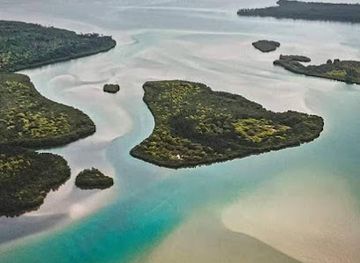
Lake
Lake Piso
Experience the serene beauty of Lake Piso in Liberia, a perfect blend of nature and adventure for every traveler.
Best shops in Lake Piso
Shopping opportunities near Lake Piso are limited and are centred on Robertsport and local markets rather than dedicated visitor retail areas. Small shops and market stalls may provide everyday food, household necessities and locally available produce, while fish and agricultural goods reflect the livelihoods of communities around the lagoon and coast. Visitors may find locally made items or crafts through informal community networks, but availability is variable and there is no reliable basis for promising a permanent craft market or extensive range of souvenirs. Larger or specialised purchases are better made before leaving Monrovia or another major Liberian town. When buying locally, ask permission before photographing products or makers, negotiate respectfully where appropriate, and avoid purchasing wildlife products, archaeological material, protected plants or anything collected from the lake and reserve.
-
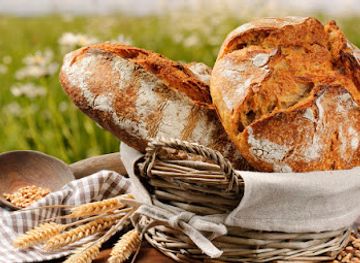
Bakery
Up Town Bread Shop
Experience the best of Liberian pastries and baked goods at Up Town Bread Shop in Robertsport, where every flavor tells a story.
Get your free copy of our complete guide to Lake Piso, delivered straight to you.
Everything on this page, from attractions and restaurants to essentials and local phrases, in one PDF you can read offline, print or share.
Already have an account? Sign in
Your Lake Piso guide is ready.
We'll send it to · Not you? Sign out

Getting your guide ready…
We are putting together a fresh copy of the Lake Piso guide. This can take up to a minute.
This can take a few moments. If your browser asks, choose Allow so the download can start. You'll find the guide in your Downloads folder.
Nothing happened? Download it again
Sorry, the guide is taking longer than usual. Please try again in a minute, or get it by email instead.
Lake Piso essentials
Currency and Payment
Safety
Emergency Situations
Do's and Don'ts
Local Tips
From Eve
Local phrases worth knowing
You don't need to get them perfect. A few words go a long way, and locals appreciate the effort.
Basics
| English | Local | Say it |
|---|---|---|
| Hello | Sua | [swah] |
| Goodbye | Taa taa | [tah-tah] |
| Yes | Ee | [ay] |
| No | Nay | [nigh] |
| Please/You're welcome | Yah sah | [yah sah] |
| Thank you | Tenki | [ten-kee] |
| Excuse me/Sorry | Sorri | [sore-ree] |
| How are you? | How dey? | [how day] |
| Fine. And you? | Fine. You dey? | [feen. yoo day] |
| Do you speak English? | Yu sabi talk English? | [yoo sah-bee talk English] |
| I don't understand | Mi no sabi | [mee no sah-bee] |
Eating & Drinking
| English | Local | Say it |
|---|---|---|
| I'd like to see the menu, please | Mi will see menu, abeg | [mee will see menu, ah-beg] |
| I don't eat meat | Mi no leat meat | [mee no leet meat] |
| Cheers! | Cheers! | [cheers] |
| I would like to pay, please | Mi want pay, abeg | [mee want pay, ah-beg] |
Emergencies
| English | Local | Say it |
|---|---|---|
| Help! | Ehlp! | [ehlp] |
| Go away! | Go lef! | [go left] |
| Call the Police! | Call polis! | [call poh-lees] |
| Call a doctor! | Call dokita! | [call doh-kee-tah] |
| I'm lost | Mi lost | [mee lost] |
| I'm ill | Mi sick | [mee sick] |
Shopping
| English | Local | Say it |
|---|---|---|
| I'd like to buy... | Mi want buy... | [mee want buy] |
| I'm just looking | Mi just dey look | [mee just day look] |
| How much is it? | How much e cost? | [how much eh cost] |
| That's too expensive | Da one too cost | [dah one too cost] |
| Can you lower the price? | Yu fit reduce di price? | [yoo fit ree-duce dee price] |
Time & Numbers
| English | Local | Say it |
|---|---|---|
| What time is it? | Wetin time e be? | [weh-teen time eh beh] |
| It's one o'clock | E don reach one | [eh don reh-ch one] |
| Half past (10) | Half ten | [hah-f ten] |
| Morning | Mornin | [morn-in] |
| Afternoon | Aftanun | [af-tah-noon] |
| Evening | Evenin | [ee-ven-in] |
| Yesterday | Yestade | [yest-ah-day] |
| Today | Tideh | [tee-deh] |
| Tomorrow | Tamara | [tah-mah-rah] |
| 1 | One | [wun] |
| 2 | Tu | [too] |
| 3 | Tri | [tree] |
| 4 | Fo | [foh] |
| 5 | Fayv | [fayv] |
| 6 | Siks | [siks] |
| 7 | Seven | [seh-ven] |
| 8 | Eit | [ate] |
| 9 | Nain | [nine] |
| 10 | Ten | [ten] |
Transport & Directions
| English | Local | Say it |
|---|---|---|
| Where's a/the...? | Wey de...? | [way day] |
| What's the address? | Wetin di adress bi? | [weh-teen dee address bee] |
| Can you show me (on the map)? | Yu fit show me (for map)? | [yoo fit show me (for map)] |
| When's the next (bus)? | Wetin time di nex wan dey come? | [weh-teen time dee nehks wahn dey come] |
| A ticket (to ....) | Ticket (go...) | [ticket (goh)] |
History of Lake Piso
A Lagoon Shaped by Coast and Water
Lake Piso is a coastal lagoon rather than an inland freshwater lake in the conventional sense. Its broad waters lie close to the Atlantic coast, and the surrounding channels, wetlands, sandy shorelines and mangroves reflect the continuing interaction of river drainage, coastal sands, rainfall and seasonal water movement. This physical setting has shaped the area’s human history as much as its ecology: the lake provides sheltered water and wetland resources, while the nearby ocean connects the region with wider coastal routes.
Vai Communities and Lakeside Livelihoods
The Lake Piso region lies within the cultural landscape of the Vai people, whose communities have long occupied the coastal and forested country of north-western Liberia and neighbouring Sierra Leone. Fishing, farming, gathering and local exchange developed around the resources of the lagoon, surrounding forests and Atlantic coast. The Vai writing tradition, developed in the nineteenth century, is an important expression of the region’s cultural history, although Lake Piso itself should not be treated as a single historic settlement or monument. Many aspects of local heritage remain connected to living communities rather than preserved in formal visitor sites.
Robertsport and Liberia’s Coastal History
Robertsport, the principal settlement near Lake Piso, was established in the nineteenth century by settlers associated with Liberia’s colonisation and named for Joseph Jenkins Roberts, the country’s first president. Its location between the lagoon and the Atlantic gave it importance as a coastal settlement and administrative centre. The town’s history belongs to the wider story of Liberia, including the interaction between indigenous societies, settlers, commerce and the sea. Today, its proximity to both Lake Piso and the Atlantic makes it the clearest gateway for visitors exploring the area.
Protection and Contemporary Conservation
The modern history of Lake Piso has increasingly focused on conserving its connected habitats while recognising the needs of communities that depend on fishing, farming and forest resources. The Lake Piso Multiple Use Reserve reflects this approach, linking environmental protection with continued local use rather than excluding people from the landscape. Conservation work in such a large coastal wetland is shaped by practical issues including access, livelihoods, habitat pressure and limited infrastructure. The area’s significance is therefore both ecological and social: its future depends on maintaining the lagoon, wetlands, forest margins and community relationships that give the lake its identity.
Lake Piso in Photos
Browse through our photo collection highlighting the charm and character of the destination.
Neighbouring destination travel guides
The closest destinations to Lake Piso, if you have time for more than one.
-

-

-
-

-


Swipe for more destinations
Explore more

Explore more of Bomi County
Explore Bomi County in Liberia for former iron-ore landscapes, Tubmanburg, forested countryside, local markets and a grounded rural journey.
Explore Bomi County
Explore more of Liberia
Discover Liberia: where pristine beaches meet lush rainforests, and vibrant culture blends with rich history in the heart of West Africa.
Explore Liberia