

Free Eschen Travel Guide & Mobile App
Plan your Eschen trip with Evendo. Get free guides to top attractions, restaurants, hotels, and bars. Web access or download the mobile app.


Eschen, Liechtenstein, offers village heritage, Roman archaeology, Eschnerberg walks and Alpine Valley views near Vaduz, Feldkirch and Switzerland.
Village Setting and Character
Eschen lies in northern Liechtenstein on the broad Rhine Valley plain, where the low wooded slopes of the Eschnerberg rise above fields, villages and the international landscape of the Alpine Rhine. Together with the neighbouring settlement of Nendeln, it forms one of the principality’s larger municipalities, though its atmosphere remains distinctly local rather than urban. Roads, footpaths and residential streets connect the village with farmland, wooded ridges and nearby communities, while the Swiss and Austrian borders are only a short distance away.Read more about Eschen
Heritage on the Eschnerberg
Walking, Views and Local Life
When is the best time to visit Eschen?
Best: June–August · 24–26°C| Month | High (°C) | Rainfall (mm) |
|---|---|---|
| January | 5 | 45 |
| February | 6 | 40 |
| March | 8 | 50 |
| April | 13 | 60 |
| May | 20 | 80 |
| June (best) | 24 | 90 |
| July (best) | 26 | 100 |
| August (best) | 26 | 90 |
| September | 21 | 80 |
| October | 16 | 70 |
| November | 9 | 60 |
| December | 4 | 50 |
Getting to and around Eschen
How to get there
Transportation
Best attractions in Eschen
Eschen’s attractions are modest in scale but rewarding for visitors interested in settlement history and Alpine village landscapes. The parish church of St Martin gives the centre a clear historic focus, while the Pfrundbauten preserve a group of former ecclesiastical buildings now connected with local cultural life. In Nendeln, Roman archaeological remains provide evidence of occupation during the classical period and add depth to a walk through the municipality. The Eschnerberg is the principal outdoor attraction: wooded paths and open tracks cross the ridge, revealing views over the Rhine Valley towards Switzerland, Austria and the Alps. Village routes linking Eschen and Nendeln combine ordinary residential life with older farm buildings, churches and archaeological references. Visitors seeking larger museums, national institutions or a more concentrated sightseeing programme can reach Vaduz and Schaan by public transport, while Feldkirch across the Austrian border offers a historic urban complement to Eschen’s quieter rural setting.
-
Tourist attraction
MuseumMura
Explore the captivating stories and artifacts of Schaanwald's heritage at MuseumMura, a must-visit local history museum.
6 min drive · 1.9 km from city centre
-
Tourist attraction
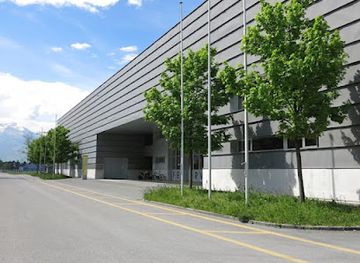
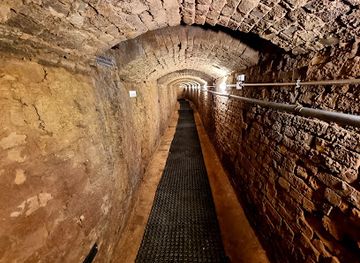
Ziegelei und Hoffmann'scher Ringofen
Explore a preserved 19th-century brick factory in Nendeln and discover Liechtenstein's industrial heritage at the Ziegelei und Hoffmann'scher Ringofen.
6 min drive · 2.1 km from city centre
Best landmarks in Eschen
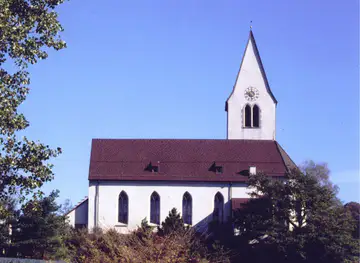
The parish church of St Martin is Eschen’s principal religious landmark and an important expression of the municipality’s longstanding parish identity. Nearby, the Pfrundbauten form a notable group of historic former church-related buildings whose survival helps reveal the older structure of the village centre. In Nendeln, the Roman archaeological site stands as a material reminder that the Rhine Valley was connected to Roman routes and settlement networks long before the modern principality existed. The Eschnerberg itself is also a defining geographical landmark: its wooded ridge separates the elevated settlements from the broad valley floor and provides the setting for historic routes and viewpoints. These places do not form a monumental urban ensemble like a capital’s old town; their significance lies in how religious, archaeological and landscape landmarks explain Eschen’s development within Liechtenstein.
-
Animal park
Vogelparadies Birka
Explore the vibrant world of birds at Vogelparadies Birka, Liechtenstein's enchanting animal park, perfect for families and nature lovers alike.
7 min drive · 2.2 km from city centre
-
Museum
Bäuerliches Wohnmuseum
Explore Liechtenstein's agricultural heritage at Bäuerliches Wohnmuseum in Schellenberg, showcasing the region's rich rural traditions and history.
9 min drive · 3.1 km from city centre
-
Historical landmark
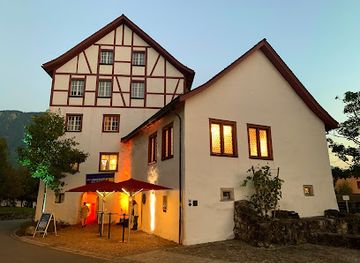
Pfrundbauten
Discover the architectural beauty and historical significance of Pfrundbauten, an iconic landmark in Eschen, Liechtenstein, perfect for cultural exploration.
3 min walk · 0.2 km from city centre
-
Monument
Russian Monument
Experience the rich history and serene beauty of the Russian Monument in Schellenberg, a tribute to courage and sacrifice surrounded by stunning landscapes.
14 min drive · 4.5 km from city centre



Explore Eschen on the map
Plan your Eschen trip on one map. See where the top attractions, landmarks, restaurants, bars and hotels are, find what's near where you're staying, and book hotels and experiences in a few clicks.
Best hotels in Eschen
Best restaurants in Eschen
Dining in Eschen reflects Liechtenstein’s position between Swiss and Austrian culinary traditions, with hearty Alpine cooking, bakery fare and seasonal ingredients appearing alongside broadly European menus. Visitors may encounter dishes associated with the region such as käsknöpfle, small cheese-coated dumplings, as well as rösti, soups, sausages and dishes based on local or nearby farm produce. Restaurants and cafés tend to serve village communities as well as visitors, so the atmosphere is generally relaxed and informal rather than centred on a large tourist restaurant quarter. Nendeln and neighbouring municipalities add further choices, while Vaduz and Schaan offer a wider range of contemporary restaurants. Wine from Liechtenstein’s small vineyards may appear on local lists, and cafés provide useful stops between walks on the Eschnerberg. Reservations can be sensible for popular evening dining, particularly when local events are taking place.
-
Fast Food
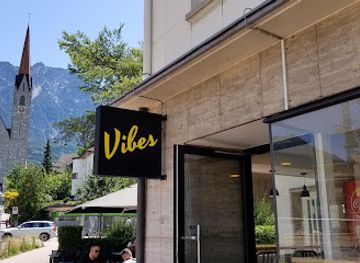
Restaurant Vibes
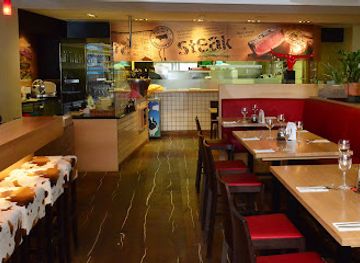
Discover delicious fast food with a unique twist at Restaurant Vibes in Schaan – where quality meets flavor!
15 min drive · 4.9 km from city centre
-
Barbecue
PUR - Restaurant & Bar
Discover gourmet barbecue delights at PUR - Restaurant & Bar in Schaan, where culinary excellence meets vibrant social energy.
15 min drive · 5.0 km from city centre
-
Restaurant
Wirtschaft zum Löwen
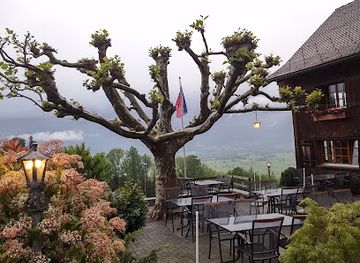
Discover exceptional cuisine at Wirtschaft zum Löwen, where traditional flavors meet modern culinary artistry in beautiful Schellenberg.
14 min drive · 4.5 km from city centre
-
Italian
Kokon
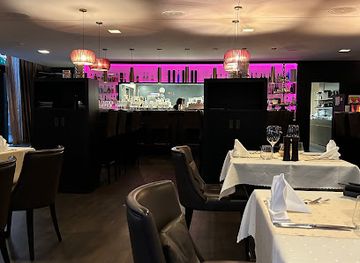
Savor authentic Italian cuisine at Kokon in Ruggell - where every meal is a celebration of flavor and tradition.
13 min drive · 4.3 km from city centre
Best bars in Eschen
Eschen has a restrained evening scene shaped by its residential character rather than by a concentration of nightclubs. Evenings are more likely to involve a restaurant, café, local bar or community event than a late-night entertainment district, and activity is spread through the municipality and nearby villages. Visitors seeking a broader selection of bars, cultural events and live performances can travel to Vaduz or Schaan, while Feldkirch offers a larger Austrian evening scene within the wider region. Liechtenstein’s small scale means that local festivals, concerts and village events can be more significant socially than permanent club venues. Public transport becomes less frequent later in the day, so checking the return connection or arranging a taxi is sensible when spending the evening outside Eschen. Quiet behaviour is appropriate in residential areas after dark.
-
Restaurant
Fago by meier
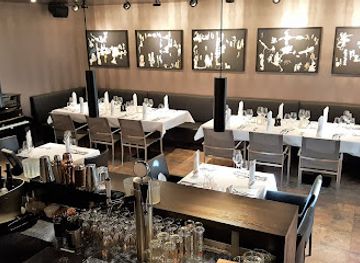
Experience the culinary artistry of Fago by Meier, where local ingredients meet international flavors in an unforgettable dining atmosphere.
1 min walk · 0.1 km from city centre
-
Bar
Black Pearl Bar
Discover the Black Pearl Bar in Schaan, where vibrant cocktails meet a lively atmosphere, perfect for unwinding after a day of exploring.
15 min drive · 4.9 km from city centre
-
Bar
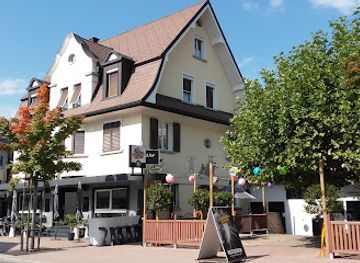
St. Martins Pub am Platz
Discover the lively atmosphere and authentic Irish hospitality at St. Martins Pub am Platz in Eschen, the perfect spot to unwind and socialize.
3 min walk · 0.3 km from city centre
-
Restaurant
ESSwerk
Discover the culinary treasures of Liechtenstein at ESSwerk, a restaurant in Eschen offering a delightful blend of local flavors and modern dining.
13 min walk · 1.0 km from city centre
Best nightclubs in Eschen
Eschen has a restrained evening scene shaped by its residential character rather than by a concentration of nightclubs. Evenings are more likely to involve a restaurant, café, local bar or community event than a late-night entertainment district, and activity is spread through the municipality and nearby villages. Visitors seeking a broader selection of bars, cultural events and live performances can travel to Vaduz or Schaan, while Feldkirch offers a larger Austrian evening scene within the wider region. Liechtenstein’s small scale means that local festivals, concerts and village events can be more significant socially than permanent club venues. Public transport becomes less frequent later in the day, so checking the return connection or arranging a taxi is sensible when spending the evening outside Eschen. Quiet behaviour is appropriate in residential areas after dark.
-
Bar
Black Pearl Bar
Unwind in Schaan’s vibrant Black Pearl Bar, where expertly crafted cocktails and a lively atmosphere await every visitor.
15 min drive · 4.9 km from city centre
-
Bar
St. Martins Pub am Platz
Discover St. Martins Pub am Platz, a vibrant Irish pub in Eschen offering hearty cuisine, a lively atmosphere, and an extensive drink menu.
3 min walk · 0.3 km from city centre
-
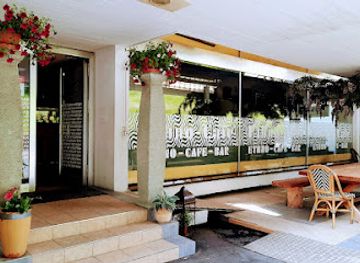
Bar tabac
Ethno Cafe Bar
Discover the Ethno Cafe Bar in Schaanwald - a vibrant cultural hub blending global flavors with a cozy atmosphere for an unforgettable experience.
9 min drive · 3.0 km from city centre
-
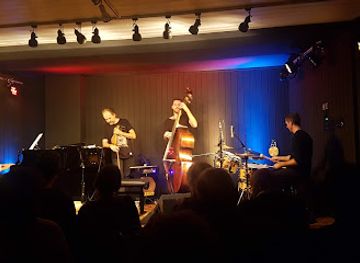
Live Music
Tangente Jazz+ Eschen
Discover the heart of jazz in Eschen at Tangente Jazz+, a cozy venue showcasing exceptional local and international talents in an intimate setting.
2 min walk · 0.2 km from city centre

Best shops in Eschen
Shopping in Eschen is primarily local and practical, with supermarkets, small businesses and everyday services rather than a large concentration of specialist retail. The village setting suits visitors looking for provisions for a walk, regional food products or small locally sourced gifts, while traditional Liechtenstein crafts and foodstuffs can be sought through shops and markets across the principality. Nendeln and neighbouring communities add further everyday retail, but shoppers seeking a wider selection of boutiques, galleries and internationally familiar brands will generally find more choice in Vaduz, Schaan or nearby Feldkirch. Swiss francs are the normal currency, and small independent businesses may have more limited opening patterns than large shopping centres. Farm produce, local wine and Alpine food specialities can provide more distinctive souvenirs than generic tourist merchandise, particularly when purchased from reputable local sellers.
-
Gas station
Coop Pronto Shop mit Tankstelle Eschen FL
Discover convenience and quality at Coop Pronto Shop mit Tankstelle in Eschen, your essential stop for fuel and groceries in beautiful Liechtenstein.
6 min walk · 0.5 km from city centre
-
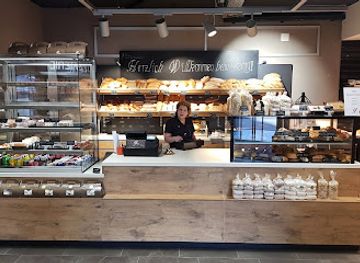
Bakery
Georg Brot & Kaffee
Experience the heart of Eschen at Georg Brot & Kaffee, where artisanal bakery meets cozy coffee culture in a delightful setting.
3 min walk · 0.2 km from city centre
-
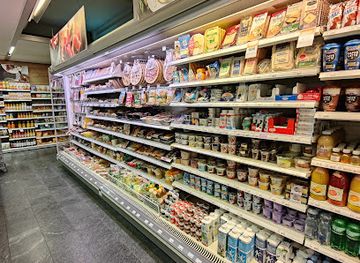
Discount supermarket
Denner Partner
Explore Denner Partner in Eschen, where great quality meets unbeatable prices at your favorite discount supermarket.
3 min walk · 0.3 km from city centre
-
Restaurant
Mündle Bäckerei Konditorei AG
Explore the delightful flavors of Mündle Bäckerei Konditorei AG in Eschen, where traditional baking meets cozy café vibes.
1 min walk · 0.1 km from city centre
Get your free copy of our complete guide to Eschen, delivered straight to you.
Everything on this page, from attractions and restaurants to essentials and local phrases, in one PDF you can read offline, print or share.
Already have an account? Sign in
Your Eschen guide is ready.
We'll send it to · Not you? Sign out

Getting your guide ready…
We are putting together a fresh copy of the Eschen guide. This can take up to a minute.
This can take a few moments. If your browser asks, choose Allow so the download can start. You'll find the guide in your Downloads folder.
Nothing happened? Download it again
Sorry, the guide is taking longer than usual. Please try again in a minute, or get it by email instead.
Eschen essentials
Currency and Payment
Safety
Emergency Situations
Do's and Don'ts
Local Tips
From Eve
Local phrases worth knowing
You don't need to get them perfect. A few words go a long way, and locals appreciate the effort.
Basics
| English | Local | Say it |
|---|---|---|
| Hello | Hallo | [ha-lo] |
| Goodbye | Adieu | [a-dju] |
| Yes | Ja | [ya] |
| No | Nein | [nine] |
| Please/You're welcome | Bitte | [bit-te] |
| Thank you | Danke | [dan-ke] |
| Excuse me/Sorry | Entschuldigung | [ent-shul-di-gung] |
| How are you? | Wie geht es dir? | [vee geyt es deer] |
| Fine. And you? | Guet. Und dir? | [gweet. oond deer] |
| Do you speak English? | Sprechscht du Englisch? | [shpreksht doo eng-lish] |
| I don't understand | I verstoh nid | [ee fer-shtoh need] |
Eating & Drinking
| English | Local | Say it |
|---|---|---|
| I'd like to see the menu, please | Ich möcht gern d'Menükarte luege, bitte | [eech merkt gern de-men-oo-kar-te loo-ge bit-te] |
| I don't eat meat | Ich esse kein Fleisch | [eech ess-eh kine fli-sh] |
| Cheers! | Prost! | [prohst] |
| I would like to pay, please | Ich möchte bitte zahle | [eech merkhteh bit-te tsah-leh] |
Emergencies
| English | Local | Say it |
|---|---|---|
| Help! | Hilf! | [helf] |
| Go away! | Geh weg! | [geh vehg] |
| Call the Police! | Ruef die Polizei! | [roof dee poh-lee-tsey] |
| Call a doctor! | Ruef en Arzt! | [roof en ahr-tst] |
| I'm lost | Ig bini verlore | [ee-g bee-nee fair-lo-reh] |
| I'm ill | Ig bin krank | [ee-g been krahnk] |
Shopping
| English | Local | Say it |
|---|---|---|
| I'd like to buy... | Ich möchte kaufen... | [eech merkteh kow-fen] |
| I'm just looking | Ig cha nur luege | [ee-g kha noor loo-ge] |
| How much is it? | Was koscht das? | [vahs kohsht dahs] |
| That's too expensive | Das ist zu teuer | [dahs ist tsoo toy-er] |
| Can you lower the price? | Chasch du de Priis reduziere? | [khasch doo deh prees reh-doo-tsee-reh] |
Time & Numbers
| English | Local | Say it |
|---|---|---|
| What time is it? | Wieviel Uhr ist es? | [vee-fee-el oor ist es] |
| It's one o'clock | Es ist ein Uhr | [es ist iyn oor] |
| Half past (10) | Halb (10) | [hahlp (tsen)] |
| Morning | Morga | [mohr-gah] |
| Afternoon | Nomitag | [no-mee-tahg] |
| Evening | Obig | [oh-bi-g] |
| Yesterday | Gestern | [geh-shtern] |
| Today | Hüt | [hoot] |
| Tomorrow | Morn | [morn] |
| 1 | Eis | [ice] |
| 2 | Zwei | [tzvey] |
| 3 | Drei | [dry] |
| 4 | Vier | [feer] |
| 5 | Fünf | [foonf] |
| 6 | Sech | [zehk] |
| 7 | Siebe | [zee-beh] |
| 8 | Acht | [ahkht] |
| 9 | Nüün | [noo-uhn] |
| 10 | Zäh | [tsaeh] |
Transport & Directions
| English | Local | Say it |
|---|---|---|
| Where's a/the...? | Wo isch...? | [voh ish] |
| What's the address? | Was isch d'Adresse? | [vahs ish de-ah-dres-seh] |
| Can you show me (on the map)? | Chasch mir das zeige (uf em Plan)? | [khasch meer dahs tsigh-eh oof em plahn] |
| When's the next (bus)? | Wänn chunt de nächschti (Bus)? | [vehnn khunt de nehkh-shtee boos] |
| A ticket (to ....) | E Billett (nach ...) | [eh bill-ett nahkh] |
History of Eschen
Prehistoric Settlement on the Ridge
The Eschnerberg was attractive to early communities because its elevated position offered well-drained ground above the Rhine Valley and access to routes crossing the region. Archaeological work has identified prehistoric settlement sites on the ridge, including remains associated with the wider Alpine cultural landscape. These discoveries place Eschen within a long history of human movement between the Rhine, Lake Constance and the mountain passes farther south. The raised terrain also helped protect settlements from the seasonal conditions of the valley floor. Although little of the earliest built environment survives above ground, the archaeological record gives the locality a significance far older than its present village streets.
Roman Routes and Nendeln
During the Roman period, the Rhine Valley formed part of a network linking settlements and transport routes across the Alpine foothills. Nendeln preserves evidence of Roman occupation, including the remains of a Roman estate complex. Such a site reflects both agricultural production and the movement of people and goods through the region, rather than an isolated outpost. Roman influence later became part of the historical foundation on which medieval communities developed. The archaeological remains in Nendeln are therefore important not only for the municipality but also for understanding Liechtenstein’s place between the Roman world, the Alpine interior and the routes leading towards present-day Switzerland and Austria.
Medieval Parish Community
Eschen emerged as a settled medieval parish community within the political and ecclesiastical structures of the Rhine Valley. Its parish church, dedicated to St Martin, became a central spiritual and social landmark, while agricultural land and village institutions shaped daily life. The settlement’s position on the Eschnerberg connected it with neighbouring communities and regional routes. Medieval society here was influenced by local landholding, church administration and the changing authority of regional lords. The surviving historic buildings in and around the centre, including the Pfrundbauten, offer material reminders of that period, even though the village has since expanded far beyond its older ecclesiastical core.
From Lordship to Liechtenstein
The lands that now form Liechtenstein passed through several regional lordships before the House of Liechtenstein acquired Vaduz and Schellenberg in the early eighteenth century. In 1719, Emperor Charles VI created the Imperial Principality of Liechtenstein by joining those territories, giving the princely house a place in the imperial political order. Eschen belonged to the territory of Schellenberg and consequently became part of the new principality. This change did not remove the village’s agricultural character, but it placed local administration and parish life within a political framework that ultimately developed into the modern state of Liechtenstein.
Modernisation and Municipal Growth
The nineteenth and twentieth centuries brought major changes to Eschen and Nendeln. Improved roads, industrial development and closer economic connections with Switzerland and Austria gradually reduced the dominance of subsistence agriculture. Nendeln became associated with transport and manufacturing, while Eschen developed as a residential and service centre within the expanding Rhine Valley economy. After the Second World War, Liechtenstein’s industrial growth and rising prosperity accelerated building, population growth and infrastructure improvements. Modern Eschen therefore combines a settled village landscape with contemporary housing, businesses and public facilities, while the church, archaeological sites and historic structures preserve links with earlier phases of local history.
Travel experiences inspired by this city


Swipe for more travel diaries
Eschen in Photos
Browse through our photo collection highlighting the charm and character of the destination.
Cities near Eschen
The closest cities to Eschen, if you have time for more than one stop.
-
-

-

-

-


Swipe for more cities
Explore more

Explore more of Liechtenstein
Discover the charm of Liechtenstein, a tiny Alpine principality offering medieval castles, stunning hiking trails, and a rich cultural heritage in the heart of Europe.
Explore Liechtenstein