

Free Vianden Travel Guide & Mobile App
Plan your Vianden trip with Evendo. Get free guides to top attractions, restaurants, hotels, and bars. Web access or download the mobile app.


Vianden, Luxembourg, pairs a medieval castle and Gothic churches with the Our Valley’s wooded hills, museums, walks and distinctive local culture.
Castle and River Valley
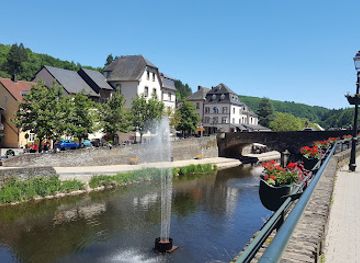
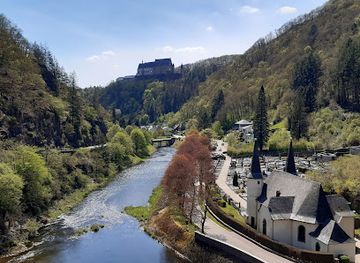
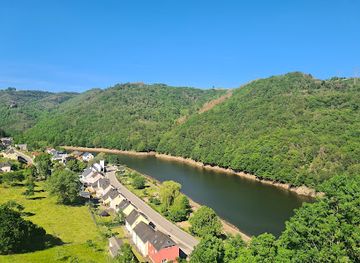
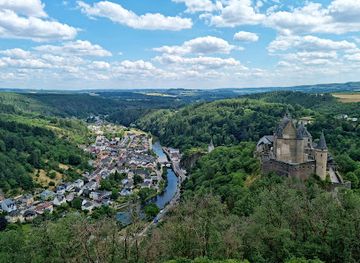
Vianden is a small historic town in north-eastern Luxembourg, dramatically set in a narrow valley along the River Our near the German border. Its defining sight is Vianden Castle, a vast medieval fortress rebuilt in the late nineteenth century and rising above a compact town of slate-roofed houses, stone lanes and steep wooded slopes. The castle's towers and curtain walls give the surrounding landscape a distinctly medieval profile, while the river and hills create a setting suited to walking and quiet exploration.Read more about Vianden
Historic Streets and Cultural Memory
Life in the Our Valley
When is the best time to visit Vianden?
Best: April–May, September · 19–25°C| Month | High (°C) | Rainfall (mm) |
|---|---|---|
| January | 5 | 50 |
| February | 7 | 40 |
| March | 12 | 40 |
| April (best) | 19 | 40 |
| May (best) | 24 | 60 |
| June | 29 | 80 |
| July | 30 | 90 |
| August | 29 | 80 |
| September (best) | 25 | 70 |
| October | 17 | 60 |
| November | 9 | 50 |
| December | 6 | 50 |
Getting to and around Vianden
How to get there
Transportation
Best attractions in Vianden
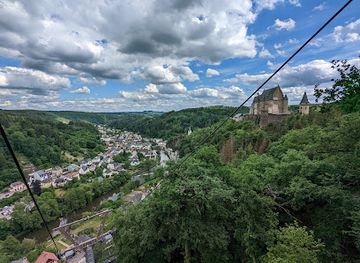
Vianden's principal attraction is its restored medieval castle, whose towers, courtyards and grand interiors provide a detailed view of aristocratic life above the Our Valley. In the old town, the Victor Hugo House explores the French writer's stays in Vianden through documents, rooms and literary interpretation, while the Trinitarian Church offers a quieter encounter with the town's religious heritage. The chairlift rises above the valley to broad views of the castle, river and surrounding wooded slopes. Walking routes lead beyond the compact centre towards viewpoints, forest tracks and neighbouring parts of the Ardennes, making the landscape part of the sightseeing experience. The Museum of Musical Instruments, housed in the former municipal building, adds a specialised cultural dimension, and the narrow Grand-Rue provides a natural route between cafés, historic façades and the principal monuments. Together, these attractions combine architecture, literature, local history and outdoor exploration without making Vianden feel like a large urban museum.
-
Castle
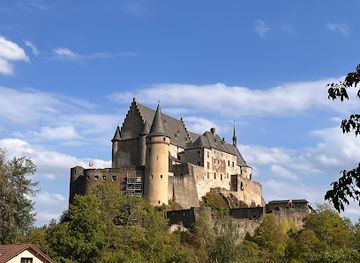
Vianden Castle
Discover Vianden Castle—a fairytale fortress above the Our valley, blending Romanesque and Gothic grandeur, breathtaking panoramas, and medieval history in rural Luxembourg.
4 min walk · 0.3 km from city centre
-
Tourist attraction
Musée Littéraire 'Victor Hugo'
Explore Victor Hugo’s inspiring former residence in Vianden—a riverside literary museum blending history, period décor, and the story of exile in Luxembourg.
2 min walk · 0.1 km from city centre
-
Hiking area
Ourdall Promenade
Discover the Ourdall Promenade in Vianden: a serene riverside walkway with castle views, nature, family-friendly amenities, and seasonal charm in Luxembourg’s Éislek region.
5 min walk · 0.4 km from city centre
-
Tourist attraction
panorama
Stunning panoramic viewpoint in the Ardennes near Vianden, offering sweeping views over the Sûre valley and a serene escape for nature lovers and hikers.
8 min drive · 2.7 km from city centre

Best landmarks in Vianden
Vianden Castle is the town's defining landmark, occupying a rocky ridge above the Our and displaying the layered form of a medieval aristocratic fortress restored during the nineteenth century. Its towers and walls are visible throughout the valley, while the interior halls and chapel convey the scale of the former County of Vianden. Below it, the Trinitarian Church, founded in the thirteenth century, represents the town's religious and architectural history and is closely associated with the former Trinitarian order. The Church of Our Lady, with its Gothic character and elevated position, adds another important sacred landmark to the old town. The Victor Hugo House is less monumental but culturally significant: the building preserves the memory of the writer's residence and links Vianden to European Romanticism. Together, these structures explain the town's development from medieval county seat to literary and heritage destination.
-
Castle
Vianden Castle
Towering above the lush Ardennes, Vianden Castle is a restored medieval fortress blending Romanesque, Gothic, and Renaissance charms in Luxembourg’s enchanting north.
4 min walk · 0.3 km from city centre
-
Mountain cable car
Chairlift - Bottom station
Discover sweeping views over Vianden and its medieval castle aboard Luxembourg’s only chairlift—an unforgettable journey floating high above the lush Our Valley forest.
2 min walk · 0.2 km from city centre
-
Mountain cable car
Chairlift Vianden
Ascend over the Our Valley in Vianden’s iconic chairlift for sweeping views of Luxembourg’s castles, forests, and storybook townscapes—an unmissable, family-friendly adventure.
2 min walk · 0.2 km from city centre
-
 Hostel
Youth Hostel Vianden
Youth Hostel Vianden offers affordable accommodation below Luxembourg’s iconic hilltop castle, placing backpackers and families in the heart of historic Ardennes scenery.
6 min walk · 0.5 km from city centre
Explore Vianden on the map
Plan your Vianden trip on one map. See where the top attractions, landmarks, restaurants, bars and hotels are, find what's near where you're staying, and book hotels and experiences in a few clicks.
Best hotels in Vianden
Best restaurants in Vianden
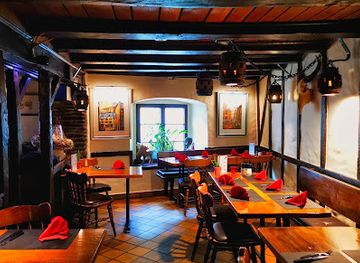
Vianden's dining scene reflects Luxembourg's position between Germanic, French and Ardennes traditions. Restaurants and cafés around the Grand-Rue and the old town typically provide a convenient setting for meals after visiting the castle, with menus that may include Luxembourgish and regional European cooking. Hearty dishes associated with the country and its northern countryside include Judd mat Gaardebounen, smoked pork served with broad beans, as well as sausages, potato-based dishes, game and seasonal produce. Luxembourg's French influence is also visible in pastries, breads, sauces and restaurant technique, while nearby Belgium and Germany contribute to the broader borderland palate. Cafés are useful for coffee, tarts and a slower afternoon pause, and local beer or Luxembourgish wine may accompany a meal. Dining options are more limited than in the capital, so the town's character is one of intimate restaurants, traditional fare and valley views rather than a large food-market culture.
-
Restaurant
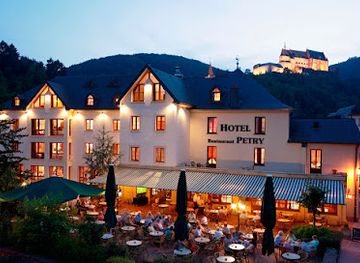
Hotel Restaurant Petry
Experience authentic Luxembourgish cuisine and delicious pizzas at Hotel Restaurant Petry in beautiful Vianden.
2 min walk · 0.2 km from city centre
-
Restaurant
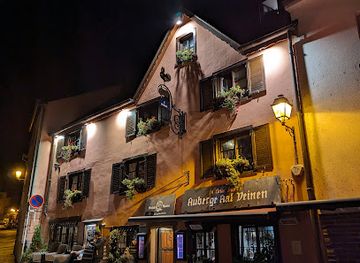
Auberge Aal Veinen Beim Hunn
Experience authentic Luxembourgish cuisine at Auberge Aal Veinen Beim Hunn in Vianden - where tradition meets comfort.
5 min walk · 0.4 km from city centre
-
Restaurant
Café du Pont
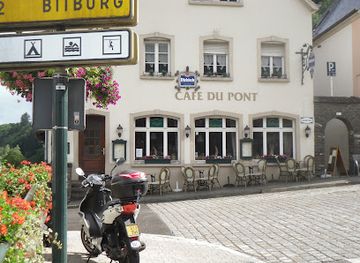
Discover exquisite flavors at Café du Pont in Vianden - where local cuisine meets delightful ambiance amidst stunning scenery.
2 min walk · 0.2 km from city centre
-
Restaurant
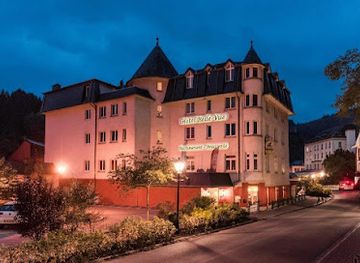
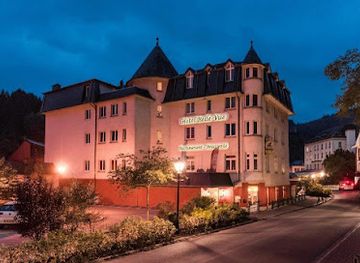
Hotel Belle Vue
Discover comfort at Hotel Belle Vue in Vianden - where charm meets modern amenities amidst breathtaking landscapes.
4 min walk · 0.3 km from city centre
Best bars in Vianden
Vianden has a modest evening scene shaped by its small population and historic-town setting rather than by nightclubs. After the main sightseeing hours, the Grand-Rue and nearby streets offer cafés, hotel bars and restaurants where visitors can linger over Luxembourgish beer, wine or a simple evening drink. The atmosphere is generally conversational and relaxed, with activity concentrated around dining rather than late-night entertainment. Cultural events, seasonal festivities and performances can add an evening dimension, but these are not necessarily daily offerings and should be checked locally. The surrounding valley becomes quiet after dark, and rural walking routes are not suitable for casual night-time wandering without proper visibility and route knowledge. Visitors seeking larger concert programmes, nightclub districts or a broader choice of cocktail venues will find more options in Luxembourg City, while Vianden is better suited to an early, atmospheric evening among illuminated historic buildings.
-
Restaurant
Hotel Restaurant Petry
Discover a culinary haven at Hotel Restaurant Petry in Vianden, where delicious pizzas and warm hospitality await every traveler.
2 min walk · 0.2 km from city centre
-
Restaurant
Auberge Aal Veinen Beim Hunn
Discover delicious local cuisine and cozy accommodations at Auberge Aal Veinen Beim Hunn in the heart of Vianden, Luxembourg.
5 min walk · 0.4 km from city centre
-
Restaurant
Café du Pont
Discover the flavors of Vianden at Café du Pont, where traditional meets modern in a delightful culinary experience.
2 min walk · 0.2 km from city centre
-
Restaurant
Hotel Belle Vue
Experience culinary excellence and serene lodgings at Hotel Belle Vue, a premier restaurant and hotel in the heart of Vianden.
4 min walk · 0.3 km from city centre
Best nightclubs in Vianden
Vianden has a modest evening scene shaped by its small population and historic-town setting rather than by nightclubs. After the main sightseeing hours, the Grand-Rue and nearby streets offer cafés, hotel bars and restaurants where visitors can linger over Luxembourgish beer, wine or a simple evening drink. The atmosphere is generally conversational and relaxed, with activity concentrated around dining rather than late-night entertainment. Cultural events, seasonal festivities and performances can add an evening dimension, but these are not necessarily daily offerings and should be checked locally. The surrounding valley becomes quiet after dark, and rural walking routes are not suitable for casual night-time wandering without proper visibility and route knowledge. Visitors seeking larger concert programmes, nightclub districts or a broader choice of cocktail venues will find more options in Luxembourg City, while Vianden is better suited to an early, atmospheric evening among illuminated historic buildings.
-
Restaurant
Auberge Aal Veinen Beim Hunn
Discover the perfect blend of culinary delights and cozy accommodations at Auberge Aal Veinen Beim Hunn in Vianden, Luxembourg.
5 min walk · 0.4 km from city centre
-
Restaurant
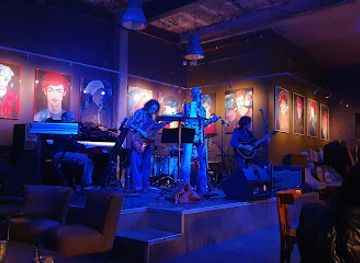
Ancien Cinéma Café Club
Discover the unique blend of history and flavor at Ancien Cinéma Café Club in Vianden, Luxembourg, where every meal tells a story.
2 min walk · 0.2 km from city centre
-
Hostel
Youth Hostel
Discover the charm of Vianden from the Youth Hostel, your affordable base for exploring Luxembourg's breathtaking landscapes and rich history.
6 min walk · 0.5 km from city centre
Best shops in Vianden
Shopping in Vianden is small-scale and closely tied to the historic centre rather than organised around a major retail district. The Grand-Rue and adjoining streets contain cafés, practical shops, galleries and visitor-oriented businesses where locally themed gifts, books, crafts and regional food products may be found. The castle and Victor Hugo's association generate much of the town's distinctive souvenir culture, including historical publications and literary items. Visitors may also encounter Luxembourgish specialities such as chocolate, biscuits, preserves, honey, beer or wine, although selection varies between businesses and seasons. The town is not a destination for extensive department-store shopping or luxury retail; its appeal lies in browsing independent outlets within old façades and combining purchases with architectural exploration. For a wider range of shops, larger town centres such as Diekirch or Luxembourg City provide more choice, while Vianden offers a more focused heritage-oriented retail experience.
-
Mountain cable car
Chairlift Vianden
Discover breathtaking views and outdoor adventures at Chairlift Vianden, a stunning mountain cable car experience in Luxembourg.
2 min walk · 0.2 km from city centre
-
Supermarket
Shop n Go Delhaize Vianden
Experience the best of Luxembourg's local flavors at Shop n Go Delhaize Vianden, your convenient shopping destination for essentials and gourmet delights.
11 min walk · 0.9 km from city centre
-
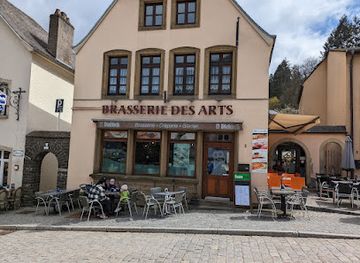
Ice Cream
Brasserie des Arts
Experience the taste of Vianden at Brasserie des Arts, where delectable ice cream and crepes await in a charming atmosphere.
2 min walk · 0.2 km from city centre
-
Hostel
Youth Hostel
Discover the charm of Vianden while enjoying comfortable stays at Youth Hostel, your gateway to the Ardennes and local attractions.
6 min walk · 0.5 km from city centre
Get your free copy of our complete guide to Vianden, delivered straight to you.
Everything on this page, from attractions and restaurants to essentials and local phrases, in one PDF you can read offline, print or share.
Already have an account? Sign in
Your Vianden guide is ready.
We'll send it to · Not you? Sign out

Getting your guide ready…
We are putting together a fresh copy of the Vianden guide. This can take up to a minute.
This can take a few moments. If your browser asks, choose Allow so the download can start. You'll find the guide in your Downloads folder.
Nothing happened? Download it again
Sorry, the guide is taking longer than usual. Please try again in a minute, or get it by email instead.
Vianden essentials
Currency and Payment
Safety
Emergency Situations
Do's and Don'ts
Local Tips
From Eve
Local phrases worth knowing
You don't need to get them perfect. A few words go a long way, and locals appreciate the effort.
Basics
| English | Local | Say it |
|---|---|---|
| Hello | Moien | [Moy-en] |
| Goodbye | Äddi | [Add-ee] |
| Yes | Jo | [Yo] |
| No | Nee | [Nay] |
| Please/You're welcome | Gär gesch | [Gair-gesh] |
| Thank you | Merci | [Mehr-see] |
| Excuse me/Sorry | Entschëllegt | [Ent-shell-egt] |
| How are you? | Wéi geet et dir? | [Way geet et deer] |
| Fine. And you? | Gutt. A dir? | [Goot. Ah deer] |
| Do you speak English? | Schwatzt dir Englesch? | [Shvatst deer Eng-lesh] |
| I don't understand | Ech verstinn net | [Esh verst-inn net] |
Eating & Drinking
| English | Local | Say it |
|---|---|---|
| I'd like to see the menu, please | Ech géifen gär d'Menü gesinn, w.e.g. | [Esh gay-fen gair d'Menoo geh-sinn, w.e.g.] |
| I don't eat meat | Ech iessen keng Fleesch | [Esh ees-sen keng Flay-sh] |
| Cheers! | Prost! | [Prost] |
| I would like to pay, please | Ech géifen gär bezuelen, w.e.g. | [Esh gay-fen gair beh-tsoo-len, w.e.g.] |
Emergencies
| English | Local | Say it |
|---|---|---|
| Help! | Hëllef! | [Hell-eff] |
| Go away! | Gitt ewech! | [Git eh-vek] |
| Call the Police! | Rufft d'Police! | [Roof-t d'Police] |
| Call a doctor! | Rufft en Dokter! | [Roof-t en Dock-ter] |
| I'm lost | Ech hunn mech verluer | [Esh hunn meh-ver-loo-er] |
| I'm ill | Ech sinn krank | [Esh seen krank] |
Shopping
| English | Local | Say it |
|---|---|---|
| I'd like to buy... | Ech géifen ... kéifen | [Esh gay-fen ... k-eye-fen] |
| I'm just looking | Ech kuck just | [Esh kook yoost] |
| How much is it? | Wéi vill kascht et? | [Way feel kash et] |
| That's too expensive | Dat ass ze deier | [Dat ass tse deyer] |
| Can you lower the price? | Kënnt dir de Präis erméiglechen? | [Kunt deer deh Pr-ice er-may-gl-ech-en] |
Time & Numbers
| English | Local | Say it |
|---|---|---|
| What time is it? | Wéi spéit ass et? | [Way sp-eyt ass et] |
| It's one o'clock | Et ass eis | [Et ass ice] |
| Half past (10) | Hallef zwielef | [Hal-eff tsvil-eff] |
| Morning | Muer | [Moo-er] |
| Afternoon | Nomëtten | [Nom-etten] |
| Evening | Owend | [Ov-end] |
| Yesterday | Gëschter | [Gesh-ter] |
| Today | Haut | [Howt] |
| Tomorrow | Muer | [Moo-er] |
| 1 | Eng | [Eng] |
| 2 | Zwee | [Tsvay] |
| 3 | Dräi | [Drey] |
| 4 | Véier | [Vay-er] |
| 5 | Fënnef | [Fen-eff] |
| 6 | Sechs | [Zex] |
| 7 | Siwen | [Zee-ven] |
| 8 | Aacht | [Akh-t] |
| 9 | Nuen | [Noy-en] |
| 10 | Zéng | [Tseyn] |
Transport & Directions
| English | Local | Say it |
|---|---|---|
| Where's a/the...? | Wou ass e(n)...? | [Voo ass e(n)] |
| What's the address? | Wat ass d'Adress? | [Vat ass d'Add-ress] |
| Can you show me (on the map)? | Kënnt dir mir (op der Kaart) weisen? | [Kunt deer meer (op der Kart) v-eye-sen] |
| When's the next (bus)? | Wéini ass de nächste(n) (Bus)? | [Way-nee ass de neh-kst(n) (Boos)] |
| A ticket (to ....) | E Billett (no ....) | [Ee Bill-et (no)] |
History of Vianden
Roman and Early Medieval Foundations
The Our Valley was occupied before Vianden became a medieval stronghold, and archaeological evidence points to settlement and movement through the wider region during Roman times. The town's name is generally linked to an early form of Viennensis, although its precise linguistic development is complex. By the early Middle Ages, the valley's position near routes between the Ardennes and the Moselle region gave it strategic value. A fortified settlement developed on the rocky height above the river, providing protection and control over the surrounding territory. The surviving town grew beneath this stronghold, shaped by the valley's restricted geography and by the need to connect the castle with roads, river crossings and agricultural communities.
The Counts of Vianden
Vianden rose to importance from the eleventh century as the seat of a powerful county. The Counts of Vianden built and expanded the castle, turning it into one of the region's principal aristocratic residences. Their authority extended across parts of what is now Luxembourg and neighbouring areas, while their political ties connected the valley to larger noble dynasties. The castle developed as a residential fortress rather than merely a military outpost, with halls, chapels, defensive walls and service buildings arranged around the rocky summit. The town below benefited from the presence of the court, religious foundations and trade, laying the historic pattern still visible between the castle, the churches and the old streets.
Dynastic Change and Decline
The county passed through several aristocratic inheritances before Vianden entered the orbit of the House of Nassau in the fifteenth century. As political power became concentrated in larger territorial centres, the castle gradually lost its role as a principal residence. Its importance declined further as military technology changed and administrative structures shifted. Parts of the complex fell into disrepair, while materials were removed or reused locally. The town nevertheless retained its churches, street plan and association with the former county. This period illustrates how many European castles changed from active political centres into rural landmarks, with Vianden's imposing ruins preserving the outline of a much more influential medieval lordship.
Victor Hugo and Nineteenth-Century Vianden
The nineteenth century brought new cultural attention to Vianden. Victor Hugo stayed in the town several times between 1862 and 1871, including during his exile from France, and drew inspiration from its castle, river valley and ruins. His presence connected Vianden with the wider Romantic fascination for medieval landscapes and helped strengthen its literary identity. At the same time, the abandoned castle attracted antiquarian interest. The fortress was progressively restored from the 1850s onwards, first under Grand Duke Adolphe and later through further conservation efforts. Restoration gave the complex a renewed architectural coherence, while also making it an important monument of Luxembourg's national heritage.
War, Restoration and Modern Heritage
Vianden was affected by the Second World War, and the castle suffered damage during the Battle of the Bulge in 1944, when fighting reached Luxembourg's northern regions. Subsequent conservation restored the building and reinforced its role as the town's principal historical monument. In the later twentieth century, Vianden developed as a cultural and walking destination within Luxembourg's Ardennes, supported by museums, heritage interpretation and improved regional connections. The town's identity today rests on the relationship between the restored castle, the medieval street pattern, Victor Hugo's literary memory and the wooded Our Valley. Its history is therefore visible not only in monuments, but also in the landscape and surviving scale of the settlement.
Vianden in Photos
Browse through our photo collection highlighting the charm and character of the destination.
Cities near Vianden
The closest cities to Vianden, if you have time for more than one stop.
-
-

-
-

-


Swipe for more cities
Explore more

Explore more of Luxembourg
Discover Luxembourg: A charming blend of historical wonders, breathtaking landscapes, and cultural vibrancy in the heart of Europe.
Explore Luxembourg