

Upper Sûre Natural Park Travel Guide - Free Web & App
Your ultimate guide to Upper Sûre Natural Park. Discover top landmarks, proposed trips, and local tips. Free on the web or via the Evendo companion app.


Upper Sûre Natural Park in Luxembourg combines a wooded reservoir, Ardennes villages, castle ruins, walking trails and peaceful water-based activities.
Reservoir, Forests and Ardennes Landscapes
Upper Sûre Natural Park lies in north-western Luxembourg, in the wooded Ardennes region known locally as the Éislek. Its defining feature is the Lac de la Haute-Sûre, a long, branching reservoir formed by the damming of the Sûre River. The lake’s wooded shores, narrow inlets and steeply folded valleys create a landscape that feels distinctly rural despite its importance as a source of drinking water. Small roads connect scattered villages, woodland paths and viewpoints above the water, while the river continues through the historic settlement of Esch-sur-Sûre.Read more about Upper Sûre Natural Park
Villages, Water and Local Heritage
Exploring the Park
When is the best time to visit Upper Sûre Natural Park?
Best: June–August · 24–25°C| Month | High (°C) | Rainfall (mm) |
|---|---|---|
| January | 6 | 78 |
| February | 6 | 70 |
| March | 11 | 64 |
| April | 15 | 57 |
| May | 20 | 58 |
| June (best) | 24 | 66 |
| July (best) | 25 | 64 |
| August (best) | 25 | 61 |
| September | 20 | 53 |
| October | 15 | 63 |
| November | 11 | 73 |
| December | 6 | 81 |
Getting to and around Upper Sûre Natural Park
How to get there
Transportation
Best attractions in Upper Sûre Natural Park
The reservoir is the park’s principal attraction, with its branching arms, wooded slopes and quiet coves providing scenic settings for walking, paddling and nature observation where activities are permitted. Esch-sur-Sûre offers the strongest concentration of heritage, with a tightly grouped historic settlement beneath the ruins of its castle. Lultzhausen is associated with lakeside recreation and access to the water, while Insenborn provides another useful base for exploring the northern shore and surrounding countryside. At Burfelt, a forest discovery centre interprets woodland habitats, forestry and the relationship between people and the landscape. Beyond these named places, the park’s appeal lies in its network of rural roads, marked paths, viewpoints and small villages, which reveal different perspectives on the reservoir and the Éislek hills. The landscape is particularly suitable for visitors seeking quiet scenery, birdwatching, seasonal woodland colour and measured outdoor activity rather than a dense concentration of built attractions.
-
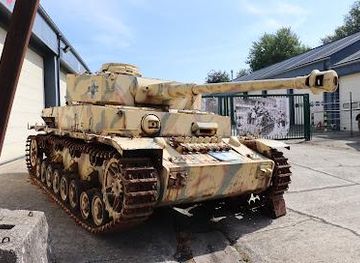
War museum
Bastogne Barracks
Step into history at Bastogne Barracks, an enthralling war museum and former command post pivotal to the Battle of the Bulge, set in Belgium's storied Ardennes.
-
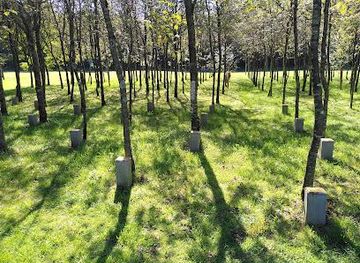
Park
Paix Woods
Nestled on the edge of Bastogne, Paix Woods is a lush, history-rich retreat where tranquil paths, towering trees, and echoes of WWII heritage blend in the Ardennes.
-
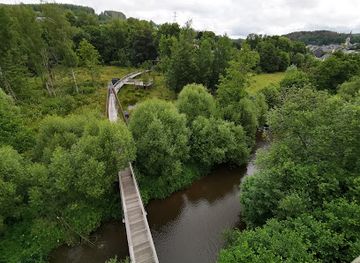
Park
Haute Sûre Forêt D'Anlier Natural Park
Vast forests, highland meadows, and tranquil riverscapes blend in Haute Sûre Forêt d'Anlier Natural Park, southern Belgium’s premier woodland escape for hikers and wildlife seekers.
-
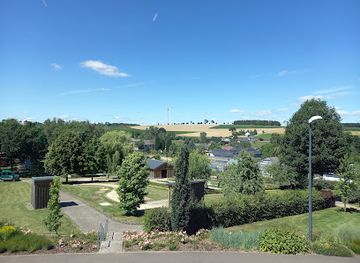
Amusement park
Park Sënnesräich
Discover Park Sënnesräich in Lullange—an award-winning sensory and science park where hands-on play, interactive exhibits, and family fun ignite all five senses in Luxembourg.
Best landmarks in Upper Sûre Natural Park
The most defining landmark is the Lac de la Haute-Sûre, whose dam and branching reservoir transformed the Sûre valley and remain central to Luxembourg’s water infrastructure. The lake’s wooded shores and narrow inlets are landscape landmarks as much as recreation spaces. In Esch-sur-Sûre, the ruins of the medieval castle rise above the compact settlement on a rocky spur, giving the village its distinctive historical profile and illustrating the strategic importance of the valley in earlier centuries. The Sûre River itself provides the geographical thread linking the park’s villages, forests and reservoir. At Burfelt, the forest discovery centre represents the park’s modern conservation identity, showing how woodland management, biodiversity and human use are interpreted within the protected rural landscape rather than through monumental architecture.
-
National park
Naturpark Öewersauer
Naturpark Öewersauer in Luxembourg combines wild landscapes, shimmering reservoirs, and historic villages, offering outdoor adventure, serene relaxation, and nature-inspired discovery.

Explore Upper Sûre Natural Park on the map
Plan your trip on one map. See where the top attractions, landmarks, restaurants and hotels are, and book hotels and experiences in a few clicks.
Best hotels in Upper Sûre Natural Park
Best bars in Upper Sûre Natural Park
Evenings in Upper Sûre Natural Park are quiet and centred on village hospitality rather than nightlife. Esch-sur-Sûre and the reservoir settlements may offer traditional cafés, inns or bars where residents and visitors meet, but the area does not have a concentration of nightclubs or late-night entertainment venues. The atmosphere is better suited to a leisurely drink, a local meal or a peaceful walk near a chosen base, with darkness and low levels of development making the surrounding countryside part of the evening experience. Visitors seeking a broader choice of bars, cultural performances or organised evening events should look towards regional towns such as Wiltz, outside the park itself, and check current local listings rather than assuming that seasonal or occasional events run throughout the year.
-
Restaurant
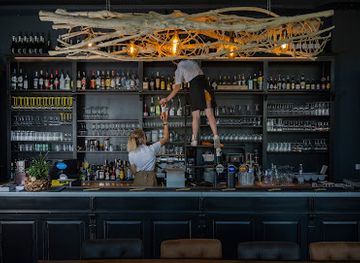
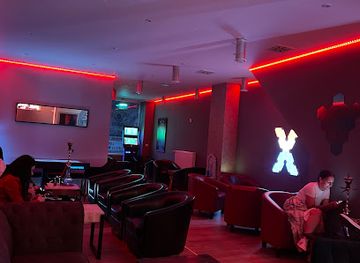
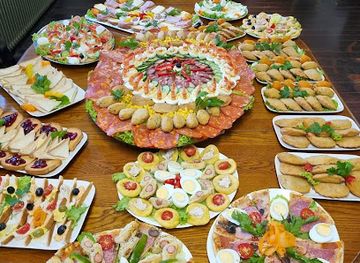
Slim's Lounge
Discover Slim's Lounge in Pommerloch for an unforgettable dining experience, featuring gourmet burgers, Italian cuisine, and vegan delights in a cozy atmosphere.
-
Bar
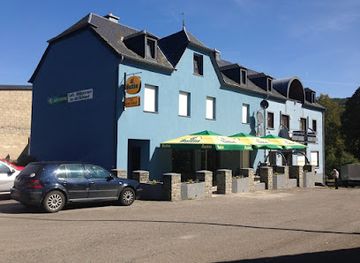
Bar an der Schleef
Discover the charm of Winseler at Bar an der Schleef, where quality drinks and a warm atmosphere invite you to relax and enjoy.
-
Restaurant
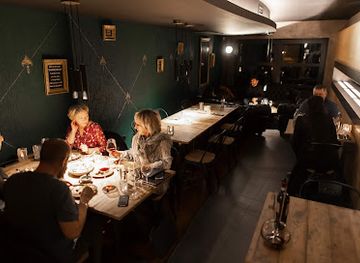
L'endroit - Bar des Sommeliers
Discover exquisite European and modern French cuisine at L'endroit, a charming fine dining restaurant in the heart of Wiltz, Luxembourg.
-
Bar
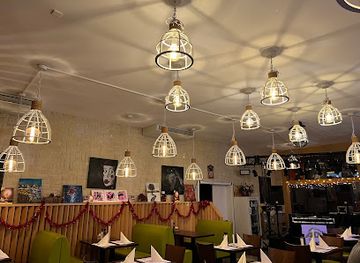
Restaurant Carpe Diem
Discover a delightful culinary experience at Restaurant Carpe Diem, where vibrant flavors meet a warm, inviting atmosphere in Mertzig, Luxembourg.
Best nightclubs in Upper Sûre Natural Park
Evenings in Upper Sûre Natural Park are quiet and centred on village hospitality rather than nightlife. Esch-sur-Sûre and the reservoir settlements may offer traditional cafés, inns or bars where residents and visitors meet, but the area does not have a concentration of nightclubs or late-night entertainment venues. The atmosphere is better suited to a leisurely drink, a local meal or a peaceful walk near a chosen base, with darkness and low levels of development making the surrounding countryside part of the evening experience. Visitors seeking a broader choice of bars, cultural performances or organised evening events should look towards regional towns such as Wiltz, outside the park itself, and check current local listings rather than assuming that seasonal or occasional events run throughout the year.
-
Cocktail bar
NEXUS BAR
Discover the ultimate cocktail experience at Nexus Bar in Wiltz, where every drink is a masterpiece and the ambiance is simply unforgettable.
-
Pub
Café chez Grilo
Experience the cozy ambiance and local flavors at Café chez Grilo, a must-visit pub in Eschdorf, Luxembourg.
-
Bar
Harley Brothers Luxembourg
Discover the vibrant nightlife at Harley Brothers Luxembourg, a trendy bar in Merkholtz offering a delightful mix of drinks and a welcoming atmosphere.
-
Bar
Day Night 2013 Sàrl Sàrl
Discover the lively bar and restaurant scene at Day Night 2013 Sàrl in Wiltz, where great drinks and food meet a vibrant atmosphere.
Best shops in Upper Sûre Natural Park
Shopping opportunities inside Upper Sûre Natural Park are modest and concentrated in villages and nearby regional towns rather than arranged around a dedicated retail district. Small village shops, cafés, farm outlets and local producers may offer practical supplies and regional food, while Esch-sur-Sûre provides a more atmospheric setting for browsing around a historic settlement. Visitors interested in souvenirs can look for Luxembourgish food products, preserves, honey, drinks, craft items and locally themed goods where available, although stock varies between businesses and seasons. Wiltz and other larger Éislek settlements provide a broader range of everyday shops and outdoor equipment. The most meaningful purchases are generally linked to the rural economy—food, drink and small-scale craft production—rather than mass-market souvenirs or extensive fashion retail.
-
Shopping mall
Knauf Shopping Center Pommerloch
Explore Knauf Shopping Center Pommerloch - A Premier Shopping Destination with Over 200 Stores and Diverse Dining Options.
-
Supermarket
Cactus Ingeldorf
Discover Cactus Ingeldorf, your ultimate shopping destination for local delights and gourmet specialties in Erpeldange-sur-Sûre.
-
Cafe
Schmaach ëm de Séi a méi
Discover the enticing flavors and cozy atmosphere at Schmaach ëm de Séi, a delightful café nestled in the heart of Esch-sur-Sûre, Luxembourg.
-
Store
Naturpark Öewersauer
Explore the natural beauty of Naturpark Öewersauer, a stunning national park in Luxembourg filled with scenic trails, vibrant wildlife, and breathtaking landscapes.


Get your free copy of our complete guide to Upper Sûre Natural Park, delivered straight to you.
Everything on this page, from attractions and restaurants to essentials and local phrases, in one PDF you can read offline, print or share.
Already have an account? Sign in
Your Upper Sûre Natural Park guide is ready.
We'll send it to · Not you? Sign out

Getting your guide ready…
We are putting together a fresh copy of the Upper Sûre Natural Park guide. This can take up to a minute.
This can take a few moments. If your browser asks, choose Allow so the download can start. You'll find the guide in your Downloads folder.
Nothing happened? Download it again
Sorry, the guide is taking longer than usual. Please try again in a minute, or get it by email instead.
Upper Sûre Natural Park essentials
Currency and Payment
Safety
Emergency Situations
Do's and Don'ts
Local Tips
From Eve
Local phrases worth knowing
You don't need to get them perfect. A few words go a long way, and locals appreciate the effort.
Basics
| English | Local | Say it |
|---|---|---|
| Hello | Moien | [Moy-en] |
| Goodbye | Äddi | [Add-ee] |
| Yes | Jo | [Yo] |
| No | Nee | [Nay] |
| Please/You're welcome | W.e̞lt | Gär gess | [Velt | Geh-er guess] |
| Thank you | Merci | [Mehr-see] |
| Excuse me/Sorry | Entschëllegt | [Ent-shell-eckt] |
| How are you? | Wéi geet et dir? | [Way gate et deer?] |
| Fine. And you? | Gutt. An du? | [Goot. Ahn doo?] |
| Do you speak English? | Schwätzt dir Englesch? | [Shvets deer Eng-lesh?] |
| I don't understand | Ech verstinn net | [Esh verst-inn net] |
Eating & Drinking
| English | Local | Say it |
|---|---|---|
| I'd like to see the menu, please | Ech géifen de Menü gesinn, w.e̞lt | [Esh gay-fen deh Meh-noo geh-seen, velt] |
| I don't eat meat | Ech iessen keng Fleesch | [Esh eesen keng Flay-sh] |
| Cheers! | Prost! | [Prohst!] |
| I would like to pay, please | Ech géif gären bezuelen, w.e̞lt | [Esh gayf geh-ren beh-tsway-len, velt] |
Emergencies
| English | Local | Say it |
|---|---|---|
| Help! | Hëllef! | [Hell-eff!] |
| Go away! | Gitt ewech! | [Gitt eh-vek!] |
| Call the Police! | Rufft d'Polizei! | [Roof-t dee-poh-lee-tsye!] |
| Call a doctor! | Rufft en Dokter! | [Roof-t en Dock-ter!] |
| I'm lost | Ech hunn mech verluer | [Esh hoohn meh-ver-loo-er] |
| I'm ill | Ech sinn krank | [Esh seen krank] |
Shopping
| English | Local | Say it |
|---|---|---|
| I'd like to buy... | Ech géifen ... kafen | [Esh gay-fen ... kah-fen] |
| I'm just looking | Ech kuck nëmmen | [Esh kook nem-men] |
| How much is it? | Wéi vill kascht et? | [Way vill kahsht et?] |
| That's too expensive | Dat ass ze deier | [Dot ass tseh dayer] |
| Can you lower the price? | Kënnt dir den Präis erof setzen? | [Kent deer den Prey-es err-off zet-zen?] |
Time & Numbers
| English | Local | Say it |
|---|---|---|
| What time is it? | Wéi spéit ass et? | [Way schpayt ass et?] |
| It's one o'clock | Et ass eeuer | [Et ass oy-er] |
| Half past (10) | Hallef (10) | [Hal-lef (10)] |
| Morning | Mueres | [Moo-er-es] |
| Afternoon | Nomëttes | [Nom-et-tes] |
| Evening | Owend | [Oh-vend] |
| Yesterday | Gëschter | [Gesh-ter] |
| Today | Haut | [Hoht] |
| Tomorrow | Muer | [Moo-er] |
| 1 | Eent | [Ent] |
| 2 | Zwei | [Zvay] |
| 3 | Dräi | [Drey] |
| 4 | Véier | [Veer] |
| 5 | Fënnef | [Fuhn-nef] |
| 6 | Sechs | [Zeks] |
| 7 | Siwen | [Zee-ven] |
| 8 | Aacht | [Ahkht] |
| 9 | Néng | [Neng] |
| 10 | Zéng | [Zeng] |
Transport & Directions
| English | Local | Say it |
|---|---|---|
| Where's a/the...? | Wou ass ...? | [Woo ass ...?] |
| What's the address? | Wat ass d'Adress? | [Vat ass dad-dress?] |
| Can you show me (on the map)? | Kënnt dir mir weisen (op der Kaart)? | [Kent deer meer vye-zen (op der Kart)?] |
| When's the next (bus)? | Wann ass de nächste (Bus)? | [Vahn ass deh nehk-steh (Boos)?] |
| A ticket (to ....) | E Billett (no ....) | [Ee Bil-lett (no ...)] |
History of Upper Sûre Natural Park
The Sûre Valley Before the Reservoir
Long before the modern lake was created, the Sûre carved a winding valley through the Ardennes uplands. Settlement and farming developed around the river, with villages, mills and managed woodland forming a closely connected rural landscape. Esch-sur-Sûre grew beneath its medieval castle, whose position above the river gave it strategic and administrative importance. The surrounding region remained comparatively rural, with agriculture, forestry and small-scale craft industries shaping everyday life rather than large urban development.
The Reservoir and a Changing Landscape
The construction of the Upper Sûre dam in the mid-twentieth century transformed the valley. Flooding behind the dam created the reservoir now known as Lac de la Haute-Sûre, altering the course of the river, surrounding land use and the relationship between nearby communities and the water. The lake was designed primarily as a strategic source of drinking water for Luxembourg, while its wooded shoreline later became important for recreation. Roads, viewpoints and waterside facilities developed around the new landscape without turning the area into a densely built resort.
Creation of the Nature Park
Upper Sûre Natural Park was established in 1999 as Luxembourg’s first nature park. Its purpose is broader than protecting scenery: the park brings together municipalities, residents, farmers and environmental interests to support sustainable regional development, conserve habitats and interpret local heritage. The designation helped give the reservoir, forests and villages a shared identity while encouraging tourism that works with the landscape rather than replacing its rural character.
Water Management and Conservation
Modern management of the park reflects the dual importance of the reservoir as both a recreation landscape and a drinking-water resource. Water quality, woodland stewardship, agricultural practice and biodiversity are therefore central to the area’s future. Visitor activities are organised within this wider framework, with access, boating, fishing and bathing subject to local conditions and regulations. Nature interpretation at places such as the Burfelt forest centre helps explain how woodland ecosystems, wildlife and human use are linked across the park.
Upper Sûre Natural Park in Photos
Browse through our photo collection highlighting the charm and character of the destination.
Cities in Upper Sûre Natural Park
The towns and cities of Upper Sûre Natural Park, and the easiest places to base yourself.

Swipe for more cities
Neighbouring destination travel guides
The closest destinations to Upper Sûre Natural Park, if you have time for more than one.
-
-

-

-

-


Swipe for more destinations
Explore more

Explore more of Oesling
Discover Oesling in Luxembourg: A scenic haven of rolling hills, historic castles, and unspoiled nature, perfect for hiking, cycling, and cultural exploration.
Explore Oesling
Explore more of Luxembourg
Discover Luxembourg: A charming blend of historical wonders, breathtaking landscapes, and cultural vibrancy in the heart of Europe.
Explore Luxembourg