

Mullerthal Trail Travel Guide - Free Web & App
Your ultimate guide to Mullerthal Trail. Discover top landmarks, proposed trips, and local tips. Free on the web or via the Evendo companion app.


Mullerthal Trail in Luxembourg winds through sandstone gorges, forests and villages, linking Echternach with memorable hikes, rock formations and nature.
Forests, Rocks and Narrow Gorges
The Mullerthal Trail crosses the undulating sandstone landscape of eastern Luxembourg, a region often known as Little Switzerland. Its three marked routes form a combined walking network of about 112 kilometres, passing through dark forests, open farmland, stream valleys and dramatic passages between weather-shaped rocks. The trail is not a single linear path but a connected system of loops, allowing walkers to choose shorter sections or combine several days of walking.Read more about Mullerthal Trail
Villages and Regional Character
Walking Through a Living Landscape
When is the best time to visit Mullerthal Trail?
Best: June–August · 23–25°C| Month | High (°C) | Rainfall (mm) |
|---|---|---|
| January | 6 | 70 |
| February | 7 | 65 |
| March | 11 | 60 |
| April | 16 | 55 |
| May | 20 | 50 |
| June (best) | 23 | 45 |
| July (best) | 25 | 40 |
| August (best) | 25 | 45 |
| September | 21 | 50 |
| October | 16 | 55 |
| November | 10 | 60 |
| December | 6 | 65 |
Getting to and around Mullerthal Trail
How to get there
Transportation
Best attractions in Mullerthal Trail
The Mullerthal Trail’s principal attractions are its landscapes: the rock corridors and ledges around Berdorf, the wooded ravines and stream valleys near Mullerthal village, and the varied scenery linking the three route loops. The area around Consdorf and Scheidgen offers further sandstone formations and forest walking, while the approaches to Beaufort combine rural scenery with the village’s castle heritage. Echternach adds a historic dimension through its abbey precinct, old town and setting beside the River Sûre, although the town is a cultural gateway rather than a natural feature of the trail itself. Larochette provides another access point, with its castle overlooking the settlement and surrounding wooded hills. Across the route, the attraction lies in the changing sequence of narrow rock passages, open farmland, quiet villages, streams and woodland rather than in a single summit or viewpoint.
-
Tourist attraction
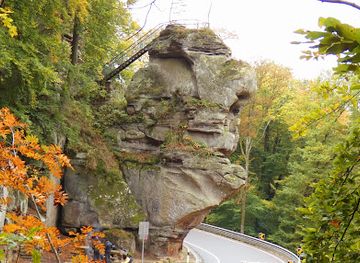
Predigtstuhl
Discover Predigtstuhl, a stunning sandstone formation in Luxembourg’s Mullerthal, offering sweeping valley views, lush forest hikes, and iconic rock-climbing routes.
-
Tourist attraction
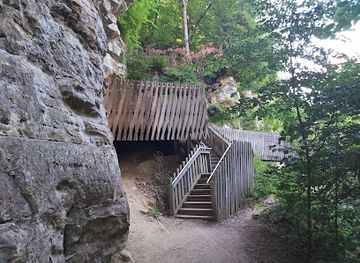
Kuelscheier
Discover Kuelscheier, a mesmerizing sandstone passage near Consdorf in Mullerthal, Luxembourg—a mystical natural tunnel blending hiking adventure and geological wonder.
-
Hiking area
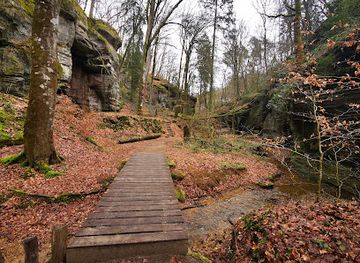
Mullerthal Trail Route 2
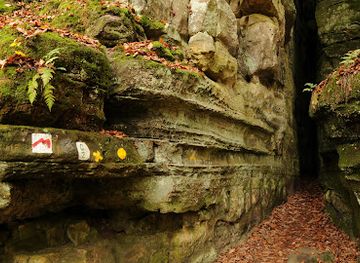
Discover moss-clad rock formations, serene streams, and ancient beech forests along Mullerthal Trail Route 2—Luxembourg’s celebrated hiking route in magical 'Little Switzerland.'
-
Winery
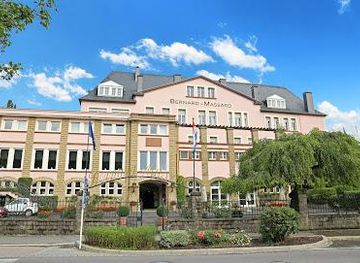
Caves Bernard-Massard
Discover Caves Bernard-Massard, Luxembourg’s leading sparkling wine cellar since 1921, offering immersive tours, tastings, and riverside ambiance in scenic Grevenmacher.

Best landmarks in Mullerthal Trail
The defining landmarks of the Mullerthal Trail are geological as much as architectural. Luxembourg Sandstone appears in weathered rock towers, fissured walls, ledges and narrow corridors, with formations around Berdorf and the Mullerthal area providing some of the route’s most recognisable scenery. Forested ravines and stream-cut valleys give these rocks their setting and explain the trail’s constantly changing character. Human landmarks add depth: Echternach Abbey and its historic town centre represent the region’s religious and cultural heritage, while Beaufort Castle and Larochette Castle stand as reminders of the area’s medieval political landscape. These sites are connected by a countryside of farms, villages and woodland rather than separated from it, making the trail a combined geological and cultural journey through eastern Luxembourg.
-
Tourist attraction
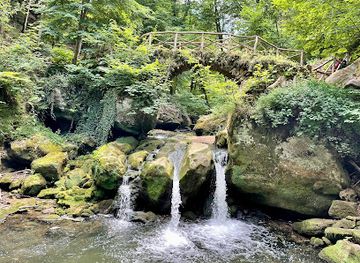
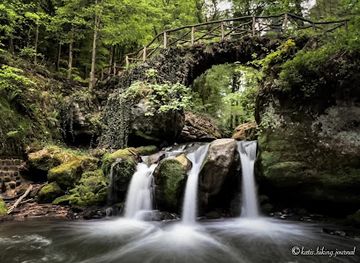
Schiessentümpel/ Schéissendëmpel Waterfall
Immerse yourself in the storybook landscapes of Luxembourg at Schiessentümpel Waterfall, set in the lush forests and rocky gorges of the picturesque Mullerthal region.
-
Tourist attraction
Kallektuffquell
Discover the enchanting travertine terraces and crystal-clear springs of Kallektuffquell, an otherworldly natural wonder nestled in Luxembourg’s lush Mullerthal forests.
-
Tourist attraction
Hohllay cave
Discover Hohllay Cave in Berdorf, Luxembourg—a sandstone quarry and mystical cave where nature, history, and legend meet in the heart of the Mullerthal region.
-
Tourist attraction
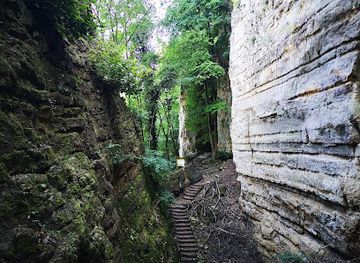
Gorges du Loup
Discover the mystical sandstone crevices and lush woodland trails of Wollefsschlucht, the enchanting Wolf's Gorge in Luxembourg's scenic Mullerthal region.
Explore Mullerthal Trail on the map
Plan your trip on one map. See where the top attractions, landmarks, restaurants and hotels are, and book hotels and experiences in a few clicks.
Best hotels in Mullerthal Trail
Best restaurants in Mullerthal Trail
Dining around the Mullerthal Trail is concentrated in Echternach and the smaller gateway settlements, including Berdorf, Beaufort, Consdorf, Larochette and Mullerthal. Visitors can expect a mixture of cafés, village restaurants, hotel dining rooms, bakeries and traditional hospitality venues, while the trail itself has few places to obtain food. Luxembourg’s cuisine reflects its position between Germanic, French and neighbouring regional traditions, with hearty meat dishes, soups, pastries and seasonal produce appearing alongside more modern European cooking. Echternach offers the broadest choice in a historic-town setting, whereas smaller villages are useful for meals close to particular route sections but have a more limited range. Walkers planning a full-day stage should check where provisions can be bought and consider carrying lunch rather than assuming that a café will be open beside the path.
-
Restaurant
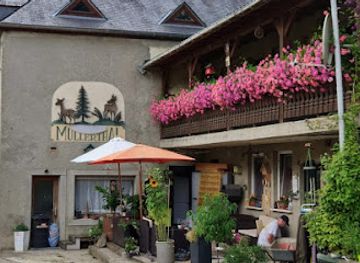
Brasserie Heringer Millen
Experience exquisite local cuisine at Brasserie Heringer Millen in Mullerthal, where every meal is crafted with passion amidst stunning natural beauty.
-
 Hotel
HotelTrail-Inn Natur & Sporthotel
Discover adventure at Trail-Inn Natur & Sporthotel in Berdorf - your perfect base for exploring Luxembourg's breathtaking landscapes.
-
Hotel
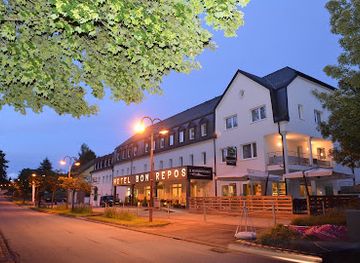
Hotel Bon Repos & Restaurant Le Grill
Discover comfort and culinary excellence at Hotel Bon Repos & Restaurant Le Grill in scenic Consdorf.
-
Hotel
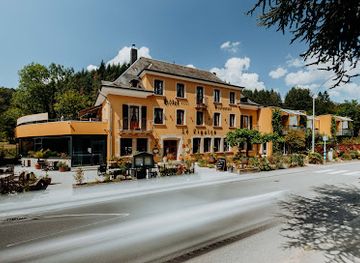
Hôtel-Restaurant Le Cigalon
Experience comfort and exquisite dining at Hôtel-Restaurant Le Cigalon in Luxembourg's scenic Mullerthal region.
Best bars in Mullerthal Trail
Evenings in the Mullerthal Region are generally quiet and village-based rather than defined by nightlife. Traditional cafés, hotel bars, restaurants and village inns in places such as Echternach, Berdorf, Beaufort and Larochette provide opportunities for a drink or relaxed meal after walking, while Echternach has the widest choice of evening settings. Seasonal festivals and cultural events may add occasional entertainment, but schedules vary and should be checked locally. There is no continuous club district along the trail, and smaller settlements may become very still after dinner. Visitors seeking a broader urban nightlife scene would need to travel beyond the Mullerthal Region to Luxembourg City, which should be treated as a separate destination rather than part of the trail experience.
-
Restaurant
Brasserie Heringer Millen
Discover the taste of Luxembourg at Brasserie Heringer Millen, where local flavors and stunning views create an unforgettable dining experience.
-
Irish pub
Brostloapseekelchen - Irish Pub
Discover the warmth of Irish hospitality at Brostloapseekelchen - a cozy pub in Echternach offering delicious food and a lively atmosphere.
-
Bar
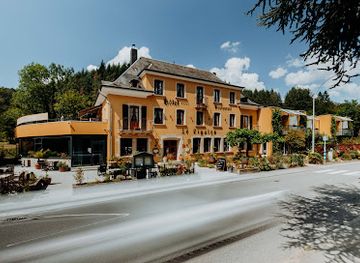
Hôtel-Restaurant Le Cigalon
Discover the charm of Hôtel-Restaurant Le Cigalon in Mullerthal, where delightful cuisine meets serene accommodations amid breathtaking landscapes.
-
Bar
De grénge Schapp s.àr.l.
Discover the serene charm of De grénge Schapp, a picturesque bar on an island in Echternach, perfect for leisurely drinks and scenic views.
Best nightclubs in Mullerthal Trail
Evenings in the Mullerthal Region are generally quiet and village-based rather than defined by nightlife. Traditional cafés, hotel bars, restaurants and village inns in places such as Echternach, Berdorf, Beaufort and Larochette provide opportunities for a drink or relaxed meal after walking, while Echternach has the widest choice of evening settings. Seasonal festivals and cultural events may add occasional entertainment, but schedules vary and should be checked locally. There is no continuous club district along the trail, and smaller settlements may become very still after dinner. Visitors seeking a broader urban nightlife scene would need to travel beyond the Mullerthal Region to Luxembourg City, which should be treated as a separate destination rather than part of the trail experience.
-
Hiking area
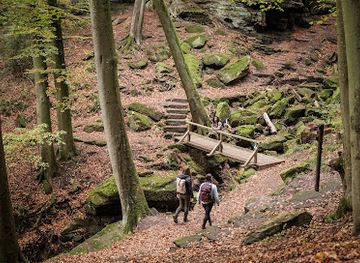
Mullerthal Trail
Discover the stunning landscapes and unique rock formations of the Mullerthal Trail, a top hiking destination in Luxembourg for nature lovers.
-
Night club
Flying Dutchman
Discover the dynamic nightlife at Flying Dutchman, Beaufort's premier night club, where music, dancing, and fun come together for an unforgettable experience.
-
Bar
Lilien
Discover the charm of Lilien, a cozy bar in Rosport-Mompach, perfect for enjoying local drinks and embracing the vibrant Luxembourg culture.
-
Bar
Café-Bar Windsurf
Experience the cozy charm of Café-Bar Windsurf in Echternach, where delightful drinks and a warm atmosphere await every visitor.
Best shops in Mullerthal Trail
Shopping on and around the Mullerthal Trail is modest and practical, with opportunities concentrated in Echternach and the larger gateway villages rather than at isolated rock formations or forest sections. Visitors may find bakeries, village shops, food producers, craft items, locally made gifts and walking supplies, while Echternach offers the broadest range of independent retail and everyday services. Regional food products and Luxembourgish specialities make more meaningful souvenirs than generic trail merchandise, although exact availability varies between businesses and seasons. Small settlements such as Berdorf, Beaufort, Consdorf and Larochette are useful for essentials when exploring nearby route sections, but walkers should not expect a continuous shopping area or permanent market along the trail. Provisions for longer walks are best obtained before leaving a gateway village.
-
Hiking area
Mullerthal Trail
Experience the breathtaking landscapes and unique rock formations of Mullerthal Trail, Luxembourg's enchanting hiking paradise.
-
Tourist attraction
Kuelscheier
Discover the breathtaking beauty of Kuelscheier, a stunning rock formation in Consdorf, Luxembourg, perfect for hiking and outdoor adventures.
-
Hiking area
Mullerthal Trail Route 2
Explore the stunning Mullerthal Trail Route 2, where breathtaking landscapes and unique rock formations await every hiker in Luxembourg's Little Switzerland.
-
Bakery
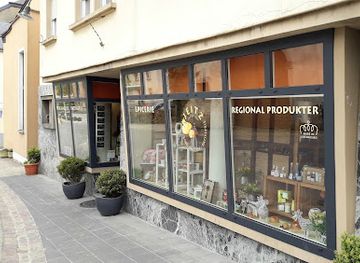
Boulangerie-Pâtisserie Jeitz Sàrl
Discover Boulangerie-Pâtisserie Jeitz Sàrl in Consdorf, where delightful pastries and fresh bread create an unforgettable local culinary experience.

Get your free copy of our complete guide to Mullerthal Trail, delivered straight to you.
Everything on this page, from attractions and restaurants to essentials and local phrases, in one PDF you can read offline, print or share.
Already have an account? Sign in
Your Mullerthal Trail guide is ready.
We'll send it to · Not you? Sign out

Getting your guide ready…
We are putting together a fresh copy of the Mullerthal Trail guide. This can take up to a minute.
This can take a few moments. If your browser asks, choose Allow so the download can start. You'll find the guide in your Downloads folder.
Nothing happened? Download it again
Sorry, the guide is taking longer than usual. Please try again in a minute, or get it by email instead.
Mullerthal Trail essentials
Currency and Payment
Safety
Emergency Situations
Do's and Don'ts
Local Tips
From Eve
Local phrases worth knowing
You don't need to get them perfect. A few words go a long way, and locals appreciate the effort.
Basics
| English | Local | Say it |
|---|---|---|
| Hello | Moien | [MWEE-en] |
| Goodbye | Äddi | [AHD-dee] |
| Yes | Jo | [YO] |
| No | Nee | [NEE] |
| Please/You're welcome | W.e.g./Gäer geschitt | [VAYG / GAYR ge-SHEET] |
| Thank you | Merci | [MEHR-see] |
| Excuse me/Sorry | Entschëllegt | [ENT-shell-egt] |
| How are you? | Wéi geet et dir? | [VAY geet ETT deer?] |
| Fine. And you? | Gutt. A dir? | [GOOT. Ah deer?] |
| Do you speak English? | Schwaarzt dir Englesch? | [SHVARTS deer ENG-lesh?] |
| I don't understand | Ech verstinn net | [ESH ver-SHTIN net] |
Eating & Drinking
| English | Local | Say it |
|---|---|---|
| I'd like to see the menu, please | Ech géif gären de Menü gesinn, w.e.g. | [ESH gayf GAIR-en deh MEH-noo ge-SEEN, vayg] |
| I don't eat meat | Ech iessen keng Fleesch | [ESH EE-sen keng FLEESH] |
| Cheers! | Zum Wohl! | [ZOOM vohl] |
| I would like to pay, please | Ech géif gären bezuelen, w.e.g. | [ESH gayf GAIR-en beh-TSWAY-len, vayg] |
Emergencies
| English | Local | Say it |
|---|---|---|
| Help! | Hëllef! | [HEL-eff] |
| Go away! | Gitt fort! | [GIT fort] |
| Call the Police! | Rufft d'Polizei! | [ROOFT deh-poh-LEE-tsai] |
| Call a doctor! | Rufft en Dokter! | [ROOFT en DOHK-tair] |
| I'm lost | Ech sinn verluer | [ESH sin vehr-LOO-er] |
| I'm ill | Ech sinn krank | [ESH sin KRAHNK] |
Shopping
| English | Local | Say it |
|---|---|---|
| I'd like to buy... | Ech géif ... kafen | [ESH gayf ... KAH-fen] |
| I'm just looking | Ech kuck just | [ESH kook yoost] |
| How much is it? | W.e.e.g kost et? | [VAYG kost ett] |
| That's too expensive | Dëst ass ze deier | [DEHST ahs zeh DEE-er] |
| Can you lower the price? | Kënnt dir den Präis erofsetzen? | [KUNT deer dehn PRIZE er-OFF-set-sen] |
Time & Numbers
| English | Local | Say it |
|---|---|---|
| What time is it? | Wéi spéit ass et? | [VAY shpayt ahs ett] |
| It's one o'clock | Et ass e puer | [ett ahs eh PEER] |
| Half past (10) | Hallef (10) | [HAH-lef (10)] |
| Morning | Muerge(n) | [MOO-er-gen] |
| Afternoon | Nomëtteg | [NOH-meh-teg] |
| Evening | Owend | [OH-vend] |
| Yesterday | Gëschter | [YESH-ter] |
| Today | Haut | [HOHt] |
| Tomorrow | Muer | [MOO-air] |
| 1 | Eng | [ENG] |
| 2 | Zwei | [TSVY] |
| 3 | Dräi | [DRY] |
| 4 | Véier | [VEE-er] |
| 5 | Fënnef | [FUN-ef] |
| 6 | Sechs | [ZEHS] |
| 7 | Siwen | [ZEE-ven] |
| 8 | Aacht | [AHKHT] |
| 9 | Néng | [NENG] |
| 10 | Zéng | [ZENG] |
Transport & Directions
| English | Local | Say it |
|---|---|---|
| Where's a/the...? | Wou ass e(n)...? | [VOO ahs eh(n)] |
| What's the address? | Wat ass d'Adress? | [VAT ahs dah-DRES] |
| Can you show me (on the map)? | Kënnt dir mir weisen (op der Kaart)? | [KUNT deer meer VY-sen (op dare KAHRT)] |
| When's the next (bus)? | Wann ass de nächste(n) (Bus)? | [VAN ahs deh NIKS-te(n) (BUS)] |
| A ticket (to ....) | Ee Billett (no ...) | [EH BEE-yet (no)] |
History of Mullerthal Trail
Sandstone Landscapes and Geological Time
The physical foundation of the Mullerthal Trail is Luxembourg Sandstone, deposited during the Triassic period and later shaped by erosion, weathering and running water. In the Mullerthal Region, these processes produced fissures, ledges, caves, narrow ravines and isolated rock towers. The geology explains the trail’s distinctive passages, where paths thread between pale, layered walls and wooded slopes. Although geological formation belongs to a far earlier timescale than human history, it has strongly influenced settlement, agriculture, forestry and the modern recreational identity of eastern Luxembourg.
Early Settlement and Echternach
Human history in the wider trail region is particularly associated with Echternach, founded around the abbey established by Saint Willibrord in 698. The abbey helped make the town an important religious and cultural centre, while the surrounding valleys and plateaux supported farming and woodland use. The town’s medieval development remains central to the cultural history of the area, offering a contrast with the sparsely settled sandstone landscapes beyond its historic core. Across the region, routes between villages, fields and forests also reflect centuries of practical movement through a working rural landscape.
Castles, Agriculture and Forest Use
The Mullerthal landscape developed through a mixture of small-scale agriculture, forestry and settlement rather than as an untouched wilderness. Historic strongholds such as Beaufort Castle and Larochette Castle belong to the broader heritage of the region, where elevated sites overlooked valleys and local routes. Villages, farmsteads and cultivated clearings remain interwoven with woodland, while streams and ravines have continued to shape movement through the terrain. The surviving pattern is therefore cultural as well as geological: the trail passes through scenery formed by natural processes and maintained over generations by rural land use.
From Rural Landscape to Walking Destination
The Mullerthal Region’s modern tourism identity grew from its sandstone scenery, wooded valleys and accessible network of rural paths. The Mullerthal Trail was developed as a long-distance walking route linking the region’s principal landscapes and settlements, with three interconnected circuits offering varied distances and terrain. Its promotion helped turn a local landscape of forests, farms and rock formations into one of Luxembourg’s best-known hiking areas without reducing it to a single viewpoint or resort. Contemporary management continues to balance recreation with the protection of paths, woodland habitats, rock formations and the character of the villages through which the routes pass.
Mullerthal Trail in Photos
Browse through our photo collection highlighting the charm and character of the destination.
Cities in Mullerthal Trail
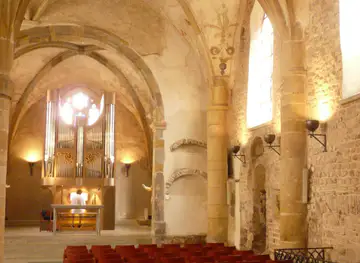
The towns and cities of Mullerthal Trail, and the easiest places to base yourself.
-

-
-


Swipe for more cities
Neighbouring destination travel guides
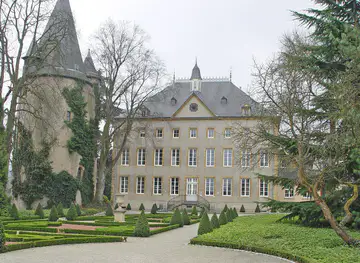
The closest destinations to Mullerthal Trail, if you have time for more than one.
-

-
-

-

-


Swipe for more destinations
Explore more
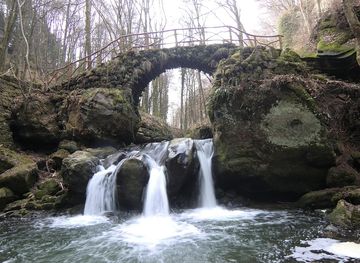
Explore more of Mullerthal
Explore the enchanting Mullerthal region in Luxembourg, known as 'Little Switzerland', with its stunning landscapes, historic sites, and charming villages.
Explore Mullerthal
Explore more of Luxembourg
Discover Luxembourg: A charming blend of historical wonders, breathtaking landscapes, and cultural vibrancy in the heart of Europe.
Explore Luxembourg