

Lowertown (Saint Paul) Travel Guide - Free
Explore Lowertown in Saint Paul with Evendo's free guide. Find the best shops, historic streets, restaurants, and gems on web or mobile.


Lowertown Saint Paul blends historic warehouses, Union Depot, Mears Park, the farmers’ market, local dining, art, and Mississippi riverfront culture.
Historic Riverfront Character
Lowertown occupies the eastern end of downtown Saint Paul, where the city’s commercial past survives in brick warehouses, railway infrastructure, broad streets, and the Mississippi riverfront. The district developed around Union Depot and the freight, wholesale, and manufacturing businesses that served Saint Paul during the nineteenth and early twentieth centuries. Today, its historic buildings contain apartments, restaurants, studios, offices, breweries, and cultural venues, giving the area a layered character rather than a single dominant identity.Read more about Lowertown
Streets, Parks, and Public Life
Food, Art, and Evening Atmosphere
Best landmarks in Lowertown
Union Depot is Lowertown’s defining landmark, a monumental Beaux-Arts railway terminal whose restored spaces preserve the district’s connection with passenger travel and regional commerce. Around it, the Lowertown Historic District retains an important concentration of late nineteenth- and early twentieth-century warehouses, built in brick and shaped by loading, storage, and wholesale functions. Mears Park is a landmark of a different kind: its landscaped public space illustrates the neighbourhood’s shift from an industrial working district to a residential and cultural quarter. CHS Field has become a contemporary reference point on the eastern side, while the Saint Paul Farmers’ Market continues a commercial tradition rooted in the area’s historic role as a distribution centre. Together these places show how transport, trade, public space, and adaptive reuse have defined Lowertown’s physical identity.
-
Park
Mears Park
Discover the beauty of Mears Park, a lush urban oasis in downtown St. Paul, perfect for relaxation, events, and exploring local culture.
1 min walk · 0.1 km from neighbourhood centre
-
Historical landmark
Union Depot
Explore the historical charm of Union Depot in St. Paul, Minnesota, where stunning architecture meets vibrant community events and convenient transportation.
3 min walk · 0.3 km from neighbourhood centre
-
Park
Landmark Plaza
Explore Landmark Plaza: A historical park in St. Paul, MN, blending lush landscapes with rich architectural heritage for an unforgettable experience.
10 min walk · 0.8 km from neighbourhood centre
-
Apartment complex
The Historic Minnesota Building
Explore the Historic Minnesota Building, a stunning architectural gem in downtown St. Paul, embodying history and modern living amidst vibrant surroundings.
7 min walk · 0.6 km from neighbourhood centre


Explore Lowertown on the map
A handpicked selection of must-see spots in Lowertown, mapped for you.
Best hotels in Lowertown
Best restaurants in Lowertown
Lowertown’s dining scene reflects the district’s warehouse conversions and its growing residential population, with restaurants, cafés, breweries, and casual venues occupying former commercial buildings around Mears Park, 5th Street, and the blocks near Union Depot. Saint Dinette has become associated with contemporary Midwestern cooking in an industrial-style setting, while OxCart Ale House combines food and craft beer close to the ballpark. Big River Pizza provides a relaxed option near the market and event venues, and Barrel Theory Beer Company represents the neighbourhood’s small-brewery culture. The Saint Paul Farmers’ Market adds a seasonal food dimension, with regional growers and producers shaping the morning experience when the outdoor market is operating. Dining can be especially busy before Saints games and during events, so the character of the area changes from weekday café traffic to a more social evening scene.
-
American
The Bulldog Lowertown
Experience the ultimate blend of gourmet burgers and craft beers at The Bulldog Lowertown in St. Paul's vibrant downtown area.
1 min walk · 0.1 km from neighbourhood centre
-
American
Dark Horse Bar & Eatery
Discover Dark Horse Bar & Eatery in St. Paul - where American cuisine meets vibrant nightlife in a charming downtown setting.
2 min walk · 0.2 km from neighbourhood centre
-
Brazilian
Bullvino's Churrascaria St. Paul
Experience authentic Brazilian cuisine at Bullvino's Churrascaria in St. Paul - where tradition meets flavor in every bite.
3 min walk · 0.2 km from neighbourhood centre
-
Restaurant
The Buttered Tin - St. Paul (Lowertown)
Experience delightful brunches and artisanal baked goods at The Buttered Tin in St. Paul's charming Lowertown neighborhood.
2 min walk · 0.2 km from neighbourhood centre

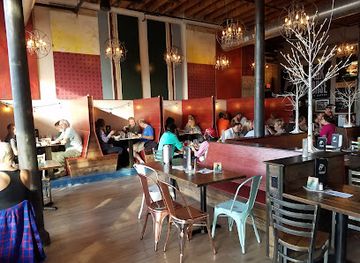


Best bars in Lowertown
Lowertown’s nightlife is busiest around Mears Park, Union Depot, and CHS Field, where converted warehouses and sports venues support a social but generally moderate evening scene rather than a dense strip of nightclubs. Barrel Theory Beer Company is a prominent local brewery, while nearby bars and restaurant lounges provide places for drinks before or after events. The seasonal Saint Paul Saints schedule adds some of the neighbourhood’s liveliest nights, with crowds moving between the ballpark, restaurants, and nearby taprooms. Union Depot also hosts cultural and private events that can extend activity into the evening. Lowertown is partly residential, so its atmosphere becomes quieter away from event venues; visitors should not assume that every block operates late into the night or that a restaurant’s evening service guarantees a club-style experience.
-
American
The Bulldog Lowertown
Experience the vibrant flavors of American cuisine at The Bulldog Lowertown, the perfect spot for food lovers and sports fans in St. Paul.
1 min walk · 0.1 km from neighbourhood centre
-
American
Dark Horse Bar & Eatery
Experience the vibrant flavors and lively atmosphere at Dark Horse Bar & Eatery, a top American restaurant in Downtown St. Paul, Minnesota.
2 min walk · 0.2 km from neighbourhood centre
-
Bar
Amsterdam Bar & Hall
Discover the lively atmosphere of Amsterdam Bar & Hall, where craft beers, live music, and delicious bites await in downtown St. Paul.
9 min walk · 0.7 km from neighbourhood centre
-
Bar
Barrio
Experience authentic Mexican flavors and an extensive tequila selection at Barrio, a vibrant bar and restaurant in downtown St. Paul.
1 min walk · 0.1 km from neighbourhood centre


Best nightclubs in Lowertown
Lowertown’s nightlife is busiest around Mears Park, Union Depot, and CHS Field, where converted warehouses and sports venues support a social but generally moderate evening scene rather than a dense strip of nightclubs. Barrel Theory Beer Company is a prominent local brewery, while nearby bars and restaurant lounges provide places for drinks before or after events. The seasonal Saint Paul Saints schedule adds some of the neighbourhood’s liveliest nights, with crowds moving between the ballpark, restaurants, and nearby taprooms. Union Depot also hosts cultural and private events that can extend activity into the evening. Lowertown is partly residential, so its atmosphere becomes quieter away from event venues; visitors should not assume that every block operates late into the night or that a restaurant’s evening service guarantees a club-style experience.
-
American
The Bulldog Lowertown
Experience the best of American cuisine at The Bulldog Lowertown, where delicious burgers and a vibrant atmosphere create unforgettable moments in St. Paul.
1 min walk · 0.1 km from neighbourhood centre
-
American
Dark Horse Bar & Eatery
Experience the vibrant atmosphere and delicious American cuisine at Dark Horse Bar & Eatery in St. Paul.
2 min walk · 0.2 km from neighbourhood centre
-
Bar
Amsterdam Bar & Hall
Experience the lively atmosphere, craft beverages, and live music at Amsterdam Bar & Hall in St. Paul – a must-visit for nightlife lovers.
9 min walk · 0.7 km from neighbourhood centre
-
Bar
Barrio
Experience the vibrant flavors of Mexico at Barrio, St. Paul's favorite Latin American bar and restaurant, known for its extensive tequila selection.
1 min walk · 0.1 km from neighbourhood centre


Best shops in Lowertown
Shopping in Lowertown is more market-led and independent than department-store oriented. The Saint Paul Farmers’ Market is the district’s principal retail attraction, particularly during its outdoor season, when stalls bring together produce, flowers, plants, prepared foods, baked goods, and other goods from regional vendors. Around the market and the converted warehouse blocks, visitors can find smaller creative businesses, studios, food and drink specialists, and event-related retail, although the selection is not comparable with a large central shopping district. The strongest reason to browse here is the relationship between commerce and place: trading takes place among buildings originally designed for wholesale distribution, making the market feel connected to Lowertown’s historic function. Seasonal markets and public events can add temporary vendors, so the current calendar is worth checking before planning a dedicated shopping visit.
-
Gift shop
Fantasy Gifts
Explore Fantasy Gifts in St. Paul, MN for a unique shopping experience filled with novelty items, adult products, and eclectic treasures.
6 min walk · 0.5 km from neighbourhood centre
-
Women's clothing store
Atelier957
Atelier957: Your destination for unique, art-inspired women's fashion in St. Paul, MN.
7 min walk · 0.5 km from neighbourhood centre
-
Sportswear store
St. Paul Saints Team Store
Explore the St. Paul Saints Team Store for authentic sportswear and memorabilia celebrating the local baseball team and its spirited community.
3 min walk · 0.3 km from neighbourhood centre
-
Coffee shop
Lowertown Bike Shop Coffee Station
Experience the perfect blend of cycling culture and coffee charm at Lowertown Bike Shop Coffee Station in St. Paul.
3 min walk · 0.2 km from neighbourhood centre


Lowertown essentials
Getting There
Getting Around
Safety
Emergency Situations
Do's and Don'ts
Local Tips

From Eve
Local phrases worth knowing
You don't need to get them perfect. A few words go a long way, and locals appreciate the effort.
Basics
| English | Local | Say it |
|---|---|---|
| Hello | Hey | [hey] |
| Goodbye | See ya | [see yah] |
| Yes | Yep | [yep] |
| No | Nah | [nah] |
| Please/You're welcome | Please/No problem | [please/no problem] |
| Thank you | Thanks | [thanks] |
| Excuse me/Sorry | Pardon me | [parr-dun me] |
| How are you? | How ya doin'? | [how yah doin'] |
| Fine. And you? | Good. How 'bout you? | [good. how 'bout yah] |
| Do you speak English? | You speak English? | [yoo speak english?] |
| I don't understand | I don't get it | [i dun get it] |
Eating & Drinking
| English | Local | Say it |
|---|---|---|
| I'd like to see the menu, please | Can I see the menu? | [can eye see the menu?] |
| I don't eat meat | I don't eat meat | [i dun eat meet] |
| Cheers! | Cheers! | [cheers] |
| I would like to pay, please | I'll pay now, thanks | [i'll pay now, thanks] |
Emergencies
| English | Local | Say it |
|---|---|---|
| Help! | Help! | [help] |
| Go away! | Get lost! | [get lost] |
| Call the Police! | Call the cops! | [call the cops] |
| Call a doctor! | Call a doc! | [call a doc] |
| I'm lost | I'm lost | [i'm lost] |
| I'm ill | I'm sick | [i'm sick] |
Shopping
| English | Local | Say it |
|---|---|---|
| I'd like to buy... | I wanna buy... | [i wanna buy] |
| I'm just looking | Just browsing | [just browsin'] |
| How much is it? | How much? | [how much] |
| That's too expensive | Too pricey | [too pricey] |
| Can you lower the price? | Can you drop the price? | [can yoo drop the price] |
Time & Numbers
| English | Local | Say it |
|---|---|---|
| What time is it? | What's the time? | [whats the time] |
| It's one o'clock | It's one | [its one] |
| Half past (10) | 10:30 | [ten-thurty] |
| Morning | Morning | [morning] |
| Afternoon | Afternoon | [afternoon] |
| Evening | Evening | [evening] |
| Yesterday | Yesterday | [yesterday] |
| Today | Today | [today] |
| Tomorrow | Tomorrow | [tomorrow] |
| 1 | One | [wun] |
| 2 | Two | [too] |
| 3 | Three | [three] |
| 4 | Four | [four] |
| 5 | Five | [five] |
| 6 | Six | [six] |
| 7 | Seven | [seven] |
| 8 | Eight | [eight] |
| 9 | Nine | [nine] |
| 10 | Ten | [ten] |
Transport & Directions
| English | Local | Say it |
|---|---|---|
| Where's a/the...? | Where's the...? | [wheres the] |
| What's the address? | What's the addy? | [whats the addy] |
| Can you show me (on the map)? | Can you show me (on the map)? | [can yoo show me (on the map)] |
| When's the next (bus)? | When's the next (bus)? | [whens the next (bus)] |
| A ticket (to ....) | A ticket to... | [a ticket to] |
History of Lowertown
River Landing and Early Commerce
Lowertown grew on the lower ground east of Saint Paul’s original bluff-top settlement, close to the Mississippi River and the landing that made the city an important trading point. Warehouses, workshops, forwarding businesses, and commercial yards developed in the nineteenth century as Saint Paul handled goods moving between river transport and the interior. The district’s name reflects this lower-lying position in relation to downtown rather than a separate town or municipality. Its location brought practical advantages for trade, but also exposed the area to flooding and difficult connections with the higher parts of the city.
Railways and the Warehouse District
Rail expansion transformed Lowertown during the late nineteenth century. Tracks and depots connected Saint Paul to regional and national markets, while wholesale firms built substantial brick warehouses for food, hardware, clothing, and other goods. The neighbourhood’s surviving industrial buildings, particularly around Kellogg Boulevard and the streets east of downtown, record this period of intense commercial growth. Union Depot, developed as Saint Paul’s principal passenger terminal and opened in its present form in 1923, became the district’s most important transport landmark. Railways made Lowertown a working district with a distinctly utilitarian urban landscape.
Decline and Historic Preservation
Changes in freight transport, suburban development, and retail distribution reduced the importance of Lowertown’s warehouses during the twentieth century. Some buildings lost their original commercial uses, while others stood vacant or were adapted for smaller businesses. Preservation efforts eventually recognised the architectural and historical value of the district’s concentrated industrial fabric, and Lowertown became associated with a nationally recognised historic district. The preservation of Union Depot and the rehabilitation of warehouse buildings helped retain the neighbourhood’s scale and materials while allowing new residential, cultural, and commercial uses.
Renewal Around Mears Park and CHS Field
Late twentieth- and early twenty-first-century investment brought apartments, restaurants, offices, arts activity, and public improvements to Lowertown. Mears Park became a focal point for residents and events, while the restoration and renewed use of Union Depot strengthened the neighbourhood’s connection with regional transit. CHS Field opened in 2015 as the home of the St. Paul Saints, adding a major sports venue and reshaping part of the eastern district. Contemporary Lowertown therefore combines preserved industrial buildings with new construction, and its continuing evolution reflects the broader challenge of reusing historic urban areas without erasing their working past.
Lowertown in Photos
Browse through our photo collection highlighting the charm and character of the destination.
Neighbourhoods near Lowertown
The closest neighbourhoods to Lowertown, if you have time for more than one stop.
-

-

-

-


Swipe for more neighbourhoods
Explore more

Explore more of Saint Paul
Saint Paul, Minnesota blends riverfront history, Victorian architecture, museums, live music and welcoming neighbourhoods for distinctive Twin Cities sightseeing.
Explore Saint Paul