

Taul Park Travel Guide - Free Web & App
Your ultimate guide to Taul Park. Discover top landmarks, proposed trips, and local tips. Free on the web or via the Evendo companion app.


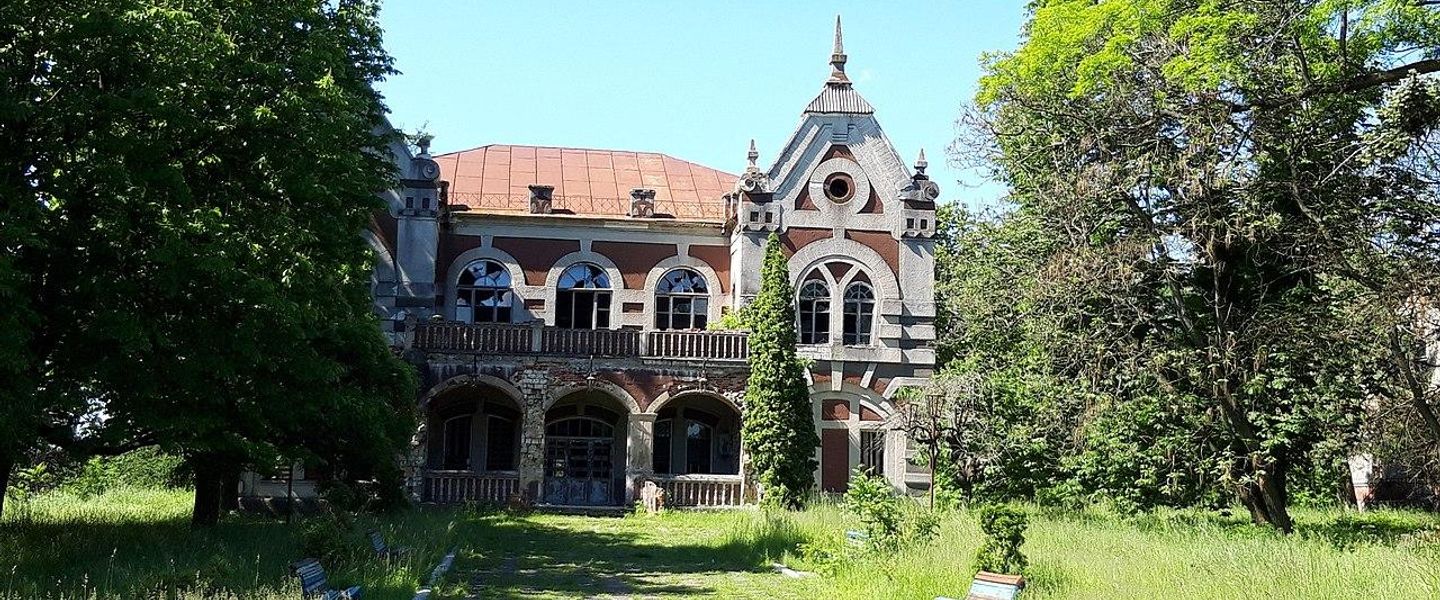


Taul Park in Moldova offers historic manor grounds, mature woodland, landscape-garden paths and a peaceful rural escape near Dondușeni in the north.
A Rural Estate Landscape
Taul Park, known locally as Parcul din satul Țaul, is an expansive historic landscape park in northern Moldova, near the town of Dondușeni. It surrounds the former Taul manor and extends across gently undulating terrain shaped by lawns, wooded slopes, winding paths, mature trees and long-established ornamental planting. Unlike a compact urban garden, the park is a broad countryside landscape whose character emerges gradually as visitors move between open clearings, woodland and estate buildings.Read more about Taul Park
Designed Nature and Local Heritage
Visiting Northern Moldova
When is the best time to visit Taul Park?
Best: June, August–September · 23–28°C| Month | High (°C) | Rainfall (mm) |
|---|---|---|
| January | 1 | 21 |
| February | 2 | 17 |
| March | 8 | 15 |
| April | 15 | 13 |
| May | 22 | 12 |
| June (best) | 27 | 9 |
| July | 29 | 8 |
| August (best) | 28 | 9 |
| September (best) | 23 | 12 |
| October | 16 | 15 |
| November | 10 | 18 |
| December | 4 | 20 |
Getting to and around Taul Park
How to get there
Transportation
Best landmarks in Taul Park
The defining landmark of Taul Park is the former manor, whose early twentieth-century architecture anchors the surrounding landscape and expresses the estate’s original social and cultural purpose. Equally important are the park’s naturalistic spatial features: mature tree groups, wooded areas, open lawns and long views formed through landscape-garden design rather than by natural wilderness alone. Together they create a rare example in Moldova of a large country estate conceived as a unified architectural and botanical composition. The park’s old trees and surviving routes are significant because they preserve the structure of a historic garden even where planting, paths or buildings have changed. Taul village provides the immediate rural context, while the absence of dense urban development helps visitors understand the manor and park as part of a former agricultural estate rather than as an isolated urban monument.
-
National park
Țaul Park
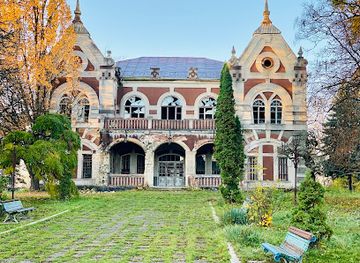
Discover Moldova's largest park, a blend of landscape architecture and historical charm, featuring rare trees and the Pommer mansion.
Explore Taul Park on the map
Plan your trip on one map. See where the top attractions, landmarks, restaurants and hotels are, and book hotels and experiences in a few clicks.
Best hotels in Taul Park
Best shops in Taul Park
Shopping at Taul Park is limited to practical provisions and whatever small-scale goods may be available through local village commerce, so visitors should obtain most supplies before arriving. Dondușeni is the nearest useful centre for everyday shopping, food and travel necessities, while larger northern Moldovan towns offer a broader selection of regional products and crafts. Visitors looking for souvenirs may find locally produced preserves, honey, seasonal produce, textiles or handmade items through occasional markets and small businesses, but availability is not guaranteed and there is no established craft-shopping quarter within the park. Moldovan wine, fruit products and traditional foodstuffs are more reliably encountered in larger towns and specialist outlets around the country. Buying directly from local producers can be appropriate when offered openly, provided visitors clarify prices and transport requirements before purchasing.
-
National park
Țaul Park
Explore the stunning natural landscapes and rich biodiversity of Țaul Park, a national park in Moldova perfect for nature lovers and outdoor enthusiasts.
Get your free copy of our complete guide to Taul Park, delivered straight to you.
Everything on this page, from attractions and restaurants to essentials and local phrases, in one PDF you can read offline, print or share.
Already have an account? Sign in
Your Taul Park guide is ready.
We'll send it to · Not you? Sign out

Getting your guide ready…
We are putting together a fresh copy of the Taul Park guide. This can take up to a minute.
This can take a few moments. If your browser asks, choose Allow so the download can start. You'll find the guide in your Downloads folder.
Nothing happened? Download it again
Sorry, the guide is taking longer than usual. Please try again in a minute, or get it by email instead.
Taul Park essentials
Currency and Payment
Safety
Emergency Situations
Do's and Don'ts
Local Tips
From Eve
Local phrases worth knowing
You don't need to get them perfect. A few words go a long way, and locals appreciate the effort.
Basics
| English | Local | Say it |
|---|---|---|
| Hello | Salut | [sah-LOOT] |
| Goodbye | La revedere | [lah reh-veh-DEH-reh] |
| Yes | Da | [dah] |
| No | Nu | [noo] |
| Please/You're welcome | Te rog | [teh rohg] |
| Thank you | Mulțumesc | [mool-tzoo-MESK] |
| Excuse me/Sorry | Scuzați-mă | [skoo-zah-TZI-muh] |
| How are you? | Ce mai faci? | [cheh my fahch?] |
| Fine. And you? | Bine. Și tu? | [bee-neh. shee too?] |
| Do you speak English? | Vorbiți engleză? | [vor-BEETZ eng-leh-zuh?] |
| I don't understand | Nu înțeleg | [noo uhn-tseh-leg] |
Eating & Drinking
| English | Local | Say it |
|---|---|---|
| I'd like to see the menu, please | Aș dori să văd meniul, vă rog | [ush doh-REE suh vad meh-nyool, vuh rohg] |
| I don't eat meat | Nu mănânc carne | [noo muh-NUHNC kahr-neh] |
| Cheers! | Noroc! | [noh-ROHK] |
| I would like to pay, please | Aș dori să plătesc, vă rog | [ush doh-REE suh pluh-TEHSC, vuh rohg] |
Emergencies
| English | Local | Say it |
|---|---|---|
| Help! | Ajutor! | [ah-YOO-tor] |
| Go away! | Du-te! | [doo-teh] |
| Call the Police! | Sună la Poliție! | [soo-NAH lah poh-LEE-tsyeh] |
| Call a doctor! | Sună un doctor! | [soo-NAH oon dohk-TOHR] |
| I'm lost | M-am pierdut | [mahm pyehr-DOOT] |
| I'm ill | Sunt bolnav | [soont bohl-NAHV] |
Shopping
| English | Local | Say it |
|---|---|---|
| I'd like to buy... | Aș dori să cumpăr... | [ush doh-REE suh koom-PUR] |
| I'm just looking | Doar mă uit | [doh-ahr muh ooit] |
| How much is it? | Cât costă? | [kaht kohs-TUH?] |
| That's too expensive | Este prea scump | [ehs-teh preh-ah skoomp] |
| Can you lower the price? | Puteți să scădeți prețul? | [poo-TEHTS suh skuh-DEHTS preh-TSOOL?] |
Time & Numbers
| English | Local | Say it |
|---|---|---|
| What time is it? | Cât este ceasul? | [kaht ehs-teh chah-SOOL?] |
| It's one o'clock | Este ora unu | [ehs-teh oh-rah oo-noo] |
| Half past (10) | La jumătate (zece) | [lah zhoo-muh-TAH-teh (zeh-che)] |
| Morning | Dimineața | [dee-mee-nyah-tsah] |
| Afternoon | După-amiază | [doo-puh ah-myah-zuh] |
| Evening | Seara | [seh-AH-rah] |
| Yesterday | Ieri | [yehr] |
| Today | Astăzi | [ahs-tuhz] |
| Tomorrow | Mâine | [muh-YEH-neh] |
| 1 | Unu | [oo-noo] |
| 2 | Doi | [doy] |
| 3 | Trei | [tray] |
| 4 | Patru | [PAH-troo] |
| 5 | Cinci | [cheench] |
| 6 | Șase | [shah-seh] |
| 7 | Șapte | [shahp-teh] |
| 8 | Opt | [ohpt] |
| 9 | Nouă | [NOO-uh] |
| 10 | Zece | [zeh-che] |
Transport & Directions
| English | Local | Say it |
|---|---|---|
| Where's a/the...? | Unde este unul/una...? | [oon-deh ehs-teh oo-NOOL/oo-nah] |
| What's the address? | Care este adresa? | [kah-reh ehs-teh ah-DREH-sah] |
| Can you show me (on the map)? | Poți să-mi arăți (pe hartă)? | [POHTS suh-mee ah-RAHTS (peh hahr-TUH)] |
| When's the next (bus)? | Când vine următorul (autobuz)? | [kahnd VEE-neh oor-MAH-toh-rool (ow-toh-BOOZ)] |
| A ticket (to ....) | Un bilet (spre ...) | [oon bee-LET (spreh)] |
History of Taul Park
The Northern Moldovan Landscape
Taul Park belongs to the gently rolling agricultural landscape of northern Moldova, a region shaped over centuries by settled farming, village life and estate cultivation. The park’s present character is therefore the result of both natural terrain and deliberate land management. Its wooded areas, open lawns and ornamental planting contrast with the surrounding fields, preserving a designed landscape within a predominantly rural setting. The location also reflects the historical importance of estate centres in northern Bessarabia, where country residences combined agricultural administration with formal gardens and recreational grounds.
The Taul Estate and Manor
The park developed around a manor estate at the beginning of the twentieth century, during a period when prosperous landowners in Bessarabia commissioned substantial country residences and landscaped grounds. The manor and its surrounding park were planned as a unified composition, with approaches, clearings, tree groups and views arranged to give the estate both ceremony and privacy. The architectural details and ownership history are described differently in popular accounts, but the estate’s early twentieth-century origin is central to its identity. The surviving grounds provide an unusually extensive example of this class of rural heritage in Moldova.
A Landscape Garden in Bessarabia
The design of Taul Park reflects the European landscape-garden fashion that replaced purely geometric planting with a mixture of formal and naturalistic scenery. Curving routes, broad spaces and planted groups were used to create changing views rather than a single rigid axis. The park’s scale allowed the estate landscape to extend beyond the immediate gardens into woodland and open country, making the grounds feel more like a managed parkland than a conventional garden. Mature trees and surviving spatial relationships remain the clearest historical evidence of this design tradition.
Twentieth-Century Change and Conservation
The political changes that followed the end of the imperial period altered the ownership and use of estates across Bessarabia, including the Taul property. In the Soviet period, many manor landscapes were adapted to institutional, agricultural or public purposes, while maintenance priorities changed and some historic buildings and paths deteriorated. Taul Park nevertheless remained recognised for its dendrological and landscape value. In independent Moldova, it continues to be treated as an important cultural and natural heritage site, although visitors should expect a historic park with uneven investment rather than a uniformly restored formal garden.
Taul Park in Photos
Browse through our photo collection highlighting the charm and character of the destination.
Neighbouring destination travel guides
The closest destinations to Taul Park, if you have time for more than one.
-

-

-

-

-


Swipe for more destinations
Explore more

Explore more of Bălți County
Explore Bălți County in northern Moldova for market-town culture, open farmland, regional history, village traditions and welcoming local cuisine.
Explore Bălți County
Explore more of Moldova
Discover Moldova: A tranquil haven of rich history, stunning vineyards, and captivating natural landscapes, perfect for an off-the-beaten-path European adventure.
Explore Moldova