

Free Agadir Travel Guide & Mobile App
Plan your Agadir trip with Evendo. Get free guides to top attractions, restaurants, hotels, and bars. Web access or download the mobile app.


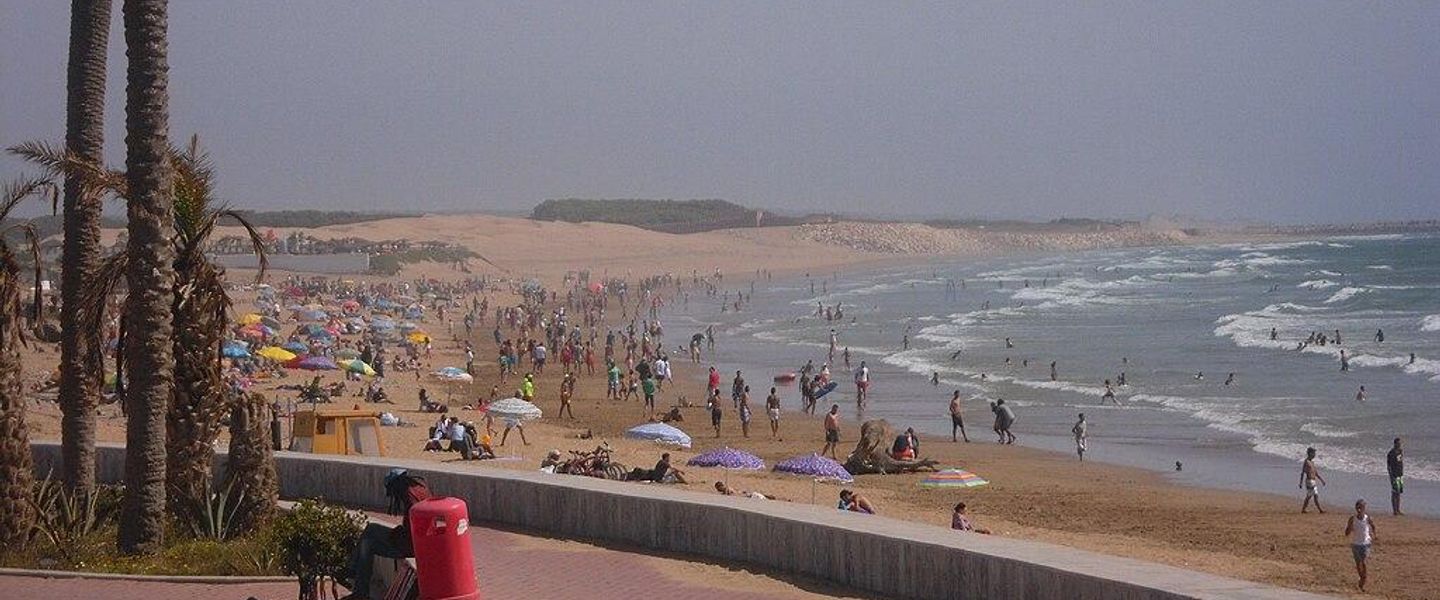


Agadir blends Atlantic beaches, Amazigh culture, earthquake-shaped history and Souss cuisine with relaxed sightseeing, markets and coastal excursions in Morocco.
Atlantic Setting and Modern Character
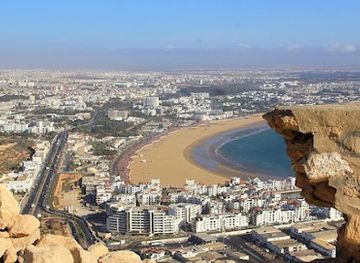
Agadir stretches along Morocco’s Atlantic coast, where a broad sandy beach, a temperate climate and the foothills of the Anti-Atlas create a city with a distinctly open horizon. Much of the urban fabric is modern: the devastating earthquake of 1960 destroyed the historic centre, and Agadir was subsequently rebuilt with wide avenues, whitewashed buildings and carefully planned neighbourhoods. The result is unlike Morocco’s medieval imperial cities, offering a relaxed coastal rhythm rather than a densely enclosed old town.Read more about Agadir
Amazigh Culture and Coastal Life
Markets, Hills and the Souss Plain
When is the best time to visit Agadir?
Best: April–June · 23–28°C| Month | High (°C) | Rainfall (mm) |
|---|---|---|
| January | 21 | 43 |
| February | 21 | 37 |
| March | 22 | 33 |
| April (best) | 23 | 19 |
| May (best) | 25 | 6 |
| June (best) | 28 | 1 |
| July | 30 | 0 |
| August | 31 | 0 |
| September | 30 | 1 |
| October | 27 | 21 |
| November | 23 | 41 |
| December | 21 | 46 |
Getting to and around Agadir
How to get there
Transportation
Best attractions in Agadir
Agadir’s principal sights combine coastal leisure with traces of a city rebuilt after disaster. The long Atlantic beach and promenade provide open views, walking space and access to water-based activities, while Agadir Oufella rises above the bay with surviving kasbah walls and a commanding outlook over the port and modern city. In the centre, the Amazigh Heritage Museum presents jewellery, textiles and ceremonial objects from southern Morocco, offering cultural context beyond the resort quarter. Souk El Had is the city’s major market, extending through a large enclosed complex of stalls selling produce, spices, clothing and household goods. The reconstructed Medina, created by artist Coco Polizzi, offers artisan workshops and an architectural interpretation of southern Moroccan traditions rather than an untouched historic quarter. Families may also visit Crocoparc, outside central Agadir near Drarga, while the marina and fishing port reveal the city’s continuing relationship with the Atlantic.
-
Market
Souk El Had
Explore the vibrant Souk El Had in Agadir, a bustling market filled with local crafts, spices, and culinary delights that embody Moroccan culture.
6 min drive · 1.9 km from city centre
-
Tourist attraction
Crocoparc
Explore the captivating Crocoparc in Agadir, where exotic crocodiles meet stunning botanical gardens and delightful dining experiences.
32 min drive · 12 km from city centre
-
Tourist attraction
Agadir Oufella
Discover the historical Agadir Oufella, a breathtaking cultural landmark offering stunning views and rich history in the heart of Agadir.
8 min drive · 2.7 km from city centre
-
Beach
Plage d'Agadir
Discover the beauty of Plage d'Agadir, a captivating beach destination in Morocco, perfect for relaxation and adventure by the Atlantic Ocean.
16 min walk · 1.2 km from city centre



Best landmarks in Agadir
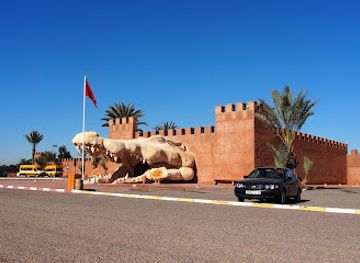
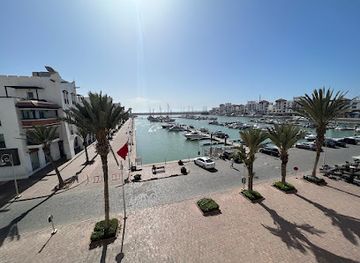
Agadir Oufella is the city’s defining historic landmark, occupying the hill above the bay where the Portuguese settlement and later kasbah stood; its surviving walls and Arabic inscription commemorate a place transformed by the 1960 earthquake. Near the centre, the Memorial Museum of Reconstruction and the surrounding remembrance spaces interpret the disaster and the rebuilding that followed. The Amazigh Heritage Museum is a cultural landmark rather than a monumental building, preserving jewellery, textiles and objects that express the identity of the Souss region. The rebuilt Medina, designed by Coco Polizzi, deliberately evokes southern Moroccan architectural forms while remaining a modern cultural and artisan complex. Agadir’s broad avenues, white modernist buildings and carefully planned districts are themselves part of its post-earthquake architectural character. Together, these places show the city’s passage from fortified Atlantic settlement to reconstructed regional capital and seaside resort.
-
Market
Souk El Had
Discover the vibrant Souk El Had in Agadir, Morocco – a bustling market filled with local crafts, delicious cuisine, and rich cultural experiences.
6 min drive · 1.9 km from city centre
-
Animal park
Crocoparc
Explore Crocoparc in Agadir: A captivating animal park and botanical garden showcasing exotic wildlife and lush landscapes for an unforgettable day out.
32 min drive · 12 km from city centre
-
Holiday apartment rental
Marina luxury apartments Agadir
Discover the elegance of Marina Luxury Apartments in Agadir, where comfort meets coastal beauty for an unforgettable getaway.
6 min drive · 2.0 km from city centre
-
Tourist attraction
Agadir Oufella
Discover the breathtaking Agadir Oufella, a historical landmark offering stunning views of Agadir and the Atlantic Ocean, rich in cultural significance.
8 min drive · 2.7 km from city centre
Explore Agadir on the map
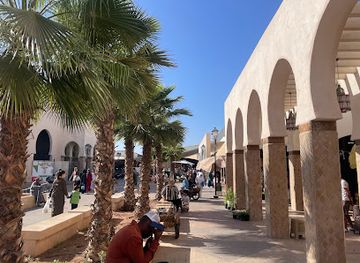
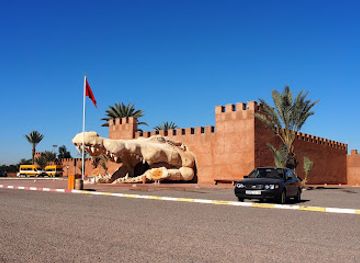
Plan your Agadir trip on one map. See where the top attractions, landmarks, restaurants, bars and hotels are, find what's near where you're staying, and book hotels and experiences in a few clicks.
Best hotels in Agadir
Best restaurants in Agadir
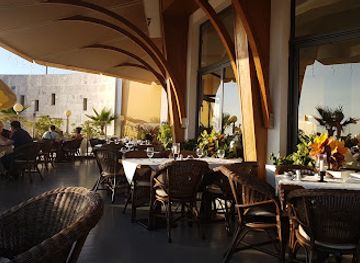
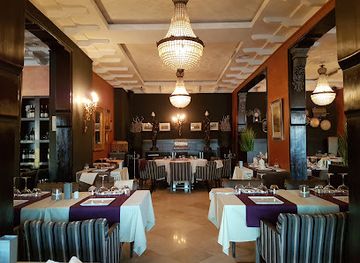
Agadir’s dining scene reflects the produce of the Souss and the city’s position on the Atlantic. Seafood is prominent, with grilled fish, prawns and other daily catches appearing in restaurants near the port and coastal districts, while Moroccan cooking brings tagines, couscous, pastilla, harira and brochettes to family restaurants and hotel dining rooms. Local flavours often include preserved lemon, olives, saffron, cumin and chermoula, and the region’s argan oil may accompany bread or feature in dressings. Talborjt and the central districts offer informal cafés and Moroccan eateries, while the beachfront and marina provide a broader range of international food. Souk El Had is useful for seeing seasonal fruit, vegetables, spices and olives, although market stalls are more suited to ingredients and snacks than to a single defined restaurant tradition. Tea, pastries and fresh juices are part of the city’s everyday food culture.
-
Restaurant
Ô Playa
Experience exquisite coastal dining at Ô Playa in Agadir; where fresh seafood meets stunning ocean views.
14 min walk · 1.1 km from city centre
-
Restaurant
Pure Passion
Discover Pure Passion: A premier dining destination in Agadir offering exquisite Moroccan cuisine with a modern twist.
6 min drive · 2.0 km from city centre
-
Restaurant
El Toro
Experience the best of Mediterranean and Moroccan cuisine at El Toro in Agadir – where flavors come alive!
13 min walk · 1.1 km from city centre
-
Restaurant
Amsterdam luxury restaurant
Experience luxury dining at Amsterdam Luxury Restaurant in Agadir with exquisite dishes and an elegant atmosphere for unforgettable moments.
12 min drive · 3.8 km from city centre

Best bars in Agadir
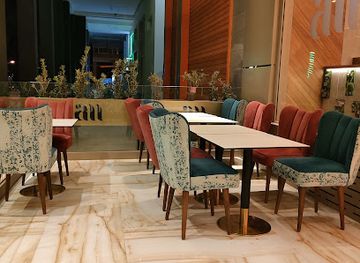
Agadir’s evening life is concentrated around the beachfront, hotel quarter, marina and selected central streets rather than spread across a dense network of independent nightlife districts. Resort hotels and licensed venues offer lounges, bars, live music and occasional Moroccan performances, while the marina provides a polished setting for an evening drink. Some restaurants remain active after dark, and cafés in Talborjt and central Agadir are more closely connected to local social life than to club culture. Nightclubs exist mainly within the tourist and hotel environment, with the atmosphere varying by season and venue. The city is generally more relaxed than Casablanca or Marrakesh at night, and visitors should remember that alcohol is served only in licensed establishments. For a quieter evening, the promenade, cafés and cultural performances offer alternatives to late-night entertainment.
-
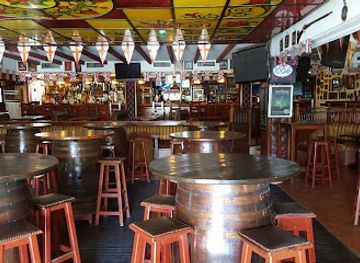
Pub
English Pub
Discover the vibrant nightlife at the English Pub in Agadir, where traditional English hospitality meets Moroccan charm in a lively atmosphere.
9 min walk · 0.7 km from city centre
-
Bar
Zanzibar Lounge
Discover the lively ambiance of Zanzibar Lounge in Agadir, where delicious drinks and vibrant nightlife await you.
6 min drive · 2.0 km from city centre
-
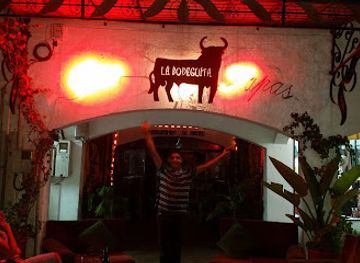
Bar
La Bodeguita
Experience the vibrant nightlife of Agadir at La Bodeguita, where local culture and modern entertainment come together in a lively bar setting.
9 min walk · 0.7 km from city centre
-
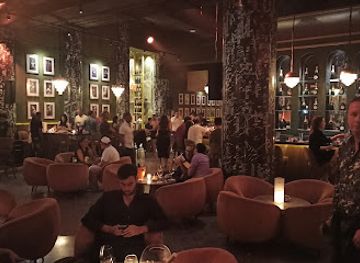
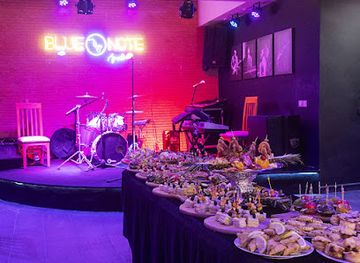
Bar
Blue Note Agadir
Discover the vibrant nightlife at Blue Note Agadir, where live jazz meets exquisite cuisine in an unforgettable setting.
7 min walk · 0.6 km from city centre
Best nightclubs in Agadir
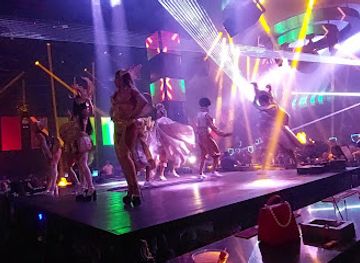
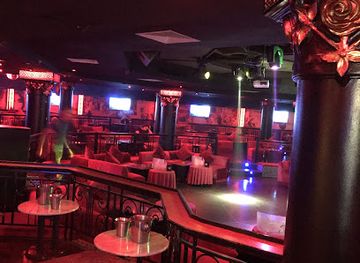
Agadir’s evening life is concentrated around the beachfront, hotel quarter, marina and selected central streets rather than spread across a dense network of independent nightlife districts. Resort hotels and licensed venues offer lounges, bars, live music and occasional Moroccan performances, while the marina provides a polished setting for an evening drink. Some restaurants remain active after dark, and cafés in Talborjt and central Agadir are more closely connected to local social life than to club culture. Nightclubs exist mainly within the tourist and hotel environment, with the atmosphere varying by season and venue. The city is generally more relaxed than Casablanca or Marrakesh at night, and visitors should remember that alcohol is served only in licensed establishments. For a quieter evening, the promenade, cafés and cultural performances offer alternatives to late-night entertainment.
-
Disco club
Naya Club Agadir
Experience the vibrant nightlife at Naya Club Agadir, where music and dance come alive in the heart of Morocco's coastal paradise.
6 min walk · 0.5 km from city centre
-
Bar
Flamingo Night Club
Discover the vibrant nightlife at Flamingo Night Club in Agadir, where music and dance come alive in a stunning atmosphere.
14 min walk · 1.1 km from city centre
-
Lounge
Millionair's club
Discover the vibrant nightlife at Millionair's Club in Agadir - where music, dance, and unforgettable memories await.
11 min walk · 0.9 km from city centre
-
Night club
rotana night club
Experience unforgettable nights filled with music, dancing, and vibrant atmosphere at Rotana Night Club in Agadir, Morocco.
6 min drive · 2.1 km from city centre
Best shops in Agadir
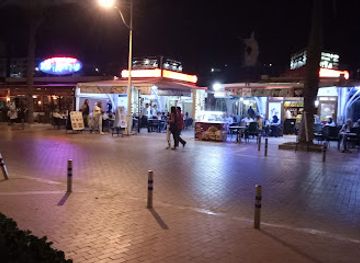
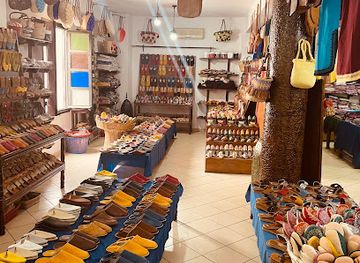
Souk El Had is Agadir’s central shopping experience, a vast market where visitors encounter fruit, vegetables, spices, olives, household goods, clothing and Moroccan handicrafts amid the routines of local commerce. Bargaining is common for many non-fixed-price items, while food and everyday products may be sold at more established prices. The market is also a useful place to look for regional specialities such as argan oil, though buyers should check labelling and provenance carefully. Talborjt and the central streets contain small shops, bakeries and practical retailers, while the marina and resort areas offer more contemporary boutiques and souvenir outlets. The reconstructed Medina provides artisan workshops and displays of pottery, leatherwork, woodwork and textiles inspired by southern Moroccan traditions. Silver jewellery, woven goods and colourful ceramics reflect the wider Amazigh and Souss heritage, but quality and origin vary between sellers.
-
Market
Kasbat Souss
Explore Agadir's Kasbat Souss Market for authentic handicrafts, local culture, and an unforgettable shopping experience in Morocco.
14 min drive · 4.7 km from city centre
-
Electronics store
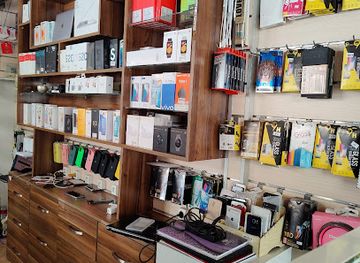
Shopagadir
Discover the latest gadgets and electronics at Shopagadir, Agadir's top destination for tech enthusiasts and casual shoppers alike.
13 min walk · 1.1 km from city centre
-
Men's clothing store
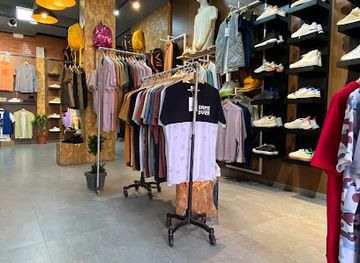
Wild Clothing ( Hay Salam )
Discover the latest trends at Wild Clothing in Hay Salam, Agadir – where stylish men's fashion meets local culture.
16 min drive · 5.3 km from city centre
-
Shopping mall
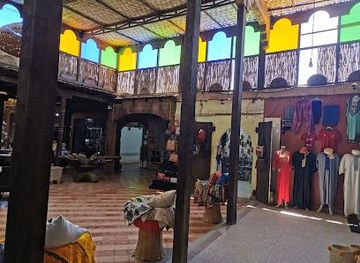
Souk Berbere Artisanal
Explore Souk Berbere Artisanal in Agadir for a vibrant shopping experience filled with handcrafted Moroccan treasures and local culture.
8 min drive · 2.6 km from city centre
Get your free copy of our complete guide to Agadir, delivered straight to you.
Everything on this page, from attractions and restaurants to essentials and local phrases, in one PDF you can read offline, print or share.
Already have an account? Sign in
Your Agadir guide is ready.
We'll send it to · Not you? Sign out

Getting your guide ready…
We are putting together a fresh copy of the Agadir guide. This can take up to a minute.
This can take a few moments. If your browser asks, choose Allow so the download can start. You'll find the guide in your Downloads folder.
Nothing happened? Download it again
Sorry, the guide is taking longer than usual. Please try again in a minute, or get it by email instead.
Agadir essentials
Currency and Payment
Safety
Emergency Situations
Do's and Don'ts
Local Tips
From Eve
Local phrases worth knowing
You don't need to get them perfect. A few words go a long way, and locals appreciate the effort.
Basics
| English | Local | Say it |
|---|---|---|
| Hello | سلام | [salam] |
| Goodbye | وداعا | [wada'an] |
| Yes | نعم | [na'am] |
| No | لا | [la] |
| Please/You're welcome | من فضلك | [min fadlik] |
| Thank you | شكرا | [shukran] |
| Excuse me/Sorry | عذرا | ['udhran] |
| How are you? | كيف حالك؟ | [kayfa haluk?] |
| Fine. And you? | بخير. وأنت؟ | [bikhayr. wa'ant?] |
| Do you speak English? | هل تتحدث الإنجليزية؟ | [hal tatahadath al'injlizia?] |
| I don't understand | لا أفهم | [la afham] |
Eating & Drinking
| English | Local | Say it |
|---|---|---|
| I'd like to see the menu, please | أود أن أرى القائمة، من فضلك | [awad an ara alqaimah, min fadlik] |
| I don't eat meat | أنا لا آكل اللحوم | [ana la akl allahm] |
| Cheers! | صحتين! | [sahatin!] |
| I would like to pay, please | أريد أن أدفع، من فضلك | [uriid 'an 'udfi', min fadlik] |
Emergencies
| English | Local | Say it |
|---|---|---|
| Help! | النجدة! | [annajdah!] |
| Go away! | انصرف! | [insraf!] |
| Call the Police! | اتصل بالشرطة! | [atassil bialshurta!] |
| Call a doctor! | اتصل بطبيب! | [atassil bitalib!] |
| I'm lost | لقد ضللت الطريق | [laqad dalalt altariq] |
| I'm ill | أنا مريض | [ana mareed] |
Shopping
| English | Local | Say it |
|---|---|---|
| I'd like to buy... | أود أن أشتري... | [awad an ashtari...] |
| I'm just looking | أنا فقط أتطلع | [ana faqat atatala] |
| How much is it? | كم هو ثمنه؟ | [kam hu thamanuh?] |
| That's too expensive | هذا غالي جدا | [hatha ghali jiddan] |
| Can you lower the price? | هل يمكنك خفض السعر؟ | [hal yumkinuk khafd alsar?] |
Time & Numbers
| English | Local | Say it |
|---|---|---|
| What time is it? | كم الساعة؟ | [kam alsaa'ah?] |
| It's one o'clock | الواحدة | [alwahidah] |
| Half past (10) | العاشر والنصف | [al'ashir walnusf] |
| Morning | الصباح | [alsabah] |
| Afternoon | بعد الظهر | [ba'd alduhur] |
| Evening | المساء | [almasa'] |
| Yesterday | أمس | [ams] |
| Today | اليوم | [alyawm] |
| Tomorrow | غدا | [ghadan] |
| 1 | واحد | [wahid] |
| 2 | اثنان | [ithnan] |
| 3 | ثلاثة | [thalatha] |
| 4 | أربعة | [arba'a] |
| 5 | خمسة | [khamsa] |
| 6 | ستة | [sitta] |
| 7 | سبعة | [sab'a] |
| 8 | ثمانية | [thamania] |
| 9 | تسعة | [tasia'a] |
| 10 | عشرة | ['ashara] |
Transport & Directions
| English | Local | Say it |
|---|---|---|
| Where's a/the...? | أين...؟ | [ayn...?] |
| What's the address? | ما هو العنوان؟ | [ma hu al'uanan?] |
| Can you show me (on the map)? | هل يمكنك إظهار لي (على الخريطة)؟ | [hal yumkinuk 'iizar li ( 'iilaa alkhariata)?] |
| When's the next (bus)? | متى الحافلة التالية؟ | [mata alhafilat altaliat?] |
| A ticket (to ....) | تذكرة (إلى ...) | [tadhkirat ( 'iilaa ...)] |
History of Agadir
Amazigh Souss Before the Port
Agadir developed within the Souss, a fertile plain and trading region with deep Amazigh roots. Communities in the surrounding Anti-Atlas and coastal hinterland maintained agricultural, pastoral and commercial networks long before the modern city emerged. The area’s position between the Atlantic, the Sahara and inland Morocco encouraged the movement of goods and people, including argan products, cereals and livestock. Agadir’s later history cannot be separated from this regional setting: its identity remains closely connected to the Amazigh culture of southern Morocco, expressed in local speech, jewellery, textiles and social traditions. The hill where the Kasbah later stood also reflects the strategic value of the coastal settlement, commanding the bay and approaches to the port.
Portuguese Santa Cruz
The Portuguese established a fortified presence at Agadir in the early sixteenth century, referring to the settlement as Santa Cruz do Cabo de Gué. The site formed part of Portugal’s wider Atlantic ambitions and supported maritime trade and coastal control. Portuguese occupation was contested by local forces and by the Saadian dynasty, which was consolidating power in southern Morocco. The fortress and settlement occupied the hill above the bay, a position that explains the enduring importance of Agadir Oufella. Though little of the original Portuguese town survives visibly, this period placed Agadir within the international competition for Atlantic commerce and left a foundational chapter in the city’s recorded history.
Saadian Reconquest and Regional Trade
In 1541, Saadian forces captured Santa Cruz, ending Portuguese control of Agadir. The victory strengthened Saadian authority in the south and became an important episode in Morocco’s resistance to Iberian expansion. Agadir continued to function as a port and commercial outlet, linking the Souss and the southern caravan routes with Atlantic shipping. Its fortunes varied over subsequent centuries as political authority, trade patterns and harbour conditions changed, but the settlement retained strategic value. The hilltop kasbah remained the defining symbol of the town, while the surrounding plain supported agriculture and the production of goods associated with the Souss, including cereals and argan oil.
Colonial Port and Commercial Expansion
During the French Protectorate, established in Morocco in 1912, Agadir became more closely integrated into modern administrative and commercial networks. Port development and improved roads connected the city with agricultural production in the Souss and with wider Moroccan markets. The settlement expanded beyond the hilltop kasbah, and its economy increasingly reflected maritime trade, fishing and the export of regional produce. French planning and infrastructure altered the scale and appearance of Agadir, although Amazigh communities and local commercial traditions remained central to the region’s social life. This period laid some of the foundations for the modern port and resort city that emerged after independence.
The Earthquake of 1960
On 29 February 1960, a powerful earthquake struck Agadir shortly before midnight, causing catastrophic destruction in the old city and killing thousands of people. The kasbah and densely built quarters were particularly affected, and much of the historic settlement was lost. The disaster permanently changed Agadir’s physical and emotional landscape. Reconstruction followed under Moroccan national leadership, with architects and planners creating a lower-density city organised around broad roads, modern buildings and functional districts. The surviving kasbah walls, memorial spaces and the rebuilt urban plan now express different aspects of the event: one preserves fragments of the pre-earthquake city, while the other records the scale of the country’s reconstruction effort.
Rebuilt Resort and Regional Centre
From the 1960s onwards, Agadir developed as a major Moroccan seaside destination and as the administrative and economic centre of the Souss-Massa region. Hotels, promenades, the fishing port and new residential districts expanded around the reconstructed core. Tourism became an important part of the economy, alongside fishing, agriculture and trade. Contemporary Agadir combines planned modernism with strong regional traditions: the Amazigh Heritage Museum, Souk El Had and local cultural events help maintain links with the wider Souss, while the beach and marina reflect its international resort role. The city’s present identity is therefore shaped by both continuity and rupture, with reconstruction forming an essential part of its heritage.
Agadir in Photos
Browse through our photo collection highlighting the charm and character of the destination.
Cities near Agadir
The closest cities to Agadir, if you have time for more than one stop.
-

-

-

-

-


Swipe for more cities
Explore more

Explore more of Morocco
Discover Morocco: A land of rich history, vibrant culture, and stunning landscapes, where ancient traditions meet modern allure.
Explore Morocco