

Hassan Tower (Rabat) Travel Guide - Free
Explore Hassan Tower in Rabat with Evendo's free guide. Find the best shops, historic streets, restaurants, and gems on web or mobile.


Hassan Tower in Rabat, Morocco, pairs an unfinished Almohad minaret with the Mohammed V Mausoleum, river views, historic squares and medina walks.
The Monumental Setting
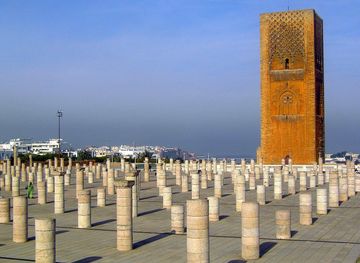
Hassan Tower gives its name to one of Rabat’s most significant historic precincts, centred on the broad esplanade surrounding the unfinished twelfth-century mosque and minaret. Set on the southern side of the Bou Regreg estuary, the area forms a striking transition between Rabat’s royal, administrative and religious quarters and the river-facing districts across the water. The tower’s red-ochre stone, carefully spaced columns and open foundations create a powerful sense of scale, even though the mosque was never completed.Read more about Hassan Tower
History in Stone
Streets, River and Everyday Rabat
Best attractions in Hassan Tower
Hassan Tower is the defining attraction of the area: its square Almohad minaret rises above the remains of an unfinished mosque, whose rows of columns and foundations spread across the open esplanade. Beside it, the Mohammed V Mausoleum offers a carefully maintained interior of white marble, carved plaster, zellij tilework and a green-tiled roof, with ceremonial guards adding to its formal atmosphere. The broad plaza is itself part of the experience, providing changing perspectives on the tower and views towards the Bou Regreg. Visitors can extend their walk towards the nearby Medina and the river approaches, while the Kasbah of the Udayas lies across the estuary in a separate historic quarter. The attraction here is not a dense collection of museums but the contrast between archaeological remains, royal memorial architecture and Rabat’s spacious civic landscape.
-
Historical landmark
Hassan Tower
Explore the iconic Hassan Tower in Rabat, a historical landmark showcasing stunning architecture and rich Moroccan heritage.
16 min walk · 1.3 km from neighbourhood centre
-
Park
Nouzhat Hassan Garden
Explore Nouzhat Hassan Garden, Rabat’s lush urban park filled with vibrant flowers, serene fountains, perfect for relaxation and cultural immersion.
5 min walk · 0.4 km from neighbourhood centre
-
Mosque
صومعة حسان الرباط Tour Hassan Rabat
Explore the architectural wonder of Tour Hassan, a historic mosque in Rabat showcasing the rich heritage of Morocco.
16 min walk · 1.3 km from neighbourhood centre
-
Tourist attraction
Hassan tower fortress square
Discover the architectural marvel of Hassan Tower in Rabat, a historical gem showcasing Morocco's rich heritage and stunning artistry.
17 min walk · 1.3 km from neighbourhood centre


Best landmarks in Hassan Tower
Hassan Tower is an architectural landmark of the Almohad period, distinguished by its red sandstone appearance, square plan and unfinished upper structure. The surrounding columns and foundations reveal the intended scale of the mosque and make the site important not only as a minaret but also as an archaeological urban plan. The Mohammed V Mausoleum forms the precinct’s other major landmark, pairing Moroccan decorative traditions with a twentieth-century national memorial function. Together, the two buildings create a deliberate visual relationship between medieval imperial Rabat and the modern Moroccan monarchy. The open esplanade, formal approaches and riverward setting are also significant, preserving the monument as a spacious civic composition rather than an isolated tower. Nearby avenues and institutional buildings belong to the wider Hassan and central Rabat landscape; they add context but should not be confused with the Almohad monument itself.
-
Historical landmark
Hassan Tower
Explore Hassan Tower in Rabat, a historic landmark symbolizing Morocco's rich cultural heritage and architectural grandeur.
16 min walk · 1.3 km from neighbourhood centre
-
Park
Nouzhat Hassan Garden
Explore the serene Nouzhat Hassan Garden in Rabat, a perfect blend of nature, culture, and tranquility in Morocco's vibrant capital.
5 min walk · 0.4 km from neighbourhood centre
-
Landmark
Ocean view
Experience the stunning ocean views of Rabat, a perfect blend of nature and culture awaiting your discovery.
19 min walk · 1.5 km from neighbourhood centre
-
Mosque
صومعة حسان الرباط Tour Hassan Rabat
Immerse yourself in the rich history and stunning architecture of Tour Hassan, a must-visit landmark in Rabat, Morocco.
16 min walk · 1.3 km from neighbourhood centre


Explore Hassan Tower on the map
A handpicked selection of must-see spots in Hassan Tower, mapped for you.
Best hotels in Hassan Tower
Best restaurants in Hassan Tower
Dining immediately around Hassan Tower is relatively restrained because the area is dominated by monuments, official buildings and open civic space. For a broader choice, walk towards the Medina and central Rabat, where cafés, Moroccan restaurants, bakeries and casual eateries occupy busier commercial streets. Visitors can look for familiar Moroccan dishes such as tagines, couscous, harira, grilled meats and pastilla, while mint tea and coffee are easy to find in local cafés. The nearby market streets provide a more everyday food atmosphere than the formal monument precinct, although stalls and businesses change over time. The Hassan quarter also has restaurants serving international and contemporary Moroccan food, reflecting Rabat’s administrative and diplomatic character. Dining choices are therefore best understood as part of the wider central Rabat area, with Hassan Tower providing the architectural setting for a walk before or after a meal rather than functioning as a dedicated restaurant district.
-
Restaurant
Coq Magic
Discover authentic Moroccan flavors at Coq Magic, where delicious barbecue meets warm hospitality in the heart of Rabat.
12 min walk · 1.0 km from neighbourhood centre
-
Restaurant
La Casa Di Carta
Experience authentic Moroccan cuisine at La Casa Di Carta in Rabat – where tradition meets flavor in a charming setting.
15 min walk · 1.2 km from neighbourhood centre
-
Fish restaurant
Dar Al Achab
Experience exquisite seafood at Dar Al Achab in Rabat – where freshness meets tradition in every delightful dish.
14 min walk · 1.1 km from neighbourhood centre
-
Moroccan
Chez CHIHAB
Experience the essence of Moroccan cuisine at Chez CHIHAB in Rabat, where tradition meets flavor in every dish.
12 min walk · 1.0 km from neighbourhood centre


Best bars in Hassan Tower
Hassan Tower is not a nightlife quarter, and the immediate surroundings become noticeably quieter after the monument and nearby civic buildings close for the day. Evening options are more likely to involve cafés, hotel lounges and restaurants in central Rabat than clubs concentrated beside the tower. The Medina and newer city centre offer further places to sit over tea, coffee or a meal, while larger nightlife venues are scattered rather than gathered in a single Hassan Tower strip. The broad esplanade can be atmospheric at dusk, with the illuminated monument and open views towards the river, but it is primarily a public heritage space rather than an entertainment venue. Visitors should keep voices low near residential and institutional streets, use licensed taxis when returning late and check current local arrangements rather than assuming that daytime access or nearby businesses continue into the night.
-
Bar
Baz'Art
Discover the vibrant drinks and artistic atmosphere at Baz'Art, a must-visit bar in the heart of Rabat, Morocco.
10 min walk · 0.8 km from neighbourhood centre
-
Bar
Yucatan
Discover the vibrant nightlife at Yucatan, Rabat's friendly bar offering affordable drinks and a lively atmosphere for tourists and locals alike.
12 min walk · 0.9 km from neighbourhood centre
-
Grill
Le Jour Et Nuit
Discover the delightful flavors of Moroccan cuisine at Le Jour Et Nuit, a top grill destination in Rabat offering a vibrant atmosphere and delicious grilled dishes.
7 min walk · 0.6 km from neighbourhood centre
-
Lounge
The Trendy - Restaurant Lounge Bar
Experience the vibrant nightlife of Rabat at The Trendy Lounge Bar, where style meets comfort and exceptional cocktails await.
10 min walk · 0.8 km from neighbourhood centre


Best nightclubs in Hassan Tower
Hassan Tower is not a nightlife quarter, and the immediate surroundings become noticeably quieter after the monument and nearby civic buildings close for the day. Evening options are more likely to involve cafés, hotel lounges and restaurants in central Rabat than clubs concentrated beside the tower. The Medina and newer city centre offer further places to sit over tea, coffee or a meal, while larger nightlife venues are scattered rather than gathered in a single Hassan Tower strip. The broad esplanade can be atmospheric at dusk, with the illuminated monument and open views towards the river, but it is primarily a public heritage space rather than an entertainment venue. Visitors should keep voices low near residential and institutional streets, use licensed taxis when returning late and check current local arrangements rather than assuming that daytime access or nearby businesses continue into the night.
-
Lounge
Montecristo Rabat
Discover Montecristo Rabat, a chic lounge offering a vibrant nightlife experience with exquisite drinks and a lively atmosphere in Morocco's capital.
16 min walk · 1.3 km from neighbourhood centre
-
Disco club
Amnésia
Immerse yourself in the electrifying nightlife of Rabat at Amnésia, the city's premier disco club for unforgettable memories and non-stop dancing.
5 min walk · 0.4 km from neighbourhood centre
-
Disco club
Jefferson
Discover the heart of Rabat's nightlife at Jefferson Disco Club, where vibrant music and lively ambiance create unforgettable evenings.
8 min walk · 0.6 km from neighbourhood centre
-
Night club
La Cabane Bambou -Al Yacoute
Discover Rabat's vibrant nightlife at La Cabane Bambou - Al Yacoute, where music and dance create unforgettable memories in an enchanting atmosphere.
16 min walk · 1.3 km from neighbourhood centre



Best shops in Hassan Tower
Shopping is limited directly beside Hassan Tower, where the land is given over mainly to the monument, mausoleum and civic open space. The nearby Medina provides the more characteristic retail experience, with narrow streets containing food shops, household businesses, clothing sellers, craft workshops and stores offering Moroccan goods. Visitors may encounter leatherwork, woven items, ceramics, lamps, spices and small souvenirs, although quality, provenance and stock vary between sellers. The central Rabat streets outside the Medina add modern shops, bookshops, cafés and everyday retail, reflecting the capital’s administrative and residential character rather than a specialist tourist market. Bargaining is common in some traditional shops, but not every business operates that way; ask politely and compare items before buying. Hassan Tower is therefore best used as an anchor for a walking route towards the Medina, not as a standalone shopping destination.
-
Shopping mall
Mall Ait Baha
Explore Mall Ait Baha, Rabat's premier shopping destination featuring a diverse array of shops, dining options, and vibrant entertainment for every traveler.
10 min walk · 0.8 km from neighbourhood centre
-
Liquor store
LES GRANDES CAVES DE JOUR ET NUIT: Vins & spiritueux, Fromage, Charcuterie, Vape Shop, Boutique de Cigarettes Electroniques
Explore a treasure trove of wines, gourmet cheeses, and local delicacies at Les Grandes Caves de Jour et Nuit in Rabat.
9 min walk · 0.7 km from neighbourhood centre
-
Gift shop
Le 17 Océan
Explore the vibrant gift shop Le 17 Océan in Rabat, where authentic Moroccan crafts and souvenirs await every traveler.
7 min walk · 0.6 km from neighbourhood centre
-
Gift shop
Alchimies artisanat haut de gamme
Explore Alchimies Artisanat Haut de Gamme in Rabat for exquisite handcrafted gifts and home goods that embody the spirit of Moroccan artistry.
10 min walk · 0.8 km from neighbourhood centre


Hassan Tower essentials
Getting There
Getting Around
Safety
Emergency Situations
Do's and Don'ts
Local Tips

From Eve
Local phrases worth knowing
You don't need to get them perfect. A few words go a long way, and locals appreciate the effort.
Basics
| English | Local | Say it |
|---|---|---|
| Hello | سلام | [salaam] |
| Goodbye | وداعا | [wadaa'an] |
| Yes | نعم | [naam] |
| No | لا | [laa] |
| Please/You're welcome | من فضلك | [min fadlik] |
| Thank you | شكرا | [shukran] |
| Excuse me/Sorry | عذرا | [aathirana] |
| How are you? | كيف حالك؟ | [kayfa haluk?] |
| Fine. And you? | بخير. وأنت؟ | [bi-khayr. wa ant?] |
| Do you speak English? | هل تتحدث الإنجليزية؟ | [hal tatahadath al-ingliziyya?] |
| I don't understand | لا أفهم | [laa afham] |
Eating & Drinking
| English | Local | Say it |
|---|---|---|
| I'd like to see the menu, please | أريد رؤية القائمة، من فضلك | [urid ru'ya al-qaima, min fadlik] |
| I don't eat meat | أنا لا آكل اللحم | [ana la aakul al-lahm] |
| Cheers! | في صحتك! | [fi sahtik!] |
| I would like to pay, please | أرغب في الدفع، من فضلك | [urghab fi al-daf', min fadlik] |
Emergencies
| English | Local | Say it |
|---|---|---|
| Help! | النجدة! | [al-najda!] |
| Go away! | اذهب بعيدا! | [idhab ba'eedan!] |
| Call the Police! | اتصل بالشرطة! | [itassil bialshurta!] |
| Call a doctor! | اتصل بالطبيب! | [itassil bialtabib!] |
| I'm lost | ضاعت طريقي | [da'at tariqi] |
| I'm ill | أنا مريض | [ana mareed] |
Shopping
| English | Local | Say it |
|---|---|---|
| I'd like to buy... | أريد شراء... | [urid shira...] |
| I'm just looking | أنا فقط أتفرج | [ana faqat atfarruj] |
| How much is it? | كم هو ثمنه؟ | [kam huwa thamanuh?] |
| That's too expensive | هذا غالي جدا | [hatha ghali jiddan] |
| Can you lower the price? | هل يمكنك خفض السعر؟ | [hal yumkinuk kaff al-sa'r?] |
Time & Numbers
| English | Local | Say it |
|---|---|---|
| What time is it? | كم الساعة؟ | [kam al-saa'a?] |
| It's one o'clock | الساعة الواحدة | [al-saa'a al-wahida] |
| Half past (10) | الساعة العاشرة والنصف | [al-saa'a al-ashira wal-nisf] |
| Morning | الصباح | [al-sabah] |
| Afternoon | الظهر | [al-duhr] |
| Evening | المساء | [al-masa] |
| Yesterday | البارحة | [al-barhah] |
| Today | اليوم | [al-yawm] |
| Tomorrow | غدا | [ghadan] |
| 1 | واحد | [wahid] |
| 2 | اثنان | [ithnan] |
| 3 | ثلاثة | [thalatha] |
| 4 | أربعة | [arba'a] |
| 5 | خمسة | [khamsa] |
| 6 | ستة | [sitta] |
| 7 | سبعة | [sab'a] |
| 8 | ثمانية | [thamania] |
| 9 | تسعة | [tasia] |
| 10 | عشرة | [ashara] |
Transport & Directions
| English | Local | Say it |
|---|---|---|
| Where's a/the...? | أين... | [ayn...] |
| What's the address? | ما هو العنوان؟ | [ma huwa al-eanwan?] |
| Can you show me (on the map)? | هل يمكنك أن تريني (على الخريطة)؟ | [hal yumkinuk an tureeni (ala al-kharita)?] |
| When's the next (bus)? | متى القادم (الحافلة)؟ | [mata al-qadim (al-hafilah)?] |
| A ticket (to ....) | تذكرة (إلى ....) | [tazkirah (ila ....)] |
History of Hassan Tower
The Almohad Mosque Project
Hassan Tower originated in the late twelfth century, when the Almohad sultan Yaqub al-Mansur planned a vast mosque and associated urban complex at Rabat, then known as Ribat al-Fath. The intended mosque was designed on an imperial scale, with the square minaret serving as its most visible surviving element. Construction appears to have stopped after Yaqub al-Mansur’s death in 1199, leaving the tower incomplete and the prayer hall represented mainly by foundations, columns and traces of its original plan. The unfinished condition is central to the monument’s identity: it records both the ambition of the Almohad capital and the abrupt interruption of the project.
A Monument After the Almohads
After the Almohad period, Rabat’s political importance changed, and the unfinished mosque did not develop into a complete religious complex. The tower and its surrounding remains nevertheless endured as a visible reminder of the city’s medieval history. Earthquakes and the gradual exposure of the open site affected the ruins over the centuries; the 1755 earthquake, which severely damaged parts of the Atlantic and Moroccan coast, is commonly associated with damage in Rabat, although the exact effect on every surviving feature is not always certain. The precinct’s later history was shaped by conservation, changing urban surroundings and its position near the royal and administrative heart of the city.
The Mohammed V Mausoleum
The modern mausoleum beside Hassan Tower was built after the death of Mohammed V, the Moroccan sultan and later king remembered for his role in the country’s independence and constitutional development. Completed in the early 1970s, it established a national memorial within the older Almohad setting. Its white marble exterior, green-tiled roof and richly decorated interior follow Moroccan architectural traditions while using modern construction. The juxtaposition of the mausoleum and unfinished minaret gives the site two distinct historical registers: medieval dynastic state-building and the formation of the modern Moroccan nation. The complex remains an important ceremonial and commemorative place rather than simply an archaeological ruin.
The Contemporary Monumental Quarter
In modern Rabat, the Hassan Tower precinct became part of a formal civic landscape linking the royal palace area, central avenues, public institutions and the Bou Regreg waterfront. Its spacious esplanade accommodates visitors and official ceremonies, while restoration and visitor management have helped preserve the tower, columns and mausoleum as a coherent historic ensemble. The area’s present character is therefore both local and national: residents pass through a recognisable part of Rabat, while visitors encounter one of Morocco’s clearest surviving expressions of Almohad architectural ambition and modern royal memory.
Hassan Tower in Photos
Browse through our photo collection highlighting the charm and character of the destination.
Neighbourhoods near Hassan Tower
The closest neighbourhoods to Hassan Tower, if you have time for more than one stop.
-

-

-

-


Swipe for more neighbourhoods
Explore more
Explore more of Rabat
Discover Rabat, Morocco's capital city where historical landmarks, vibrant arts, and serene coastal beauty come together to create an unforgettable travel experience.
Explore Rabat