

Ponta do Ouro Travel Guide - Free Web & App
Your ultimate guide to Ponta do Ouro. Discover top landmarks, proposed trips, and local tips. Free on the web or via the Evendo companion app.


Ponta do Ouro, Mozambique, combines golden beaches, coral-reef diving, dolphin encounters, turtle nesting and relaxed coastal life near the South African border.
Beach, Dunes and Ocean
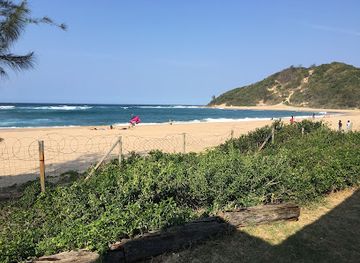
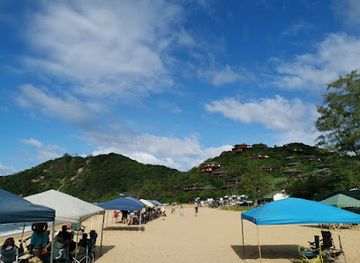
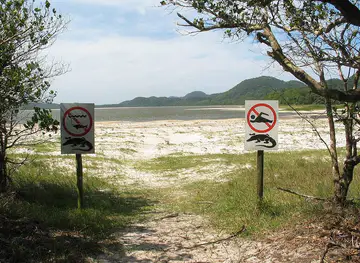
Ponta do Ouro occupies the southern tip of Mozambique’s coastal tourism corridor, close to the South African border and roughly 120 kilometres south of Maputo by road. Its name means “Point of Gold”, a reference to the warm colour of the sand and the low dunes that frame the shoreline. The settlement is small and informal in character, with sandy tracks, simple beachfront businesses and a long curve of Indian Ocean beach rather than a conventional urban centre. Swimming, surfing, shore walks and boat-based marine excursions shape the daily rhythm, while the nearby waters are known for scuba diving, seasonal humpback whales, dolphins and marine turtles.Read more about Ponta do Ouro
Marine Life and Coastal Landscape
A Gateway to Southern Mozambique
When is the best time to visit Ponta do Ouro?
Best: June–August · 28–29°C| Month | High (°C) | Rainfall (mm) |
|---|---|---|
| January | 34 | 129 |
| February | 33 | 129 |
| March | 33 | 125 |
| April | 32 | 88 |
| May | 30 | 33 |
| June (best) | 28 | 12 |
| July (best) | 28 | 9 |
| August (best) | 29 | 8 |
| September | 31 | 13 |
| October | 33 | 41 |
| November | 34 | 85 |
| December | 34 | 113 |
Getting to and around Ponta do Ouro
How to get there
Transportation
Best attractions in Ponta do Ouro
Ponta do Ouro’s principal attraction is its broad sandy beach, backed by coastal dunes and suited to swimming when sea conditions allow, shore walks and relaxed beach time. The Ponta do Ouro Partial Marine Reserve protects a stretch of southern Mozambique’s coastal and offshore environment, with coral and rocky reef habitats explored through scuba-diving and snorkelling excursions. Dolphin encounters are a major draw, while seasonal whale watching and turtle activity add a wildlife dimension without guaranteeing sightings. Nearby Ponta Malongane and Ponta Mamoli extend the beach-and-reef landscape beyond the main settlement, each with a quieter, more dispersed atmosphere. Farther north, the Maputo Special Reserve combines coastal lakes, wetlands, woodland and wildlife, but it is a separate protected area requiring its own access arrangements. The settlement itself is worth exploring for its sandy tracks, informal beachfront character and access to fishing, boating and other marine activities arranged locally.
-
Beach
Ponta Beach Camps
Discover the beauty of Ponta Beach Camps, a stunning escape in Mozambique with pristine beaches, vibrant marine life, and warm hospitality.
-
 Resort hotel
Sky Island Resort
Experience the thrill of adventure and the serenity of relaxation at Sky Island Resort, the ultimate destination in Mozambique's coastal paradise.
-
Diving center
Gozo Azul Diving
Explore the vibrant underwater world of Ponta do Ouro with Gozo Azul Diving, where unforgettable diving experiences await in the Indian Ocean.
-
Boat tour agency
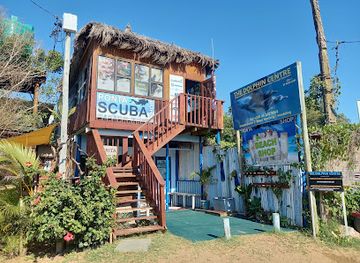
The Dolphin Centre
Discover thrilling boat tours and breathtaking whale watching at The Dolphin Centre in Ponta do Ouro, the ultimate adventure destination in Mozambique.
Best landmarks in Ponta do Ouro
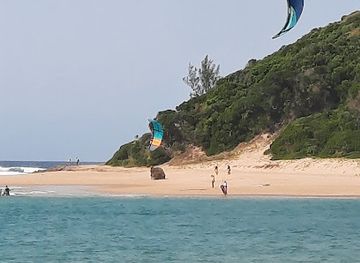
The defining natural landmark is Ponta do Ouro itself, a sandy coastal point where dunes meet the Indian Ocean near Mozambique’s southern border. The surrounding beach forms part of the Ponta do Ouro Partial Marine Reserve, whose reefs, channels and nearshore waters are more important as a protected ecological landscape than as built monuments. The reserve’s marine setting supports reef communities, dolphins, seasonal whales and nesting turtles, linking the visible beach to a wider underwater geography. Ponta Malongane and Ponta Mamoli are notable neighbouring coastal points within the same southern beach corridor, although they are distinct settlements rather than parts of Ponta do Ouro village. Farther north, the Maputo Special Reserve is a separate landmark landscape of coastal wetlands, lakes, forest and savannah. The area has few major architectural monuments; its identity rests principally on the relationship between sand, sea, marine life and borderland culture.
-
Resort hotel
Paraiso do Ouro Resort Beach Front
Experience the breathtaking beauty of Ponta do Ouro at Paraiso do Ouro Resort Beach Front, where luxury meets nature in perfect harmony.
-
Restaurant
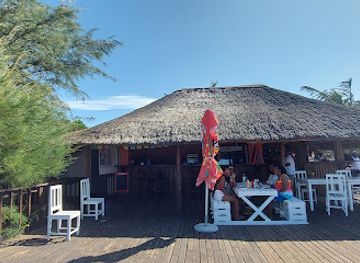
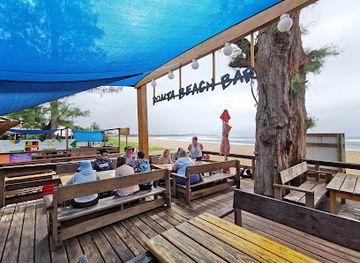
Ponta Beach Bar
Discover the vibrant flavors and stunning views at Ponta Beach Bar in Ponta do Ouro, your ultimate beachside dining experience.
-
Resort hotel
Kaya Kweru Resort
Experience the beauty of Ponta do Ouro at Kaya Kweru Resort, where luxury meets adventure on the stunning Mozambican coast.
-
Hotel
Coco Rico Resort
Discover a tropical paradise at Coco Rico Resort, where stunning ocean views and exceptional service create an unforgettable getaway in Ponta do Ouro, Mozambique.
Explore Ponta do Ouro on the map
Plan your trip on one map. See where the top attractions, landmarks, restaurants and hotels are, and book hotels and experiences in a few clicks.
Best hotels in Ponta do Ouro
Best restaurants in Ponta do Ouro
Dining in Ponta do Ouro is concentrated around accommodation properties, beachfront businesses and small independent cafés rather than a large restaurant district. Menus commonly reflect the coast and the region’s connections with Mozambique and neighbouring South Africa, with seafood, prawns, grilled fish, rice, salads and Portuguese-influenced flavours appearing alongside familiar international dishes. Local shops and informal vendors may provide simple provisions, while larger food shopping is easier to arrange before leaving Maputo or South Africa. South African visitors have influenced the area’s hospitality culture, but Ponta do Ouro remains a modest beach settlement where supplies and opening arrangements can vary. In nearby coastal bases such as Ponta Malongane, dining is similarly linked to lodges and holiday accommodation, making it sensible to check meal arrangements when booking. Carrying snacks and drinking water is useful for excursions and long sandy-road journeys.
-
Restaurant
Ponta Beach Bar
Experience delightful Mozambican cuisine at Ponta Beach Bar, where fresh seafood meets stunning ocean views in Ponta do Ouro.
-
Restaurant
Love Cafe Ponta do Ouro
Experience the flavors of Ponta do Ouro at Love Cafe – where delicious food meets breathtaking views.
-
Restaurant
Captain Gus Bar and restaurant
Experience delicious dining and family fun at Captain Gus Bar and Restaurant in Ponta do Ouro's vibrant water park setting.
-
Restaurant
Florestinha Restaurant
Discover authentic Mozambican cuisine at Florestinha Restaurant in Ponta do Ouro, where flavors meet stunning coastal views.
Best bars in Ponta do Ouro
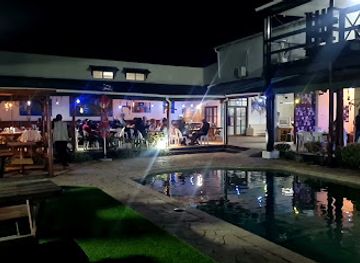
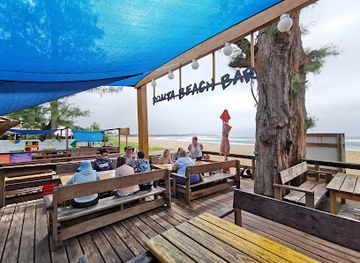
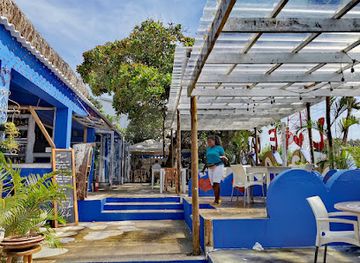
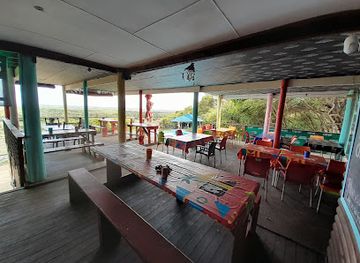
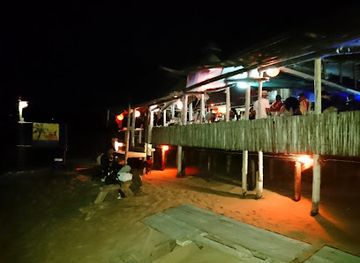
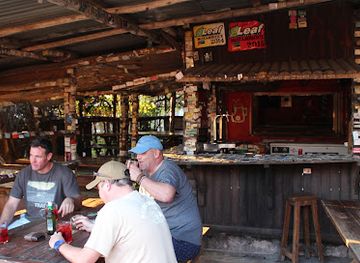
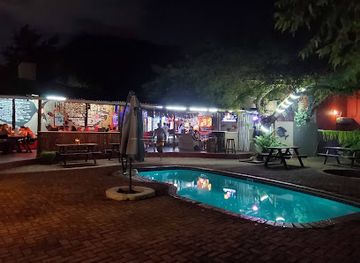
Ponta do Ouro has a low-key evening scene centred on beachfront restaurants, accommodation bars and informal social spaces rather than nightclubs or a concentrated nightlife district. Evenings may involve a drink after a day on the water, conversation with other travellers, music at a lodge or a walk through the settlement, with the atmosphere changing according to the season and occupancy. Ponta Malongane and other nearby coastal bases offer similarly quiet hospitality, generally attached to resorts and guest accommodation. There is little reason to expect late-night urban entertainment, and services can be limited outside the main visitor periods. Fringing beaches should be treated carefully after dark, particularly during turtle-nesting periods, when bright lights and noise can disturb wildlife. Visitors seeking a wider choice of bars, music and cultural entertainment will find substantially more provision in Maputo, outside the destination.
-
Restaurant
Ponta Beach Bar
Discover the vibrant atmosphere of Ponta Beach Bar, where delicious local cuisine meets stunning ocean views in Ponta do Ouro.
-
Restaurant
Love Cafe Ponta do Ouro
Discover Love Cafe Ponta do Ouro, a delightful restaurant offering fresh local cuisine and a cozy atmosphere, perfect for tourists and locals alike.
-
Bar
The Drunken Clam - Mozambique
Experience the vibrant essence of Mozambique at The Drunken Clam, where local flavors and lively ambiance create unforgettable moments.
-
Restaurant
Captain Gus Bar and restaurant
Discover fun and flavor at Captain Gus Bar and Restaurant, where delightful meals meet thrilling water park adventures in Ponta do Ouro.

Best nightclubs in Ponta do Ouro
Ponta do Ouro has a low-key evening scene centred on beachfront restaurants, accommodation bars and informal social spaces rather than nightclubs or a concentrated nightlife district. Evenings may involve a drink after a day on the water, conversation with other travellers, music at a lodge or a walk through the settlement, with the atmosphere changing according to the season and occupancy. Ponta Malongane and other nearby coastal bases offer similarly quiet hospitality, generally attached to resorts and guest accommodation. There is little reason to expect late-night urban entertainment, and services can be limited outside the main visitor periods. Fringing beaches should be treated carefully after dark, particularly during turtle-nesting periods, when bright lights and noise can disturb wildlife. Visitors seeking a wider choice of bars, music and cultural entertainment will find substantially more provision in Maputo, outside the destination.
-
Restaurant
Ponta Beach Bar
Experience the vibrant flavors and breathtaking views at Ponta Beach Bar, the quintessential beachside dining destination in Ponta do Ouro, Mozambique.
-
Bar
Fernandos
Experience the vibrant nightlife of Ponta do Ouro at Fernandos, where great drinks and good vibes come together for an unforgettable evening.
-
Grill
The Melting Pot @ Tri M Waves Lodge
Experience the taste of Mozambique at The Melting Pot @ Tri M Waves Lodge, where grilled delights meet stunning views in Ponta do Ouro.
-
Bar
Pintos Beach Bar
Experience the vibrant atmosphere and stunning ocean views at Pintos Beach Bar in Ponta do Ouro, a coastal gem in Mozambique.
Best shops in Ponta do Ouro
Shopping in Ponta do Ouro is limited and practical, with small local shops, provisions outlets, beach-related goods and locally made craft items providing more relevant opportunities than conventional retail. Visitors may find carvings, woven products, paintings or other handmade souvenirs through informal sellers and small businesses, although selection and availability change. Food, drinks, fuel and specialist equipment are easier to obtain in larger towns or before travelling along the sandy coastal roads, while diving and fishing operators may provide or arrange activity equipment rather than functioning as general retailers. The area’s most meaningful purchases are often locally produced crafts and photographs or art connected with Mozambique’s coast, provided they are bought responsibly and do not contain coral, shells, protected wildlife products or other material removed from the marine environment.
-
Restaurant
Love Cafe Ponta do Ouro
Discover the flavors of Ponta do Ouro at Love Cafe, where local ingredients and coastal charm create a dining experience to remember.
-
Diving center
Gozo Azul Diving
Unleash your adventurous spirit at Gozo Azul Diving in Ponta do Ouro, where vibrant marine life and breathtaking dive sites await.
-
Restaurant
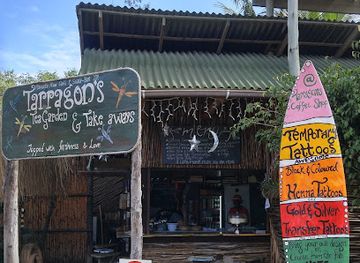
Tarragons Coffee Shop & Catering Events, Ponta do Ouro
Experience the vibrant flavors of Mozambique at Tarragons Coffee Shop & Catering Events in Ponta do Ouro, a local favorite for coffee and community.
-
Grocery store
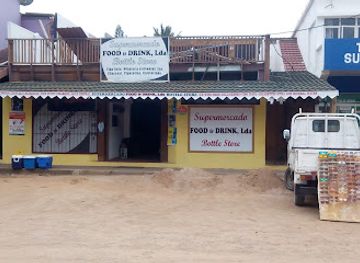
Food & Drink lda
Discover the vibrant local flavors at Food & Drink lda, a grocery store in Ponta do Ouro offering fresh produce and regional delicacies for all culinary adventures.
Get your free copy of our complete guide to Ponta do Ouro, delivered straight to you.
Everything on this page, from attractions and restaurants to essentials and local phrases, in one PDF you can read offline, print or share.
Already have an account? Sign in
Your Ponta do Ouro guide is ready.
We'll send it to · Not you? Sign out

Getting your guide ready…
We are putting together a fresh copy of the Ponta do Ouro guide. This can take up to a minute.
This can take a few moments. If your browser asks, choose Allow so the download can start. You'll find the guide in your Downloads folder.
Nothing happened? Download it again
Sorry, the guide is taking longer than usual. Please try again in a minute, or get it by email instead.
Ponta do Ouro essentials
Currency and Payment
Safety
Emergency Situations
Do's and Don'ts
Local Tips
From Eve
Local phrases worth knowing
You don't need to get them perfect. A few words go a long way, and locals appreciate the effort.
Basics
| English | Local | Say it |
|---|---|---|
| Hello | Olá | [oh-lah] |
| Goodbye | Adeus | [ah-deus] |
| Yes | Sim | [seem] |
| No | Não | [now] |
| Please/You're welcome | Por favor/De nada | [pohr fah-vohr/deh nah-dah] |
| Thank you | Obrigado | [oh-bree-gah-doh] |
| Excuse me/Sorry | Com licença/Desculpe | [kohm lee-sen-sah/deh-skool-peh] |
| How are you? | Como está? | [koh-moh ehs-tah] |
| Fine. And you? | Bem. E você? | [bane/eh voh-seh] |
| Do you speak English? | Fala inglês? | [fah-lah een-glehz] |
| I don't understand | Não entendo | [now ehn-tehn-doh] |
Eating & Drinking
| English | Local | Say it |
|---|---|---|
| I'd like to see the menu, please | Gostaria de ver o menu, por favor | [goh-stah-ree-ah deh vehr oh meh-noo/pohr fah-vohr] |
| I don't eat meat | Não como carne | [now koh-moh kahr-neh] |
| Cheers! | Saúde! | [sah-oo-deh] |
| I would like to pay, please | Gostaria de pagar, por favor | [goh-stah-ree-ah deh pah-gahr/pohr fah-vohr] |
Emergencies
| English | Local | Say it |
|---|---|---|
| Help! | Ajuda! | [ah-zhoo-dah] |
| Go away! | Vai embora! | [vah-ee ehn-boh-rah] |
| Call the Police! | Chame a polícia! | [shah-meh ah poh-lee-see-ah] |
| Call a doctor! | Chame um médico! | [shah-meh oon meh-dee-coh] |
| I'm lost | Estou perdido | [eh-stoh pehr-dee-doo] |
| I'm ill | Estou doente | [eh-stoh doo-ehn-teh] |
Shopping
| English | Local | Say it |
|---|---|---|
| I'd like to buy... | Gostaria de comprar... | [goh-stah-ree-ah deh kohm-prahr] |
| I'm just looking | Estou só a olhar | [eh-stoh soh ah oh-lahr] |
| How much is it? | Quanto custa? | [kwahn-too koos-tah] |
| That's too expensive | Isso é muito caro | [ee-soh eh moo-ee-toh kah-roh] |
| Can you lower the price? | Pode baixar o preço? | [poh-deh bahy-shahr oh preh-soo] |
Time & Numbers
| English | Local | Say it |
|---|---|---|
| What time is it? | Que horas são? | [keh oh-rahz sahn] |
| It's one o'clock | É uma hora | [eh oo-mah oh-rah] |
| Half past (10) | Meio-dia e meia | [may-oh dee-ah eh may-ah] |
| Morning | Manhã | [mah-nyah] |
| Afternoon | Tarde | [tahr-deh] |
| Evening | Noite | [noy-tay] |
| Yesterday | Ontem | [ohn-tehm] |
| Today | Hoje | [hoh-zhay] |
| Tomorrow | Amanhã | [ah-mah-nyah] |
| 1 | Um | [oom] |
| 2 | Dois | [doh-ees] |
| 3 | Três | [trehs] |
| 4 | Quatro | [kwah-troh] |
| 5 | Cinco | [seen-koh] |
| 6 | Seis | [sayz] |
| 7 | Sete | [seh-teh] |
| 8 | Oito | [oy-toh] |
| 9 | Nove | [noh-veh] |
| 10 | Dez | [dehs] |
Transport & Directions
| English | Local | Say it |
|---|---|---|
| Where's a/the...? | Onde é a/o...? | [ohn-deh eh ah/oh] |
| What's the address? | Qual é o endereço? | [kwahl eh oh ehn-deh-reh-soh] |
| Can you show me (on the map)? | Pode mostrar-me (no mapa)? | [poh-deh moh-strahr-meh (noh mah-pah)] |
| When's the next (bus)? | Quando é o próximo (autocarro)? | [kwahn-doh eh oh proh-ksih-moh (ow-toh-kah-roh)] |
| A ticket (to ....) | Um bilhete (para ...) | [oom bee-lyeh-teh (pah-rah)] |
History of Ponta do Ouro
A Sandy Southern Coast
The coastline around Ponta do Ouro is part of a long, shifting barrier landscape shaped by ocean currents, waves, wind-blown sand and seasonal weather. The point itself became known for its golden beaches and position near the southern boundary of Mozambique, while coastal waters supported fishing and movement between communities. The region’s natural geography encouraged a dispersed pattern of settlement rather than the dense urban form found in Maputo, with livelihoods historically connected to the sea, small-scale agriculture and access along sandy coastal routes.
Ronga and Tsonga Heritage
Southern Mozambique has long been inhabited by Ronga- and Tsonga-speaking communities whose cultural relationships with the coast predate modern tourism and national borders. Villages, family networks, fishing practices and local knowledge remain important to the character of the Ponta do Ouro area. The wider region was also influenced by trade and movement across the Delagoa Bay and southern African borderlands. Portuguese colonial rule introduced a different administrative and commercial structure, but did not erase the older social and cultural geography of the coast.
Portuguese Colonial and Borderland Connections
Ponta do Ouro developed within the historical sphere of Portuguese Mozambique, whose southern transport, trading and administrative connections centred increasingly on Lourenço Marques, now Maputo. Its proximity to South Africa gave the area a cross-border dimension, although the sandy coastal approach limited large-scale development. After Mozambique became independent in 1975, the country experienced prolonged political and economic instability, and remote coastal communities remained comparatively lightly developed compared with the capital and major ports.
Tourism and Marine Protection
Recreational tourism expanded more visibly after the end of Mozambique’s civil war in 1992, as improved regional connections brought visitors from South Africa and Maputo to the southern beaches. Diving, sport fishing, dolphin encounters and beach holidays became central to Ponta do Ouro’s identity. The creation of the Ponta do Ouro Partial Marine Reserve in 2009 marked a significant shift towards managing the area’s reefs, beaches and marine wildlife as a connected conservation landscape, while the nearby Maputo Special Reserve added a terrestrial and coastal conservation dimension farther north.
Ponta do Ouro in Photos
Browse through our photo collection highlighting the charm and character of the destination.
Neighbouring destination travel guides
The closest destinations to Ponta do Ouro, if you have time for more than one.
-

-

-
-

-


Swipe for more destinations
Explore more

Explore more of Mozambique
Discover Mozambique: Pristine beaches, rich cultural heritage, and vibrant wildlife await in this stunning African destination.
Explore Mozambique