
Uaboe, Nauru Travel Guide
Discover Uaboe, Nauru's serene coastal district, where natural beauty meets rich cultural heritage. Perfect for beach lovers, history buffs, and adventure seekers.
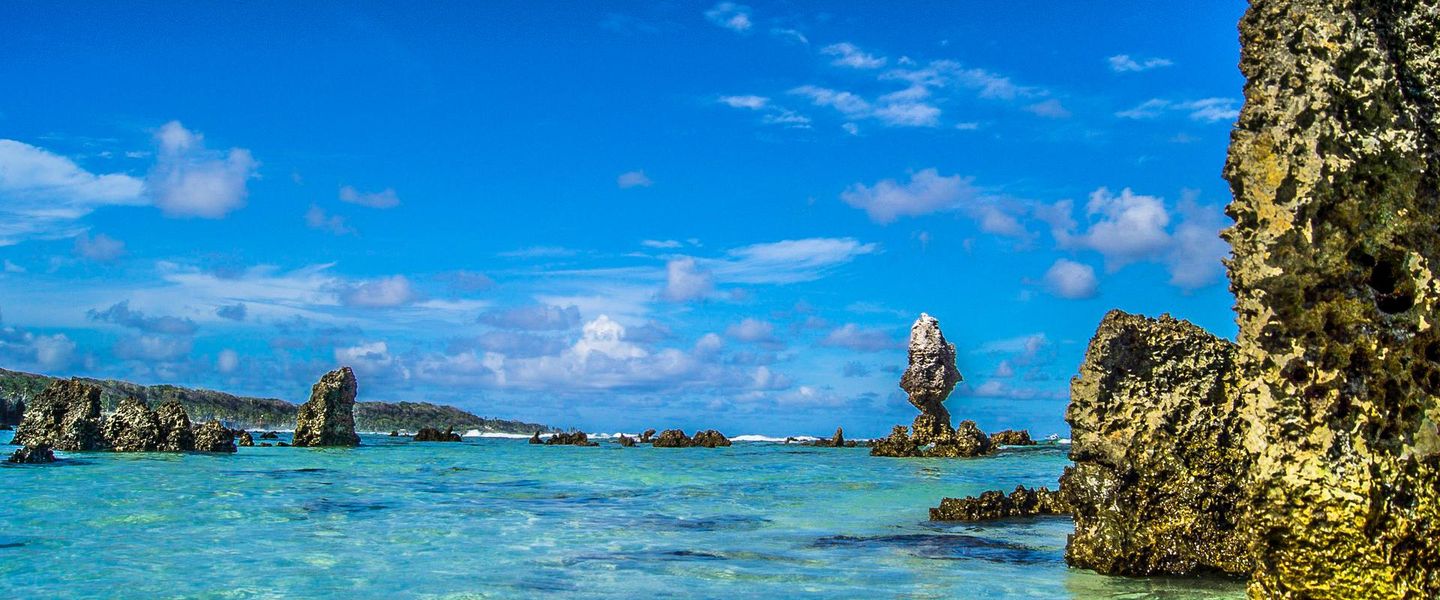
Uaboe, a charming district in the island nation of Nauru, offers a unique blend of natural beauty and rich cultural heritage. Nestled on the island's western coast, Uaboe is a tranquil escape from the hustle and bustle of urban life. The district is known for its serene beaches, where you can take leisurely strolls and enjoy breathtaking sunsets. Uaboe is not just about its picturesque scenery. The local culture is warm and inviting, with the residents often eager to share their stories and traditions. Visitors can experience the local lifestyle by participating in community events and festivals. The district also boasts historical sites that offer a glimpse into Nauru's past, making it a must-visit for history enthusiasts. One of the highlights of Uaboe is its vibrant marine life. Snorkeling and diving in the clear waters reveal a colorful underwater world teeming with exotic fish and coral reefs. For those who prefer staying on land, the district's walking trails provide an opportunity to explore its lush landscapes and spot native wildlife. Whether you're an adventure seeker or someone looking to unwind, Uaboe has something to offer everyone.

Know before you go
Hi, I'm Eve. Here are a few practical things to know before exploring Uaboe.
- Bring your snorkeling gear to explore the vibrant marine life.
- Attend local festivals to immerse yourself in the culture.
- Visit historical sites to learn about Nauru's history.
- Pack comfortable walking shoes for exploring trails.
- Respect local customs and traditions during your visit.
Explore Uaboe: Things to Do, Places to Eat, Hotels & More
Handpicked recommendations for top attractions, local dining, accommodations, and more

Best attractions in Uaboe
Top-rated picks
Best Attractions
Browse the full guide
All Attractions

Naoero Museum
Explore the vibrant culture and history of Nauru at the Naoero Museum, a treasure trove of artifacts and stories reflecting the island's heritage.

Anetan Seawall
Discover the beauty of Anetan Seawall, a tranquil coastal park in Ronave, perfect for relaxation, scenic views, and unforgettable sunsets.

Moqua Caves
Explore the enchanting Moqua Caves in Yaren, Nauru - a natural marvel showcasing stunning limestone formations and rich cultural heritage.

Twin Guns
Discover the breathtaking beauty and historical significance of the Twin Guns in Yaren, a must-visit tourist attraction in Nauru.

Best landmarks in Uaboe
Top-rated picks
Best Landmarks
Browse the full guide
All Landmarks

Nauru International Airport
Discover the charm of Nauru International Airport, your gateway to exploring the enchanting landscapes and rich culture of Nauru.

Nauru Australian Immigration Detention Center
Discover the complex narrative of the Nauru Australian Immigration Detention Center amidst the stunning landscapes of Nauru.

Capelle and Partner
Discover the vibrant shopping experience at Capelle and Partner in Ronave, where local culture meets international brands and delightful dining.

Ewa Lodge
Discover tranquility and comfort at Ewa Lodge in Ronave, your perfect retreat to explore the breathtaking beauty and culture of the region.

Best restaurants in Uaboe
Top-rated picks
Best Restaurants
Browse the full guide
All Restaurants

The Bay Restaurant
Experience exquisite dining at The Bay Restaurant in Anibare with stunning ocean views and a diverse menu celebrating local flavors.

OMG Sushi Restaurant
Discover the exquisite tastes of Japan at OMG Sushi Restaurant in Orro – where every dish is crafted with passion and precision.

Mr Chippies
Experience the best local cuisine at Mr Chippies in Anibare - where fresh ingredients meet delightful flavors.

Star Kingdom
Experience authentic Asian cuisine at Star Kingdom in Boe - a culinary journey filled with vibrant flavors and delightful dishes.

Best bars in Uaboe
Top-rated picks
Best Bars
Browse the full guide
All Bars

The Bay Restaurant
Experience the best of island dining at The Bay Restaurant, where fresh seafood meets stunning ocean views in Anibare.

Jules On The Deck
Experience the bliss of relaxation at Jules On The Deck, a premier bar in Nibok offering stunning ocean views and a vibrant social atmosphere.

Reef Bar
Experience the vibrant atmosphere at Reef Bar, a perfect blend of relaxation, local flavors, and stunning ocean views in Anibare, Nauru.

Mr Chippies
Discover the flavorful offerings at Mr Chippies, a beloved restaurant in Anibare, where local ingredients and international cuisine come together.

Best nightclubs in Uaboe
Top-rated picks
Best Nightclubs
Browse the full guide
All Nightclubs
Menen Hotel
Discover the heart of Ibwenape at Menen Hotel, where comfort meets convenience for an unforgettable stay.

Nauru International Airport
Discover the serene beauty of Nauru through its gateway, Nauru International Airport, where tropical charm meets modern travel amenities.

The Bay Restaurant
Experience the flavors of Anibare at The Bay Restaurant, where delicious local dishes meet stunning views and warm hospitality.
Od-N Aiwo Hotel
Experience comfort and local charm at Od-N Aiwo Hotel in Boe, Nauru's serene retreat for travelers seeking relaxation and cultural immersion.

Best shops in Uaboe
Top-rated picks
Best Shops
Browse the full guide
All Shops

Eigigu Supermarket
Explore the vibrant flavors of Nauru at Eigigu Supermarket, your local source for fresh produce, snacks, and authentic culinary delights.

Pacific store
Discover the local flavors of Nauru at Pacific Store in Nibok, your one-stop grocery shop for fresh produce and unique culinary delights.
Zombies Store
Explore the charm of Yaren at Zombies Store, your one-stop shop for unique local finds and everyday essentials.

Vim No.1 Store
Explore Vim No.1 Store in Arijejen, Nauru for local flavors, festive charm, and a delightful grocery shopping experience.

Explore Uaboe on the Map
A handpicked selection of must-see spots in Uaboe, mapped for you.
Uaboe Essentials
-
Nauru is served by Nauru International Airport (INU), which is the only airport on the island. Flights to Nauru are limited and typically operate from Brisbane, Australia, with Nauru Airlines. From the airport, Uaboe is a short drive away, as the entire island is only about 21 square kilometers in size.
-
Transportation around Uaboe and the rest of Nauru is relatively straightforward given the island's small size. Taxis are available, and car rentals can be arranged through local providers. There are no public buses, so most visitors opt for taxis or rented vehicles to get around. Bicycles are also a popular choice for exploring the area.
-
The official currency of Nauru is the Australian Dollar (AUD). Credit cards are accepted in some establishments, but it is advisable to carry cash, especially for smaller vendors and in more remote areas. ATMs are available, but they may not always be reliable, so it is wise to withdraw sufficient cash before arriving in Uaboe.
-
Uaboe, like the rest of Nauru, is generally considered safe for tourists. However, standard precautions should be taken. Avoid walking alone at night in unfamiliar areas and keep an eye on your belongings in crowded places. There are no specific high-crime areas targeting tourists, but staying vigilant is always advisable.
-
In case of an emergency, dial 110 for police, 111 for fire, and 112 for medical assistance. The local police station and medical facilities are available, though they may be limited in capacity. It is highly recommended to have travel insurance that covers medical emergencies. For minor health issues, there are pharmacies on the island where you can purchase over-the-counter medications.
-
Fashion: Do dress modestly, especially outside of beach areas. Avoid overly revealing clothing. Religion: Do respect local customs and traditions, although Nauru has no official religion. Public Transport: Since there are no public buses, this is not applicable. Taxis and private vehicles are the main modes of transport. Greetings: Do greet people with a warm 'hello' or a handshake. Nauruans are generally friendly and approachable. Eating & Drinking: Do try the local cuisine and accept food offerings graciously. Don’t refuse hospitality as it is considered impolite.
-
To experience Uaboe like a local, visit the community markets to buy fresh produce and local goods. Engage with the residents, who are often willing to share stories about their culture and history. Don’t miss the opportunity to explore the scenic views of the coastline and the remnants of the island's phosphate mining history. Additionally, walking or cycling along the coastal road provides a unique way to see the island.
When is the best time to visit Uaboe?
Useful Local Phrases for Uaboe
You don't need to speak the language perfectly. Even learning a few simple words can make conversations warmer—and locals usually appreciate the effort.
— Eve

Here are the phrases I use most often in Uaboe. Try a few—you'll be surprised how far they go! 😊
❤️
-
- HelloIaorana
[yo-ra-na] - GoodbyeNana
[na-na] - YesE
[e] - NoAe
[ai] - Please/You're welcomeMaeva
[ma-e-va] - Thank youMauruuru
[mau-ru-ru] - Excuse me/SorryPardon
[pa-don] - How are you?Aita pea pe?
[ai-ta pea pe] - Fine. And you?Maitai. E pehea koe?
[mai-tai. e pe-he-a koe] - Do you speak English?E tauturu koe i te reo Parani?
[e tau-tu-ru koe i te re-o Pa-ra-ni] - I don't understandAita au e haere
[ai-ta au e ha-e-re]
- HelloIaorana
-
- I'd like to see the menu, pleaseE ui atu au i te menu, maru
[e ui a-tu au i te me-nu, ma-ru] - I don't eat meatAita au e kai vaevae
[ai-ta au e kai va-va-e] - Cheers!Manuia!
[ma-nu-ia] - I would like to pay, pleaseE ui atu au i te totika, maru
[e ui a-tu au i te to-ti-ka, ma-ru]
- I'd like to see the menu, pleaseE ui atu au i te menu, maru
-
- Help!Aita!
[ai-ta] - Go away!Haere atu!
[ha-e-re a-tu] - Call the Police!Whakapā atu ki te Pirihimana!
[fa-ka-pa a-tu ki te Pi-ri-hi-ma-na] - Call a doctor!Whakapā atu ki te Rata!
[fa-ka-pa a-tu ki te Ra-ta] - I'm lostI te ngaro au
[i te nga-ro au] - I'm illKei te he au
[kei te he au]
- Help!Aita!
-
- I'd like to buy...E ui atu au e hoko...
[e ui a-tu au e ho-ko] - I'm just lookingE pupuni au
[e pu-pu-ni au] - How much is it?E hia te moni?
[e hi-a te mo-ni] - That's too expensiveTe moni e roa
[te mo-ni e ro-a] - Can you lower the price?E taea e koe te oki i te moni?
[e ta-e-a e koe te o-ki i te mo-ni]
- I'd like to buy...E ui atu au e hoko...
-
- What time is it?He aha te wā?
[he a-ha te wa] - It's one o'clockKotahi o ngā karaka
[ko-ta-hi o nga ka-ra-ka] - Half past (10)Tekau ma rima
[te-ka-u ma ri-ma] - MorningAta
[a-ta] - AfternoonAhiahi
[a-hi-a-hi] - EveningPō
[po] - YesterdayInapo
[i-na-po] - TodayTēnei rā
[te-nei ra] - TomorrowĀpōpō
[a-po-po] - 1Tahi
[ta-hi] - 2Rua
[ru-a] - 3Toru
[to-ru] - 4Whā
[fa] - 5Rima
[ri-ma] - 6Ono
[o-no] - 7Whitu
[fi-tu] - 8Waru
[wa-ru] - 9Iwa
[i-wa] - 10Tekau
[te-ka-u]
- What time is it?He aha te wā?
-
- Where's a/the...?Kei hea te...?
[kei he-a te] - What's the address?He aha te wāhitau?
[he a-ha te wa-hi-tau] - Can you show me (on the map)?Ka taea e koe te whakaatu mai i ahau (i runga i te mahere)?
[ka ta-e-a e koe te fa-ka-a-tu mai i a-ha-u i ru-nga i te ma-he-re] - When's the next (bus)?Āhea te mutunga atu (pahi)?
[a-po-a te mu-tu-nga a-tu pa-hi] - A ticket (to ....)He tiki (ki te ...)
[he ti-ki ki te]
- Where's a/the...?Kei hea te...?
History of Uaboe
-
Uaboe, like the rest of Nauru, was originally settled by Micronesian and Polynesian people over 3,000 years ago. The early inhabitants were skilled navigators and fishermen who relied heavily on the surrounding ocean for sustenance. Archaeological findings suggest that the area was part of a larger network of villages that traded goods and cultural practices.
-
The first recorded European contact with Nauru, including Uaboe, was in 1798 by British sea captain John Fearn. This marked the beginning of an era of European exploration and eventual colonization. In the late 19th century, Germany annexed Nauru, bringing significant changes to the island's governance and daily life. This period saw the introduction of Christianity and Western education.
-
Uaboe, along with the rest of Nauru, experienced dramatic changes with the discovery of phosphate in the early 20th century. The island became a significant site for phosphate mining, which brought economic prosperity but also environmental degradation. The British Phosphate Commissioners managed the extraction and export of phosphate, leading to substantial infrastructural developments in the region.
-
During World War II, Uaboe and the rest of Nauru fell under Japanese occupation from 1942 to 1945. The island's strategic location made it a target for military operations, and many Nauruans, including those from Uaboe, were forcibly relocated to other islands or conscripted into labor. The war left significant impacts on the island's infrastructure and population.
-
After World War II, Uaboe, along with the rest of Nauru, underwent a period of reconstruction under Australian administration. The island gradually rebuilt its infrastructure and economy, heavily relying on phosphate mining revenues. Nauru gained independence in 1968, and Uaboe became part of the newly sovereign nation. This period saw efforts to balance economic development with environmental sustainability.
-
Today, Uaboe is a small but vibrant part of Nauru, reflecting the island's rich cultural heritage and complex history. The community continues to grapple with the legacies of phosphate mining and environmental challenges while striving to preserve traditional practices and promote sustainable development. Uaboe hosts various cultural events and local initiatives aimed at fostering community resilience and cultural pride.
Cities near Uaboe
The closest cities to Uaboe, if you have time for more than one stop.


Your all‑in‑one travel companion app
Explore expert travel guides, compare and book tours, experiences, hotels, and more—all from the palm of your hand. Download now for seamless trip planning wherever your wanderlust takes you.


Uaboe in Photos
Browse through our photo collection highlighting the charm and character of the destination.


Uaboe: The Hidden Gem of Nauru
Uaboe, a charming district in the island nation of Nauru, offers a unique blend of natural beauty and rich cultural heritage. Nestled on the island's western coast, Uaboe is a tranquil escape from the hustle and bustle of urban life. The district is known for its serene beaches, where you can take leisurely strolls and enjoy breathtaking sunsets. Uaboe is not just about its picturesque scenery. The local culture is warm and inviting, with the residents often eager to share their stories and traditions. Visitors can experience the local lifestyle by participating in community events and festivals. The district also boasts historical sites that offer a glimpse into Nauru's past, making it a must-visit for history enthusiasts. One of the highlights of Uaboe is its vibrant marine life. Snorkeling and diving in the clear waters reveal a colorful underwater world teeming with exotic fish and coral reefs. For those who prefer staying on land, the district's walking trails provide an opportunity to explore its lush landscapes and spot native wildlife. Whether you're an adventure seeker or someone looking to unwind, Uaboe has something to offer everyone.
Explore More of Uaboe District

Looking beyond Uaboe? Discover Uaboe District for broader travel guides, local hot-spots, and regional highlights.
Explore Uaboe DistrictExplore More of Nauru

Looking beyond Uaboe? Discover Nauru for broader travel guides, local hot-spots, and regional highlights.
Explore Nauru