

Free Cascade Travel Guide & Mobile App
Plan your Cascade trip with Evendo. Get free guides to top attractions, restaurants, hotels, and bars. Web access or download the mobile app.


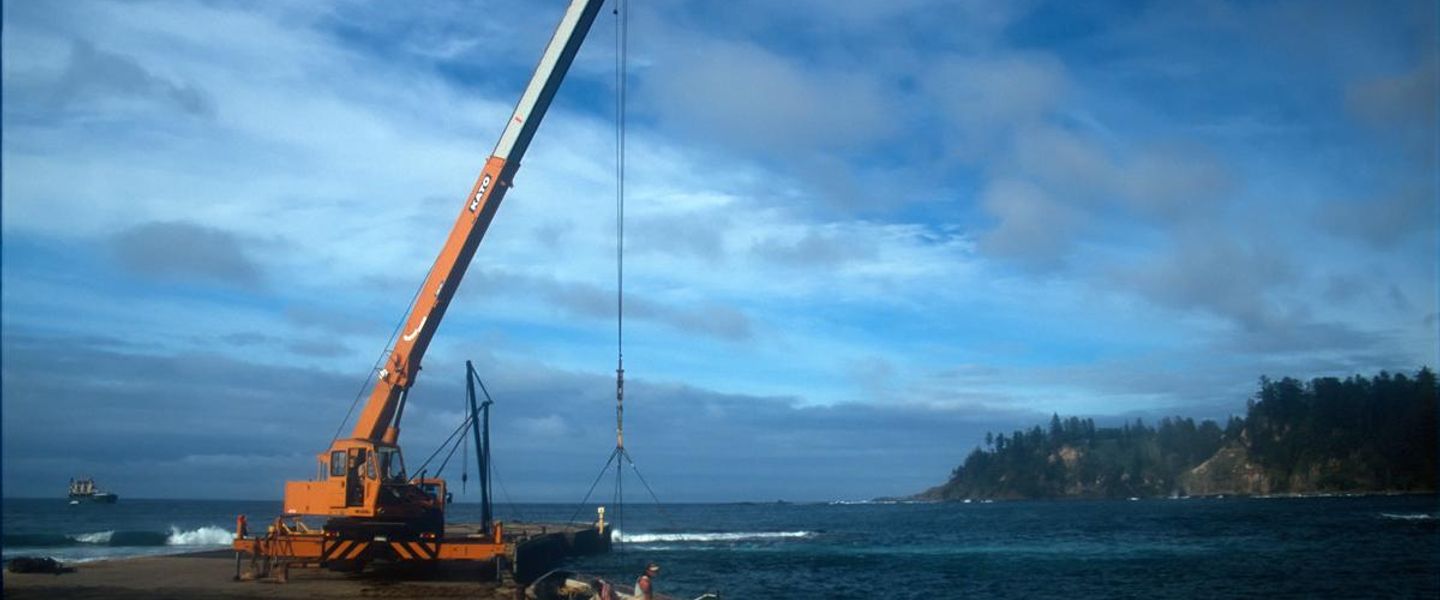


Cascade, Norfolk Island, pairs rugged Pacific scenery with convict-era history, coastal walks, quiet beaches and access to Kingston’s heritage attractions and island landscapes.
A Coastal Settlement Shaped by the Sea
Cascade is a small coastal locality on the eastern side of Norfolk Island, where steep green slopes descend towards the open Pacific. Its character is defined less by an urban centre than by scattered homes, rural roads, sea views and the broad sweep of Cascade Bay. The shoreline carries traces of the island’s maritime history, while the surrounding landscape reveals Norfolk Island’s distinctive mix of subtropical vegetation, pasture and volcanic terrain.Read more about Cascade
History in the Island Landscape
Exploring Beyond the Locality
When is the best time to visit Cascade?
Best: December–February · 24°C| Month | High (°C) | Rainfall (mm) |
|---|---|---|
| January (best) | 24 | 61 |
| February (best) | 24 | 65 |
| March | 24 | 71 |
| April | 23 | 76 |
| May | 22 | 82 |
| June | 20 | 85 |
| July | 19 | 87 |
| August | 19 | 86 |
| September | 20 | 81 |
| October | 21 | 74 |
| November | 22 | 67 |
| December (best) | 24 | 60 |
Getting to and around Cascade
How to get there
Transportation
Best attractions in Cascade
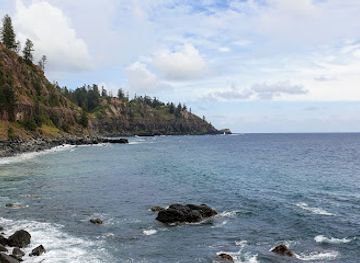
Cascade Bay is the locality’s defining attraction, opening towards the Pacific beneath the island’s rolling rural slopes and offering a strong sense of Norfolk Island’s exposed eastern coast. The shoreline and nearby roads are best appreciated as part of a scenic drive, with pauses for sea views, birdwatching and changing light rather than as a conventional resort beach. Around the wider island, Kingston provides the principal concentration of visitor attractions, including the Kingston and Arthur’s Vale Historic Area, Norfolk Island Museum and the remains of the former penal settlement. Norfolk Island National Park adds forest tracks, elevated viewpoints and native birdlife, while Emily Bay offers a gentler coastal setting with important Polynesian archaeological associations. Cascade is therefore less about a crowded programme of sights than about placing the island’s maritime, convict and natural histories within a compact but varied landscape.
-
Fishing pier
Cascade Pier
Discover the serene beauty of Cascade Pier, a fishing paradise on Norfolk Island offering stunning views and a unique connection to nature.
6 min walk · 0.5 km from city centre
Best landmarks in Cascade
Cascade’s most significant physical feature is its bay and coastal setting, a natural landmark that expresses Norfolk Island’s relationship with the Pacific and its long dependence on maritime access. The locality itself has few monumental buildings, so the island’s principal heritage landmarks lie elsewhere. In Kingston, the Kingston and Arthur’s Vale Historic Area preserves convict-era structures including the New Gaol, the Commissariat Store and other government and penal buildings associated with the second settlement. Christ Church, with its cemetery and links to the Pitcairn community, represents the island’s continuing religious and social history. Kingston Pier is an important surviving maritime structure, while the remains around Emily Bay connect the modern island to its earlier Polynesian settlement. Together these sites show how Norfolk Island developed through Indigenous Pacific activity, British penal administration and Pitcairn resettlement.
-
Fishing pier
Cascade Pier
Experience the tranquil beauty of Cascade Pier on Norfolk Island, a perfect destination for fishing and enjoying stunning ocean views.
6 min walk · 0.5 km from city centre
-
 Hotel
HotelTintoela of Norfolk
Discover serenity and rich culture at Tintoela of Norfolk, a premier hotel surrounded by the stunning landscapes of Norfolk Island.
7 min walk · 0.6 km from city centre
-
Tourist attraction
Cockpit Waterfall
Explore the tranquil Cockpit Waterfall on Norfolk Island, a breathtaking natural attraction perfect for relaxation and nature lovers.
2 min walk · 0.1 km from city centre
-
Hotel
Tranquility at Cascade
Experience serenity at Tranquility at Cascade, a scenic retreat in Norfolk Island, where relaxation meets nature’s beauty and local charm.
4 min walk · 0.3 km from city centre


Explore Cascade on the map
Plan your Cascade trip on one map. See where the top attractions, landmarks, restaurants, bars and hotels are, find what's near where you're staying, and book hotels and experiences in a few clicks.
Best hotels in Cascade
Best bars in Cascade
Cascade itself has little conventional nightlife, and evenings are generally quiet once the coastal roads and viewpoints empty. Most social venues are around Burnt Pine, where visitors may find hotel bars, casual drinking places and occasional live entertainment rather than a dense club scene. Norfolk Island’s evening character is often more cultural than late-night: community performances, local music, historical talks and organised events can provide a stronger sense of place than nightclubs. The island’s small population means programmes and venues vary, so current local information is more dependable than assuming a mainland-style schedule. In rural Cascade, darkness brings exceptionally open night skies, although visitors should avoid walking unfamiliar coastal roads after dark and arrange transport in advance when attending an event elsewhere.
-
Fishing pier
Cascade Pier
Discover the tranquil beauty of Cascade Pier, a pristine fishing spot on Norfolk Island, where nature and relaxation meet.
6 min walk · 0.5 km from city centre

Get your free copy of our complete guide to Cascade, delivered straight to you.
Everything on this page, from attractions and restaurants to essentials and local phrases, in one PDF you can read offline, print or share.
Already have an account? Sign in
Your Cascade guide is ready.
We'll send it to · Not you? Sign out

Getting your guide ready…
We are putting together a fresh copy of the Cascade guide. This can take up to a minute.
This can take a few moments. If your browser asks, choose Allow so the download can start. You'll find the guide in your Downloads folder.
Nothing happened? Download it again
Sorry, the guide is taking longer than usual. Please try again in a minute, or get it by email instead.
Cascade essentials
Currency and Payment
Safety
Emergency Situations
Do's and Don'ts
Local Tips
From Eve
Local phrases worth knowing
You don't need to get them perfect. A few words go a long way, and locals appreciate the effort.
Basics
| English | Local | Say it |
|---|---|---|
| Hello | G'day | [g'day] |
| Goodbye | See ya | [see ya] |
| Yes | Aye | [aye] |
| No | Nah | [nah] |
| Please/You're welcome | Pliz | [pliz] |
| Thank you | Ta | [ta] |
| Excuse me/Sorry | Pardon | [pardon] |
| How are you? | How ya goin'? | [how ya goin'] |
| Fine. And you? | All good. You? | [all good. you?] |
| Do you speak English? | You speak English? | [you speak English?] |
| I don't understand | I dun get ya | [I dun get ya] |
Eating & Drinking
| English | Local | Say it |
|---|---|---|
| I'd like to see the menu, please | Menu, please | [menu, please] |
| I don't eat meat | I don't eat meat | [I don't eat meat] |
| Cheers! | Cheers! | [cheers!] |
| I would like to pay, please | Pay, please | [pay, please] |
Emergencies
| English | Local | Say it |
|---|---|---|
| Help! | Help! | [help!] |
| Go away! | Piss off! | [piss off!] |
| Call the Police! | Call the coppers! | [call the coppers!] |
| Call a doctor! | Get a doc! | [get a doc!] |
| I'm lost | I'm lost | [I'm lost] |
| I'm ill | I'm crook | [I'm crook] |
Shopping
| English | Local | Say it |
|---|---|---|
| I'd like to buy... | Wanna buy... | [wanna buy...] |
| I'm just looking | Just browsing | [just browsing] |
| How much is it? | How much? | [how much?] |
| That's too expensive | Too dear | [too dear] |
| Can you lower the price? | Can ya do it cheaper? | [can ya do it cheaper?] |
Time & Numbers
| English | Local | Say it |
|---|---|---|
| What time is it? | What's the time? | [what's the time?] |
| It's one o'clock | It's one | [it's one] |
| Half past (10) | Half ten | [half ten] |
| Morning | Mornin' | [mornin'] |
| Afternoon | Arvo | [arvo] |
| Evening | Evenin' | [evenin'] |
| Yesterday | Yesty | [yesty] |
| Today | Today | [today] |
| Tomorrow | Tomorrer | [tomorrer] |
| 1 | One | [one] |
| 2 | Two | [two] |
| 3 | Three | [three] |
| 4 | Four | [four] |
| 5 | Five | [five] |
| 6 | Six | [six] |
| 7 | Seven | [seven] |
| 8 | Eight | [eight] |
| 9 | Nine | [nine] |
| 10 | Ten | [ten] |
Transport & Directions
| English | Local | Say it |
|---|---|---|
| Where's a/the...? | Where's the...? | [where's the...?] |
| What's the address? | What's the addy? | [what's the addy?] |
| Can you show me (on the map)? | Show me (on the map) | [show me (on the map)] |
| When's the next (bus)? | When's the next bus? | [when's the next bus?] |
| A ticket (to ....) | Ticket (to ...) | [ticket (to ...)] |
History of Cascade
Polynesian Settlement of Norfolk Island
Norfolk Island was settled by Polynesian voyagers centuries before European arrival, with archaeological evidence indicating a community connected to East Polynesia. The settlement at Emily Bay, near present-day Kingston, included houses, gardens and a stone-lined ceremonial area, demonstrating skilled adaptation to the island’s volcanic soils and maritime environment. Cascade lies away from this principal archaeological concentration, but its coast formed part of the wider island landscape used for movement, fishing and observation. The Polynesian period ended before permanent European settlement, yet it remains fundamental to understanding Norfolk Island as more than a purely colonial destination. Place names, archaeological traces and the island’s position within the Pacific all point to an earlier history of ocean voyaging and cultural exchange.
The First British Penal Settlement
Britain established a penal settlement on Norfolk Island in 1788, shortly after the founding of New South Wales. The island’s fertile volcanic land and abundant timber made it strategically valuable, while its remoteness offered a difficult place of confinement. The first settlement developed around Kingston, not Cascade, but the entire island was drawn into the colony’s agricultural and maritime economy. Convict labour cleared land, built roads and constructed government works, while coastal landing places supported the movement of supplies. This first penal settlement was abandoned in 1814 after difficulties in maintaining the outpost. Its remains form an early layer of Norfolk Island’s colonial history, distinct from the larger and more severe penal system established later.
The Second Penal Settlement
Norfolk Island became a penal settlement again from 1825 to 1855, when the British government used it for convicts considered especially difficult to control. Kingston expanded with barracks, administrative buildings, workshops, a hospital and other institutions, many of which survive in the Kingston and Arthur’s Vale Historic Area. Conditions were harsh, and the settlement became associated with strict discipline and punishment. Cascade was not the administrative centre, but its coast belonged to the island’s network of roads, farms and landing places that sustained the settlement. The closure of the penal colony in 1855 transformed Norfolk Island’s population and purpose, leaving a built heritage that now provides the clearest physical evidence of the island’s convict era.
The Pitcairn Island Resettlement
In 1856, the people of Pitcairn Island were moved to Norfolk Island because their small Pacific home could no longer support a growing population. The settlers were descendants of the Bounty mutineers and Polynesian women, and they brought a distinctive community identity, traditions and form of Christianity. Most initially occupied the former penal settlement around Kingston, while families and farming activity later spread across the island, including the countryside around Cascade. Their arrival created the basis of modern Norfolk Island society. The Pitcairn connection remains visible in family histories, language, music, religious practice and annual commemorations, and it gives the island a cultural character that cannot be reduced to its convict buildings.
Norfolk Island in Modern Australia
Norfolk Island was administered as a separate Australian territory after the 1914 transfer from British to Australian control, and its aviation and communications links gradually reduced the island’s isolation. The former penal precinct at Kingston gained international recognition as part of the Australian Convict Sites listed by UNESCO in 2010. In 2015, the Norfolk Island Regional Council was replaced and Australian state-type services were introduced more directly, a change that prompted continuing discussion about local autonomy and identity. Today Cascade remains a small rural and coastal locality within the territory, while tourism, agriculture, heritage conservation and the continuing Pitcairn-descended community shape the island’s contemporary life.
Cascade in Photos
Browse through our photo collection highlighting the charm and character of the destination.
Cities near Cascade
The closest cities to Cascade, if you have time for more than one stop.
-

-

-


Swipe for more cities
Explore more

Explore more of Norfolk Island
Discover Norfolk Island, a serene and historic gem in the South Pacific, known for its stunning landscapes, rich cultural heritage, and abundant natural beauty.
Explore Norfolk Island