

Free Grand Forks Travel Guide & Mobile App
Plan your Grand Forks trip with Evendo. Get free guides to top attractions, restaurants, hotels, and bars. Web access or download the mobile app.


Grand Forks, North Dakota, pairs Red River landscapes with university culture, flood history, museums, galleries, local food and four-season outdoor adventures.
A City Shaped by the Red River
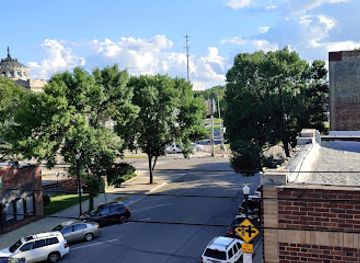
Grand Forks stands on the western bank of the Red River of the North, facing East Grand Forks across the state line in Minnesota. The river has long influenced the city's economy, settlement patterns and sense of identity, while the broad surrounding landscape gives the urban area an open, spacious character. Downtown Grand Forks combines low-rise historic buildings with newer restaurants, galleries and community spaces, and the city's compact core is easy to explore on foot.Read more about Grand Forks
University Culture and Local History
Green Space and Resilience
When is the best time to visit Grand Forks?
Best: June–August · 25–27°C| Month | High (°C) | Rainfall (mm) |
|---|---|---|
| January | -9 | 18 |
| February | -6 | 15 |
| March | 3 | 21 |
| April | 12 | 37 |
| May | 20 | 64 |
| June (best) | 26 | 89 |
| July (best) | 27 | 83 |
| August (best) | 25 | 76 |
| September | 20 | 64 |
| October | 13 | 38 |
| November | 3 | 20 |
| December | -4 | 18 |
Getting to and around Grand Forks
How to get there
Transportation
Best attractions in Grand Forks
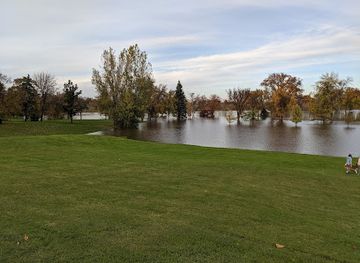
Grand Forks's attractions range from riverfront open space to university culture and local history. The Greater Grand Forks Greenway is the city's defining recreational landscape, with trails, lawns, woodland and access to the Red River for walking, cycling and seasonal activities. On the University of North Dakota campus, the North Dakota Museum of Art presents changing exhibitions and regional perspectives alongside national and international contemporary work. Ralph Engelstad Arena is a major collegiate ice-hockey venue and an important part of the city's sporting culture, while the Alerus Center hosts large events and performances. Downtown, the Empire Arts Center occupies a restored historic theatre and offers films, concerts and community arts programming. The Grand Forks County Historical Society helps interpret the area's settlement and social history, and the nearby Myra Arboretum provides a quieter setting for gardens and native plant displays. Across the river, East Grand Forks extends the urban experience into Minnesota.
-
Tourist attraction
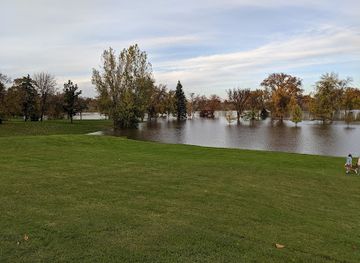
Lincoln Drive Park
Experience the beauty and tranquility of Lincoln Drive Park, a perfect destination for recreation and relaxation in Grand Forks, North Dakota.
6 min drive · 2.0 km from city centre
-
Amusement center
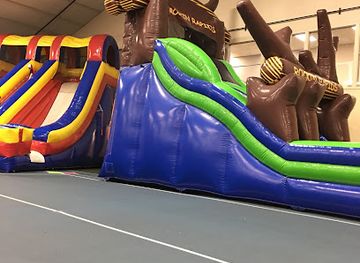
Northern Air Action Park
Experience endless fun at Northern Air Action Park in Grand Forks, where thrilling attractions meet family-friendly entertainment.
12 min drive · 4.1 km from city centre
-
Car racing track
River Cities Speedway
Experience thrilling car racing events at River Cities Speedway in Grand Forks, ND - a must-visit for motorsport fans and adrenaline seekers.
7 min drive · 2.4 km from city centre
-
Tourist attraction
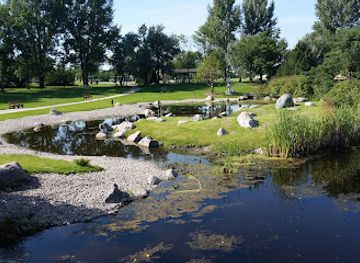
Sertoma Park
Experience the tranquil beauty of Sertoma Park in Grand Forks, ND, featuring scenic paths, serene ponds, and stunning gardens for a perfect family outing.
11 min drive · 3.6 km from city centre
Best landmarks in Grand Forks
The most significant landmarks of Grand Forks express its university identity, civic history and relationship with the Red River. The University of North Dakota campus contains historic academic buildings alongside newer facilities, and its public presence has shaped the city since the institution was founded in 1883. The North Dakota Museum of Art is a key cultural landmark, recognised for bringing contemporary art into the region. Ralph Engelstad Arena represents the modern importance of collegiate ice hockey and is one of the city's most prominent large-scale buildings. Downtown's Empire Arts Center occupies the former Grand Forks Central High School and links historic architecture with present-day performance culture. Along the river, the Greater Grand Forks Greenway is both a landscape landmark and a physical record of post-1997 flood planning, while flood memorials and interpretive sites preserve the memory of the disaster that transformed the city.
-
Grill
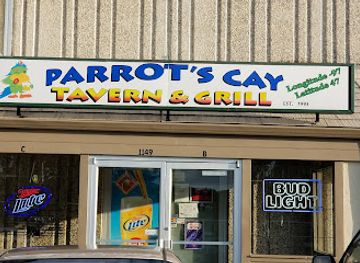
Parrot's Cay Tavern & Grill
Discover the tropical flavors of the Caribbean at Parrot's Cay Tavern & Grill in Grand Forks, ND, where every meal is a festive celebration.
13 min drive · 4.5 km from city centre
-
Restaurant
Rhombus Guys
Discover the vibrant atmosphere and delectable pizzas at Rhombus Guys in Grand Forks, ND, a favorite among locals and tourists alike.
3 min walk · 0.3 km from city centre
-
Restaurant
The Toasted Frog
Experience the unique flavors of The Toasted Frog in Grand Forks, where local ingredients meet innovative cuisine in a warm, inviting atmosphere.
2 min walk · 0.2 km from city centre
-
Park
Lincoln Drive Park
Experience the natural beauty and recreational opportunities at Lincoln Drive Park, a serene retreat in Grand Forks, North Dakota.
6 min drive · 2.0 km from city centre
Explore Grand Forks on the map
Plan your Grand Forks trip on one map. See where the top attractions, landmarks, restaurants, bars and hotels are, find what's near where you're staying, and book hotels and experiences in a few clicks.
Best hotels in Grand Forks
Best restaurants in Grand Forks
Grand Forks's dining scene reflects its Red River valley setting, northern climate and university population. Restaurants and cafés downtown range from familiar American comfort food and burgers to contemporary cooking, pizza, coffee and international dishes, while the university area adds an informal student-oriented atmosphere. Regional ingredients and agricultural traditions appear through seasonal produce, locally made goods and the area's strong connection with grain farming, although the city is not defined by one single signature dish. The seasonal farmers' market is a useful place to encounter North Dakota produce, baked goods and small-scale food businesses. East Grand Forks, only a short distance across the river, adds further restaurants and casual riverside dining. Independent eateries, bakeries and bars are concentrated most conveniently around the central districts, while larger family restaurants and chain options are more common along the main commercial roads.
-
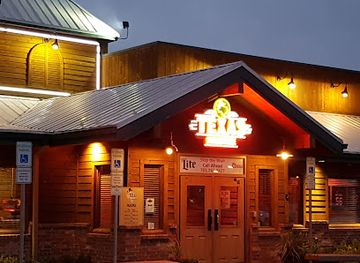
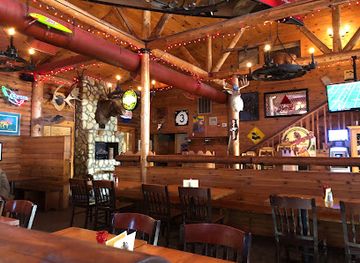
Steak
Texas Roadhouse
Indulge in mouthwatering steaks and classic American dishes at Texas Roadhouse in Grand Forks - where every meal feels like a celebration.
15 min drive · 4.9 km from city centre
-
Grill
Blue Moose Bar & Grill
Discover the flavors of East Grand Forks at Blue Moose Bar & Grill - where delicious food meets warm hospitality in every bite.
6 min walk · 0.5 km from city centre
-
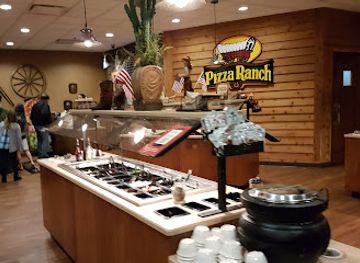
Buffet
Pizza Ranch
Savor endless pizza, chicken & more at Pizza Ranch - the perfect buffet spot for families in Grand Forks.
16 min drive · 5.3 km from city centre
-
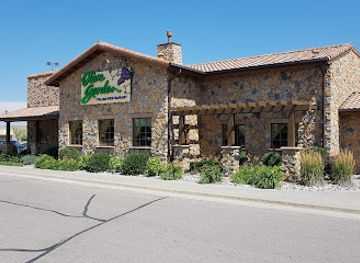
Italian
Olive Garden Italian Restaurant
Experience authentic Italian dining at Olive Garden in Grand Forks - where every meal feels like a celebration.
15 min drive · 4.9 km from city centre
Best bars in Grand Forks
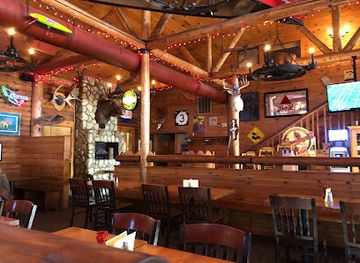
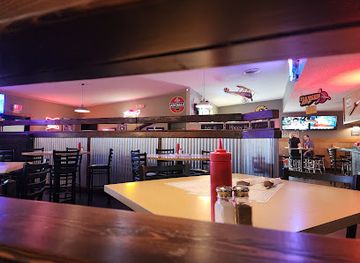
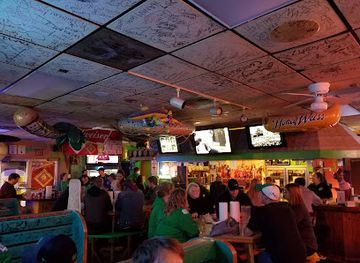
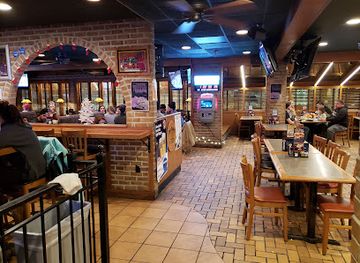
Grand Forks has a modest, sociable evening scene shaped by its university, regional population and long winters rather than by a large nightclub culture. Downtown and the area around the University of North Dakota contain pubs, bars, casual venues and restaurants where evenings may continue over local or national drinks, live music and televised sport. Collegiate hockey at Ralph Engelstad Arena can bring a particularly strong atmosphere to the city, while student events and seasonal festivals add occasional late-night activity. The Empire Arts Center provides an alternative after-dark programme of films, performances and community events, and the Alerus Center hosts larger concerts and touring entertainment when scheduled. Visitors should expect distances between venues to be manageable in the centre but quieter streets elsewhere, with winter weather making taxis or pre-arranged transport useful after dark.
-
Grill
Blue Moose Bar & Grill
Experience the heart of American cuisine at Blue Moose Bar & Grill, where great food meets a welcoming atmosphere in East Grand Forks.
6 min walk · 0.5 km from city centre
-
Grill
Speedway 805 Grill & Bar
Experience the best of Grand Forks dining at Speedway 805 Grill & Bar, where flavors meet fun in a vibrant grill atmosphere.
13 min drive · 4.2 km from city centre
-
Grill
Parrot's Cay Tavern & Grill
Experience the best of tropical flavors and vibrant atmosphere at Parrot's Cay Tavern & Grill, the perfect dining spot in Grand Forks, North Dakota.
13 min drive · 4.5 km from city centre
-
Grill
Ground Round Grill & Bar-Grand Forks, ND
Experience a taste of America at Ground Round Grill & Bar in Grand Forks, where delicious food meets a lively atmosphere.
14 min drive · 4.8 km from city centre
Best nightclubs in Grand Forks
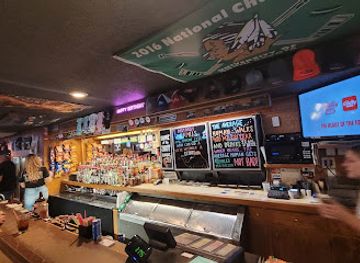
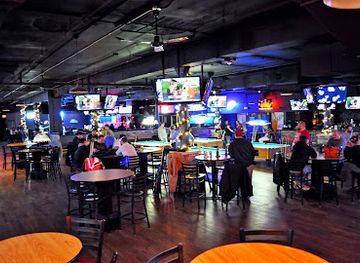
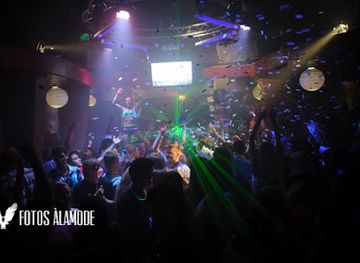
Grand Forks has a modest, sociable evening scene shaped by its university, regional population and long winters rather than by a large nightclub culture. Downtown and the area around the University of North Dakota contain pubs, bars, casual venues and restaurants where evenings may continue over local or national drinks, live music and televised sport. Collegiate hockey at Ralph Engelstad Arena can bring a particularly strong atmosphere to the city, while student events and seasonal festivals add occasional late-night activity. The Empire Arts Center provides an alternative after-dark programme of films, performances and community events, and the Alerus Center hosts larger concerts and touring entertainment when scheduled. Visitors should expect distances between venues to be manageable in the centre but quieter streets elsewhere, with winter weather making taxis or pre-arranged transport useful after dark.
-
Bar
Bun Lounge
Experience the vibrant nightlife at Bun Lounge in Grand Forks, where great drinks and a lively atmosphere await.
6 min drive · 1.9 km from city centre
-
Bar
The Loft
Discover The Loft in Grand Forks - where craft cocktails, live music, and a vibrant atmosphere create the ultimate nightlife experience.
2 min walk · 0.1 km from city centre
-
Lounge
Johnny's Lounge
Experience the vibrant nightlife of Grand Forks at Johnny's Lounge, where relaxation meets excitement in a stylish setting.
5 min drive · 1.6 km from city centre
-
Lounge
Level 10
Experience the vibrant nightlife at Level 10, the premier lounge and nightclub in Grand Forks, ND with exciting music and a lively atmosphere.
2 min walk · 0.2 km from city centre
Best shops in Grand Forks
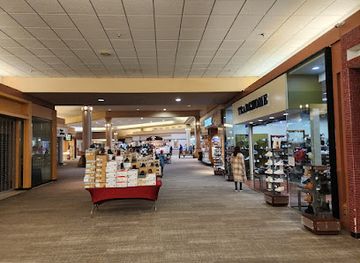
Shopping in Grand Forks combines a walkable downtown core with larger commercial areas on the outskirts. Main Avenue and the surrounding central streets contain independent retailers, cafés, galleries, gift shops and services, making the district the best place to browse local businesses alongside older commercial architecture. The seasonal farmers' market brings regional growers, bakers and craft producers into the city, with availability depending on the time of year. Columbia Mall and nearby retail corridors provide a broader selection of national shops, department-style stores and practical services, though they are more car-oriented than downtown. Visitors looking for locally connected purchases can seek out North Dakota food products, regional artwork, handmade goods and university-related items rather than generic souvenirs. East Grand Forks offers additional independent shops and restaurants across the state line, within easy reach of central Grand Forks.
-
Shopping mall
Columbia Mall
Discover Columbia Mall in Grand Forks, your ultimate shopping destination with diverse stores, dining, and entertainment for a perfect day out.
14 min drive · 4.6 km from city centre
-
Sporting goods store
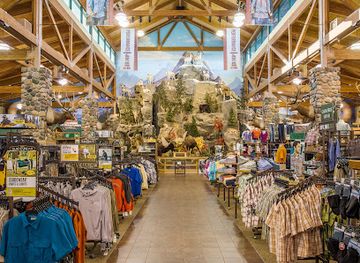
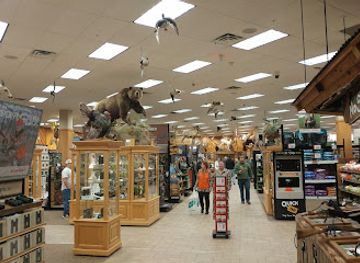
Cabela's
Cabela's in East Grand Forks is your ultimate destination for hunting, fishing, and camping gear, blending shopping with a unique outdoor experience.
8 min walk · 0.6 km from city centre
-
Sporting goods store
Scheels
Explore Scheels in Grand Forks for an unparalleled shopping experience in sporting goods, activewear, and outdoor gear.
14 min drive · 4.7 km from city centre
-
Shopping mall
Grand Cities Mall
Explore Grand Cities Mall for a unique shopping experience in Grand Forks, North Dakota—where retail, dining, and fun meet.
8 min drive · 2.8 km from city centre
Get your free copy of our complete guide to Grand Forks, delivered straight to you.
Everything on this page, from attractions and restaurants to essentials and local phrases, in one PDF you can read offline, print or share.
Already have an account? Sign in
Your Grand Forks guide is ready.
We'll send it to · Not you? Sign out

Getting your guide ready…
We are putting together a fresh copy of the Grand Forks guide. This can take up to a minute.
This can take a few moments. If your browser asks, choose Allow so the download can start. You'll find the guide in your Downloads folder.
Nothing happened? Download it again
Sorry, the guide is taking longer than usual. Please try again in a minute, or get it by email instead.
Grand Forks essentials
Currency and Payment
Safety
Emergency Situations
Do's and Don'ts
Local Tips
From Eve
Local phrases worth knowing
You don't need to get them perfect. A few words go a long way, and locals appreciate the effort.
Basics
| English | Local | Say it |
|---|---|---|
| Hello | Hey | [hey] |
| Goodbye | See ya | [see ya] |
| Yes | Yah | [yah] |
| No | Nah | [nah] |
| Please/You're welcome | Please | [please] |
| Thank you | Thanks | [thanks] |
| Excuse me/Sorry | Pardon | [pardon] |
| How are you? | How ya doin'? | [how ya doin] |
| Fine. And you? | I'm good. You? | [I'm good. You] |
| Do you speak English? | Ya speak English? | [ya speak English] |
| I don't understand | I dunno what ya mean | [I dunno what ya mean] |
Eating & Drinking
| English | Local | Say it |
|---|---|---|
| I'd like to see the menu, please | Show me the menu, please | [show me the menu, please] |
| I don't eat meat | I don't eat meat | [I don't eat meat] |
| Cheers! | Cheers! | [cheers] |
| I would like to pay, please | I'll pay now, please | [I'll pay now, please] |
Emergencies
| English | Local | Say it |
|---|---|---|
| Help! | Help! | [help] |
| Go away! | Get lost! | [get lost] |
| Call the Police! | Call the cops! | [call the cops] |
| Call a doctor! | Get a doc! | [get a doc] |
| I'm lost | I'm lost | [I'm lost] |
| I'm ill | I'm sick | [I'm sick] |
Shopping
| English | Local | Say it |
|---|---|---|
| I'd like to buy... | I wanna buy... | [I wanna buy] |
| I'm just looking | Just lookin' | [just lookin] |
| How much is it? | How much? | [how much] |
| That's too expensive | Too pricey | [too pricey] |
| Can you lower the price? | Can ya make it cheaper? | [can ya make it cheaper] |
Time & Numbers
| English | Local | Say it |
|---|---|---|
| What time is it? | What time is it? | [what time is it] |
| It's one o'clock | It's one o'clock | [it's one o'clock] |
| Half past (10) | Half past ten | [half past ten] |
| Morning | Morning | [morning] |
| Afternoon | Afternoon | [afternoon] |
| Evening | Evening | [evening] |
| Yesterday | Yesterday | [yesterday] |
| Today | Today | [today] |
| Tomorrow | Tomorrow | [tomorrow] |
| 1 | One | [one] |
| 2 | Two | [two] |
| 3 | Three | [three] |
| 4 | Four | [four] |
| 5 | Five | [five] |
| 6 | Six | [six] |
| 7 | Seven | [seven] |
| 8 | Eight | [eight] |
| 9 | Nine | [nine] |
| 10 | Ten | [ten] |
Transport & Directions
| English | Local | Say it |
|---|---|---|
| Where's a/the...? | Where's the...? | [where's the] |
| What's the address? | What's the address? | [what's the address] |
| Can you show me (on the map)? | Show me (on the map) | [show me on the map] |
| When's the next (bus)? | When's the next (bus)? | [when's the next bus] |
| A ticket (to ....) | A ticket to .... | [a ticket to] |
History of Grand Forks
Red River Settlement and Indigenous Homelands
The Red River valley has long been home to Indigenous peoples, including Dakota and Ojibwe communities, whose presence predates the modern city. In the nineteenth century, the river also formed part of the Red River trade network linking agricultural settlements and fur-trading routes between present-day United States and Canada. The area's fertile, flat landscape encouraged farming and transport, while the river provided a natural corridor through the northern plains. Modern Grand Forks developed within this wider history of Indigenous homelands, Métis exchange and agricultural settlement rather than on an unoccupied frontier.
The Founding of Grand Forks
The community that became Grand Forks emerged in the 1870s near the junction of the Red Lake River and the Red River of the North. Its name refers to the river's broad forks, a geographical feature already familiar to traders and travellers. Rail connections in the late nineteenth century accelerated settlement and helped establish Grand Forks as a centre for grain, commerce and regional transport. The city was incorporated in 1881, and its growth reflected wider patterns of railroad expansion and agricultural development across Dakota Territory.
Railways, Agriculture and Urban Growth
Railways transformed Grand Forks from a river settlement into a regional city. Grain elevators, warehouses, shops and civic buildings followed the expansion of wheat farming and trade across the Red River valley. The city also became an educational centre with the establishment of the University of North Dakota in 1883, an institution that has shaped local culture, employment and public life ever since. Immigration and migration added to the population, while schools, churches and commercial streets gave the young city a more permanent urban form. Much of Grand Forks's historic identity remains connected to this combination of agriculture, rail transport and education.
The University and Civic Identity
During the twentieth century, the University of North Dakota grew into one of the city's defining institutions, bringing students, researchers, artists and professional communities to Grand Forks. Its campus helped broaden the local economy beyond agriculture and transport, while galleries, performing arts and collegiate sport became important parts of public life. Grand Forks also developed as a service centre for northeastern North Dakota, with hospitals, retail districts and civic institutions serving communities across the surrounding rural region. The city's northern plains identity was therefore increasingly expressed through both practical regional commerce and university-led cultural activity.
The 1997 Red River Flood and Renewal
In spring 1997, severe flooding of the Red River caused extensive damage across Grand Forks and East Grand Forks. A major fire in the evacuated downtown area intensified the disaster, destroying or damaging numerous buildings. The flood prompted a wide-ranging reconstruction and flood-protection programme, including the creation and expansion of the Greater Grand Forks Greenway along the river. The event remains a defining part of local memory, reflected in memorials, public interpretation and the way the city manages its waterfront. Contemporary Grand Forks combines this history of loss and rebuilding with a renewed emphasis on resilient infrastructure, open space and river access.
Grand Forks in Photos
Browse through our photo collection highlighting the charm and character of the destination.
Cities near Grand Forks
The closest cities to Grand Forks, if you have time for more than one stop.
-

-

-
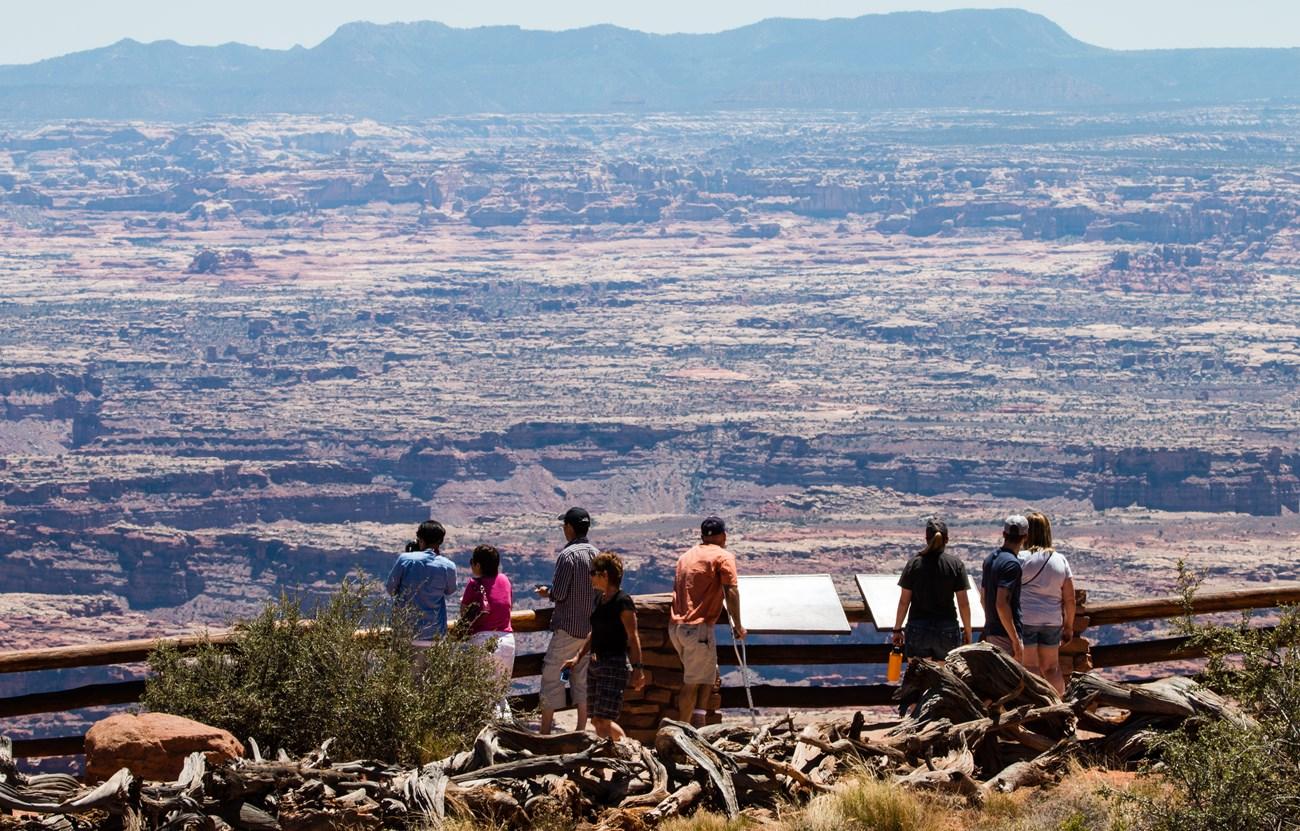 Devils Lake
, North Dakota, combines walleye fishing, prairie scenery, Dakota heritage, Fort Totten history and relaxed small-town sightseeing.
2 h 38 min drive · 138 km from city centre
Devils Lake
Devils Lake, North Dakota, combines walleye fishing, prairie scenery, Dakota heritage, Fort Totten history and relaxed small-town sightseeing.
2 h 38 min drive · 138 km from city centre
-

-


Swipe for more cities
Explore more
Explore more of North Dakota
Discover the rugged beauty, rich history, and warm hospitality of North Dakota, the untamed frontier of the United States.
Explore North Dakota