

Mohican State Park Travel Guide - Free Web & App
Your ultimate guide to Mohican State Park. Discover top landmarks, proposed trips, and local tips. Free on the web or via the Evendo companion app.


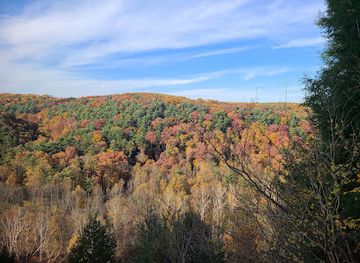
Mohican State Park in Ohio offers forest trails, river gorges, waterfalls, camping, canoeing and autumn scenery near Loudonville for outdoor escapes.
A Forested Landscape in Central Ohio
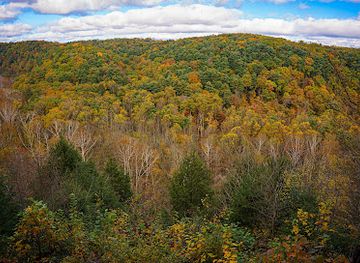
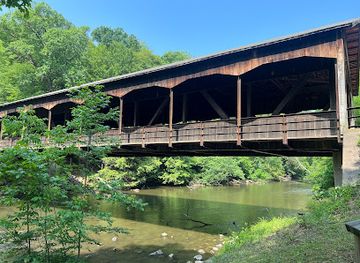
Mohican State Park occupies a wooded section of north-central Ohio near Loudonville, where the Clear Fork of the Mohican River cuts through a landscape of sandstone ridges, ravines and hemlock-lined slopes. The 1,110-acre park lies beside the much larger Mohican-Memorial State Forest, allowing visitors to experience a broader network of forest roads, trails and natural habitats beyond the formal park boundary. Its terrain is more rugged than much of the surrounding farmland, with narrow valleys and elevated overlooks creating a strong sense of enclosure in the forest.Read more about Mohican State Park
River, Ravines and Wildlife
Outdoor Recreation and Local Character
When is the best time to visit Mohican State Park?
Best: June, August–September · 23–27°C| Month | High (°C) | Rainfall (mm) |
|---|---|---|
| January | 1 | 57 |
| February | 3 | 56 |
| March | 9 | 70 |
| April | 16 | 86 |
| May | 22 | 94 |
| June (best) | 26 | 102 |
| July | 28 | 112 |
| August (best) | 27 | 103 |
| September (best) | 23 | 87 |
| October | 17 | 70 |
| November | 9 | 80 |
| December | 2 | 64 |
Getting to and around Mohican State Park
How to get there
Transportation
Best attractions in Mohican State Park
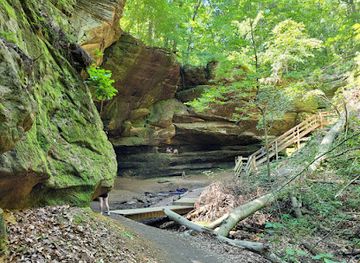
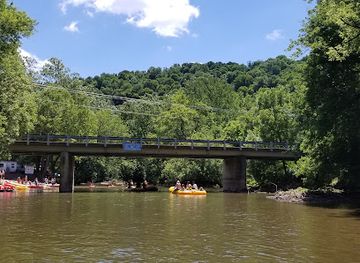
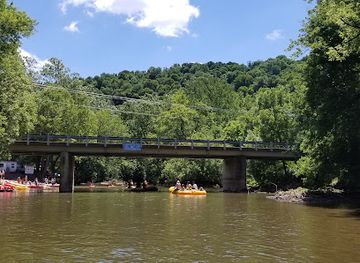
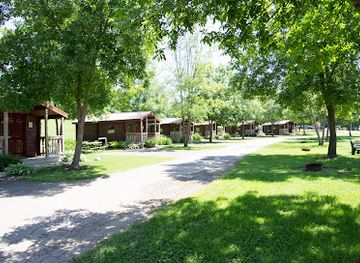
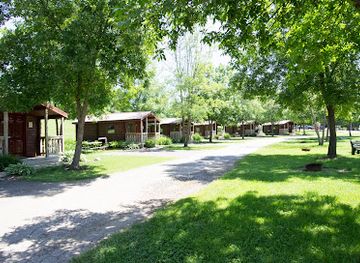
Mohican State Park's principal attractions are its forested ravines, the Clear Fork of the Mohican River and the trail network linking wooded slopes, viewpoints and stream-side scenery. Hemlock Gorge provides one of the area's most distinctive walks, with shaded terrain and mature hemlock character, while Lyons Falls is a seasonal waterfall reached by a park trail. Beyond the park boundary, the adjoining Mohican-Memorial State Forest expands the landscape into a larger network of roads, woodland and recreation routes. The river is central to canoeing, kayaking and fishing, with access governed by local conditions and regulations. Campgrounds, cabins and Mohican Lodge provide established visitor facilities rather than attractions in themselves, but their locations make them useful bases for exploring. Nearby Loudonville adds the small-town services, shops and dining that are less readily available within the wooded recreation areas.
-
State park
Mohican-Memorial State Forest
Explore the breathtaking landscapes and diverse wildlife at Mohican-Memorial State Forest in Ohio, a perfect destination for outdoor enthusiasts and nature lovers.
-
Tourist attraction
Mohican Adventures Canoe Livery & Fun Center
Discover the thrill of outdoor adventures at Mohican Adventures, your gateway to canoeing, kayaking, and family fun in Ohio's scenic landscapes.
-
Tourist attraction
Wolf Creek Grist Mill
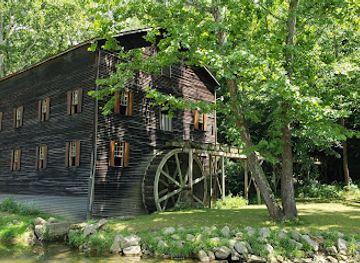
Explore the historic Wolf Creek Grist Mill in Loudonville, Ohio, where tradition meets beauty in a serene natural setting.
-
 Park
ParkMohican State Park Nature Center
Explore the natural beauty and educational wonders of Mohican State Park Nature Center, a tranquil escape in the heart of Ohio.
Best landmarks in Mohican State Park
The Clear Fork of the Mohican River is Mohican's defining natural landmark, cutting through sandstone country and providing the water-based setting around which much of the area's recreation developed. Hemlock Gorge is significant for its shaded ravine landscape and surviving hemlock-dominated woodland, while Lyons Falls is a recognised scenic feature whose flow responds to recent rainfall and seasonal conditions. The surrounding sandstone ridges, narrow valleys and forested slopes are landmarks in combination rather than isolated monumental formations. Mohican Lodge and the park's established cabins and campgrounds represent the area's twentieth-century transition from working forest to public recreation landscape. The adjacent Mohican-Memorial State Forest is a separate public land designation, but its continuous woodland setting is essential to understanding the broader landmark character visitors associate with Mohican.
-
State park
Mohican-Memorial State Forest
Explore the breathtaking beauty of Mohican-Memorial State Forest, Ohio's perfect destination for outdoor adventures and serene nature retreats.
-
Recreation center
Mohican Adventures Canoe Livery & Fun Center
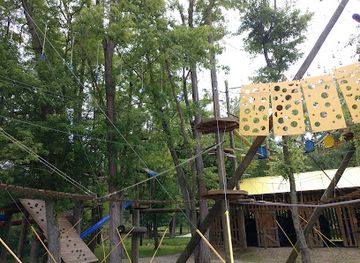
Explore the great outdoors at Mohican Adventures, your go-to destination for canoeing, kayaking, and thrilling aerial park experiences in Ohio.
-
Campground
Mohican Adventures Campground & Cabins
Discover the perfect blend of adventure and relaxation at Mohican Adventures Campground & Cabins, Ohio's premier outdoor destination.
-
Hiking area
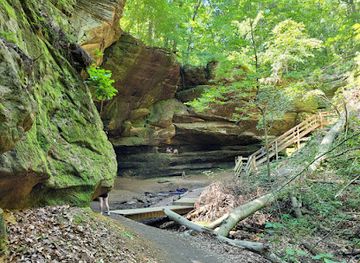
Gorge Overlook Trail
Explore the stunning scenery and diverse wildlife at Gorge Overlook Trail, Ohio's premier hiking destination for nature enthusiasts and adventure seekers.
Explore Mohican State Park on the map
Plan your trip on one map. See where the top attractions, landmarks, restaurants and hotels are, and book hotels and experiences in a few clicks.
Best hotels in Mohican State Park
Best restaurants in Mohican State Park
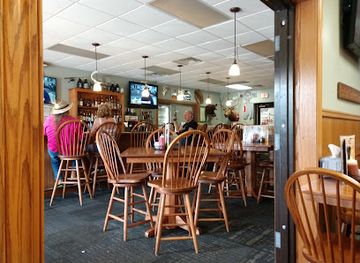
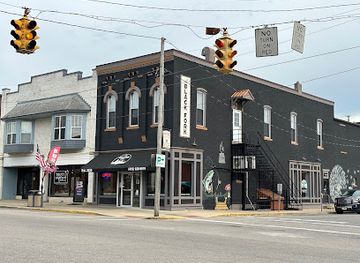
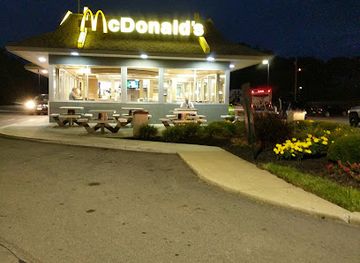
Dining within Mohican State Park is centred on established accommodation and recreation facilities, while the wider choice is found in Loudonville and nearby small communities. Mohican Lodge provides an on-site restaurant setting for guests and visitors according to its current arrangements, and the park campground environment is more suited to self-catering than to an extensive restaurant scene. In Loudonville, visitors can look for independent restaurants, cafés, takeaways and traditional casual dining serving familiar American fare, while rural roads lead towards farm-oriented communities and regional food producers. The area does not have a concentrated gastronomy district, so those staying in cabins or campsites often shop for provisions before heading into the forest. Opening patterns and seasonal availability can vary, particularly outside the busiest recreation months.
-
Recreation center
Mohican Adventures Canoe Livery & Fun Center
Discover the ultimate outdoor adventure at Mohican Adventures Canoe Livery & Fun Center - where nature meets fun in Loudonville, Ohio.
-
Family-friendly
Trails End Restaurant
Enjoy family-friendly dining at Trails End Restaurant near Mohican State Park—featuring delicious pizzas and classic American dishes in a cozy setting.
-
Restaurant
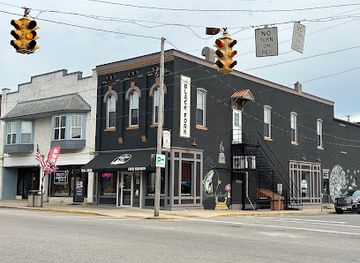
Black Fork Bistro
Experience culinary excellence at Black Fork Bistro in Loudonville, Ohio – where fresh ingredients meet innovative dishes in a cozy setting.
-
Fast Food
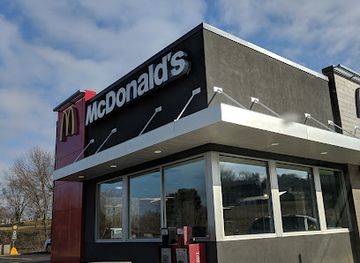
McDonald's
Savor classic American fast food at McDonald's in Loudonville - from breakfast delights to late-night snacks.
Best bars in Mohican State Park
Evenings in Mohican State Park are generally quiet and nature-oriented rather than built around nightlife. The lodge and accommodation areas may provide a social setting for guests, but visitors should not expect a cluster of bars or nightclubs inside the park. Loudonville has the area's more conventional evening hospitality, including casual restaurants, local bars and community-oriented venues, although the atmosphere remains that of a small rural town rather than a late-night entertainment centre. Campfires, where permitted and subject to current rules, and dark woodland surroundings shape many evenings for campers, while organised seasonal events may occur in the wider region without forming a permanent programme. Check current local information before planning an evening around a particular venue or performance.
-
Recreation center
Mohican Adventures Canoe Livery & Fun Center
Experience the thrill of outdoor adventures at Mohican Adventures Canoe Livery & Fun Center, your ultimate destination for canoeing, kayaking, and family fun in Ohio.
-
Family-friendly
Trails End Restaurant
Discover the perfect blend of family-friendly dining and delicious pizza at Trails End Restaurant in Loudonville, Ohio, where every meal is a celebration.
-
Restaurant
Black Fork Bistro
Experience the flavors of Loudonville at Black Fork Bistro, where local ingredients meet creative culinary artistry in a cozy setting.
-
Fast Food
McDonald's
Experience the classic American fast food at McDonald's in Loudonville, where delicious meals and affordability meet.

Best shops in Mohican State Park
Shopping in Mohican State Park itself is limited and primarily connected with visitor necessities, park facilities and recreation supplies. Loudonville is the principal nearby place for groceries, everyday provisions, outdoor needs and small independent businesses. Visitors may also encounter locally produced foods, seasonal farm goods, handmade items and regional crafts in the rural communities surrounding the park, although markets and opening patterns are not necessarily permanent. The wider area is close enough to Ohio's Amish Country for excursions towards larger concentrations of artisan and food retail, but those communities lie outside Mohican State Park and should not be confused with shopping within the destination. There is no extensive retail district in the forest, making advance provision sensible for camping, hiking and self-catering stays.
-
State park
Mohican-Memorial State Forest
Experience the natural wonders and outdoor adventures at Mohican-Memorial State Forest, a picturesque state park in Ohio.
-
Recreation center
Mohican Adventures Canoe Livery & Fun Center
Experience the thrill of outdoor adventures at Mohican Adventures Canoe Livery & Fun Center, where fun and nature combine in Loudonville, Ohio.
-
State park
Mohican State Park
Discover adventure and tranquility in Mohican State Park, Ohio's premier destination for nature lovers and outdoor activities.
-
Campground
Mohican Adventures Campground & Cabins
Discover serenity and adventure at Mohican Adventures Campground & Cabins, Ohio's premier outdoor getaway.
Get your free copy of our complete guide to Mohican State Park, delivered straight to you.
Everything on this page, from attractions and restaurants to essentials and local phrases, in one PDF you can read offline, print or share.
Already have an account? Sign in
Your Mohican State Park guide is ready.
We'll send it to · Not you? Sign out

Getting your guide ready…
We are putting together a fresh copy of the Mohican State Park guide. This can take up to a minute.
This can take a few moments. If your browser asks, choose Allow so the download can start. You'll find the guide in your Downloads folder.
Nothing happened? Download it again
Sorry, the guide is taking longer than usual. Please try again in a minute, or get it by email instead.
Mohican State Park essentials
Currency and Payment
Safety
Emergency Situations
Do's and Don'ts
Local Tips
From Eve
Local phrases worth knowing
You don't need to get them perfect. A few words go a long way, and locals appreciate the effort.
Basics
| English | Local | Say it |
|---|---|---|
| Hello | Kwi | [kwee] |
| Goodbye | Neech | [neech] |
| Yes | Hah | [hah] |
| No | Nah | [nah] |
| Please/You're welcome | Wah | [wah] |
| Thank you | Wee-sah | [wee-sah] |
| Excuse me/Sorry | Noh-chee | [noh-chee] |
| How are you? | Tah-kwee nah-kwee? | [tah-kwee nah-kwee] |
| Fine. And you? | Kwee. Tah-kwee? | [kwee. tah-kwee] |
| Do you speak English? | Nah-kwee pah-swee Eng-leesh? | [nah-kwee pah-swee Eng-leesh] |
| I don't understand | Nah-kwee noh-chee | [nah-kwee noh-chee] |
Eating & Drinking
| English | Local | Say it |
|---|---|---|
| I'd like to see the menu, please | Nah-kwee kwi-shoo sah-mee-noo, wah | [nah-kwee kwee-shoo sah-mee-noo, wah] |
| I don't eat meat | Nah-kwee kwi-shoo noo-meet | [nah-kwee kwee-shoo noo-meet] |
| Cheers! | Chee-shah! | [chee-shah] |
| I would like to pay, please | Nah-kwee kwi-shoo pay, wah | [nah-kwee kwee-shoo pay, wah] |
Emergencies
| English | Local | Say it |
|---|---|---|
| Help! | Kwee-kwee! | [kwee-kwee] |
| Go away! | Pah-kwee! | [pah-kwee] |
| Call the Police! | Kwee-kwee chee-lee-cee! | [kwee-kwee chee-lee-cee] |
| Call a doctor! | Kwee-kwee nah-nee-chah! | [kwee-kwee nah-nee-chah] |
| I'm lost | Nah-kwee nah-loo | [nah-kwee nah-loo] |
| I'm ill | Nah-kwee kwee-shoo moh-kwee | [nah-kwee kwee-shoo moh-kwee] |
Shopping
| English | Local | Say it |
|---|---|---|
| I'd like to buy... | Nah-kwee kwi-shoo bah-ee... | [nah-kwee kwee-shoo bah-ee] |
| I'm just looking | Nah-kwee kwi-shoo nah-kwee-kwee | [nah-kwee kwee-shoo nah-kwee-kwee] |
| How much is it? | Kwee tah-kwee? | [kwee tah-kwee] |
| That's too expensive | Nah-kwee kwee-shoo kwee-pah-mah-tah | [nah-kwee kwee-shoo kwee-pah-mah-tah] |
| Can you lower the price? | Kwee kwee-shoo lay-kwee tah-kwee | [kwee kwee-shoo lay-kwee tah-kwee] |
Time & Numbers
| English | Local | Say it |
|---|---|---|
| What time is it? | Tah-kwee pah-pee? | [tah-kwee pah-pee] |
| It's one o'clock | Kwee's kwi-pah-pee | [kwee's kwi-pah-pee] |
| Half past (10) | Kwee-shoo-pee (10) | [kwee-shoo-pee (10)] |
| Morning | Mah-kee-nee | [mah-kee-nee] |
| Afternoon | Pah-kah-nee | [pah-kah-nee] |
| Evening | Kwee-chee | [kwee-chee] |
| Yesterday | Nah-kwee mah-kee-nee | [nah-kwee mah-kee-nee] |
| Today | Nee-sah | [nee-sah] |
| Tomorrow | Ah-mee-kwee | [ah-mee-kwee] |
| 1 | Kwi | [kwee] |
| 2 | Nee | [nee] |
| 3 | Sah | [sah] |
| 4 | Noh | [noh] |
| 5 | Kah | [kah] |
| 6 | Kwee | [kwee] |
| 7 | Kwee-nah | [kwee-nah] |
| 8 | Noh-kwee | [noh-kwee] |
| 9 | Sah-kwee | [sah-kwee] |
| 10 | Noh-kwee | [noh-kwee] |
Transport & Directions
| English | Local | Say it |
|---|---|---|
| Where's a/the...? | Pah-kwee mah-kwee...? | [pah-kwee mah-kwee] |
| What's the address? | Tah-kwee mah-kwee-chee? | [tah-kwee mah-kwee-chee] |
| Can you show me (on the map)? | Kwee kwee-shoo mah-kwee (on the map)? | [kwee kwee-shoo mah-kwee (on the map)] |
| When's the next (bus)? | Wah-kwee's the next (bus)? | [wah-kwee's the next (bus)] |
| A ticket (to ....) | Noh-pee-kwee (to ....) | [noh-pee-kwee (to ....)] |
History of Mohican State Park
A Landscape Shaped by Sandstone and Water
Mohican's physical character developed through the erosion of sandstone and the action of streams descending towards the Clear Fork of the Mohican River. Over long geological periods, water cut ravines and exposed ledges while cooler, shaded slopes allowed hemlock and other woodland communities to persist. These landforms later influenced settlement, transport and recreation: the same narrow valleys that made movement difficult also created the scenery that became central to the area's tourism identity.
Indigenous Landscapes and Early Settlement
The Mohican name reflects the wider historical geography of the region, although the modern park should not be treated as a direct reservation or settlement of the Mohican people, whose homelands were primarily farther east. Before and during Euro-American settlement, Indigenous peoples used the forests and river valleys of present-day Ohio. During the nineteenth century, farms, mills, roads and small communities developed around the waterways, while Loudonville emerged as an important local centre connected to the surrounding rural landscape.
Timber, Mills and the Working Forest
Nineteenth-century growth brought substantial timber cutting to north-central Ohio. Forests supplied wood for construction and fuel, and streams such as the Clear Fork supported local milling and transport at a regional scale. Repeated clearing altered the original woodland, but marginal hillsides and ravines were less easily cultivated and retained more forest cover. The present patchwork of woodland, farms and river corridors therefore reflects both the area's natural topography and the economic history of logging and agriculture.
From Working Landscape to State Park
As large-scale timber extraction declined and public interest in outdoor recreation increased, parts of the region were protected and managed as public forest and parkland. Mohican State Park became part of Ohio's state-park system in the mid-twentieth century, with facilities developed for camping, hiking, boating and family recreation. Its creation preserved access to the Clear Fork valley and forested ravines while placing the landscape under managed public stewardship.
Conservation and Recreation Today
Modern Mohican is managed as a recreation landscape in which habitat protection, forestry, water management and visitor use must coexist. The state park and adjoining Mohican-Memorial State Forest are distinct public areas, but together they form the setting commonly understood by visitors as the Mohican region. Trails, campgrounds, cabins, the lodge and river activities have made tourism an important part of the local economy, while seasonal conditions and responsible use remain essential to protecting the woodland and waterways.
Mohican State Park in Photos
Browse through our photo collection highlighting the charm and character of the destination.
Neighbouring destination travel guides
The closest destinations to Mohican State Park, if you have time for more than one.
-

-

-

-

-


Swipe for more destinations
Explore more
Explore more of Central Ohio
Central Ohio combines Columbus museums and food with Indigenous earthworks, historic towns, river parks and accessible countryside across the state capital region.
Explore Central Ohio
Explore more of Ohio
Explore Ohio's vibrant cities, rich history, and stunning natural landscapes. From bustling urban centers to serene state parks, Ohio offers diverse attractions for every traveler.
Explore Ohio