

Free Torun Travel Guide & Mobile App
Plan your Torun trip with Evendo. Get free guides to top attractions, restaurants, hotels, and bars. Web access or download the mobile app.


Toruń reveals Poland’s medieval past through Gothic architecture, Copernicus heritage, riverside walks, living traditions and renowned gingerbread.
Medieval Streets and River Horizons
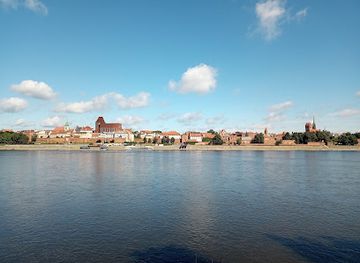
Toruń stands on the River Vistula in northern Poland, its Old Town forming one of the country’s most coherent historic urban landscapes. Red-brick Gothic churches, defensive walls and merchant houses line streets that have retained much of their medieval plan, while the broad riverbank opens towards long views across the water. The city’s historic centre, together with the ruins of the Teutonic Castle, reflects Toruń’s importance as a trading member of the medieval Hanseatic world.Read more about Torun
Copernicus and Living Traditions
Architecture, Culture and the Vistula
When is the best time to visit Torun?
Best: June–August · 23–25°C| Month | High (°C) | Rainfall (mm) |
|---|---|---|
| January | 1 | 17 |
| February | 2 | 15 |
| March | 5 | 17 |
| April | 12 | 27 |
| May | 19 | 47 |
| June (best) | 23 | 69 |
| July (best) | 25 | 83 |
| August (best) | 24 | 70 |
| September | 19 | 43 |
| October | 13 | 31 |
| November | 7 | 26 |
| December | 2 | 21 |
Getting to and around Torun
How to get there
Transportation
Best attractions in Torun
Toruń’s principal attractions are concentrated in and around its UNESCO-listed medieval centre. The Old Town Hall presents the scale and confidence of a prosperous Hanseatic city, while the Regional Museum occupies several historic buildings and introduces local art, history and domestic life. The House of Nicolaus Copernicus explores the astronomer’s family and the merchant world of fifteenth-century Toruń, complemented by the interactive Planetarium and the Centre for Contemporary Astronomy. The ruins of the Teutonic Castle reveal the city’s military origins, while the Vistula boulevards offer open views after the enclosed streets of the Old Town. Families and curious adults can investigate traditional baking at the Living Museum of Gingerbread, where pierniki are treated as a cultural practice rather than simply a souvenir. Churches, fortified gates and quiet courtyards reward unstructured walks between the better-known museums.
-
Museum
Muzeum Piernika
Discover the rich history of gingerbread at Muzeum Piernika, a charming museum in Toruń celebrating this delicious tradition.
9 min walk · 0.7 km from city centre
-
Historical place
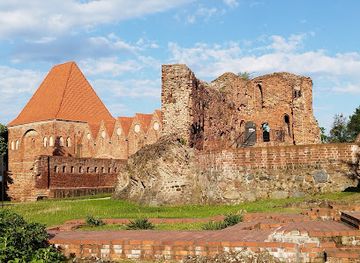
Teutonic Castle ruins
Discover the historical allure of the Teutonic Castle ruins in Toruń, a stunning site steeped in medieval history and breathtaking views.
12 min walk · 1.0 km from city centre
-
Museum
House of Nicolaus Copernicus
Discover the revolutionary world of Nicolaus Copernicus at his historic house in Toruń, where science and history come alive in an engaging museum experience.
8 min walk · 0.6 km from city centre
-
Museum
Muzeum Toruńskiego Piernika
Experience the sweet tradition of gingerbread in Toruń at the Muzeum Toruńskiego Piernika, where history meets delicious craftsmanship.
9 min walk · 0.7 km from city centre


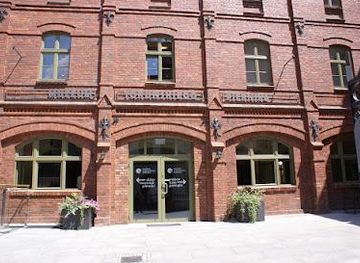
Best landmarks in Torun
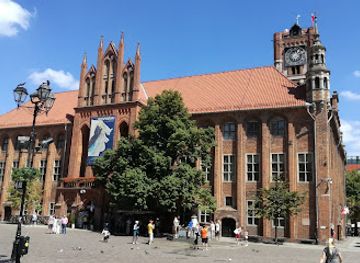
Toruń’s landmarks express its medieval prosperity, religious life and position on the Vistula. The Old Town Hall, one of the largest medieval town halls in Europe, dominates the central square with its brick Gothic mass and former civic functions. Nearby, the Cathedral Basilica of St John the Baptist and St John the Evangelist preserves centuries of religious and artistic history, while the Church of St Mary reflects the former Franciscan presence in the city. The Leaning Tower, incorporated into the medieval fortifications, is a memorable reminder of defensive engineering and later urban change. The ruins of the Teutonic Castle point to the order that shaped Toruń’s foundation, and the House of Nicolaus Copernicus connects a surviving merchant environment with the city’s most celebrated historical figure. Together, these buildings make Toruń’s past visible at street level.
-
Museum
Muzeum Piernika
Explore the rich tradition of gingerbread in Toruń at Muzeum Piernika, where history and flavor blend into a delightful experience.
9 min walk · 0.7 km from city centre
-
Memorial
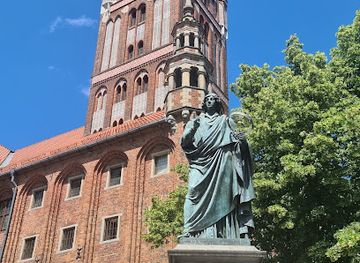
Nicolaus Copernicus Monument in Toruń
Discover the Nicolaus Copernicus Monument in Toruń, a tribute to the father of modern astronomy amidst the charm of a medieval town.
7 min walk · 0.6 km from city centre
-
Historical place
Teutonic Castle ruins
Discover the rich medieval heritage at the enchanting Teutonic Castle ruins in Toruń, a must-see historical attraction for all travelers.
12 min walk · 1.0 km from city centre
-
Cultural center
Zamek Krzyżacki w Toruniu
Discover the grandeur of Zamek Krzyżacki in Toruń, a stunning medieval castle that embodies the rich history and culture of Poland.
12 min walk · 0.9 km from city centre
Explore Torun on the map
Plan your Torun trip on one map. See where the top attractions, landmarks, restaurants, bars and hotels are, find what's near where you're staying, and book hotels and experiences in a few clicks.
Best hotels in Torun
Best restaurants in Torun
Toruń’s food culture is most closely associated with pierniki, the fragrant gingerbread made with spices, honey and flour and shaped into biscuits, hearts or decorative forms. Workshops and specialist bakeries explain the tradition, while cafés across the Old Town serve the biscuits alongside coffee and seasonal cakes. Polish cooking is widely represented in restaurants and milk bars, with dishes such as pierogi, żurek, barszcz, cabbage preparations and regional soups appearing in familiar or updated forms. The historic centre around the Market Square, Szeroka Street and the New Town contains the greatest concentration of dining rooms, cafés and casual eateries, while market shopping gives a more practical view of local ingredients. Contemporary restaurants often reinterpret Polish produce rather than abandoning it, and beer, compote and Polish spirits may accompany meals according to the style of establishment.
-
Crêperie
Manekin Toruń Rynek Staromiejski Naleśnikarnia
Experience delightful crêpes in Toruń's enchanting Old Market Square at Manekin - where tradition meets culinary creativity.
6 min walk · 0.5 km from city centre
-
European
Restauracja Chleb i Wino Toruń
Experience the rich flavors of Europe at Restauracja Chleb i Wino in Toruń's historic Old Town - where tradition meets culinary excellence.
6 min walk · 0.5 km from city centre
-
Dumpling
Pierogarnia Stary Toruń
Experience authentic Polish dumplings at Pierogarnia Stary Toruń - a culinary treasure in the heart of medieval architecture.
7 min walk · 0.6 km from city centre
-
Italian
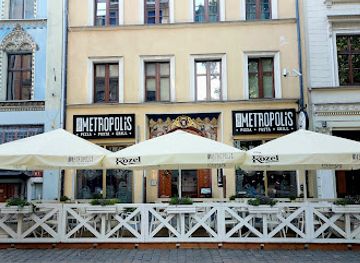
Stare Metropolis Łazienna 26 Toruń
Experience authentic Italian flavors at Stare Metropolis in Toruń – where tradition meets culinary excellence in every bite.
9 min walk · 0.7 km from city centre
Best bars in Torun
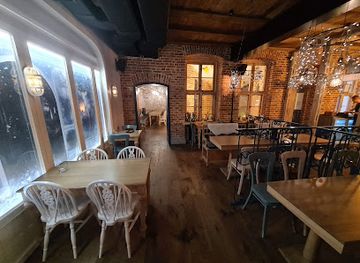
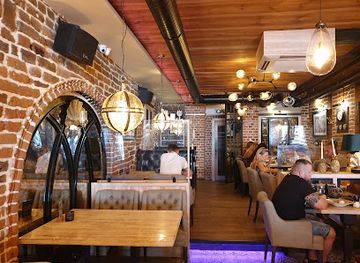
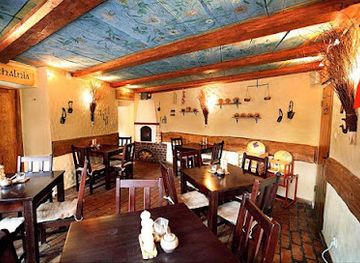
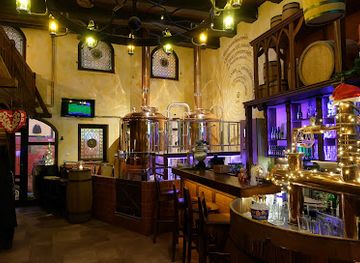
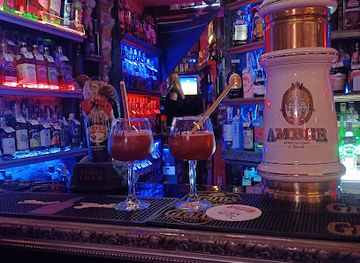
Toruń’s evening life is shaped by its university population and compact Old Town, where cafés, beer bars, cocktail rooms and small music venues occupy medieval or nineteenth-century interiors. The streets around the Market Square and Szeroka Street are the most convenient areas for moving between venues, while the riverside becomes attractive for relaxed walks and summer gatherings. Nightlife is generally more social than superclub-oriented, with Polish craft beer, live music, student events and occasional cultural performances providing much of the activity. The city’s theatres, concert venues and cultural institutions broaden the evening programme beyond drinking, and the Centre of Contemporary Art may host after-hours events or exhibitions. On quieter nights, Toruń’s illuminated churches, town houses and defensive remains make an architectural walk a more characteristic late-evening experience than a large nightclub circuit.
-
Bar
Jan Olbracht Browar Staromiejski
Discover the flavors of Toruń at Jan Olbracht Browar Staromiejski, where craft beer and traditional Polish cuisine unite in a historic setting.
7 min walk · 0.6 km from city centre
-
Brewpub
Kredens Pub
Experience the charm of Kredens Pub in Toruń, where craft beer meets delicious pizza in a vibrant atmosphere.
7 min walk · 0.5 km from city centre
-
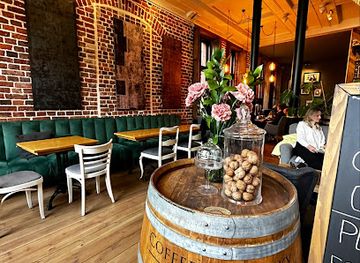
Coffee shop
Coffee & Whisky House
Experience the perfect blend of artisanal coffee and premium whiskey in the heart of Toruń's medieval charm.
8 min walk · 0.7 km from city centre
-
Brewpub
Cybermachina
Experience the vibrant atmosphere of Cybermachina in Toruń, where craft brews and cocktails meet a historic setting in the heart of the medieval town.
9 min walk · 0.7 km from city centre
Best nightclubs in Torun
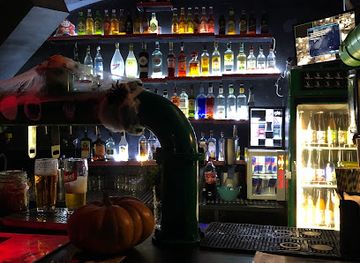
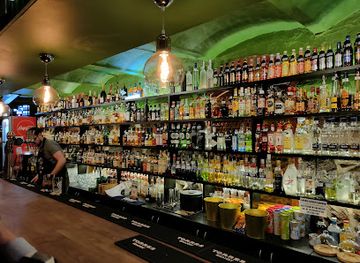
Toruń’s evening life is shaped by its university population and compact Old Town, where cafés, beer bars, cocktail rooms and small music venues occupy medieval or nineteenth-century interiors. The streets around the Market Square and Szeroka Street are the most convenient areas for moving between venues, while the riverside becomes attractive for relaxed walks and summer gatherings. Nightlife is generally more social than superclub-oriented, with Polish craft beer, live music, student events and occasional cultural performances providing much of the activity. The city’s theatres, concert venues and cultural institutions broaden the evening programme beyond drinking, and the Centre of Contemporary Art may host after-hours events or exhibitions. On quieter nights, Toruń’s illuminated churches, town houses and defensive remains make an architectural walk a more characteristic late-evening experience than a large nightclub circuit.
-
Cocktail bar
Tutu Whiskey & Jazz Club
Experience the unforgettable blend of live jazz and expertly crafted cocktails at Tutu Whiskey & Jazz Club in the heart of Toruń's Medieval Town.
8 min walk · 0.7 km from city centre
-
Night club
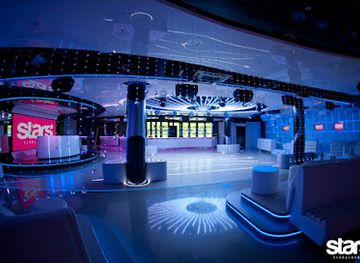
Stars Club & Lounge
Discover the heartbeat of Toruń's nightlife at Stars Club & Lounge, a premier destination for live music, dancing, and vibrant socializing.
8 min walk · 0.7 km from city centre
-
Bar
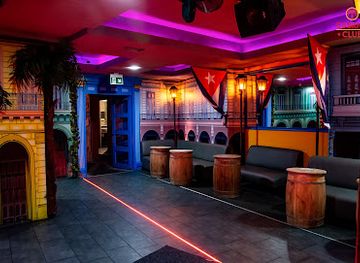
Cubano Club Toruń - Klub nocny
Discover Cubano Club Toruń, a lively bar and live music venue offering an unforgettable nightlife experience in the heart of Poland's Medieval Town.
6 min walk · 0.5 km from city centre
-
Night club
Students Club FRAME
Discover the vibrant energy of Students Club FRAME, where Toruń's nightlife comes alive with craft brews and electrifying dance beats.
10 min walk · 0.8 km from city centre
Best shops in Torun
Shopping in Toruń centres on the historic streets of the Old Town, particularly Szeroka, Chełmińska and the lanes around the Market Square, where independent shops, galleries, cafés and souvenir retailers occupy old town houses. The city’s defining purchase is pierniki, available in traditional and decorated forms from specialist bakeries and museum-linked shops. Visitors can also find Polish ceramics, amber jewellery, handmade paper goods, illustrated prints, regional food products and small works by local artists, although authenticity and provenance vary between retailers. Regular markets and food stalls provide a less polished view of everyday shopping, while modern commercial centres offer familiar national and international chains outside the historic core. The best souvenirs are those connected with Toruń’s own identity: gingerbread, Copernicus-themed cultural products, or craft items made by Polish designers rather than generic medieval merchandise.
-
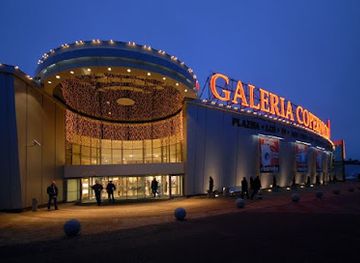
Shopping mall
Galeria Copernicus
Discover Galeria Copernicus, a vibrant shopping mall in Toruń offering diverse stores, delightful dining, and engaging entertainment for all visitors.
9 min drive · 2.9 km from city centre
-
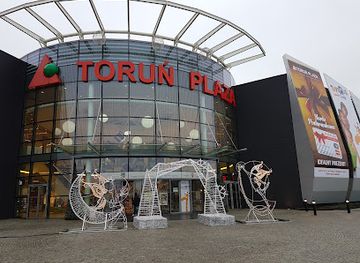
Shopping mall
Toruń Plaza
Explore Toruń Plaza, a bustling shopping mall filled with diverse stores, delicious dining, and family-friendly entertainment in the heart of Toruń.
7 min drive · 2.4 km from city centre
-
Shopping mall
Centrum Handlowe Nowe Bielawy
Explore Centrum Handlowe Nowe Bielawy in Toruń, Poland - a shopping paradise with diverse stores, dining options, and family-friendly entertainment.
20 min drive · 6.7 km from city centre
-
Shopping mall
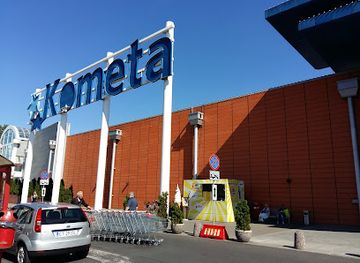
Kometa Shopping Center
Explore the Kometa Shopping Center in Toruń – your ultimate destination for shopping, dining, and local culture.
8 min drive · 2.6 km from city centre
Get your free copy of our complete guide to Torun, delivered straight to you.
Everything on this page, from attractions and restaurants to essentials and local phrases, in one PDF you can read offline, print or share.
Already have an account? Sign in
Your Torun guide is ready.
We'll send it to · Not you? Sign out

Getting your guide ready…
We are putting together a fresh copy of the Torun guide. This can take up to a minute.
This can take a few moments. If your browser asks, choose Allow so the download can start. You'll find the guide in your Downloads folder.
Nothing happened? Download it again
Sorry, the guide is taking longer than usual. Please try again in a minute, or get it by email instead.
Torun essentials
Currency and Payment
Safety
Emergency Situations
Do's and Don'ts
Local Tips
From Eve
Local phrases worth knowing
You don't need to get them perfect. A few words go a long way, and locals appreciate the effort.
Basics
| English | Local | Say it |
|---|---|---|
| Hello | Cześć | [che-shch] |
| Goodbye | Do widzenia | [do veed-zen-ya] |
| Yes | Tak | [tak] |
| No | Nie | [nye] |
| Please/You're welcome | Proszę | [pro-sheh] |
| Thank you | Dziękuję | [dzyen-koo-yeh] |
| Excuse me/Sorry | Przepraszam | [psheh-prah-sham] |
| How are you? | Jak się masz? | [yahk sheh mahsh] |
| Fine. And you? | Dobrze. A ty? | [doh-bzheh. ah tih] |
| Do you speak English? | Czy mówisz po angielsku? | [chi moo-vish poh ahn-gyel-skoo] |
| I don't understand | Nie rozumiem | [nye roh-zoo-mee-em] |
Eating & Drinking
| English | Local | Say it |
|---|---|---|
| I'd like to see the menu, please | Chciałbym zobaczyć menu, proszę | [hchya-woom zoh-bah-chich meh-noo, pro-sheh] |
| I don't eat meat | Nie jem mięsa | [nye yem myen-sah] |
| Cheers! | Na zdrowie! | [nah zdrov-yeh] |
| I would like to pay, please | Chciałbym zapłacić, proszę | [hchya-woom zah-pla-chich, pro-sheh] |
Emergencies
| English | Local | Say it |
|---|---|---|
| Help! | Pomocy! | [poh-mo-tsi] |
| Go away! | Idź sobie! | [eej soh-b-yeh] |
| Call the Police! | Zadzwoń po policję! | [zahd-voon poh po-li-tsyeh] |
| Call a doctor! | Zadzwoń po lekarza! | [zahd-voon poh leh-kah-zah] |
| I'm lost | Zgubiłem się | [zgoo-bi-wem syeh] |
| I'm ill | Jestem chory | [yeh-stem hoh-ri] |
Shopping
| English | Local | Say it |
|---|---|---|
| I'd like to buy... | Chciałbym kupić... | [hchya-woom koo-peech] |
| I'm just looking | Tylko się rozglądam | [til-koh syeh rohz-gwah-dahm] |
| How much is it? | Ile to kosztuje? | [ee-leh toh kohs-too-yeh] |
| That's too expensive | To jest za drogie | [toh yest zah dro-geh] |
| Can you lower the price? | Czy możesz obniżyć cenę? | [chi moo-zhesh ohb-nee-zhich cheh-neh] |
Time & Numbers
| English | Local | Say it |
|---|---|---|
| What time is it? | Która jest godzina? | [ktoo-rah yest goh-dzee-nah] |
| It's one o'clock | Jest pierwsza | [yest pyev-yens-zah] |
| Half past (10) | Pół do jedenastej | [poo doh yed-nan-stay] |
| Morning | Rano | [rah-no] |
| Afternoon | Popołudnie | [poh-poo-wood-nyeh] |
| Evening | Wieczór | [vyeh-choor] |
| Yesterday | Wczoraj | [v-cho-rye] |
| Today | Dzisiaj | [dsi-sahy] |
| Tomorrow | Jutro | [yoo-tro] |
| 1 | Jeden | [yeh-den] |
| 2 | Dwa | [d-vah] |
| 3 | Trzy | [tshih] |
| 4 | Cztery | [ch-teh-ri] |
| 5 | Pięć | [pyen-ch] |
| 6 | Sześć | [sh-shch] |
| 7 | Siedem | [sh-ye-dem] |
| 8 | Osiem | [oh-shem] |
| 9 | Dziewięć | [dshe-vee-nyeh] |
| 10 | Dziesięć | [dshe-sh-ch] |
Transport & Directions
| English | Local | Say it |
|---|---|---|
| Where's a/the...? | Gdzie jest... | [g-dzhe yest] |
| What's the address? | Jaki jest adres? | [yah-ki yest ah-dres] |
| Can you show me (on the map)? | Czy możesz mi pokazać (na mapie)? | [chi moo-zhesh mee poh-kah-zach (nah mah-pyeh)] |
| When's the next (bus)? | Kiedy odjeżdża następny (autobus)? | [kyeh-dih oh-dyeh-dzhah nah-stem-nih (ow-toh-boos)] |
| A ticket (to ....) | Bilet (do ...) | [bee-let (doh)] |
History of Torun
Early Settlement on the Vistula
The Vistula crossing and fertile lands around present-day Toruń attracted settlement long before the medieval city emerged. The area was inhabited by Slavic communities and lay within the wider historical region of Chełmno Land. Its position beside a major river route gave it commercial and strategic importance, linking inland settlements with the Baltic coast. Archaeological evidence points to earlier occupation in the surrounding landscape, but the urban foundation that shaped Toruń began in the thirteenth century under the expansion of the Teutonic Order. The river, rather than a distant frontier, became the city’s principal economic advantage, supporting transport, trade and communication across northern Central Europe.
Foundation Under the Teutonic Order
In 1233 the Teutonic Order granted Toruń a town charter, establishing the settlement within the political and military framework of the order’s Prussian lands. The city was rebuilt and developed beside the Vistula, with fortifications, a planned street network and substantial brick architecture. A second settlement, later known as the New Town, grew nearby and reflected the expansion of commerce and population. Toruń’s location enabled trade in grain, timber and other commodities, while its membership in the Hanseatic League connected it with ports and markets around the Baltic and North Sea. The churches, town halls, merchant houses and defensive remains visible today largely derive from this period of urban growth.
A Merchant City in Royal Prussia
Toruń’s political allegiance changed during the Thirteen Years’ War, when the city joined the Prussian Confederation in opposition to the Teutonic Order. The Second Peace of Toruń in 1466 transferred Royal Prussia, including Toruń, to the Polish Crown. The city retained important privileges and continued to prosper as a centre of trade on the Vistula. This period also brought religious and intellectual change. In 1473, Nicolaus Copernicus was born in Toruń to a merchant family, linking the city permanently with the scientific transformation of Renaissance Europe. The surviving Gothic churches and patrician houses reflect the wealth and civic confidence of Toruń’s late-medieval and early-modern merchant society.
Reformation, Conflict and Religious Change
The sixteenth century brought the Reformation and a more complex religious landscape to Toruń, whose commercial links encouraged the circulation of new ideas. Lutheran influence became significant, while Catholic institutions remained central to the city’s identity. Toruń suffered during the Swedish wars of the seventeenth century, as conflict disrupted trade and damaged parts of the urban fabric. In 1724, the so-called Tumult of Toruń, a religiously charged disturbance followed by executions, became a major episode in the city’s history and was criticised internationally. The event illustrates the tensions within the Polish-Lithuanian Commonwealth, where different confessions and civic communities lived alongside one another under changing political conditions.
Partitions and Nineteenth-Century Transformation
The Second Partition of Poland in 1793 placed Toruń under Prussian rule, apart from a brief period within the Duchy of Warsaw during the Napoleonic era. After 1815 the city again belonged to Prussia and later to the German Empire. Its military importance increased as fortifications were expanded, while railway connections and industrial development altered the relationship between the Old Town and the wider urban area. German and Polish communities shaped public life in different ways, and the nineteenth century brought both modern infrastructure and national tensions. After the First World War, Toruń returned to Poland in 1920 and became the capital of the newly established Pomeranian Voivodeship.
War, Reconstruction and Modern Toruń
Toruń avoided the degree of wartime destruction suffered by many Polish cities during the Second World War, although the occupation brought repression, deportations and loss of life. After 1945 it developed as an important academic and cultural centre, strengthened particularly by the establishment of Nicolaus Copernicus University in 1945. Restoration of the medieval centre gathered pace in the later twentieth century, and the Old and New Towns, together with the ruins of the Teutonic Castle, were inscribed on the UNESCO World Heritage List in 1997. Contemporary Toruń combines university life, cultural institutions and tourism with a historic urban environment whose medieval structure remains unusually legible.
Torun in Photos
Browse through our photo collection highlighting the charm and character of the destination.
Cities near Torun
The closest cities to Torun, if you have time for more than one stop.
-

-

-

-

-


Swipe for more cities
Explore more

Explore more of Poland
Discover Poland's rich history, vibrant cities, and scenic landscapes, from the medieval streets of Kraków to the serene beauty of the Tatra Mountains and Masurian Lakes.
Explore Poland