

Free Fajardo Travel Guide & Mobile App
Plan your Fajardo trip with Evendo. Get free guides to top attractions, restaurants, hotels, and bars. Web access or download the mobile app.


Fajardo, Puerto Rico blends bioluminescent bays, Caribbean beaches, El Yunque access, sailing and coastal history into a distinctive island escape.
Coastal Character
Fajardo occupies Puerto Rico’s north-eastern corner, where the island’s forested mountains descend towards a chain of cays, sheltered bays and bright Caribbean water. Once shaped by agriculture and maritime trade, the municipality is now known for its beaches, marinas and access to some of the east coast’s most distinctive natural attractions. The town itself has a practical, lived-in character, while the waterfront districts of Las Croabas and Puerto del Rey provide a more leisure-oriented setting of restaurants, boat docks and sea views.Read more about Fajardo
Nature After Dark
Island Connections
When is the best time to visit Fajardo?
Best: February–March, May · 27°C| Month | High (°C) | Rainfall (mm) |
|---|---|---|
| January | 26 | 64 |
| February (best) | 27 | 48 |
| March (best) | 27 | 55 |
| April | 27 | 61 |
| May (best) | 27 | 48 |
| June | 28 | 62 |
| July | 28 | 76 |
| August | 28 | 90 |
| September | 28 | 92 |
| October | 27 | 91 |
| November | 27 | 69 |
| December | 27 | 58 |
Getting to and around Fajardo
How to get there
Transportation
Best attractions in Fajardo
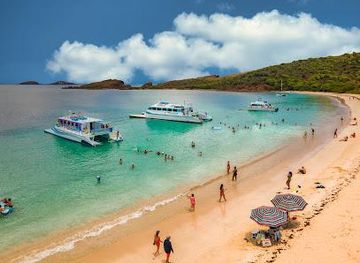
Fajardo’s attractions centre on coast, forest and the open sea. At Las Cabezas de San Juan Nature Reserve, guided visits reveal mangroves, dry forest, wetlands and the historic Fajardo Lighthouse, while Laguna Grande offers one of Puerto Rico’s best-known bioluminescent-lagoon experiences after dark. Seven Seas Beach provides a broad, sheltered stretch of sand suited to swimming and relaxed seaside days, with smaller coastal areas nearby offering a quieter atmosphere. Las Croabas combines a waterfront promenade with boat departures, restaurants and views towards the cays. Puerto del Rey Marina is a base for sailing, fishing and marine excursions rather than a conventional sightseeing monument. The municipality’s position also makes it a convenient starting point for organised trips towards Cayo Icacos and other offshore reefs, while El Yunque National Forest lies beyond Fajardo for visitors seeking rainforest trails and mountain scenery.
-
Theme park
Carabalí Rainforest Park
Experience thrilling adventures and stunning natural beauty at Carabalí Rainforest Park in Luquillo, Puerto Rico, from ATV rides to horseback adventures.
33 min drive · 13 km from city centre
-
Tourist attraction
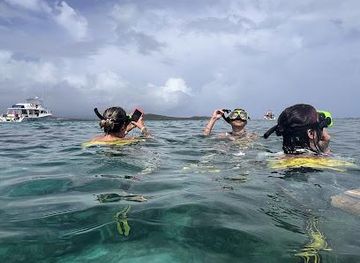
Snorkeling Puerto Rico | Boat Tours
Dive into the vibrant underwater world of Fajardo with Snorkeling Puerto Rico, where adventure meets the beauty of the Caribbean Sea.
9 min drive · 3.1 km from city centre
-
Boat tour agency
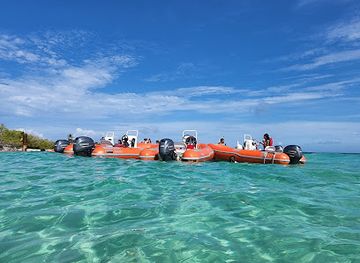
East Island Excursions
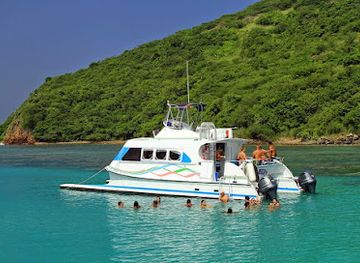
Explore the stunning waters of Puerto Rico with East Island Excursions, offering unforgettable boat tours and rentals in Fajardo's beautiful coastline.
14 min drive · 4.8 km from city centre
-
Beach
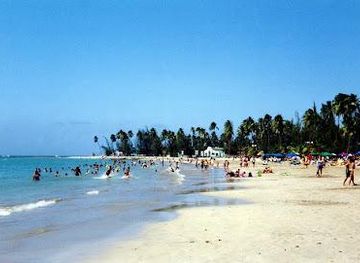
Liquillo Beach
Explore the stunning Luquillo Beach in Puerto Rico, where golden sands meet crystal-clear waters for the ultimate tropical escape.
30 min drive · 10 km from city centre

Best landmarks in Fajardo
The Fajardo Lighthouse, or Faro de las Cabezas de San Juan, is the municipality’s defining historic structure: completed in 1882 under Spanish rule, it guided shipping from an elevated headland overlooking reefs, mangroves and Atlantic passages. Its keeper’s quarters and tower also express the practical architecture of nineteenth-century maritime infrastructure. The old Fajardo town area contains civic and religious buildings that reflect the municipality’s development as a Spanish colonial settlement and later Puerto Rican community, although its character is less monumental than that of Old San Juan. Around the coast, the sheltered bays of Las Croabas and the harbour facilities at Puerto del Rey represent a different kind of landmark, linking Fajardo’s present identity to boating and inter-island travel. The lighthouse’s setting within Las Cabezas de San Juan is especially significant because the built heritage stands within a protected coastal landscape rather than apart from it.
-
Tour operator
Kayaking Puerto Rico | Snorkeling & Bio Bay Tours
Discover the breathtaking beauty of Puerto Rico through kayaking and snorkeling adventures in stunning bioluminescent bays and pristine waters.
16 min drive · 5.2 km from city centre
-
 Resort hotel
El Conquistador Resort
Discover the enchanting El Conquistador Resort in Fajardo, where luxurious accommodations meet breathtaking ocean views and endless adventure awaits.
14 min drive · 4.5 km from city centre
-
Boat tour agency
East Island Excursions
Explore the breathtaking beauty of Puerto Rico's coastline with East Island Excursions, offering unforgettable boat tours and rentals for every traveler.
14 min drive · 4.8 km from city centre
-
Observation deck
Torre Yokahú (Yokahu Tower)
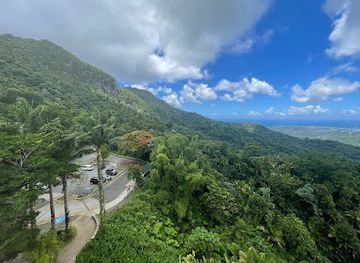
Experience breathtaking views of Puerto Rico's lush landscapes from Torre Yokahú, a stunning observation deck in El Yunque National Forest.
33 min drive · 13 km from city centre
Explore Fajardo on the map
Plan your Fajardo trip on one map. See where the top attractions, landmarks, restaurants, bars and hotels are, find what's near where you're staying, and book hotels and experiences in a few clicks.
Best hotels in Fajardo
Best restaurants in Fajardo
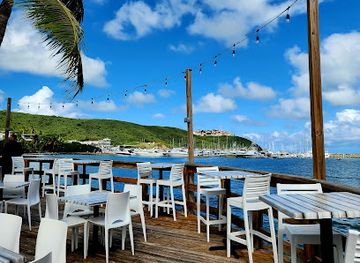
Fajardo’s dining culture is shaped by the sea, Puerto Rican home cooking and the steady movement of visitors through its marinas and coastal communities. Seafood is prominent, with fish, shrimp, octopus and conch appearing in restaurants and casual waterfront cooking, while familiar Puerto Rican staples include mofongo, tostones, arroz con gandules and dishes seasoned with sofrito. Las Croabas is the best-known concentration of waterfront restaurants and informal food outlets, where meals are often paired with views of the lagoon and boats. Small kiosks and roadside establishments provide a more relaxed setting for frituras, sandwiches and cold drinks, while the town and main commercial areas offer broader everyday choices. Contemporary restaurants catering to marina visitors sit alongside family-run establishments, making the dining scene more varied than Fajardo’s modest size might suggest without losing its coastal, relaxed character.
-
Restaurant
El Mesón Sandwiches (Fajardo)
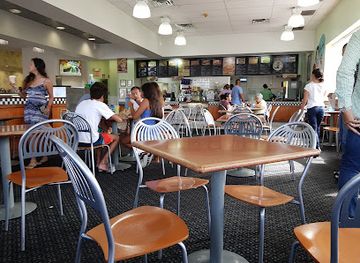
Experience the taste of Puerto Rico at El Mesón Sandwiches in Fajardo - where delicious sandwiches meet vibrant local culture.
15 min walk · 1.2 km from city centre
-
Puerto Rican
La Estación
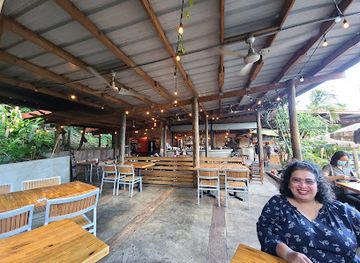
Experience the vibrant flavors of Puerto Rico at La Estación, where barbecue meets traditional cuisine in Fajardo.
12 min drive · 4.1 km from city centre
-
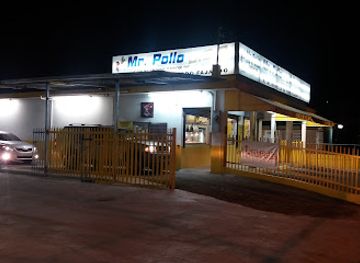
Chicken
Mr. Pollo
Discover authentic Puerto Rican flavors at Mr. Pollo in Fajardo - a top choice for delicious rotisserie chicken at affordable prices.
7 min walk · 0.6 km from city centre
-
Seafood
El Cayo Restaurant
Discover the vibrant flavors of seafood and Creole cuisine at El Cayo Restaurant in Fajardo - where every meal is a celebration of Caribbean culture.
8 min drive · 2.7 km from city centre
Best bars in Fajardo
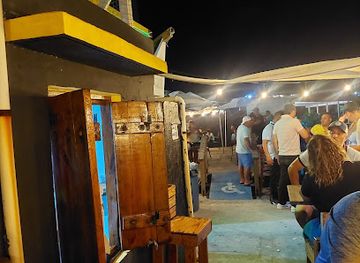
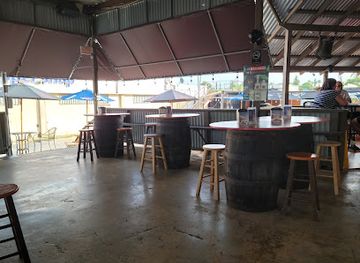
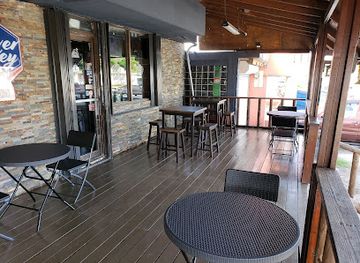
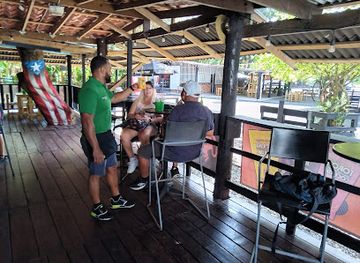
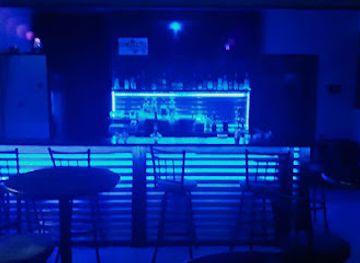
Fajardo’s evenings are generally coastal and sociable rather than centred on large nightclubs. Las Croabas has the greatest concentration of waterfront bars and restaurants, where visitors can linger over rum-based drinks, beer or music after a day on the water. Informal kiosks and local establishments around the town provide a more everyday Puerto Rican atmosphere, with conversation and casual food often as important as the drinks themselves. Marina areas may offer a quieter evening setting with views of anchored boats, while organised bioluminescent-lagoon trips create one of the municipality’s most distinctive after-dark activities without relying on nightlife venues. Entertainment is seasonal and dispersed, and late-night options can be limited outside the main waterfront and commercial areas, so visitors should arrange transport rather than assume that every district remains active after dark.
-
Bar
El Chinchorro de J
Experience the vibrant flavors and lively atmosphere at El Chinchorro de J, a beloved bar in Fajardo showcasing the best of Puerto Rican cuisine.
8 min drive · 2.7 km from city centre
-
Restaurant
El Torito Bar & Grill
Experience authentic Puerto Rican flavors at El Torito Bar & Grill in Fajardo, where vibrant dishes and a lively atmosphere await.
6 min drive · 2.0 km from city centre
-
Sports bar
SOTO SPORT BAR & RESTAURANT
Experience the vibrant atmosphere and delicious Puerto Rican cuisine at SOTO SPORT BAR & RESTAURANT in Fajardo, a must-visit for sports fans and food lovers alike.
5 min drive · 1.7 km from city centre
-
Restaurant
NUEVO DUEÑO
Discover the authentic taste of Puerto Rico at Nuevo Dueño, a charming restaurant in Fajardo serving delicious local cuisine in a welcoming atmosphere.
7 min drive · 2.3 km from city centre
Best nightclubs in Fajardo
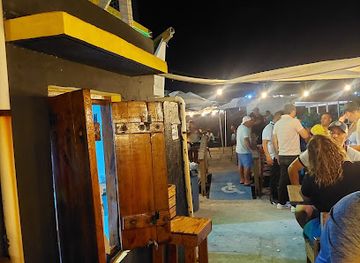
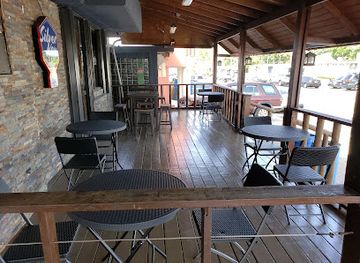
Fajardo’s evenings are generally coastal and sociable rather than centred on large nightclubs. Las Croabas has the greatest concentration of waterfront bars and restaurants, where visitors can linger over rum-based drinks, beer or music after a day on the water. Informal kiosks and local establishments around the town provide a more everyday Puerto Rican atmosphere, with conversation and casual food often as important as the drinks themselves. Marina areas may offer a quieter evening setting with views of anchored boats, while organised bioluminescent-lagoon trips create one of the municipality’s most distinctive after-dark activities without relying on nightlife venues. Entertainment is seasonal and dispersed, and late-night options can be limited outside the main waterfront and commercial areas, so visitors should arrange transport rather than assume that every district remains active after dark.
-
Bar
El Chinchorro de J
Experience the vibrant nightlife at El Chinchorro de J in Fajardo, offering affordable drinks and a lively atmosphere for all visitors.
8 min drive · 2.7 km from city centre
-
Sports bar
SOTO SPORT BAR & RESTAURANT
Experience the vibrant atmosphere of Soto Sport Bar & Restaurant in Fajardo, where delicious cuisine meets the thrill of live sports.
5 min drive · 1.7 km from city centre
-
Restaurant
NUEVO DUEÑO
Savor authentic Puerto Rican cuisine at Nuevo Dueño, a charming restaurant in Fajardo known for its friendly service and delicious dishes.
7 min drive · 2.3 km from city centre
-
Sports bar
Doble Seis Sport TV - Fajardo
Doble Seis Sport TV in Fajardo: Your go-to sports bar for live games, karaoke nights, and a lively atmosphere filled with delicious food and drinks.
7 min drive · 2.5 km from city centre
Best shops in Fajardo
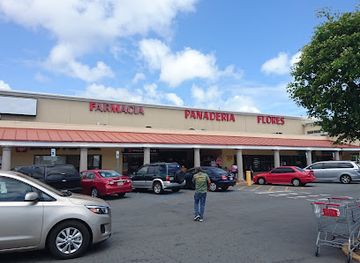
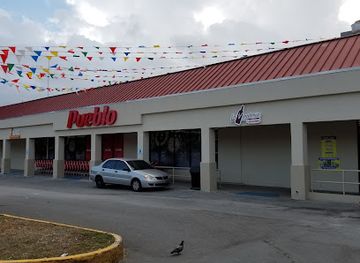
Shopping in Fajardo is practical and local in character, with everyday retail concentrated around the town and larger commercial areas rather than a grand historic shopping quarter. Visitors will find supermarkets, pharmacies, department-style stores and small independent businesses, while Plaza Fajardo provides a conventional commercial setting for shops and services. Las Croabas and the waterfront areas are more useful for browsing casual souvenirs, beach necessities, locally made gifts and food products associated with Puerto Rico. Small kiosks and artisan stalls may offer jewellery, crafts, artwork, hot sauces, coffee and rum-related products, although selection and availability vary. The most distinctive purchases tend to be portable expressions of island culture rather than luxury goods: handmade pieces, colourful textiles, locally produced foods and art inspired by the sea. Fajardo is also a convenient place to stock up before excursions to Culebra, Vieques or the offshore cays.
-
Shopping mall
Plaza Fajardo
Experience the best of shopping, dining, and entertainment at Plaza Fajardo, your go-to destination in Puerto Rico.
9 min drive · 3.1 km from city centre
-
Shopping mall
Monte Brisas Shopping Center
Explore Monte Brisas Shopping Center in Fajardo for a delightful mix of shopping, dining, and local culture in a vibrant setting.
5 min drive · 1.6 km from city centre
-
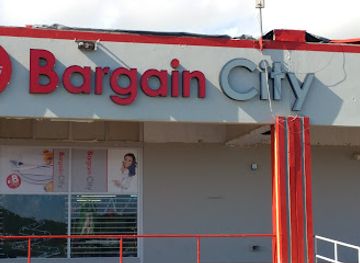
Warehouse store
Bargain City
Explore Bargain City in Fajardo for unbeatable prices on a wide selection of products, perfect for tourists seeking great deals.
16 min walk · 1.3 km from city centre
-
Clothing store
Grand Stores
Experience the vibrant fashion scene at Grand Stores in Fajardo, where style meets affordability in a stunning shopping oasis.
17 min walk · 1.3 km from city centre

Get your free copy of our complete guide to Fajardo, delivered straight to you.
Everything on this page, from attractions and restaurants to essentials and local phrases, in one PDF you can read offline, print or share.
Already have an account? Sign in
Your Fajardo guide is ready.
We'll send it to · Not you? Sign out

Getting your guide ready…
We are putting together a fresh copy of the Fajardo guide. This can take up to a minute.
This can take a few moments. If your browser asks, choose Allow so the download can start. You'll find the guide in your Downloads folder.
Nothing happened? Download it again
Sorry, the guide is taking longer than usual. Please try again in a minute, or get it by email instead.
Fajardo essentials
Currency and Payment
Safety
Emergency Situations
Do's and Don'ts
Local Tips
From Eve
Local phrases worth knowing
You don't need to get them perfect. A few words go a long way, and locals appreciate the effort.
Basics
| English | Local | Say it |
|---|---|---|
| Hello | Hola | [oh-lah] |
| Goodbye | Adiós | [ah-dee-ohs] |
| Yes | Sí | [see] |
| No | No | [noh] |
| Please/You're welcome | Por favor/De nada | [por fah-vor/de nah-dah] |
| Thank you | Gracias | [grah-see-ahs] |
| Excuse me/Sorry | Perdón/Lo siento | [pehr-dohn/loh see-ehn-toh] |
| How are you? | ¿Cómo estás? | [koh-moh ehs-tahs] |
| Fine. And you? | Bien. ¿Y tú? | [bee-ehn. ee too] |
| Do you speak English? | ¿Hablas inglés? | [ah-blahs een-glehs] |
| I don't understand | No entiendo | [noh ehn-tee-ehn-doh] |
Eating & Drinking
| English | Local | Say it |
|---|---|---|
| I'd like to see the menu, please | Quisiera ver el menú, por favor | [kee-see-eh-rah behr ehl meh-noo, por fah-vor] |
| I don't eat meat | No como carne | [noh koh-moh kahr-neh] |
| Cheers! | ¡Salud! | [sah-loohd] |
| I would like to pay, please | Quisiera pagar, por favor | [kee-see-eh-rah pah-gahr, por fah-vor] |
Emergencies
| English | Local | Say it |
|---|---|---|
| Help! | ¡Ayuda! | [ah-yoo-dah] |
| Go away! | ¡Vete! | [veh-teh] |
| Call the Police! | ¡Llama a la Policía! | [yah-mah ah lah poh-lee-see-ah] |
| Call a doctor! | ¡Llama a un médico! | [yah-mah ah oon meh-dee-koh] |
| I'm lost | Estoy perdido | [ehs-toy pehr-dee-doh] |
| I'm ill | Estoy enfermo | [ehs-toy ehn-fehr-moh] |
Shopping
| English | Local | Say it |
|---|---|---|
| I'd like to buy... | Quisiera comprar... | [kee-see-eh-rah kohm-prahr] |
| I'm just looking | Solo estoy mirando | [soh-loh ehs-toy mee-rahn-doh] |
| How much is it? | ¿Cuánto cuesta? | [kwan-toh kwehs-tah] |
| That's too expensive | Eso es muy caro | [eh-soh ehs mwee kah-roh] |
| Can you lower the price? | ¿Puede rebajar el precio? | [pweh-deh reh-bah-hahr ehl pree-syoh] |
Time & Numbers
| English | Local | Say it |
|---|---|---|
| What time is it? | ¿Qué hora es? | [keh oh-rah ehs] |
| It's one o'clock | Es la una | [ehs lah oo-nah] |
| Half past (10) | Media (10) | [meh-dee-ah (dheez)] |
| Morning | Mañana | [mah-nyah-nah] |
| Afternoon | Tarde | [tahr-deh] |
| Evening | Noche | [noh-cheh] |
| Yesterday | Ayer | [ah-yehr] |
| Today | Hoy | [oy] |
| Tomorrow | Mañana | [mah-nyah-nah] |
| 1 | Uno | [oo-noh] |
| 2 | Dos | [dohs] |
| 3 | Tres | [trehs] |
| 4 | Cuatro | [kwah-troh] |
| 5 | Cinco | [seen-koh] |
| 6 | Seis | [seys] |
| 7 | Siete | [see-eh-teh] |
| 8 | Ocho | [oh-choh] |
| 9 | Nueve | [nweh-veh] |
| 10 | Diez | [dyehs] |
Transport & Directions
| English | Local | Say it |
|---|---|---|
| Where's a/the...? | ¿Dónde está...? | [dohn-deh ehs-tah] |
| What's the address? | ¿Cuál es la dirección? | [kwal ehs lah dee-rehk-syon] |
| Can you show me (on the map)? | ¿Puedes mostrarme (en el mapa)? | [pweh-dehs mohs-trar-meh (ehn ehl mah-pah)] |
| When's the next (bus)? | ¿Cuándo es el próximo (autobús)? | [kwan-doh ehs ehl prohk-see-moh (ow-toh-boos)] |
| A ticket (to ....) | Un boleto (para ....) | [oon boh-leh-toh (pah-rah)] |
History of Fajardo
Taíno Coast and Spanish Settlement
Before European colonisation, the north-eastern coast was inhabited by Taíno communities whose lives were closely connected to coastal waters, fishing and fertile lowlands. Spanish settlement developed gradually, and Fajardo was formally established as a municipality in 1760. Its position facing the Atlantic and the islands to the east gave it strategic importance, although the settlement remained smaller than Puerto Rico’s principal colonial ports. The town’s name is generally associated with the Spanish settler and landowner Don Santiago de Fajardo, reflecting the naming practices of the colonial period. Agriculture, livestock and coastal commerce formed the basis of local life, while the surrounding landscape retained a strong maritime and rural character.
Agriculture and the Sugar Economy
During the nineteenth century, Fajardo’s economy was increasingly linked to plantation agriculture, particularly sugar production, alongside coffee, fruit and livestock in the wider eastern region. Sugar estates brought new patterns of land ownership, labour and commerce, while roads and coastal shipping connected the municipality with other Puerto Rican ports. The agricultural landscape was never separate from the sea: produce and materials moved through coastal facilities, and fishing remained important to communities around the bays. Reminders of this period survive more clearly in the region’s rural geography and historic estate landscapes than in a single preserved urban quarter. Economic life also reflected the wider transformations affecting Puerto Rico under late Spanish rule.
The Lighthouse at Las Cabezas
Fajardo’s maritime importance was reinforced by the construction of the Fajardo Lighthouse, known as Faro de las Cabezas de San Juan, in 1882. Built on the headland at the north-eastern tip of Puerto Rico, it guided shipping through waters exposed to Atlantic weather and marked the approach to the island’s eastern passages. The lighthouse formed part of a wider Spanish colonial signalling network and was designed with a central tower and keeper’s quarters. Its elevated location also made it a point of observation over mangroves, reefs and neighbouring cays. Today, the structure is a material link between Fajardo’s colonial past and its present role as a centre for coastal conservation and maritime tourism.
War, Political Change and Modernisation
In 1898, during the Spanish-American War, Puerto Rico changed from Spanish to United States administration, beginning a new political era for Fajardo as for the rest of the island. The twentieth century brought modern roads, communications and changing agricultural patterns, while sugar’s influence gradually declined. Fajardo’s economy became more diversified, with fishing, commerce, public services and maritime activity assuming greater importance. The municipality’s location also gained renewed strategic and recreational value as ferry links, marinas and coastal roads connected the eastern region with offshore islands. These changes altered the relationship between the town, its countryside and its waterfront without erasing the importance of the sea.
Conservation and the Coastal Economy
From the late twentieth century onwards, Fajardo’s identity increasingly incorporated environmental conservation and marine recreation. The protection of the Las Cabezas de San Juan area preserved an unusually varied coastal landscape of mangrove forest, dry forest, wetlands, coral communities and beaches, while recognition of Laguna Grande’s bioluminescence brought new attention to fragile marine ecosystems. Marinas and visitor facilities expanded around sheltered waters, and Fajardo became a launching point for sailing, diving, fishing and trips towards Culebra and Vieques. Contemporary Fajardo therefore reflects several historical layers at once: a Taíno and colonial coast, an agricultural municipality, a working maritime community and a gateway to protected island landscapes.
Fajardo in Photos
Browse through our photo collection highlighting the charm and character of the destination.
Cities near Fajardo
The closest cities to Fajardo, if you have time for more than one stop.
-

-

-

-

-


Swipe for more cities
Explore more

Explore more of Puerto Rico
Discover Puerto Rico, where vibrant culture, stunning beaches, and rich history create an unforgettable Caribbean experience. Perfect for adventurers and relaxation seekers alike.
Explore Puerto Rico