

Old San Juan (San Juan) Travel Guide - Free
Explore Old San Juan in San Juan with Evendo's free guide. Find the best shops, historic streets, restaurants, and gems on web or mobile.


Old San Juan, Puerto Rico, pairs Spanish colonial streets and Atlantic forts with plazas, galleries, Caribbean dining and lively evening culture.
Colonial Streets and Ocean Walls
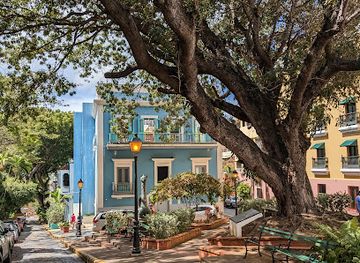
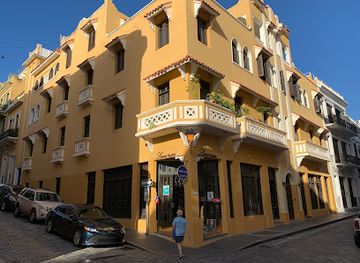
Old San Juan occupies a compact, roughly 500-year-old islet at the entrance to San Juan Bay, where steep lanes, pastel façades and massive stone fortifications create one of the Caribbean’s most distinctive urban landscapes. Its seven-square-block historic core is best understood on foot: blue-grey cobbles lead between shaded plazas, churches, museums, cafés and buildings with Spanish colonial balconies, while the city walls open towards the Atlantic and the busy harbour.Read more about Old San Juan
History in Everyday Life
Plazas, Culture and Evening Life
Best attractions in Old San Juan
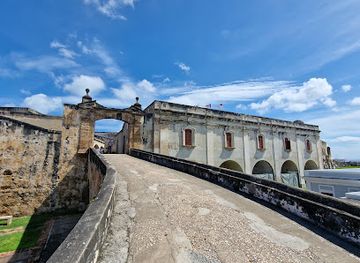
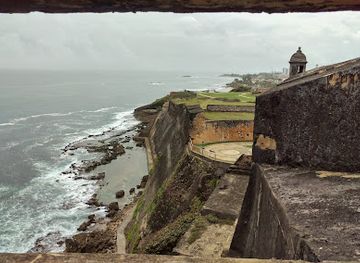
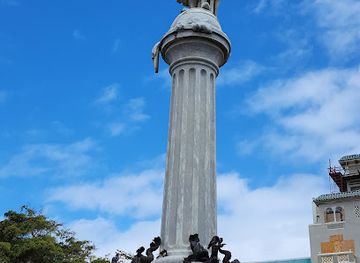
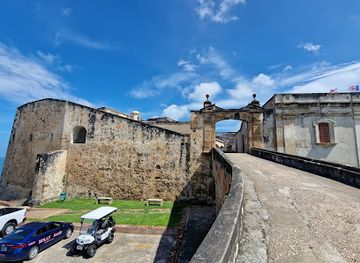
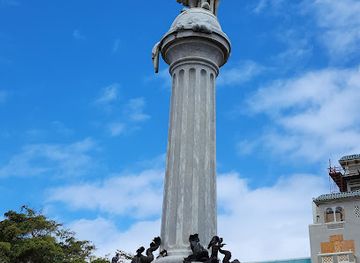
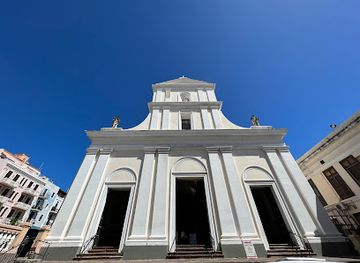
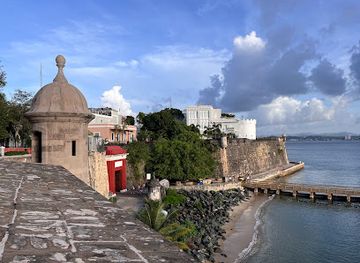
Old San Juan’s principal attractions are concentrated within a walkable historic core. Castillo San Felipe del Morro, commonly called El Morro, commands the north-western headland with lawns, sea views, tunnels and monumental walls, while Castillo San Cristóbal occupies the eastern side of the old city and explains how the landward approach was defended. Between them, the Catedral de San Juan Bautista, La Fortaleza, Casa Blanca and the Museo de las Américas provide different perspectives on religious, political, domestic and cultural history. The Paseo de la Princesa follows the southern waterfront beneath the old walls, and the Plaza de Armas, Plaza de Colón and Plaza de San José offer shaded places to pause among public buildings, cafés and sculpture. Smaller pleasures include colourful façades, blue cobbles, city gates, harbour outlooks and the steep lanes leading towards the Atlantic.
-
Tourist attraction
San Juan National Historic Site
Discover the historical treasures of San Juan National Historic Site, where the past meets the breathtaking beauty of Puerto Rico's coastline.
5 min drive · 1.6 km from neighbourhood centre
-
Tourist attraction
Castillo San Cristóbal
Discover the historical significance and architectural beauty of Castillo San Cristóbal, a stunning fortress in San Juan, Puerto Rico.
3 min walk · 0.3 km from neighbourhood centre
-
Tourist attraction
Plaza Colón
Experience the historical charm and vibrant culture at Plaza Colón in San Juan, the heart of Puerto Rico's heritage and scenic beauty.
4 min walk · 0.3 km from neighbourhood centre
-
Catedral Basilica Menor de San Juan Bautista
Explore the historical grandeur of Catedral Basilica Menor de San Juan Bautista, a stunning architectural gem in the heart of Old San Juan.
Best landmarks in Old San Juan
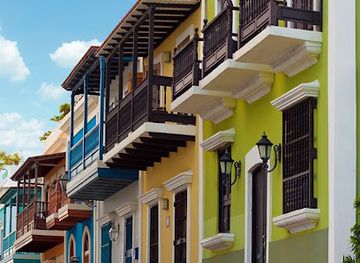
Old San Juan’s landmarks form a connected record of colonial government, religion, commerce and defence. El Morro and San Cristóbal are the dominant military structures, linked historically to the surviving city walls and gates that once controlled movement through the enclosed settlement. La Fortaleza, still associated with Puerto Rico’s executive government, occupies a prominent position on Calle Fortaleza, while the Catedral de San Juan Bautista is among the old city’s most important religious buildings. Casa Blanca, associated with the Ponce de León family, adds a domestic dimension to the monumental streetscape. The Paseo de la Princesa and Plaza de Armas are significant public spaces rather than isolated monuments, showing how the waterfront and civic centre continue to organise daily life. Decorative balconies, arcaded façades, blue cobbles and painted masonry are also essential elements of the district’s architectural identity.
-
Historical place
San Juan National Historic Site
Explore the historic forts and vibrant culture at San Juan National Historic Site, a UNESCO World Heritage gem in Puerto Rico.
5 min drive · 1.6 km from neighbourhood centre
-
Monument
Plaza Colón
Explore Plaza Colón, the historic heart of San Juan, Puerto Rico, where culture, history, and vibrant community come together in a picturesque setting.
4 min walk · 0.3 km from neighbourhood centre
-
Catholic cathedral
Catedral Basilica Menor de San Juan Bautista
Discover the architectural beauty and historical significance of the Catedral Basilica Menor de San Juan Bautista, a must-see landmark in San Juan, Puerto Rico.
12 min walk · 1.0 km from neighbourhood centre
-
Historical landmark
Puerta de San Juan
Discover the rich history and breathtaking architecture of Puerta de San Juan, a must-see historical landmark in the heart of San Juan's colonial district.
14 min walk · 1.1 km from neighbourhood centre
Explore Old San Juan on the map
A handpicked selection of must-see spots in Old San Juan, mapped for you.
Best hotels in Old San Juan
Best restaurants in Old San Juan
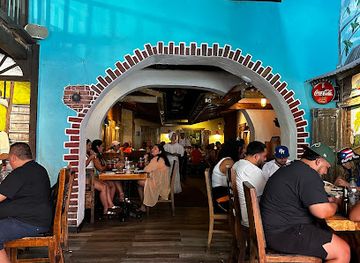
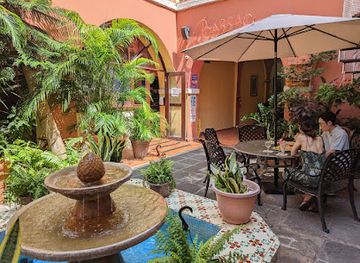
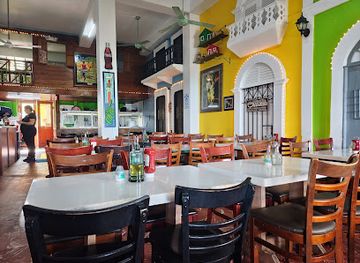
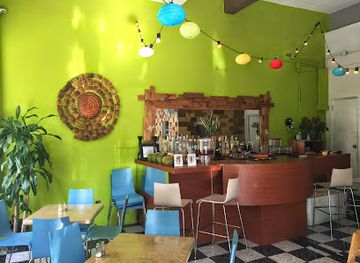
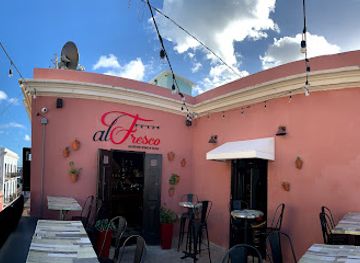
Dining in Old San Juan is shaped by the district’s historic streets, tourism and Puerto Rican culinary traditions. Restaurants, cafés and bars occupy restored colonial buildings around streets such as Fortaleza, San Francisco and Cristo, while the waterfront provides settings for meals with harbour views. Menus commonly draw on island ingredients and familiar dishes such as mofongo, rice and beans, plantains, seafood and pork, alongside contemporary interpretations and broader Caribbean, Latin American and international cooking. Bakeries, coffee shops and casual eateries make the neighbourhood suitable for daytime grazing between museums and forts, while more formal establishments often cluster in the central lanes. The area can be busier around cruise arrivals and major plazas, and individual premises change over time, so current menus and opening arrangements should be checked locally. The strongest dining experience comes from looking beyond landmark restaurants to the mixture of long-established food culture and newer hospitality in historic buildings.
-
Puerto Rican
Restaurante Raíces
Discover authentic Puerto Rican cuisine at Restaurante Raíces in San Juan Antiguo - where tradition meets flavor.
6 min walk · 0.5 km from neighbourhood centre
-
Puerto Rican
Barrachina
Experience authentic Puerto Rican cuisine at Barrachina in San Juan – home of the original Piña Colada!
12 min walk · 0.9 km from neighbourhood centre
-
Puerto Rican
El Jibarito
Experience authentic Puerto Rican cuisine at El Jibarito in San Juan – where traditional flavors meet vibrant culture for an unforgettable dining experience.
8 min walk · 0.6 km from neighbourhood centre
-
Puerto Rican
Deaverdura
Experience authentic Puerto Rican cuisine at Deaverdura in San Juan – where tradition meets flavor at affordable prices.
10 min walk · 0.8 km from neighbourhood centre
Best bars in Old San Juan
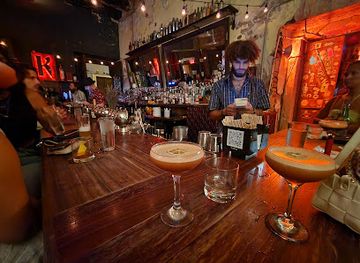
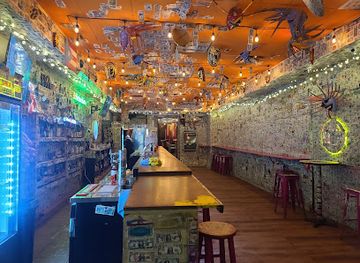
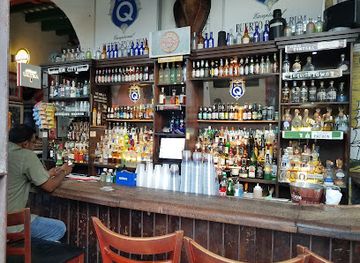
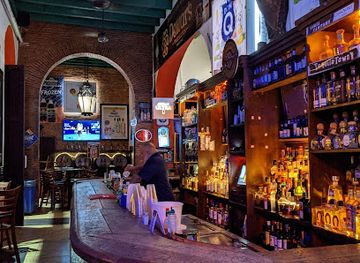
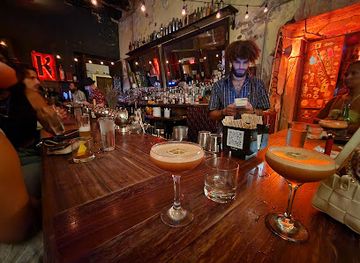
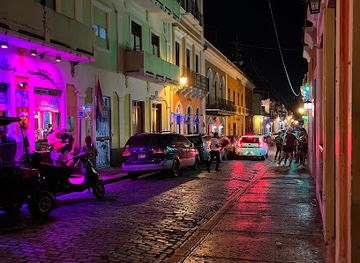
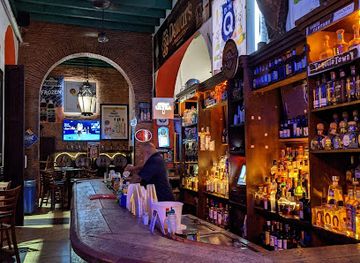
After dark, Old San Juan becomes a social district of small bars, cocktail rooms, music venues and restaurants, concentrated particularly along Calle San Sebastián, Calle Fortaleza, Calle Cristo and nearby lanes. The atmosphere ranges from relaxed drinks in historic interiors to lively gatherings associated with live music and dancing, with salsa, reggaetón and other Latin sounds frequently part of the broader evening culture. Plazas and illuminated façades provide a natural route between venues, while the waterfront is more open and atmospheric than the denser bar streets. Nightlife is not uniform: some blocks remain residential and quiet, and noise can carry easily through the old masonry streets. Visitors should check current venue information, respect residents, and use care on uneven paving when moving between bars after dark.
-
Bar
La Factoría
Experience the vibrant nightlife at La Factoría, San Juan's premier cocktail bar, offering innovative drinks and a lively atmosphere.
12 min walk · 0.9 km from neighbourhood centre
-
Bar
Los 3 Cuernos
Experience the vibrant nightlife of Old San Juan at Los 3 Cuernos, where delicious drinks and vibrant music meet authentic Puerto Rican culture.
5 min walk · 0.4 km from neighbourhood centre
-
Bar
Nono's
Experience the vibrant nightlife of San Juan at Nono's, where local culture meets lively celebrations in a welcoming bar atmosphere.
13 min walk · 1.0 km from neighbourhood centre
-
Bar
El Batey Bar
Discover the lively atmosphere and rich history of El Batey Bar, a must-visit destination in San Juan for an authentic Puerto Rican nightlife experience.
12 min walk · 1.0 km from neighbourhood centre
Best nightclubs in Old San Juan
After dark, Old San Juan becomes a social district of small bars, cocktail rooms, music venues and restaurants, concentrated particularly along Calle San Sebastián, Calle Fortaleza, Calle Cristo and nearby lanes. The atmosphere ranges from relaxed drinks in historic interiors to lively gatherings associated with live music and dancing, with salsa, reggaetón and other Latin sounds frequently part of the broader evening culture. Plazas and illuminated façades provide a natural route between venues, while the waterfront is more open and atmospheric than the denser bar streets. Nightlife is not uniform: some blocks remain residential and quiet, and noise can carry easily through the old masonry streets. Visitors should check current venue information, respect residents, and use care on uneven paving when moving between bars after dark.
-
Bar
La Factoría
Experience the vibrant cocktail culture at La Factoría, a must-visit bar in San Juan blending local flavors with a lively atmosphere.
12 min walk · 0.9 km from neighbourhood centre
-
Gay bar
LA SOMBRILLA ROSA
Experience the vibrant atmosphere of La Sombrilla Rosa, a premier gay bar in San Juan, Puerto Rico, known for its lively entertainment and welcoming community.
11 min walk · 0.9 km from neighbourhood centre
-
Bar
El Batey Bar
Experience the vibrant nightlife of San Juan at El Batey Bar, where local culture meets eclectic decor and delightful cocktails.
12 min walk · 1.0 km from neighbourhood centre
-
Cocktail bar
The Mezzanine
Experience innovative cocktails and a lively atmosphere at The Mezzanine, a must-visit cocktail bar in the heart of San Juan, Puerto Rico.
10 min walk · 0.8 km from neighbourhood centre
Best shops in Old San Juan
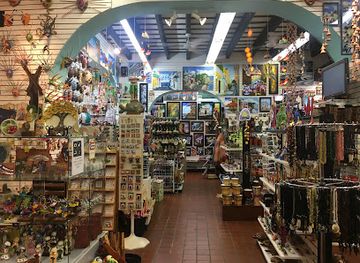
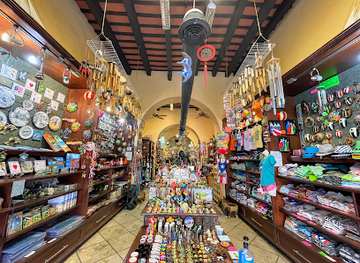
Shopping in Old San Juan is woven into the historic street network rather than concentrated in a single enclosed centre. Calle del Cristo, Calle Fortaleza, Calle San Francisco and surrounding lanes contain boutiques, jewellery shops, art galleries, craft retailers, bookshops and stores selling Puerto Rican food products and souvenirs. Visitors will encounter locally made artwork, prints, ceramics, textiles, handmade goods and tropical clothing alongside more conventional tourist merchandise. The neighbourhood is a useful place to browse galleries and independent businesses in restored colonial buildings, while the area around the waterfront and cruise piers has a stronger souvenir orientation. Retail offerings change, and not every shop represents local production, so asking about provenance is worthwhile when purchasing art or craftwork. The appeal lies in combining shopping with architecture, plazas and side streets rather than treating it as a standalone mall experience.
-
Gift shop
Mariel Arts & Crafts - Souvenirs Old San Juan
Discover the essence of Puerto Rican culture at Mariel Arts & Crafts, where unique souvenirs and local artistry come together in Old San Juan.
11 min walk · 0.9 km from neighbourhood centre
-
Gift shop
Souvenir Outlet Puerto Rico
Explore the vibrant culture of Puerto Rico through unique gifts and clothing at Souvenir Outlet Puerto Rico, your go-to shop for authentic souvenirs.
7 min walk · 0.6 km from neighbourhood centre
-
Art cafe
Luna Market
Discover Luna Market in San Juan Antiguo: An art cafe and second-hand store offering unique beach clothing and local art in a vibrant atmosphere.
9 min walk · 0.7 km from neighbourhood centre
-
Clothing store
Urban Tribe
Discover Urban Tribe, a vibrant clothing store in San Juan Antiguo, offering unique local designs and trendy fashion for every traveler.
11 min walk · 0.9 km from neighbourhood centre
Old San Juan essentials
Getting There
Getting Around
Safety
Emergency Situations
Do's and Don'ts
Local Tips

From Eve
Local phrases worth knowing
You don't need to get them perfect. A few words go a long way, and locals appreciate the effort.
Basics
| English | Local | Say it |
|---|---|---|
| Hello | Hola | [oh-lah] |
| Goodbye | Adiós | [ah-dee-ohs] |
| Yes | Sí | [see] |
| No | No | [noh] |
| Please/You're welcome | Por favor/De nada | [por fah-vor/deh nah-dah] |
| Thank you | Gracias | [gra-see-ahs] |
| Excuse me/Sorry | Perdón/Lo siento | [pehr-dohn/loh see-ehn-toh] |
| How are you? | ¿Cómo estás? | [koh-moh ehs-tahs] |
| Fine. And you? | Bien. ¿Y tú? | [byehn. ee too] |
| Do you speak English? | ¿Hablas inglés? | [ah-blahs een-glays] |
| I don't understand | No entiendo | [noh ehn-tee-ehn-doh] |
Eating & Drinking
| English | Local | Say it |
|---|---|---|
| I'd like to see the menu, please | Quisiera ver el menú, por favor | [kee-see-eh-rah behr ehl meh-noo, por fah-vor] |
| I don't eat meat | No como carne | [noh koh-moh kahr-neh] |
| Cheers! | ¡Salud! | [sah-lood] |
| I would like to pay, please | Me gustaría pagar, por favor | [meh goos-tah-ree-ah pah-gahr, por fah-vor] |
Emergencies
| English | Local | Say it |
|---|---|---|
| Help! | ¡Ayuda! | [ah-yoo-dah] |
| Go away! | ¡Vete! | [veh-teh] |
| Call the Police! | ¡Llama a la policía! | [yah-mah ah lah poh-lee-see-ah] |
| Call a doctor! | ¡Llama a un doctor! | [yah-mah ah oon dohk-tohr] |
| I'm lost | Estoy perdido | [ehs-toy pehr-dee-doh] |
| I'm ill | Estoy enfermo | [ehs-toy ehn-fehr-moh] |
Shopping
| English | Local | Say it |
|---|---|---|
| I'd like to buy... | Quisiera comprar... | [kee-see-eh-rah kohm-prahr] |
| I'm just looking | Solo estoy mirando | [soh-loh ehs-toy mee-rahn-doh] |
| How much is it? | ¿Cuánto cuesta? | [kwan-toh kwehs-tah] |
| That's too expensive | Eso es muy caro | [eh-soh ehs moo-ee kahr-oh] |
| Can you lower the price? | ¿Puedes bajar el precio? | [pweh-dehs bah-har ehl pree-syoh] |
Time & Numbers
| English | Local | Say it |
|---|---|---|
| What time is it? | ¿Qué hora es? | [keh oh-rah ehs] |
| It's one o'clock | Es la una | [ehs lah oo-nah] |
| Half past (10) | Las diez y media | [lahs d'yehs ee meh-dee-ah] |
| Morning | Mañana | [mah-nyah-nah] |
| Afternoon | Tarde | [tahr-deh] |
| Evening | Noche | [noh-cheh] |
| Yesterday | Ayer | [ah-yehr] |
| Today | Hoy | [oy] |
| Tomorrow | Mañana | [mah-nyah-nah] |
| 1 | Uno | [oo-noh] |
| 2 | Dos | [dohs] |
| 3 | Tres | [trehs] |
| 4 | Cuatro | [kwah-troh] |
| 5 | Cinco | [seen-koh] |
| 6 | Seis | [sehs] |
| 7 | Siete | [syeh-teh] |
| 8 | Ocho | [oh-choh] |
| 9 | Nueve | [nweh-veh] |
| 10 | Diez | [dyehs] |
Transport & Directions
| English | Local | Say it |
|---|---|---|
| Where's a/the...? | ¿Dónde está...? | [dohn-deh ehs-tah] |
| What's the address? | ¿Cuál es la dirección? | [kwal ehs lah dee-rehk-syon] |
| Can you show me (on the map)? | ¿Puedes mostrarme (en el mapa)? | [pweh-dehs mohs-trahr-meh (ehn ehl mah-pah)] |
| When's the next (bus)? | ¿Cuándo es el próximo (autobús)? | [kwan-doh ehs ehl prohk-see-moh (ow-toh-boos)] |
| A ticket (to ....) | Un boleto (para ....) | [oon boh-leh-toh (pah-rah)] |
History of Old San Juan
The Founding of San Juan
San Juan was founded by Spanish colonists in 1521 on the islet now known as Old San Juan, after the settlement moved from nearby Caparra on the main island. Its position at the entrance to San Juan Bay gave it immediate strategic importance as a harbour and gateway to the Caribbean. Streets, churches and civic buildings developed within a compact urban area, while the surrounding water helped define the settlement’s defensive and commercial role. The old city’s Spanish name, San Juan Bautista, reflects its early colonial and Catholic foundations.
A Fortress at the Harbour Mouth
From the sixteenth century onwards, Spain expanded San Juan’s defences to protect shipping and the approach to the bay. Castillo San Felipe del Morro grew into the great citadel on the north-western tip, while Castillo San Cristóbal guarded the eastern landward approach. City walls, gates and smaller defensive works connected these strongholds with the urban core. Attacks, including the English assault of 1598 and the Dutch attack of 1625, demonstrated the importance of the fortifications, whose surviving scale still shapes Old San Juan’s streets and coastal viewpoints.
Civic, Religious and Residential Growth
As San Juan became an important administrative centre of the Spanish Caribbean, Old San Juan accumulated institutions that remain visible today. La Fortaleza served as the governor’s residence from the sixteenth century, the Catedral de San Juan Bautista developed beside the principal streets, and Casa Blanca began as a residence associated with the Ponce de León family. Merchants, officials, craftspeople and seafarers occupied the compact blocks, producing a dense town of plazas, narrow lanes and buildings adapted to the climate. The city’s architecture reflects successive alterations rather than a single period of construction.
From Spanish Port to Historic District
The transfer of Puerto Rico to the United States in 1898 changed the island’s political setting but did not erase Old San Juan’s urban fabric. Military use, port activity and civic functions continued around the walled city, while twentieth-century preservation efforts increasingly recognised its architectural and historical value. Old San Juan and its fortifications were designated a UNESCO World Heritage Site in 1983, and the San Juan National Historic Site preserves the principal defensive works. Today the neighbourhood remains both a lived-in part of San Juan and a major setting for cultural institutions, government functions, hospitality and public life.
Old San Juan in Photos
Browse through our photo collection highlighting the charm and character of the destination.
Neighbourhoods near Old San Juan
The closest neighbourhoods to Old San Juan, if you have time for more than one stop.
-

-


Swipe for more neighbourhoods
Explore more

Explore more of San Juan
San Juan blends Spanish colonial history, Caribbean beaches, colourful streets, museums and lively local culture in Puerto Rico’s historic capital.
Explore San Juan