

Frigate Bay Travel Guide - Free Web & App
Your ultimate guide to Frigate Bay. Discover top landmarks, proposed trips, and local tips. Free on the web or via the Evendo companion app.


Frigate Bay, Saint Kitts and Nevis, pairs Atlantic and Caribbean beaches with salt-pond landscapes, golf, watersports and easy access to Basseterre.
Beaches, Salt Pond and Peninsula Landscapes
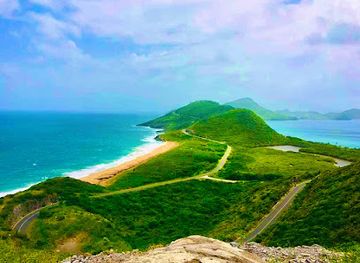
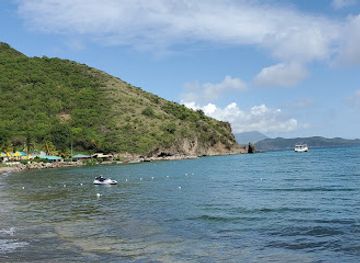
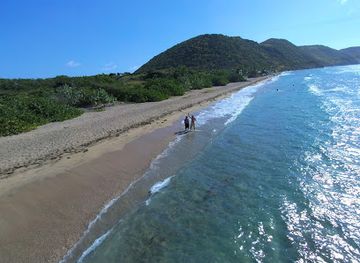
Frigate Bay occupies the narrow south-eastern peninsula of Saint Kitts, a short drive from the capital, Basseterre. Its resort landscape is defined by the unusual proximity of two very different shorelines: the calmer Caribbean-facing North Frigate Bay Beach and the more open Atlantic coast at South Frigate Bay Beach. Between them, the Frigate Bay Salt Pond forms a low, scrub-fringed wetland where seabirds and other coastal wildlife may be observed, while the peninsula gradually opens into drier hills and ocean-facing viewpoints.Read more about Frigate Bay
A Developed Coastal Base
Evenings and Island Access
When is the best time to visit Frigate Bay?
Best: April–June · 28–29°C| Month | High (°C) | Rainfall (mm) |
|---|---|---|
| January | 28 | 80 |
| February | 27 | 60 |
| March | 27 | 60 |
| April (best) | 28 | 40 |
| May (best) | 28 | 40 |
| June (best) | 29 | 40 |
| July | 29 | 40 |
| August | 29 | 40 |
| September | 29 | 40 |
| October | 29 | 40 |
| November | 29 | 60 |
| December | 28 | 80 |
Getting to and around Frigate Bay
How to get there
Transportation
Best attractions in Frigate Bay
Frigate Bay’s principal attractions are coastal and landscape-based. North Frigate Bay Beach faces the Caribbean Sea and is closely associated with the resort zone, while South Frigate Bay Beach opens towards the Atlantic and can feel more exposed. The Frigate Bay Salt Pond, set between the beaches, adds a contrasting wetland and dry-scrub environment where coastal birds may be seen without disturbing the habitat. The Royal St Kitts Golf Course provides a landscaped recreational setting within the peninsula, and the road towards Timothy Hill leads to one of the island’s best-known viewpoints, overlooking the narrow landform, both coasts and Nevis offshore. Basseterre is nearby rather than part of Frigate Bay, and adds museums, historic streets and the waterfront. Beyond the resort area, visitors can use Frigate Bay as a base for Brimstone Hill Fortress National Park, the central mountain landscape and other Saint Kitts attractions reached by road.
-
Park
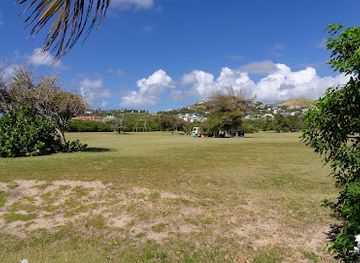
Frigate Bay Lawn
Explore the serene landscapes of Frigate Bay Lawn, a tranquil park in St. Kitts offering stunning views and a perfect escape into nature.
-
Tourist attraction
St Kitts Tour Dune buggy and beach
Experience the thrill of dune buggy adventures and relax on stunning beaches in St. Kitts, where nature meets excitement.
Explore Frigate Bay on the map
Plan your trip on one map. See where the top attractions, landmarks, restaurants and hotels are, and book hotels and experiences in a few clicks.
Best hotels in Frigate Bay
Best restaurants in Frigate Bay
Dining in Frigate Bay is concentrated in resort hotels, condominium areas and the Frigate Bay Strip, where visitors generally find casual restaurants, bars and places serving Caribbean and international food. Menus commonly reflect the island’s coastal setting through fish, seafood and grilled dishes, alongside rice, peas, plantain and other Caribbean staples, although exact choices vary between establishments. Hotel dining provides a convenient option for guests staying in the resort area, while Basseterre offers additional restaurants and cafés within a short drive. Smaller local eateries and roadside food vendors may provide a more informal taste of Saint Kitts, but opening patterns and payment methods can vary. Because Frigate Bay is a resort district rather than a traditional market town, visitors seeking a broad choice of provisions or everyday food shopping may find Basseterre more practical.
-
Mexican
The Monkey Bar | Mexican Restaurant and Bar
Discover authentic Mexican flavors at The Monkey Bar in St. Kitts—where delicious cuisine meets stunning Caribbean views.
-
Restaurant
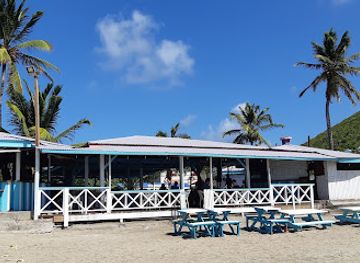
Boozies on The Beach
Discover Boozies on The Beach: where stunning ocean views meet delicious Caribbean flavors in Frigate Bay.
-
Caribbean
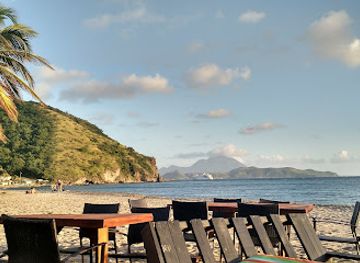
Cathy's Ocean View | Bar and Grill (open for lunch on ship day from 12pm to 3:30pm)
Discover authentic Caribbean flavors at Cathy's Ocean View in Frigate Bay—where delicious food meets stunning ocean vistas.
-
Grill
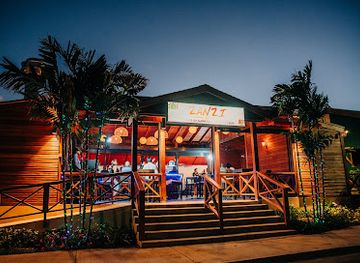
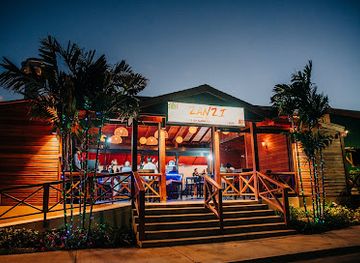
Zanzi Bar & Grill
Experience delicious grilled cuisine and stunning sea views at Zanzi Bar & Grill in Frigate Bay, St. Kitts.
Best bars in Frigate Bay
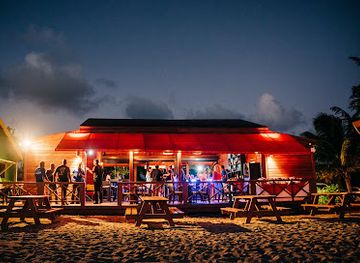
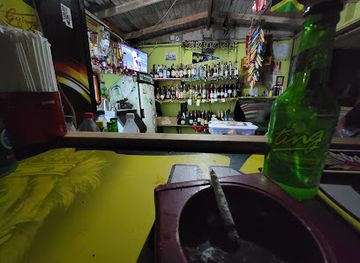
Frigate Bay has the most concentrated evening scene outside Basseterre, centred on the Frigate Bay Strip and the bars and restaurants serving the resort community. The atmosphere is generally informal and sociable, with opportunities for drinks, conversation, music and occasional seasonal entertainment rather than a large nightclub district. Resort properties may also have their own lounges or evening programmes, although these vary by venue and date. Basseterre provides further bars and late-evening options, but it remains a separate town rather than an extension of the Frigate Bay Strip. Visitors should arrange a taxi or other safe transport when returning from evening venues, particularly if staying away from the main resort area, and should not assume that every establishment operates late throughout the year.
-
Bar
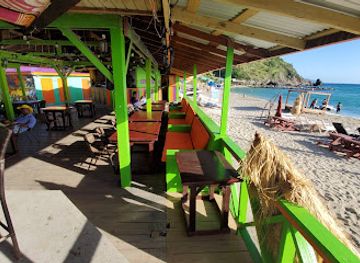
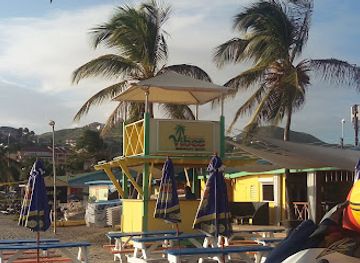
Vibes Beach Bar
Experience the vibrant vibes of St. Kitts at Vibes Beach Bar, where tropical drinks, delicious food, and stunning beach views await.
-
Mexican
The Monkey Bar | Mexican Restaurant and Bar
Experience vibrant Mexican flavors and stunning ocean views at The Monkey Bar in St. Kitts, the ultimate dining destination for food lovers.
-
Grill
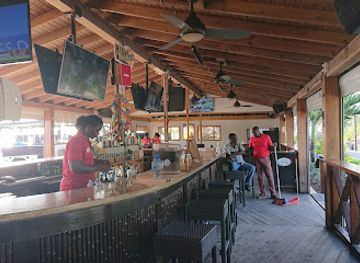
Zanzi Bar & Grill
Experience the best of Caribbean cuisine at Zanzi Bar & Grill in St. Kitts, where vibrant flavors meet breathtaking ocean views.
-
Bar
Inon's Beach Bar
Experience the vibrant atmosphere and stunning views at Inon's Beach Bar in Frigate Bay, St. Kitts & Nevis.
Best nightclubs in Frigate Bay
Frigate Bay has the most concentrated evening scene outside Basseterre, centred on the Frigate Bay Strip and the bars and restaurants serving the resort community. The atmosphere is generally informal and sociable, with opportunities for drinks, conversation, music and occasional seasonal entertainment rather than a large nightclub district. Resort properties may also have their own lounges or evening programmes, although these vary by venue and date. Basseterre provides further bars and late-evening options, but it remains a separate town rather than an extension of the Frigate Bay Strip. Visitors should arrange a taxi or other safe transport when returning from evening venues, particularly if staying away from the main resort area, and should not assume that every establishment operates late throughout the year.
-
Bar
Vibes Beach Bar
Discover the vibrant atmosphere at Vibes Beach Bar, where delicious cocktails, stunning views, and unforgettable moments await you on Frigate Bay Beach.
-
Grill
Zanzi Bar & Grill
Experience the vibrant flavors of the Caribbean at Zanzi Bar & Grill, the ultimate dining destination in St. Kitts.
-
Bar
Inon's Beach Bar
Inon's Beach Bar in Frigate Bay: A vibrant spot for cocktails, local cuisine, and unforgettable beachside entertainment in St. Kitts & Nevis.
-
Grill
Oceans Beach Bar Lounge and Aqua Park Ltd
Experience the best of Caribbean leisure at Oceans Beach Bar Lounge and Aqua Park, a culinary paradise in Frigate Bay, St. Kitts.


Best shops in Frigate Bay
Shopping in Frigate Bay is oriented towards resort convenience rather than extensive retail. Hotels and nearby commercial areas may provide small provisions, beach necessities, gifts and locally themed souvenirs, while the Frigate Bay Strip is primarily a dining and leisure zone. Basseterre, a short drive away, offers a broader selection of shops, everyday services, galleries and waterfront retail around the central commercial areas and Port Zante. Visitors interested in regional products can look for Caribbean foodstuffs, rum, crafts, artwork and locally made gifts, checking provenance where authenticity matters. Facilities become less predictable away from the resort and capital, so it is sensible to buy essential supplies before travelling into rural or mountainous parts of Saint Kitts. Frigate Bay should not be approached as a destination for specialist or large-scale shopping.
-
Water ski shop
Flyboarding Addiction St Kitts Nevis
Soar above the stunning waters of St Kitts Nevis with an unforgettable flyboarding experience at Flyboarding Addiction.
-
Tourist attraction
Pedego Electric Bikes St. Kitts and Nevis
Experience the beauty of St. Kitts and Nevis on electric bikes, discovering stunning landscapes and vibrant culture with every pedal.
Get your free copy of our complete guide to Frigate Bay, delivered straight to you.
Everything on this page, from attractions and restaurants to essentials and local phrases, in one PDF you can read offline, print or share.
Already have an account? Sign in
Your Frigate Bay guide is ready.
We'll send it to · Not you? Sign out

Getting your guide ready…
We are putting together a fresh copy of the Frigate Bay guide. This can take up to a minute.
This can take a few moments. If your browser asks, choose Allow so the download can start. You'll find the guide in your Downloads folder.
Nothing happened? Download it again
Sorry, the guide is taking longer than usual. Please try again in a minute, or get it by email instead.
Frigate Bay essentials
Currency and Payment
Safety
Emergency Situations
Do's and Don'ts
Local Tips
From Eve
Local phrases worth knowing
You don't need to get them perfect. A few words go a long way, and locals appreciate the effort.
Basics
| English | Local | Say it |
|---|---|---|
| Hello | Hello | [Heh-low] |
| Goodbye | Goodbye | [Gud-bye] |
| Yes | Yes | [Yehs] |
| No | No | [Noh] |
| Please/You're welcome | Please/You're welcome | [Pleez/Yor wel-kum] |
| Thank you | Thank you | [Thank yu] |
| Excuse me/Sorry | Excuse me/Sorry | [Eks-kyoos mee/Saw-ree] |
| How are you? | How are you? | [How ar yu?] |
| Fine. And you? | Fine. And you? | [Fyn. And yu?] |
| Do you speak English? | Do you speak English? | [Doo yu speek Ing-glish?] |
| I don't understand | I don't understand | [Eye dohnt un-der-stand] |
Eating & Drinking
| English | Local | Say it |
|---|---|---|
| I'd like to see the menu, please | I'd like to see the menu, please | [Eye'd lyke to see the meh-noo, pleez] |
| I don't eat meat | I don't eat meat | [Eye dohnt eet meet] |
| Cheers! | Cheers! | [Chee-ers!] |
| I would like to pay, please | I would like to pay, please | [Eye wood lyke to pay, pleez] |
Emergencies
| English | Local | Say it |
|---|---|---|
| Help! | Help! | [Help!] |
| Go away! | Go away! | [Go a-way!] |
| Call the Police! | Call the Police! | [Call the Po-lees!] |
| Call a doctor! | Call a doctor! | [Call a doc-ter!] |
| I'm lost | I'm lost | [Eye'm lost] |
| I'm ill | I'm ill | [Eye'm il] |
Shopping
| English | Local | Say it |
|---|---|---|
| I'd like to buy... | I'd like to buy... | [Eye'd lyke to by...] |
| I'm just looking | I'm just looking | [Eye'm just look-ing] |
| How much is it? | How much is it? | [How much is it?] |
| That's too expensive | That's too expensive | [That's too ex-pen-siv] |
| Can you lower the price? | Can you lower the price? | [Can yu loh-er the price?] |
Time & Numbers
| English | Local | Say it |
|---|---|---|
| What time is it? | What time is it? | [What time is it?] |
| It's one o'clock | It's one o'clock | [Its wun o-klok] |
| Half past (10) | Half past (10) | [Haf past (ten)] |
| Morning | Morning | [Morn-ing] |
| Afternoon | Afternoon | [Af-ter-noon] |
| Evening | Evening | [Eev-ning] |
| Yesterday | Yesterday | [Yes-ter-day] |
| Today | Today | [Toh-day] |
| Tomorrow | Tomorrow | [Toh-mor-row] |
| 1 | 1 | [Wun] |
| 2 | 2 | [Too] |
| 3 | 3 | [Tree] |
| 4 | 4 | [For] |
| 5 | 5 | [Fyv] |
| 6 | 6 | [Siks] |
| 7 | 7 | [Sev-en] |
| 8 | 8 | [Ayt] |
| 9 | 9 | [Nyen] |
| 10 | 10 | [Ten] |
Transport & Directions
| English | Local | Say it |
|---|---|---|
| Where's a/the...? | Where's a/the...? | [Ware's a/the...?] |
| What's the address? | What's the address? | [Whats the ad-dress?] |
| Can you show me (on the map)? | Can you show me (on the map)? | [Can yu show mee (on the map)?] |
| When's the next (bus)? | When's the next (bus)? | [When's the next (bus)?] |
| A ticket (to ....) | A ticket (to ....) | [A tik-et (to ....)] |
History of Frigate Bay
A Volcanic Island Peninsula
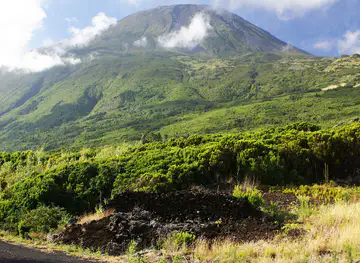
Frigate Bay forms part of Saint Kitts’ south-eastern peninsula, a landscape shaped by the island’s volcanic origin and later coastal processes. The peninsula’s low-lying salt pond, beaches and dry scrub differ from the steep central mountain country farther north. These physical contrasts influenced how the area was used: the coast offered access to marine resources and open land, while the interior supported more intensive agricultural settlement. The geological story belongs to a far earlier timescale than the human history of Saint Kitts, but it remains central to understanding why Frigate Bay contains two contrasting coasts and a narrow, easily recognised landform between them.
Kalinago and Early European Settlement
Before European colonisation, Saint Kitts was inhabited by Indigenous peoples, including communities commonly identified in historical sources as Kalinago. English settlement began at Old Road on the west coast in 1623, making Saint Kitts one of the earliest English colonies in the Caribbean. French settlement followed, and the island became part of the contested colonial world of the Lesser Antilles. Frigate Bay was not the main early colonial settlement, but its peninsula formed part of the wider island environment that connected coastal resources, agricultural lands and routes towards Basseterre and the interior.
Sugar, Slavery and the Wider Island Economy
For centuries, Saint Kitts’ economy was dominated by sugar cultivation, supported by enslaved African labour under British colonial rule. Estates and sugar works were concentrated in the more fertile parts of the island, particularly around the central and western foothills, rather than on the dry resort coast now associated with Frigate Bay. The wealth generated by plantations shaped Basseterre, estate architecture and the island’s political history, while emancipation and later economic change gradually altered land use. The former sugar landscape remains visible in estates, villages and heritage sites elsewhere on Saint Kitts.
From Agriculture to Tourism
The decline of sugar and the search for new economic opportunities encouraged Saint Kitts to diversify towards tourism and services. Frigate Bay’s beaches, accessible position near Basseterre and expansive coastal land made it suitable for resort development. Hotels, villas, apartments, leisure facilities and restaurants gradually transformed the area from a relatively lightly developed peninsula into one of the country’s best-known visitor bases. Tourism also strengthened links with the cruise port and airport, although Frigate Bay itself remains distinct from historic Basseterre and from the larger rural island landscape.
A Contemporary Coastal Environment
Modern Frigate Bay combines managed resort land with natural and semi-natural features, especially the salt pond and the dry vegetation of the peninsula. Development has brought investment and employment but has also made careful treatment of coastal habitats important. The pond, beaches and surrounding slopes are part of a living environment affected by rainfall, storms, sea conditions and construction. Today, the area’s identity rests on this balance between recreation and landscape: visitors come for beach and resort facilities, while the peninsula’s coastal character still provides a visible connection to Saint Kitts’ physical geography.
Frigate Bay in Photos
Browse through our photo collection highlighting the charm and character of the destination.
Neighbouring destination travel guides
The closest destinations to Frigate Bay, if you have time for more than one.
-

-

-
-

-


Swipe for more destinations
Explore more
Explore more of Saint George Basseterre Parish
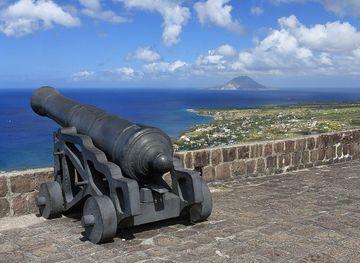
Explore Saint George Basseterre Parish for historic Basseterre streets, harbour views, Caribbean food, museums and the civic heart of Saint Kitts.
Explore Saint George Basseterre Parish
Explore more of Saint Kitts and Nevis
Discover the pristine beaches, lush landscapes, and rich history of Saint Kitts and Nevis, a hidden gem in the Caribbean offering adventure and relaxation.
Explore Saint Kitts and Nevis