

Free Saint Kitts Southeast Peninsula Travel Guide & Mobile App
Explore Saint Kitts Southeast Peninsula with free travel guides. Discover regional history, expert tips, proposed trips, and audio guides on web or mobile app.


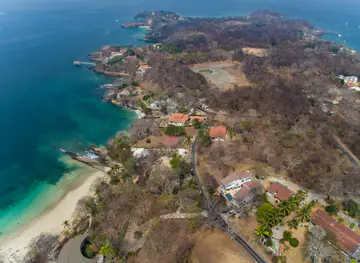
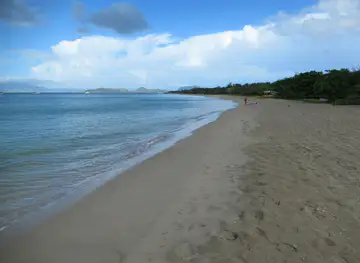
Explore Saint Kitts Southeast Peninsula for sheltered beaches, volcanic scenery, sailing, Nevis views and relaxed coastal days around Frigate Bay.
Read more about Saint Kitts Southeast Peninsula
When is the best time to visit Saint Kitts Southeast Peninsula?
Best: January–March · 28–29°C| Month | High (°C) | Rainfall (mm) |
|---|---|---|
| January (best) | 28 | 65 |
| February (best) | 28 | 49 |
| March (best) | 29 | 43 |
| April | 29 | 64 |
| May | 30 | 115 |
| June | 30 | 108 |
| July | 30 | 144 |
| August | 31 | 181 |
| September | 30 | 195 |
| October | 30 | 180 |
| November | 29 | 164 |
| December | 29 | 122 |
Getting to and around Saint Kitts Southeast Peninsula
How to get there
Transportation
Best attractions in Saint Kitts Southeast Peninsula
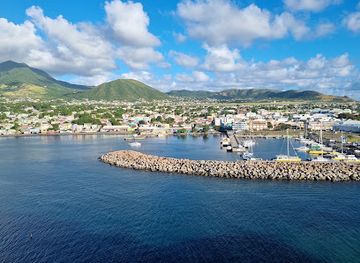
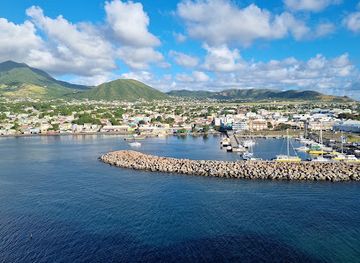
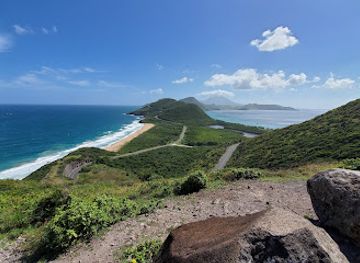
The Southeast Peninsula’s attractions are primarily coastal and outdoor, with enough variety to fill several relaxed days rather than a single sightseeing circuit. Frigate Bay provides the largest concentration of accommodation, beach facilities, watersports and golf, while the beaches and coves farther south-east offer different combinations of swimming, views, boating and quiet shoreline. Cockleshell Bay is especially valued for its outlook across The Narrows towards Nevis, while White House Bay and the waters around Christophe Harbour are associated with sheltered marine activity and yachting. Boat trips, snorkelling, diving, fishing and sailing are important ways to experience the peninsula, subject to weather and sea conditions. Inland, dry volcanic hills, former agricultural land, salt ponds and scattered estate remains create a landscape for scenic drives and exploratory walks, although shade and formal paths are limited in some areas. The peninsula is less museum-focused than Basseterre and does not contain Saint Kitts’s best-known fortress, Brimstone Hill, which is outside the area in the north-west. Its distinctive appeal lies instead in the contrast between developed Frigate Bay, open south-eastern scenery, historic plantation traces and the changing character of the Caribbean and Atlantic coasts.
-
Grill
Reggae Beach Bar-Grill
Experience the vibrant ambiance of Reggae Beach Bar-Grill, where delicious Caribbean cuisine meets stunning beach views and live reggae music in St. Kitts & Nevis.
-
Museum
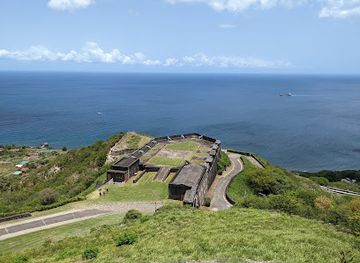
The Citadel at Fort George
Discover the rich military history and breathtaking views at The Citadel at Fort George in Sandy Point Town, St. Kitts & Nevis.
-
Tourist attraction
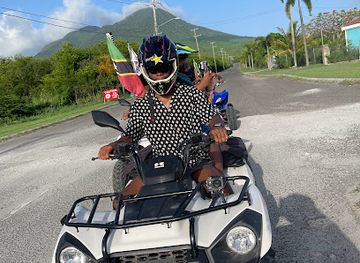
Supreme + Motorsports SKN
Explore the stunning landscapes of Nevis on an unforgettable ATV adventure with Supreme + Motorsports SKN, a premier tourist attraction and rental service.
-
Beach pavillion
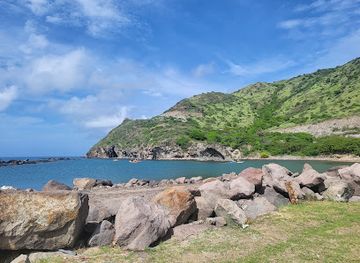
Cockleshell Bay Beach
Discover the beauty of Cockleshell Bay Beach in St. Kitts & Nevis, where crystal-clear waters and soft sands create an unforgettable Caribbean experience.

Best landmarks in Saint Kitts Southeast Peninsula
The most recognisable landmarks of the Southeast Peninsula are formed by its geography as much as by its buildings. The narrow channel known as The Narrows separates Saint Kitts from Nevis and creates the defining southern prospect, particularly from the coastal road and beaches around Cockleshell Bay. The peninsula’s volcanic hills and dry ridgelines provide a strong backdrop to Frigate Bay and the open south-eastern coast, while salt ponds and low coastal vegetation mark the island’s drier environment. Christophe Harbour is a contemporary maritime landmark, its marina and harbour works representing Saint Kitts’s shift from a sugar-based economy towards tourism and yachting. Scattered stone walls, abandoned estate structures and altered plantation landscapes are quieter reminders of the former sugar system, though many are fragile and not formal monuments. The peninsula’s beaches, including Frigate Bay, South Friars Bay, White House Bay and Cockleshell Bay, are geographical landmarks with distinct outlooks and degrees of shelter rather than interchangeable stretches of sand. Brimstone Hill Fortress, although a major landmark of Saint Kitts, is outside the Southeast Peninsula and should be visited as a separate excursion.
-
 Hotel
St. Kitts Marriott Resort & The Royal Beach Casino
Discover the luxury and excitement of St. Kitts Marriott Resort & The Royal Beach Casino, where relaxation meets adventure in a tropical paradise.
-
Restaurant
Carambola Beach Club
Discover the flavors and beauty of the Caribbean at Carambola Beach Club, a premier dining destination in St. Kitts.
-
Grill
Reggae Beach Bar-Grill
Experience the vibrant flavors and rhythms of the Caribbean at Reggae Beach Bar-Grill in St. Kitts & Nevis, where every meal is a celebration.
-
Tourist attraction
Timothy Hill Overlook
Discover stunning views and vibrant landscapes at Timothy Hill Overlook, a must-visit destination in St. Kitts for breathtaking scenery and unforgettable moments.
Explore Saint Kitts Southeast Peninsula on the map
Plan your trip on one map. See where the top cities, national parks and sights are, and book hotels and experiences in a few clicks.
Best hotels in Saint Kitts Southeast Peninsula
Best restaurants in Saint Kitts Southeast Peninsula
Dining on the Southeast Peninsula ranges from hotel and resort restaurants to beach bars, marina venues, casual grills and small establishments serving Caribbean-influenced food. Menus commonly draw on fish, shellfish, chicken, goat, rice, peas, plantains and seasonal vegetables, alongside familiar international dishes aimed at visitors. Fresh seafood is a natural feature of coastal dining, although availability varies with catches, weather and supply. Around Frigate Bay there is the broadest choice of restaurants and evening meals, while Christophe Harbour offers a more marina-oriented setting and the smaller bays tend to have fewer options. Local drinks, rum-based cocktails and Caribbean beers are widely available, but visitors should not expect every beach to have permanent food service. Markets and shops around Basseterre, outside the peninsula, can be useful for fruit, snacks and provisions before exploring quieter coastal areas. Service is generally relaxed rather than fast, so allowing extra time is part of the practical dining experience.
-
Restaurant
Carambola Beach Club
Experience Caribbean cuisine at Carambola Beach Club with stunning ocean views in St. Kitts' tropical paradise.
-
Grill
Reggae Beach Bar-Grill
Discover Caribbean flavors at Reggae Beach Bar-Grill in St. Kitts & Nevis – where every meal is served with ocean views and island vibes.
-
Restaurant
Shipwreck Beach Bar
Discover paradise at Shipwreck Beach Bar - where Caribbean flavors meet breathtaking ocean views on St. Kitts' stunning Frigate Bay.
-
Restaurant
Sprat Net
Discover authentic Caribbean flavors at Sprat Net in St. Kitts – where every dish tells a story!


Best bars in Saint Kitts Southeast Peninsula
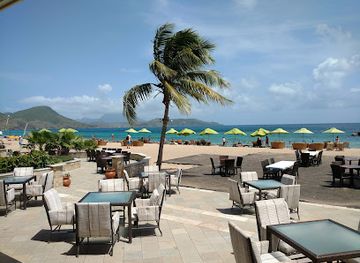
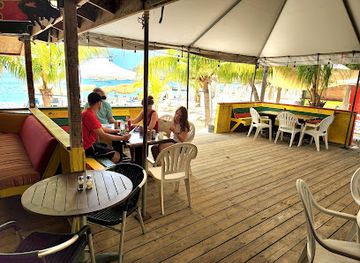
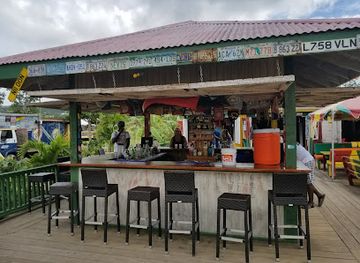
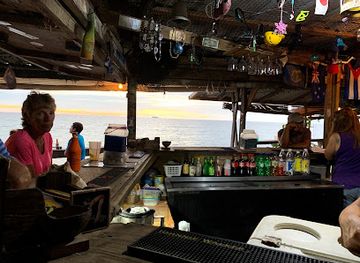
Nightlife on the Southeast Peninsula is concentrated around Frigate Bay, where bars, restaurants and hotel venues provide the most dependable choice for evening drinks, music and socialising. The atmosphere ranges from informal beach bars to more polished hotel and marina settings, with Caribbean music, sports screenings and occasional live entertainment depending on the season and venue. Christophe Harbour has a quieter nautical character, while the more distant bays are largely peaceful after dark and should not be treated as nightlife districts. The area is not a continuous club strip, and opening arrangements or entertainment schedules can change, particularly outside peak visitor periods. Taxis are preferable to walking between scattered venues at night, and visitors should arrange their return transport in advance. Rum drinks and local beers are common, but an evening meal, sunset outing or boat excursion can be just as central to the peninsula’s after-dark culture as clubbing.
-
Restaurant
Carambola Beach Club
Experience exquisite dining at Carambola Beach Club, where stunning ocean views meet delightful Caribbean cuisine in Frigate Bay.
-
Grill
Reggae Beach Bar-Grill
Experience the vibrant taste of Caribbean cuisine at Reggae Beach Bar-Grill, a tropical paradise in St. Kitts & Nevis with stunning beach views.
-
Bar
Sunshines Restaurant
Discover the vibrant nightlife and delicious local cuisine at Sunshines Restaurant, a must-visit bar and nightclub in Vaughans, St. Kitts & Nevis.
-
Restaurant
Shipwreck Beach Bar
Experience the vibrant atmosphere and delicious cuisine at Shipwreck Beach Bar in Frigate Bay, a must-visit for tourists in St. Kitts.
Best nightclubs in Saint Kitts Southeast Peninsula
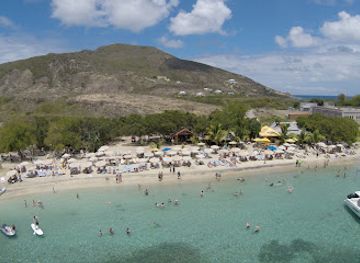
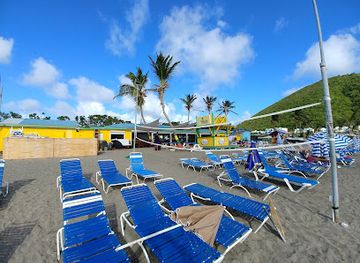
Nightlife on the Southeast Peninsula is concentrated around Frigate Bay, where bars, restaurants and hotel venues provide the most dependable choice for evening drinks, music and socialising. The atmosphere ranges from informal beach bars to more polished hotel and marina settings, with Caribbean music, sports screenings and occasional live entertainment depending on the season and venue. Christophe Harbour has a quieter nautical character, while the more distant bays are largely peaceful after dark and should not be treated as nightlife districts. The area is not a continuous club strip, and opening arrangements or entertainment schedules can change, particularly outside peak visitor periods. Taxis are preferable to walking between scattered venues at night, and visitors should arrange their return transport in advance. Rum drinks and local beers are common, but an evening meal, sunset outing or boat excursion can be just as central to the peninsula’s after-dark culture as clubbing.
-
Restaurant
Carambola Beach Club
Discover the culinary gem of St. Kitts at Carambola Beach Club, where exquisite dining meets breathtaking ocean views and vibrant beach vibes.
-
Grill
Reggae Beach Bar-Grill
Discover the vibrant flavors and stunning views at Reggae Beach Bar-Grill in St. Kitts & Nevis, where island culture meets culinary delight.
-
Bar
Vibes Beach Bar
Experience the laid-back charm of Vibes Beach Bar in St. Kitts, where delicious cuisine meets stunning beach views.
-
Bar
Inon's Beach Bar
Discover Inon's Beach Bar in Frigate Bay, your perfect retreat for cocktails, local cuisine, and stunning ocean views in the heart of St. Kitts & Nevis.

Best shops in Saint Kitts Southeast Peninsula
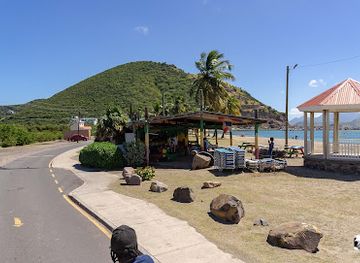
Shopping on the Southeast Peninsula is modest and closely tied to tourism, beaches and marina life rather than to a large independent retail district. Frigate Bay has the widest selection of visitor-oriented shops, resort boutiques, convenience outlets and places selling beachwear, crafts, jewellery and souvenirs. Christophe Harbour provides a more specialised setting associated with yachts, restaurants and upscale visitor services, though its retail offer can vary. Small vendors and beach businesses may sell locally themed crafts, artwork, clothing and gifts, but stock and payment options are not uniform. For a broader choice of groceries, everyday supplies, books and locally produced goods, Basseterre, outside the peninsula, is the practical shopping centre. Visitors seeking edible souvenirs can look for Caribbean spices, rum, sauces, preserves and packaged confectionery, checking customs rules before taking food or plant products overseas. Bargaining should not be assumed in established shops, while prices at informal stalls are best clarified courteously before buying.
-
Print shop
PRINT-HUB SKN
Discover PRINT-HUB SKN in St. Kitts for all your printing needs—quality services with a local touch.
-
Grill
Reggae Beach Bar-Grill
Experience the vibrant flavors and relaxing vibes of Reggae Beach Bar-Grill, a must-visit culinary gem in St. Kitts & Nevis.
-
Tourist attraction
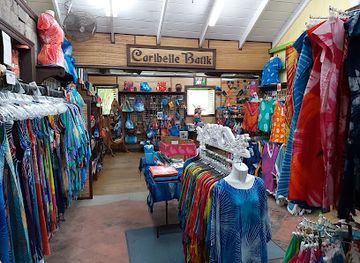
Caribelle Batik at Romney Manor
Explore the vibrant batik artistry and lush botanical gardens at Caribelle Batik in St. Kitts, where culture and nature meet.
-
Bar
La Casa Del Habano
Discover La Casa Del Habano: St. Kitts' premier bar and cigar lounge, offering an exquisite selection of cigars and a relaxing environment.


Get your free copy of our complete guide to Saint Kitts Southeast Peninsula, delivered straight to you.
Everything on this page, from attractions and restaurants to essentials and local phrases, in one PDF you can read offline, print or share.
Already have an account? Sign in
Your Saint Kitts Southeast Peninsula guide is ready.
We'll send it to · Not you? Sign out

Getting your guide ready…
We are putting together a fresh copy of the Saint Kitts Southeast Peninsula guide. This can take up to a minute.
This can take a few moments. If your browser asks, choose Allow so the download can start. You'll find the guide in your Downloads folder.
Nothing happened? Download it again
Sorry, the guide is taking longer than usual. Please try again in a minute, or get it by email instead.
Saint Kitts Southeast Peninsula essentials
Currency and Payment
Safety
Emergency Situations
Do's and Don'ts
Local Tips
From Eve
Local phrases worth knowing
You don't need to get them perfect. A few words go a long way, and locals appreciate the effort.
Basics
| English | Local | Say it |
|---|---|---|
| Hello | Hello | [Heh-lo] |
| Goodbye | Goodbye | [Good-bye] |
| Yes | Yes | [Yes] |
| No | No | [No] |
| Please/You're welcome | Please | [Pleez] |
| Thank you | Thank you | [Thank you] |
| Excuse me/Sorry | Excuse me | [Ex-cuse me] |
| How are you? | How yuh doin'? | [How yuh doin'?] |
| Fine. And you? | Fine. An yuh? | [Fine. An yuh?] |
| Do you speak English? | Yuh speak English? | [Yuh speak English?] |
| I don't understand | I nah understand | [I nah un-derstand] |
Eating & Drinking
| English | Local | Say it |
|---|---|---|
| I'd like to see the menu, please | Mi wan si di menu, please | [Mi wan si di menu, pleez] |
| I don't eat meat | Mi nah eat meat | [Mi nah eat meat] |
| Cheers! | Cheers! | [Cheers!] |
| I would like to pay, please | Mi wan pay, please | [Mi wan pay, pleez] |
Emergencies
| English | Local | Say it |
|---|---|---|
| Help! | Help! | [Help!] |
| Go away! | Go way! | [Go way!] |
| Call the Police! | Call di police! | [Call di po-lice!] |
| Call a doctor! | Call a doctor! | [Call a doc-tor!] |
| I'm lost | Mi lost | [Mi lost] |
| I'm ill | Mi sick | [Mi sick] |
Shopping
| English | Local | Say it |
|---|---|---|
| I'd like to buy... | Mi wan buy... | [Mi wan buy...] |
| I'm just looking | Mi jus' lookin' | [Mi jus' lookin'] |
| How much is it? | How much it cost? | [How much it cost?] |
| That's too expensive | Dat too expensive | [Dat too ex-pen-sive] |
| Can you lower the price? | Yuh can lower di price? | [Yuh can lower di price?] |
Time & Numbers
| English | Local | Say it |
|---|---|---|
| What time is it? | Wha time it? | [Wha time it?] |
| It's one o'clock | It one o'clock | [It one o'clock] |
| Half past (10) | Half past ten | [Half past ten] |
| Morning | Mornin' | [Mornin'] |
| Afternoon | Afternoon | [Afternoon] |
| Evening | Evenin' | [Evenin'] |
| Yesterday | Yesterday | [Yesterday] |
| Today | Today | [Today] |
| Tomorrow | Tomorrow | [Tomorrow] |
| 1 | One | [One] |
| 2 | Two | [Two] |
| 3 | Three | [Three] |
| 4 | Four | [Four] |
| 5 | Five | [Five] |
| 6 | Six | [Six] |
| 7 | Seven | [Seven] |
| 8 | Eight | [Eight] |
| 9 | Nine | [Nine] |
| 10 | Ten | [Ten] |
Transport & Directions
| English | Local | Say it |
|---|---|---|
| Where's a/the...? | Wha de...? | [Wha de...?] |
| What's the address? | Wha di address? | [Wha di ad-dress?] |
| Can you show me (on the map)? | Yuh can show mi (pon di map)? | [Yuh can show mi (pon di map)?] |
| When's the next (bus)? | Wen di next (bus)? | [Wen di next (bus)?] |
| A ticket (to ....) | A ticket (to....) | [A ti-ket (to....)] |
History of Saint Kitts Southeast Peninsula
Indigenous Settlement Before European Colonisation
Saint Kitts was inhabited before European colonisation by Indigenous peoples whose settlements and movement extended across the island’s coastal and fertile areas. Archaeological evidence from Saint Kitts demonstrates long-standing use of marine resources, cultivated land and volcanic landscapes, although the surviving record is uneven and many sites are not presented as conventional visitor attractions. The Southeast Peninsula’s coves, beaches and access to fishing waters would have formed part of a wider island system rather than an isolated district. Visitors should avoid removing artefacts or disturbing possible archaeological remains.
The French and English Colonial Struggle
Saint Kitts became one of the earliest European plantation colonies in the eastern Caribbean during the seventeenth century, with both English and French settlements competing for control of the island. The strategic importance of Saint Kitts shaped the region’s politics and fortifications, while the island’s fertile volcanic soils encouraged sugar cultivation. The Southeast Peninsula was not the principal site of Brimstone Hill Fortress, which lies in the north-west of Saint Kitts, but its coastal position and approaches formed part of the island’s broader maritime geography during these conflicts.
Sugar, Estates and Enslaved Labour
For centuries, Saint Kitts’s economy centred on sugar estates worked by enslaved Africans and, after emancipation, by paid labourers. The peninsula’s former estate lands, stone walls, altered hillsides and traces of industrial infrastructure reflect this plantation landscape, even where modern roads, resorts and vegetation have changed its appearance. Sugar connected the island to Atlantic trade networks and generated wealth for estate owners, while imposing severe social and environmental costs on enslaved communities. The surviving ruins and land patterns are therefore reminders of exploitation as well as of colonial architecture and agricultural history.
Emancipation and the Post-Sugar Landscape
Emancipation in the British Caribbean transformed labour and community life, but it did not immediately remove the economic dominance of sugar estates. On Saint Kitts, rural communities continued to depend on plantation work while cultivating small plots and developing other livelihoods. As sugar declined over the long term, former agricultural land became increasingly associated with grazing, scrub, tourism and conservation. The Southeast Peninsula’s relatively dry vegetation, open slopes and occasional estate remnants make these shifts especially visible, although the modern landscape should not be mistaken for untouched countryside.
The Railway and Island-Wide Sugar Economy
The St Kitts sugar railway was developed to move cane from estates to the central factory and to connect agricultural districts with the wider island economy. Its main dramatic heritage landscapes lie elsewhere on Saint Kitts, but the railway belongs to the same system that shaped settlements, roads and agricultural production across the island. The eventual closure of the sugar industry in 2005 marked a decisive economic transformation. Since then, tourism, services, yachting and property development have become more prominent, particularly around the south-east coast.
Tourism, Marinas and the Contemporary Peninsula
From the late twentieth century onwards, Frigate Bay and the Southeast Peninsula became important parts of Saint Kitts’s tourism economy. Accommodation, golf, watersports, restaurants and beach facilities developed alongside roads and coastal infrastructure, while Christophe Harbour introduced a major marina and mixed-use development to the south-east. This modern phase has brought investment and new visitor facilities but has also made questions of coastal access, environmental protection and responsible development increasingly important. The peninsula now combines resort areas with open hills, working maritime spaces, former agricultural land and small beaches.
Saint Kitts Southeast Peninsula in Photos
Browse through our photo collection highlighting the charm and character of the destination.
Neighbouring regions of Saint Kitts Southeast Peninsula
The closest regions to Saint Kitts Southeast Peninsula, if you have time for more than one.
-
-
-

-
-


Swipe for more regions
Explore more

Explore more of Saint Kitts and Nevis
Discover the pristine beaches, lush landscapes, and rich history of Saint Kitts and Nevis, a hidden gem in the Caribbean offering adventure and relaxation.
Explore Saint Kitts and Nevis