

Free Kingstown Travel Guide & Mobile App
Plan your Kingstown trip with Evendo. Get free guides to top attractions, restaurants, hotels, and bars. Web access or download the mobile app.


Kingstown, Saint Vincent and the Grenadines, blends Caribbean history, lively markets, waterfront views and island culture amid green volcanic scenery.
Harbour, Hills and Island Life
Kingstown occupies a curved bay on the south-west coast of Saint Vincent, where steep green hills descend towards a busy waterfront. The capital is compact and walkable, with a dense centre of old churches, commercial streets, government buildings and market stalls rather than a resort-style urban landscape. Fishing boats, inter-island ferries and small craft animate the harbour, while the surrounding slopes provide a constant reminder of the island’s volcanic terrain.Read more about Kingstown
Colonial Heritage and Creole Culture
Gardens and Wider Horizons
When is the best time to visit Kingstown?
Best: July–September · 29°C| Month | High (°C) | Rainfall (mm) |
|---|---|---|
| January | 29 | 110 |
| February | 29 | 78 |
| March | 29 | 63 |
| April | 30 | 51 |
| May | 30 | 50 |
| June | 30 | 50 |
| July (best) | 29 | 49 |
| August (best) | 29 | 50 |
| September (best) | 29 | 52 |
| October | 29 | 64 |
| November | 29 | 78 |
| December | 29 | 97 |
Getting to and around Kingstown
How to get there
Transportation
Best attractions in Kingstown
Kingstown’s compact centre rewards slow exploration, beginning with the stalls and produce of Kingstown Market before continuing towards the waterfront and its inter-island activity. St George’s Anglican Cathedral and St Mary’s Catholic Cathedral offer contrasting examples of the capital’s religious heritage, while the St Vincent and the Grenadines Botanic Gardens provide a leafy retreat with a long history of tropical plant cultivation. Above the city, Fort Charlotte is valued as much for its elevated views across the harbour and coastline as for its military history. The Carnegie Free Library and the surrounding civic streets add further insight into the capital’s institutional life. Kingstown is also a useful base for boat journeys to the Grenadines, although those islands are separate destinations rather than city attractions. Street scenes, small shops, churches and changing views over the bay are central to the experience of sightseeing here.
-
Park
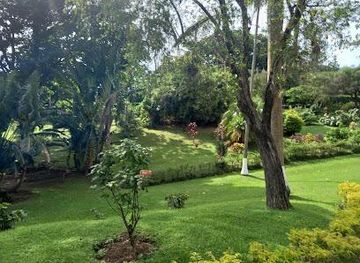
Botanical Gardens
Discover the lush paradise of the Botanical Gardens in Kingstown, a historical gem filled with exotic plants and vibrant wildlife.
10 min drive · 3.2 km from city centre
-
Hiking area
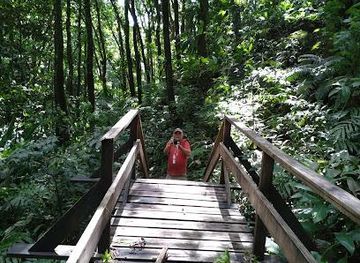
Vermont Nature Trail and Rain Forest
Experience the enchanting Vermont Nature Trail and Rain Forest, a lush paradise for hiking and wildlife exploration in St. Vincent.
7 min drive · 2.3 km from city centre
-
 Hiking area
SAINT ANDREW MOUNTAIN
Discover the breathtaking views and serene hiking trails of Saint Andrew Mountain in Dubois, a perfect escape for nature lovers and adventure seekers.
9 min walk · 0.7 km from city centre
Best landmarks in Kingstown
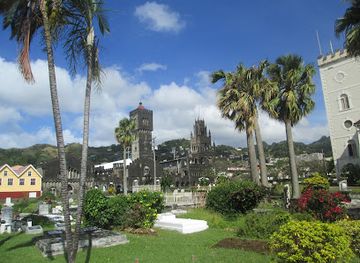
St George’s Anglican Cathedral occupies a prominent position in the capital and is one of Kingstown’s most recognisable religious buildings, while St Mary’s Catholic Cathedral is distinguished by its dark stone exterior and striking Gothic-inspired design. Fort Charlotte, on the hillside above the city, reflects the military importance of Saint Vincent’s harbour during the colonial era and provides a broad outlook over Kingstown and the south-western coast. The St Vincent and the Grenadines Botanic Gardens, founded in 1765, are an important living landmark associated with the Caribbean’s early botanical institutions. In the civic centre, the Carnegie Free Library represents the development of public education and cultural institutions during the colonial period. Kingstown Market is less monumental but equally significant, serving as a continuing centre of trade and daily social life.
-
Park
Botanical Gardens
Explore the lush landscapes and rich history of St. Vincent's Botanical Gardens, a tranquil escape in the heart of Kingstown.
10 min drive · 3.2 km from city centre
-
Hiking area
Vermont nature trail and rain forest
Discover the breathtaking beauty of Vermont Nature Trail and Rain Forest, an idyllic hiking destination filled with lush landscapes and vibrant wildlife.
7 min drive · 2.3 km from city centre
Explore Kingstown on the map
Plan your Kingstown trip on one map. See where the top attractions, landmarks, restaurants, bars and hotels are, find what's near where you're staying, and book hotels and experiences in a few clicks.
Best hotels in Kingstown
Best bars in Kingstown
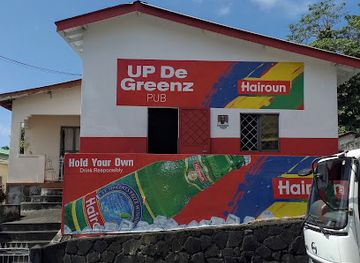
Kingstown’s nightlife is relatively modest and locally oriented rather than dominated by large clubs. After dark, small bars and rum shops around the central commercial area and waterfront provide places for conversation, music and televised sport, while live soca, calypso and reggae may feature during cultural celebrations and seasonal events. Restaurants and hotel bars offer a quieter evening setting, and occasional concerts, fêtes and community performances bring a stronger social energy to the capital. The Friday evening atmosphere can be livelier than an ordinary weekday, but opening patterns and entertainment schedules vary. Visitors should dress neatly, keep valuables secure and arrange a recognised taxi when returning to accommodation outside the centre. Kingstown’s evenings are best understood through local music, conversation and public celebrations rather than expectations of an extensive club district.
-
Bar
Sir Demon's Pub
Discover the lively atmosphere of Sir Demon's Pub in Kingstown, where local culture and great drinks come together for an unforgettable experience.
10 min drive · 3.3 km from city centre
Best nightclubs in Kingstown
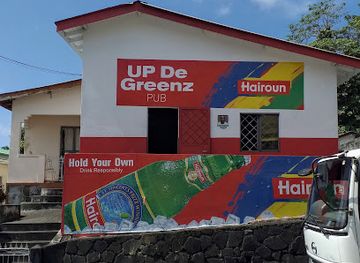
Kingstown’s nightlife is relatively modest and locally oriented rather than dominated by large clubs. After dark, small bars and rum shops around the central commercial area and waterfront provide places for conversation, music and televised sport, while live soca, calypso and reggae may feature during cultural celebrations and seasonal events. Restaurants and hotel bars offer a quieter evening setting, and occasional concerts, fêtes and community performances bring a stronger social energy to the capital. The Friday evening atmosphere can be livelier than an ordinary weekday, but opening patterns and entertainment schedules vary. Visitors should dress neatly, keep valuables secure and arrange a recognised taxi when returning to accommodation outside the centre. Kingstown’s evenings are best understood through local music, conversation and public celebrations rather than expectations of an extensive club district.
-
Bar
Sir Demon's Pub
Discover the vibrant atmosphere and local flavors at Sir Demon's Pub in Kingstown, the ideal bar for travelers seeking a true Caribbean experience.
10 min drive · 3.3 km from city centre
-
Night club
bar Lounge
Experience the electrifying nightlife at Chauncey B.S, where music, dance, and vibrant cocktails combine for an unforgettable night out.
10 min drive · 3.3 km from city centre
Get your free copy of our complete guide to Kingstown, delivered straight to you.
Everything on this page, from attractions and restaurants to essentials and local phrases, in one PDF you can read offline, print or share.
Already have an account? Sign in
Your Kingstown guide is ready.
We'll send it to · Not you? Sign out

Getting your guide ready…
We are putting together a fresh copy of the Kingstown guide. This can take up to a minute.
This can take a few moments. If your browser asks, choose Allow so the download can start. You'll find the guide in your Downloads folder.
Nothing happened? Download it again
Sorry, the guide is taking longer than usual. Please try again in a minute, or get it by email instead.
Kingstown essentials
Currency and Payment
Safety
Emergency Situations
Do's and Don'ts
Local Tips
From Eve
Local phrases worth knowing
You don't need to get them perfect. A few words go a long way, and locals appreciate the effort.
Basics
| English | Local | Say it |
|---|---|---|
| Hello | Wah gwan | [wah gwan] |
| Goodbye | Later | [lay-ter] |
| Yes | Yeah man | [yeah man] |
| No | Nah man | [nah man] |
| Please/You're welcome | If yuh please | [if yuh please] |
| Thank you | Tank yuh | [tank yuh] |
| Excuse me/Sorry | Sarry | [sarry] |
| How are you? | How yuh dey? | [how yuh dey] |
| Fine. And you? | Ahright. An yuh? | [ah-right. an yuh] |
| Do you speak English? | Yuh speak English? | [yuh speak English] |
| I don't understand | Ah eh get yuh | [ah eh get yuh] |
Eating & Drinking
| English | Local | Say it |
|---|---|---|
| I'd like to see the menu, please | Lemme see de menu, please | [lem-me see de menu, please] |
| I don't eat meat | Ah doh eat meat | [ah doh eat meat] |
| Cheers! | Cheers! | [cheers!] |
| I would like to pay, please | Lemme pay, please | [lemme pay, please] |
Emergencies
| English | Local | Say it |
|---|---|---|
| Help! | Help! | [help!] |
| Go away! | Leh me lone! | [leh me lone] |
| Call the Police! | Call de Police! | [call de Police] |
| Call a doctor! | Call ah doctor! | [call ah doctor] |
| I'm lost | Ah lost | [ah lost] |
| I'm ill | Ah sick | [ah sick] |
Shopping
| English | Local | Say it |
|---|---|---|
| I'd like to buy... | Ah wah buy... | [ah wah buy] |
| I'm just looking | Ah jus lookin | [ah jus lookin] |
| How much is it? | How much dis? | [how much dis] |
| That's too expensive | Dat too dear | [dat too dear] |
| Can you lower the price? | Yuh cud drop de price? | [yuh cud drop de price] |
Time & Numbers
| English | Local | Say it |
|---|---|---|
| What time is it? | What time it is? | [what time it is] |
| It's one o'clock | Is one o'clock | [is one o'clock] |
| Half past (10) | Ten thirty | [ten thirty] |
| Morning | Mahnin | [mahnin] |
| Afternoon | Evenin | [evenin] |
| Evening | Evenin | [evenin] |
| Yesterday | Yestadeh | [yestadeh] |
| Today | Today | [today] |
| Tomorrow | Tamara | [tamara] |
| 1 | One | [one] |
| 2 | Two | [two] |
| 3 | Tree | [tree] |
| 4 | Fo' | [fo] |
| 5 | Fahv | [fahv] |
| 6 | Six | [six] |
| 7 | Seven | [seven] |
| 8 | Eight | [eight] |
| 9 | Nine | [nine] |
| 10 | Ten | [ten] |
Transport & Directions
| English | Local | Say it |
|---|---|---|
| Where's a/the...? | Wey de... | [wey de] |
| What's the address? | Wey de address dey? | [wey de address dey] |
| Can you show me (on the map)? | Yuh cud show me (on de map)? | [yuh cud show me (on de map)] |
| When's the next (bus)? | When de next (bus)? | [when de next (bus)] |
| A ticket (to ....) | A ticket (to ....) | [a ticket (to)] |
History of Kingstown
Indigenous Saint Vincent
Before European settlement, Saint Vincent was home to Indigenous communities commonly identified in historical sources as Kalinago, alongside people of mixed Indigenous and African heritage later known as Garifuna or Black Caribs. The island’s mountainous interior and coastline supported farming, fishing and inter-island exchange. European powers struggled to impose lasting control, and Indigenous resistance remained a defining feature of Saint Vincent’s early colonial history. The area that became Kingstown developed on a sheltered south-western bay, whose harbour provided a useful setting for maritime activity and administration.
French and British Rivalry
During the eighteenth century, Saint Vincent became a contested possession in the struggle between Britain and France for influence in the eastern Caribbean. French settlers established plantations and Catholic institutions, while British authority expanded through war and treaty. Britain formally secured Saint Vincent under the Treaty of Paris in 1763, although French influence and Indigenous opposition continued. Kingstown grew as an administrative and commercial centre, linking plantation production and shipping with the island’s coastal settlements.
The Carib Wars and Deportation
British attempts to extend plantation agriculture and colonial authority provoked sustained resistance from Indigenous and Garifuna communities. The conflict known as the Second Carib War, fought from 1795 to 1797, ended with British victory. Thousands of Garifuna were deported from Saint Vincent to Roatán, off the coast of Honduras, in 1797; many later established communities along the Caribbean coast of Central America. The conflict reshaped land ownership and political power on Saint Vincent, while Kingstown became increasingly important as the seat of colonial administration.
Plantation Society and Emancipation
For much of the nineteenth century, Saint Vincent’s economy depended on plantation agriculture, particularly sugar, and on the labour of enslaved Africans. Britain abolished slavery throughout most of its Caribbean colonies in 1834, with a period of apprenticeship preceding full freedom in 1838. Emancipation altered the social and economic structure of the island, though unequal access to land and wealth persisted. Kingstown’s churches, commercial houses and civic buildings developed within this changing colonial society, serving a population shaped by African, European, Indigenous and wider Caribbean connections.
Colonial Modernisation
Saint Vincent remained a British colony as agriculture diversified and Kingstown expanded its role as the island’s main port, market and administrative centre. The St Vincent and the Grenadines Botanic Gardens, founded in 1765, reflected the colonial interest in cultivating useful and ornamental plants, while later roads, schools, churches and public institutions gave the capital a more recognisable civic form. The Carnegie Free Library, established in the early twentieth century with support from the Carnegie programme, belongs to this period of educational and institutional development.
Self-Government and Independence
Saint Vincent and the Grenadines became an associated state of the United Kingdom in 1969, gaining internal self-government before achieving independence on 27 October 1979. Kingstown became the capital of the independent state and remains the centre of national government, commerce and civic life. Its historic churches, market, harbour and hillside fort continue to express different layers of the island’s past, while contemporary Kingstown reflects the political and cultural identity of a sovereign Caribbean nation.
Kingstown in Photos
Browse through our photo collection highlighting the charm and character of the destination.
Cities near Kingstown
The closest cities to Kingstown, if you have time for more than one stop.
-

-

-

-

-


Swipe for more cities
Explore more
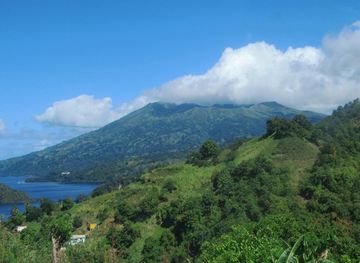
Explore more of Saint Vincent and the Grenadines
Discover the enchanting islands of Saint Vincent and the Grenadines, where lush rainforests, pristine beaches, and vibrant culture create an unforgettable Caribbean experience.
Explore Saint Vincent and the Grenadines