

Free Acquaviva Travel Guide & Mobile App
Plan your Acquaviva trip with Evendo. Get free guides to top attractions, restaurants, hotels, and bars. Web access or download the mobile app.


Acquaviva, San Marino, pairs quiet hill-country walks, medieval heritage and views across the Apennines with easy access to the Republic’s historic centre.
A Small Castello with a Rural Character
Acquaviva occupies the north-western corner of the Republic of San Marino, where wooded slopes and open countryside give way to the lowlands around the Marecchia valley. One of San Marino’s nine castelli, it is considerably quieter than the capital on Monte Titano, offering a slower view of the country shaped by small settlements, parish life and agricultural landscapes. Its name, meaning “living water”, is traditionally associated with a local spring, while the castello’s identity remains closely linked to the church of Sant’Andrea Apostolo and the nearby settlement of Gualdicciolo.Read more about Acquaviva
Woodland, Water and Open Landscapes
Life Beyond the Capital
When is the best time to visit Acquaviva?
Best: May–June, September · 24–28°C| Month | High (°C) | Rainfall (mm) |
|---|---|---|
| January | 10 | 60 |
| February | 11 | 55 |
| March | 14 | 51 |
| April | 19 | 46 |
| May (best) | 24 | 41 |
| June (best) | 28 | 36 |
| July | 30 | 31 |
| August | 30 | 34 |
| September (best) | 26 | 37 |
| October | 21 | 41 |
| November | 15 | 47 |
| December | 11 | 52 |
Getting to and around Acquaviva
How to get there
Transportation
Best attractions in Acquaviva
Acquaviva’s attractions are shaped by landscape and local life rather than by a concentrated old town. The parish church of Sant’Andrea Apostolo provides the castello’s main historic focus, while the nearby settlement of Gualdicciolo offers a glimpse of San Marino’s northern borderland character. Monte Cerreto is the area’s principal setting for outdoor recreation, with wooded slopes, open views and opportunities for walking; the San Marino Adventure Park brings treetop and active pursuits to this natural environment when operating. Rural roads and lanes reveal a quieter side of the republic, passing scattered homes, fields and woodland rather than monumental streets. Acquaviva also makes a useful base for exploring neighbouring castelli and travelling onwards to San Marino’s historic capital, where the towers, museums and steep streets provide a contrasting experience. The appeal lies in combining modest parish heritage with fresh air, open countryside and the everyday geography of a small sovereign state.
-
Basilica
Basilica of Saint Marinus
Discover the Basilica of Saint Marinus, a stunning neoclassical church steeped in history and spiritual significance in San Marino.
7 min drive · 2.5 km from city centre
-
Government office
Public Palace of the Republic of San Marino
Explore the Public Palace of San Marino, where history and architecture come alive in the heart of this ancient republic.
7 min drive · 2.5 km from city centre
-
Historical landmark
Cava dei Balestrieri
Explore Cava dei Balestrieri, a historic landmark in San Marino that showcases the rich heritage and stunning views of this ancient republic.
7 min drive · 2.4 km from city centre
-
Tourist attraction
Parco di Montecerreto
Explore Parco di Montecerreto in San Marino, a stunning park offering breathtaking views, lush landscapes, and a tranquil escape for all nature lovers.
11 min walk · 0.9 km from city centre


Best landmarks in Acquaviva
The principal landmark within Acquaviva is the church of Sant’Andrea Apostolo, whose parish role gives the castello a visible religious and communal centre. Its significance lies less in monumental scale than in the continuity of worship and local identity it represents within one of San Marino’s rural districts. The settlement of Gualdicciolo is another important geographical marker: positioned near the northern approach to the republic, it embodies the castello’s long relationship with cross-border movement and the surrounding Italian landscape. Monte Cerreto functions as a natural landmark, its wooded slopes and elevated ground shaping Acquaviva’s scenery and recreational identity. Unlike the capital, Acquaviva does not possess a dense skyline of towers, palaces and fortified walls; its landmarks are modest parish, settlement and landscape features that show how San Marino extends beyond Monte Titano.
-
Basilica
Basilica of Saint Marinus
Discover the Basilica of Saint Marinus, a stunning architectural gem in San Marino, embodying the rich history and spiritual essence of the republic.
7 min drive · 2.5 km from city centre
-
Mountain cable car
Cable Car San Marino - City
Ride the Cable Car San Marino for breathtaking views and an unforgettable experience in the heart of San Marino.
7 min drive · 2.3 km from city centre
-
Historical landmark
Liberty Square
Explore Liberty Square in San Marino, where history, culture, and stunning architecture converge in a vibrant atmosphere.
7 min drive · 2.5 km from city centre
-
Government office
Public Palace of the Republic of San Marino
Explore the Public Palace of the Republic of San Marino, a breathtaking blend of history, culture, and stunning views in the heart of San Marino.
7 min drive · 2.5 km from city centre


Explore Acquaviva on the map
Plan your Acquaviva trip on one map. See where the top attractions, landmarks, restaurants, bars and hotels are, find what's near where you're staying, and book hotels and experiences in a few clicks.
Best hotels in Acquaviva
Best restaurants in Acquaviva
Acquaviva’s dining scene is modest and local in character, with cafés, bars and family-run establishments serving the straightforward cooking associated with San Marino and neighbouring Romagna. Expect pasta dishes, piadina, grilled meats, seasonal vegetables, salads, cheeses and cured meats, alongside desserts influenced by the wider regional tradition. The castello’s dispersed settlements mean that dining is generally found along roads or within local communities rather than in a single restaurant quarter. Gualdicciolo is a practical area for everyday refreshments, while visitors staying in the countryside may find that planning a meal around opening days and transport is useful. Sanmarinese cuisine shares ingredients and techniques with central Italian cooking, but local menus can also include dishes associated with the wider Montefeltro and Romagna borderlands. Cafés and bars remain important social spaces, particularly for coffee, aperitivi and informal conversation.
-
Restaurant
Ritrovo Dei Lavoratori XXVIII Luglio
Experience authentic Italian flavors in San Marino at Ritrovo Dei Lavoratori XXVIII Luglio - where tradition meets modern dining.
7 min drive · 2.5 km from city centre
-
Restaurant
Hostaria Da Lino
Experience authentic Italian cuisine at Hostaria Da Lino in Valdragone – where every meal is a celebration of local flavors and warmth.
7 min drive · 2.3 km from city centre
-
Restaurant
La Vecchia Fonte
Discover authentic Italian flavors at La Vecchia Fonte in Cailungo - home to delicious pizzas and warm hospitality.
7 min drive · 2.4 km from city centre
-
Fast Food
L'Angela Veste Piada
Discover Valdragone's culinary gem at L'Angela Veste Piada – savor authentic piadine in a cozy fast food setting.
6 min drive · 2.1 km from city centre


Best bars in Acquaviva
Acquaviva has a quiet evening atmosphere rather than a concentrated nightlife district. Local bars and cafés provide the main settings for coffee, aperitivi, conversation and an unhurried drink, with activity centred on residents rather than late-night visitors. Gualdicciolo and the roads towards neighbouring castelli offer some everyday evening options, but the castello should not be approached as a clubbing destination. For theatres, larger cultural programmes and a broader choice of bars, visitors generally travel towards San Marino City or across the border to Rimini, depending on the event and transport arrangements. Evening walks in the countryside require care because roads and paths may be poorly lit. Outdoor and seasonal events may add occasional activity around the wider republic, but schedules vary and should be checked locally.
-
Cafe
Fabrika 136 - coffee and food
Experience the delightful blend of coffee and local cuisine at Fabrika 136 in Acquaviva, a cozy cafe for every traveler.
8 min walk · 0.7 km from city centre
-
Takeout restaurant
Monaldi piadina e cassoni acquaviva
Discover authentic Italian street food at Monaldi Piadina e Cassoni in Acquaviva, where fresh piadinas and cassoni bring the taste of Italy to your plate.
11 min walk · 0.9 km from city centre
-
Bar
Time Off - Bar & Pub San Marino
Discover San Marino's vibrant nightlife at Time Off - Bar & Pub, where locals and tourists unite for an unforgettable experience in the heart of the city.
7 min drive · 2.4 km from city centre
-
Bar
Bar Bottega Del Posto
Discover the local charm and vibrant flavors at Bar Bottega Del Posto in Santa Mustiola, where delightful drinks and delicious snacks await.
6 min drive · 1.9 km from city centre


Best nightclubs in Acquaviva
Acquaviva has a quiet evening atmosphere rather than a concentrated nightlife district. Local bars and cafés provide the main settings for coffee, aperitivi, conversation and an unhurried drink, with activity centred on residents rather than late-night visitors. Gualdicciolo and the roads towards neighbouring castelli offer some everyday evening options, but the castello should not be approached as a clubbing destination. For theatres, larger cultural programmes and a broader choice of bars, visitors generally travel towards San Marino City or across the border to Rimini, depending on the event and transport arrangements. Evening walks in the countryside require care because roads and paths may be poorly lit. Outdoor and seasonal events may add occasional activity around the wider republic, but schedules vary and should be checked locally.
-
Cafe
Fabrika 136 - coffee and food
Discover the perfect blend of local flavors and a cozy atmosphere at Fabrika 136, Acquaviva's premier coffee and food destination.
8 min walk · 0.7 km from city centre
-
 Disco club
Vision Club
Experience the vibrant nightlife at Vision Club, Gualdicciolo's premier disco destination for dancing, music, and unforgettable memories.
5 min drive · 1.5 km from city centre

Best shops in Acquaviva
Shopping in Acquaviva is local and practical rather than concentrated in a dedicated retail quarter. Small businesses and cafés around Gualdicciolo serve everyday needs, while visitors may find Sanmarinese food products, wine, confectionery and small souvenirs through shops across the republic. The castello’s rural setting makes it a suitable place to look for locally produced goods when available, but it is not known for a large artisan market or an extensive sequence of independent boutiques. For broader souvenir shopping, specialist retail and the familiar San Marino-branded products associated with tourism, visitors usually continue towards the capital and its historic-centre streets. Purchases may include ceramics, food products, locally produced wine and commemorative items, although provenance varies. A useful approach is to favour clearly labelled Sanmarinese or regional products over generic merchandise.
-
Airsoft supply store
Target Team San Marino
Explore the thrilling world of airsoft at Target Team San Marino, where gear meets passion in an unforgettable shopping experience.
7 min drive · 2.5 km from city centre
-
Jewelry store
Klepto Gioielli
Discover exquisite jewelry and unique craftsmanship at Klepto Gioielli, a must-visit jewelry store in San Marino.
7 min drive · 2.4 km from city centre
-
Chinese medicine store
Qiu Tian
Discover holistic healing and relaxation at Qiu Tian, a Chinese medicine store offering massage and physical therapy in the heart of San Marino.
8 min walk · 0.6 km from city centre
-
Gift shop
Kadò - La gioia di un pensiero
Discover unique gifts and local treasures at Kadò - La gioia di un pensiero in Valdragone, where craftsmanship meets creativity.
7 min drive · 2.4 km from city centre


Get your free copy of our complete guide to Acquaviva, delivered straight to you.
Everything on this page, from attractions and restaurants to essentials and local phrases, in one PDF you can read offline, print or share.
Already have an account? Sign in
Your Acquaviva guide is ready.
We'll send it to · Not you? Sign out

Getting your guide ready…
We are putting together a fresh copy of the Acquaviva guide. This can take up to a minute.
This can take a few moments. If your browser asks, choose Allow so the download can start. You'll find the guide in your Downloads folder.
Nothing happened? Download it again
Sorry, the guide is taking longer than usual. Please try again in a minute, or get it by email instead.
Acquaviva essentials
Currency and Payment
Safety
Emergency Situations
Do's and Don'ts
Local Tips
From Eve
Local phrases worth knowing
You don't need to get them perfect. A few words go a long way, and locals appreciate the effort.
Basics
| English | Local | Say it |
|---|---|---|
| Hello | Ciao | [chow] |
| Goodbye | Arrivederci | [ah-ree-veh-dehr-chee] |
| Yes | Sì | [see] |
| No | No | [noh] |
| Please/You're welcome | Per favore/Prego | [pehr fah-voh-reh/preh-goh] |
| Thank you | Grazie | [grah-tsyeh] |
| Excuse me/Sorry | Mi scusi/Scusa | [mee skoo-zee/skoo-zah] |
| How are you? | Come stai? | [koh-meh stai] |
| Fine. And you? | Bene. E tu? | [beh-neh/eh too] |
| Do you speak English? | Parli inglese? | [pahr-lee een-gleh-zeh] |
| I don't understand | Non capisco | [nohn kah-pee-skoh] |
Eating & Drinking
| English | Local | Say it |
|---|---|---|
| I'd like to see the menu, please | Vorrei vedere il menù, per favore | [vohr-reh-ee veh-deh-reh eel meh-noo pehr fah-voh-reh] |
| I don't eat meat | Non mangio carne | [nohn mahn-joh kahr-neh] |
| Cheers! | Salute! | [sah-loo-teh] |
| I would like to pay, please | Vorrei pagare, per favore | [vohr-reh-ee pah-gah-reh pehr fah-voh-reh] |
Emergencies
| English | Local | Say it |
|---|---|---|
| Help! | Aiuto! | [ah-yoo-toh] |
| Go away! | Vai via! | [vah-ee vee-ah] |
| Call the Police! | Chiama la Polizia! | [kyah-mah lah poh-lee-tsyah] |
| Call a doctor! | Chiama un medico! | [kyah-mah oon meh-dee-koh] |
| I'm lost | Mi sono perso | [mee soh-no pehr-soh] |
| I'm ill | Sto male | [stoh mah-leh] |
Shopping
| English | Local | Say it |
|---|---|---|
| I'd like to buy... | Vorrei comprare... | [vohr-reh-ee kohm-prah-reh] |
| I'm just looking | Sto solo guardando | [stoh soh-loh gwahr-dahn-doh] |
| How much is it? | Quanto costa? | [kwahn-toh koh-stah] |
| That's too expensive | È troppo caro | [eh troh-poh kah-roh] |
| Can you lower the price? | Puoi abbassare il prezzo? | [pwoh-ee ahb-bah-sah-reh eel preh-tsoh] |
Time & Numbers
| English | Local | Say it |
|---|---|---|
| What time is it? | Che ora è? | [keh oh-rah eh] |
| It's one o'clock | È l'una | [eh loo-nah] |
| Half past (10) | Sono le dieci e mezza | [soh-no leh dyeh-chee eh meh-tszah] |
| Morning | Mattina | [maht-tee-nah] |
| Afternoon | Pomeriggio | [poh-meh-ree-joh] |
| Evening | Sera | [seh-rah] |
| Yesterday | Ieri | [yeh-ree] |
| Today | Oggi | [oh-jee] |
| Tomorrow | Domani | [doh-mah-nee] |
| 1 | Uno | [oo-noh] |
| 2 | Due | [dweh] |
| 3 | Tre | [treh] |
| 4 | Quattro | [kwah-troh] |
| 5 | Cinque | [cheen-kweh] |
| 6 | Sei | [seh-ee] |
| 7 | Sette | [seh-tteh] |
| 8 | Otto | [oht-toh] |
| 9 | Nove | [noh-veh] |
| 10 | Dieci | [dyeh-chee] |
Transport & Directions
| English | Local | Say it |
|---|---|---|
| Where's a/the...? | Dov'è un/il...? | [doh-veh oon/eel] |
| What's the address? | Qual è l'indirizzo? | [kwahl eh leen-dee-ree-tsoh] |
| Can you show me (on the map)? | Puoi mostrarmi (sulla mappa)? | [pwoh-ee mohs-trar-mee soo-lah mahp-pah] |
| When's the next (bus)? | Quando passa il prossimo (autobus)? | [kwahn-doh pahs-sah eel prohs-see-moh ow-toh-boos] |
| A ticket (to ....) | Un biglietto (per ....) | [oon beel-lyet-toh pehr] |
History of Acquaviva
A Name Linked to Living Water
Acquaviva’s name is generally connected with a spring or source of flowing water, a reminder of how settlement names in this part of the Apennine foothills often reflected practical features of the landscape. The area developed as a rural community rather than as a fortified urban centre, with dispersed homes, cultivated land and routes connecting San Marino to the surrounding Romagna countryside. Its position in the north-western part of the republic gave it an agricultural and frontier character, while the nearby valleys provided access towards settlements beyond San Marino’s borders. The early history of Acquaviva is therefore best understood through the gradual organisation of rural territory and parish life rather than through a single dramatic foundation event.
The Parish Community of Sant’Andrea
The church of Sant’Andrea Apostolo became the principal religious reference point for Acquaviva, helping to give the scattered community a shared centre. As in other Sanmarinese castelli, the parish was important not only for worship but also for marking local identity, festivals and social relationships. The church and surrounding settlement reflect the long continuity of small-scale communities that survived through farming, family networks and contact with neighbouring Italian territories. Although Acquaviva lacks the monumental concentration of the capital, its religious heritage helps explain how the republic’s territory was organised beyond Monte Titano. The castello’s present character still bears this imprint, with local life arranged around roads, homes, parish institutions and the countryside.
A Castello in the Expanding Republic
Acquaviva formed part of the territorial and administrative development of the Republic of San Marino as the state consolidated the castelli that make up its modern territory. Its northern location placed it within the rural belt that connected the historic centre with the borderlands of Romagna. Over time, roads, parish communities and local administrative structures tied the area more closely to the capital while leaving its settlement pattern relatively dispersed. The castello’s history consequently belongs to the broader story of San Marino’s survival as an independent republic: political continuity was maintained not only through the institutions on Monte Titano, but also through modest communities that cultivated land, maintained local customs and sustained connections across the surrounding region.
Gualdicciolo and Borderland Exchange
The settlement of Gualdicciolo, within Acquaviva, reflects the practical importance of San Marino’s northern approaches and its proximity to Italy. Border communities have long been shaped by movement: residents, traders and workers crossed between the republic and neighbouring Emilia-Romagna, while roads carried agricultural produce and everyday goods. In the modern period, this setting supported small-scale commercial and industrial activity alongside the older rural economy. Gualdicciolo’s importance is therefore less architectural than geographical and social, illustrating how Acquaviva participated in the economic life of the wider region. The castello’s present-day roads and businesses retain traces of this relationship between a small sovereign territory and its much larger surroundings.
Modern Rural Recreation
During the twentieth and twenty-first centuries, Acquaviva remained one of San Marino’s less urbanised castelli while adapting to contemporary life. Improved roads and links with the rest of the republic made it possible for residents to work and study beyond the immediate area, while local sports and outdoor facilities added new uses to the wooded slopes around Monte Cerreto. The development of recreational attractions, including the San Marino Adventure Park, brought visitors into a landscape previously experienced mainly through local agriculture and parish life. Acquaviva today is consequently defined by continuity rather than a preserved medieval townscape: its history survives in the castello structure, church, settlements and rural environment, alongside modern residential and leisure activity.
Travel experiences inspired by this city
-
 8 Day Trip
Exploring the Renaissance Charm of Urbino with My Spouse
Join us on a journey to Urbino, Italy, where history, art, and romance await amidst breathtaking landscapes and cultural treasures.
 15 Jun 2025
By Abimbola Hassan -
 9 Day Trip
Solo Renaissance Adventure in Urbino
Explore Urbino's rich Renaissance history and culture on a solo journey, enjoying art, architecture, and local cuisine.
 10 Jun 2025
By Yael Cohen-Levi -
 15 Day Trip
Exploring the Renaissance Charm of Urbino with Family
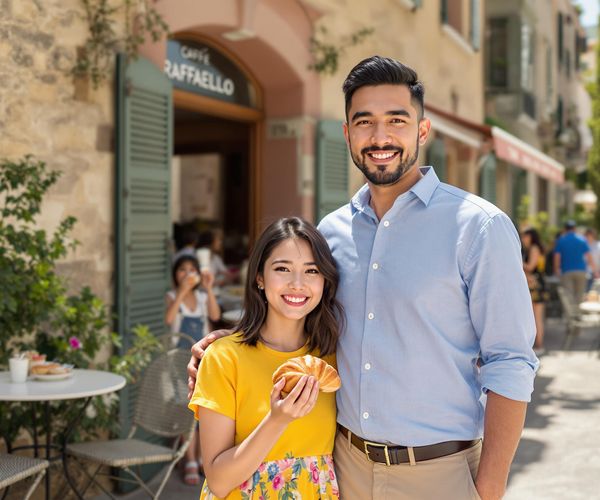
Discover the artistic and cultural treasures of Urbino, Italy, on a 15-day family adventure, staying at the charming Hotel Raffaello.
 10 Jun 2025
By Chih-Ming Huang -
 8 Day Trip
Family Adventure in the Heart of Renaissance Italy: Exploring Urbino
Discover the rich Renaissance history and culture of Urbino, Italy, with Jose Silva's family adventure, exploring architecture, cuisine, and local charm.
 5 Jun 2025
By Jose Silva -
 8 Day Trip
Exploring the Renaissance Charm of Urbino, Italy
Discover Urbino, Italy's Renaissance treasure, with Valentina and Maximilian. Immerse in culture, history, and breathtaking landscapes.
 5 Jun 2025
By Valentina Santiago -
 11 Day Trip
A Romantic Renaissance Getaway in Urbino
Discover the Renaissance charm of Urbino, Italy, on a romantic 11-day getaway, steeped in history and culture. Perfect for curious couples.
 10 May 2025
By Claire Taylor
Swipe for more travel diaries
Acquaviva in Photos
Browse through our photo collection highlighting the charm and character of the destination.
Cities near Acquaviva
The closest cities to Acquaviva, if you have time for more than one stop.
-

-

-
-

-


Swipe for more cities
Explore more

Explore more of San Marino
Discover San Marino: A charming microstate with medieval towers, scenic vistas, rich history, and delightful cuisine. Perfect for a unique cultural escape.
Explore San Marino