

V&A Waterfront (Cape Town) Travel Guide - Free
Explore V&A Waterfront in Cape Town with Evendo's free guide. Find the best shops, historic streets, restaurants, and gems on web or mobile.


V&A Waterfront in Cape Town blends harbour history, Zeitz MOCAA, ocean views, markets, dining, shopping, family attractions and boat trips beside Table Bay.
Harbour, Heritage and Table Bay
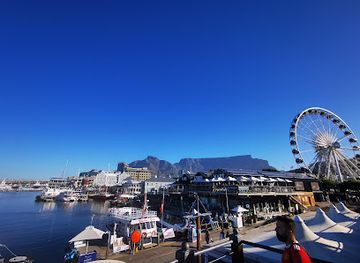
The V&A Waterfront occupies the working edge of Cape Town’s historic harbour, where the city meets Table Bay beneath the slopes of Signal Hill. It is a managed waterfront precinct rather than a traditional residential neighbourhood, combining restored port buildings, contemporary architecture, retail arcades, museums, restaurants, hotels and public promenades. The Victoria Basin provides the area’s visual centre, with fishing boats, excursion vessels and working harbour activity sharing the water with diners and visitors.Read more about V&A Waterfront
Culture in a Working Port
Public Life by the Water
Best attractions in V&A Waterfront
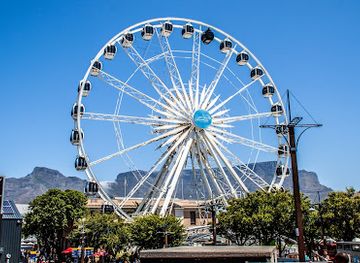
The V&A Waterfront’s attractions are concentrated around the harbour, its public spaces and its cultural institutions. Zeitz MOCAA occupies a striking converted grain silo in the Silo District, with galleries devoted to contemporary art from Africa and its diaspora. The Two Oceans Aquarium introduces local marine habitats through displays, viewing tanks and educational exhibits, while the Cape Wheel provides elevated views over the harbour and Table Bay when operating. The Watershed combines design, craft and food in a repurposed industrial building, and Nobel Square presents sculptures of four South African Nobel Peace Prize laureates beside the water. The Clock Tower precinct, canal routes, Victoria Wharf and the quays offer contrasting ways to explore the area, from heritage architecture and shopping to harbour watching. Robben Island ferry departures also begin here, although the island itself lies across the bay.
-
 Shopping mall
V&A Waterfront
Discover the iconic V&A Waterfront: Cape Town's premier destination for shopping, dining, and cultural experiences with breathtaking views.
2 min walk · 0.1 km from neighbourhood centre
-
Tourist attraction
The Cape Wheel
Discover breathtaking views of Cape Town from The Cape Wheel, a stunning Ferris wheel at Victoria & Alfred Waterfront, perfect for tourists seeking unforgettable experiences.
6 min walk · 0.5 km from neighbourhood centre
-
Tourist attraction
Zeitz Museum of Contemporary Art Africa
Explore the Zeitz Museum of Contemporary Art Africa, a stunning showcase of contemporary African creativity in the heart of Cape Town's V&A Waterfront.
3 min walk · 0.2 km from neighbourhood centre
-
Sightseeing tour agency
City Sightseeing Cape Town Visitor Center
Explore Cape Town's stunning sights with ease from the City Sightseeing Visitor Center at Victoria & Alfred Waterfront, your gateway to unforgettable adventures.
4 min walk · 0.3 km from neighbourhood centre


Best landmarks in V&A Waterfront
The V&A Waterfront’s landmarks reveal successive phases of Cape Town’s maritime history. The Clock Tower, a nineteenth-century harbour building near the Victoria Basin, is one of the precinct’s most recognisable historic structures and an important surviving marker of the old port. The converted grain silo that houses Zeitz MOCAA gives the Silo District its powerful architectural identity, retaining the vertical presence of industrial infrastructure while creating galleries within it. Chavonnes Battery Museum preserves remains of an earlier defensive installation associated with the harbour’s colonial-era history. Nobel Square’s sculptures commemorate Nelson Mandela, Desmond Tutu, F. W. de Klerk and Albert Luthuli, linking the waterfront to South Africa’s political history. The basin, warehouses, quays and breakwaters are landmarks in a broader sense: together they record how a working port has been adapted for public use without erasing its industrial framework.
-
Shopping mall
V&A Waterfront
Discover the vibrant V&A Waterfront, Cape Town's premier shopping mall and cultural landmark, offering a unique blend of shopping, dining, and art experiences.
2 min walk · 0.1 km from neighbourhood centre
-
Ferris wheel
The Cape Wheel
Discover breathtaking views of Cape Town's skyline and natural wonders at The Cape Wheel, the ultimate Ferris wheel experience in the vibrant waterfront.
6 min walk · 0.5 km from neighbourhood centre
-
Market
The Watershed
Explore The Watershed at V&A Waterfront, a vibrant market showcasing local crafts, delicious food, and the essence of South African culture.
3 min walk · 0.2 km from neighbourhood centre
-
Tourist attraction
The Nelson Mandela Gateway To Robben Island
Discover the rich history of South Africa at the Nelson Mandela Gateway to Robben Island, a tribute to resilience and freedom.
2 min walk · 0.2 km from neighbourhood centre

Explore V&A Waterfront on the map
A handpicked selection of must-see spots in V&A Waterfront, mapped for you.
Best hotels in V&A Waterfront
Best restaurants in V&A Waterfront
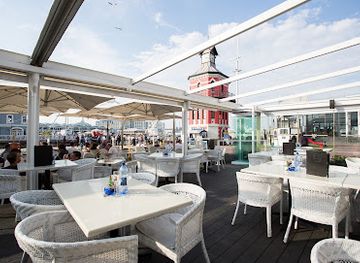
Dining at the V&A Waterfront reflects both its maritime setting and its role as a major visitor precinct. Restaurants around the Victoria Basin and the quays make strong use of harbour views, with seafood, South African cooking, grills, sushi and international menus represented across the area. Established names associated with the Waterfront include Willoughby & Co, Harbour House and Belthazar, while cafés, bakeries and informal counters provide easier options between attractions. The Watershed and nearby market-style spaces add casual food and drink alongside their design and craft offer. The restaurant scene is generally more polished and commercially structured than that of Cape Town’s older inner-city streets, but the working harbour remains a visible influence: boats, warehouses, fishing activity and Table Bay shape the setting even when the menu is contemporary. Reservations may be useful for sought-after venues, particularly at busy times.
-
Seafood
Harbour House V&A Waterfront
Discover exquisite seafood dining at Harbour House V&A Waterfront with stunning harbor views and a delightful atmosphere in Cape Town.
3 min walk · 0.2 km from neighbourhood centre
-
Seafood
Sevruga Restaurant
Experience exquisite seafood and Asian fusion cuisine at Sevruga Restaurant in Cape Town's iconic V&A Waterfront.
3 min walk · 0.2 km from neighbourhood centre
-
Seafood
Cape Town Fish Market
Experience mouthwatering seafood and vibrant flavors at Cape Town Fish Market in V&A Waterfront - perfect for families and sushi enthusiasts.
2 min walk · 0.1 km from neighbourhood centre
-
Italian
Col'Cacchio V&A Waterfront (Halaal Friendly)
Experience authentic Italian cuisine at Col'Cacchio V&A Waterfront - perfect for pizza lovers in Cape Town's vibrant setting.
5 min walk · 0.4 km from neighbourhood centre


Best bars in V&A Waterfront
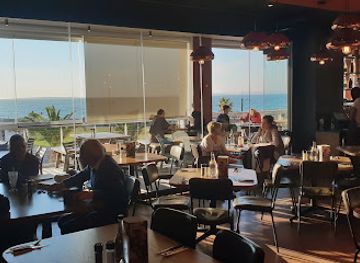
Evenings at the V&A Waterfront centre on restaurants, hotel bars, waterfront terraces and relaxed drinking rather than a concentrated late-night club district. The Victoria Basin and Silo District provide places for cocktails, wine, beer and after-dinner conversation, with changing views of the harbour and illuminated Table Mountain. Live music and programmed entertainment can appear in the precinct, especially around major events, but schedules and venues vary. The area’s nightlife is generally sociable and visitor-oriented, with a calmer feel than Cape Town’s dedicated clubbing areas elsewhere in the city. The Watershed and food-focused spaces may extend the evening through dining and informal gatherings, while the Clock Tower and quay areas become quieter once retail activity winds down. Visitors heading farther into the city for clubs should arrange transport rather than assuming the Waterfront operates as an all-night entertainment strip.
-
Restaurant
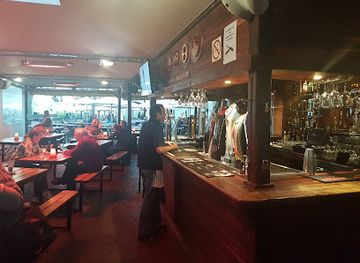
Ferrymans Irish Tavern
Discover the vibrant Ferrymans Irish Tavern in Cape Town's waterfront, where Irish hospitality meets local flavors in a picturesque setting.
3 min walk · 0.2 km from neighbourhood centre
-
Bar
Tiger's Milk V&A Waterfront
Experience the vibrant culinary scene at Tiger's Milk V&A Waterfront, where delicious food and crafted cocktails meet a lively atmosphere.
4 min walk · 0.3 km from neighbourhood centre
-
Restaurant
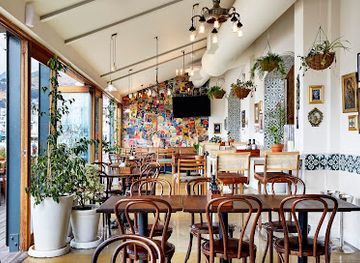
La Parada V&A Waterfront
Experience the vibrant flavors of South African tapas at La Parada V&A Waterfront, the perfect dining destination in Cape Town's scenic harbor.
1 min walk · 0.1 km from neighbourhood centre
-
Restaurant
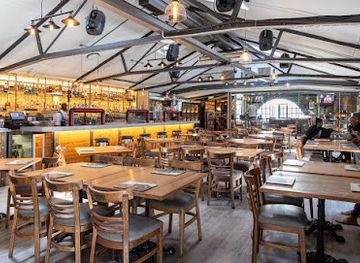
Mitchell's Scottish Ale House
Explore Mitchell's Scottish Ale House at V&A Waterfront, where authentic Scottish cuisine meets vibrant Cape Town culture amid stunning waterfront views.
3 min walk · 0.2 km from neighbourhood centre

Best nightclubs in V&A Waterfront
Evenings at the V&A Waterfront centre on restaurants, hotel bars, waterfront terraces and relaxed drinking rather than a concentrated late-night club district. The Victoria Basin and Silo District provide places for cocktails, wine, beer and after-dinner conversation, with changing views of the harbour and illuminated Table Mountain. Live music and programmed entertainment can appear in the precinct, especially around major events, but schedules and venues vary. The area’s nightlife is generally sociable and visitor-oriented, with a calmer feel than Cape Town’s dedicated clubbing areas elsewhere in the city. The Watershed and food-focused spaces may extend the evening through dining and informal gatherings, while the Clock Tower and quay areas become quieter once retail activity winds down. Visitors heading farther into the city for clubs should arrange transport rather than assuming the Waterfront operates as an all-night entertainment strip.
-
Night club
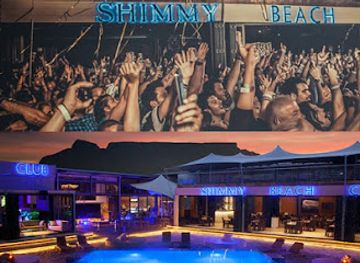
Shimmy Beach Club
Experience the vibrant nightlife and exquisite dining at Shimmy Beach Club, Cape Town's premier coastal venue for brunch and evening entertainment.
11 min walk · 0.9 km from neighbourhood centre
-
Gay night club
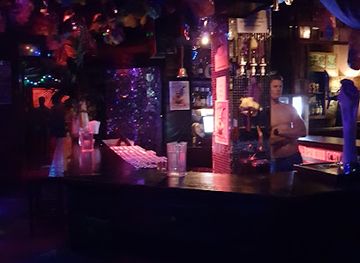
Crew Bar
Discover the lively spirit of Crew Bar, a premier gay night club in De Waterkant, Cape Town, where vibrant nights and unforgettable experiences await.
11 min walk · 0.9 km from neighbourhood centre
-
Gay night club
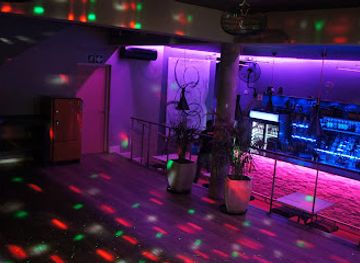
The Pink Candy Night Club
Experience the vibrant nightlife and inclusive atmosphere at The Pink Candy Night Club in Cape Town, a must-visit for LGBTQ+ tourists.
16 min walk · 1.3 km from neighbourhood centre
-
Night club
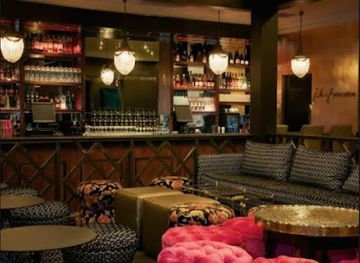
Jade Champagne Bar & Lounge
Discover the elegance of Jade Champagne Bar & Lounge in Green Point, a premier nightlife destination in Cape Town with a vibrant atmosphere and exquisite drinks.
9 min walk · 0.8 km from neighbourhood centre
Best shops in V&A Waterfront
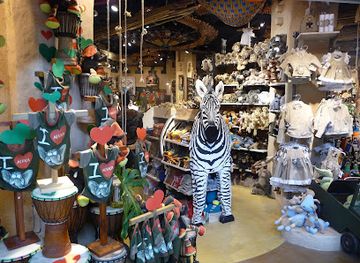
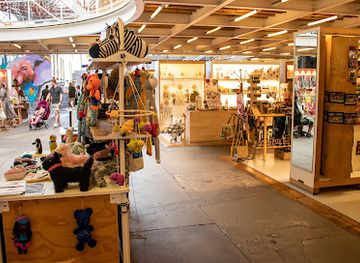
Shopping is one of the V&A Waterfront’s defining activities, with Victoria Wharf providing a large concentration of fashion, accessories, lifestyle goods, food and international retail alongside South African brands. For a more locally rooted experience, the Watershed is the key destination, presenting crafts, furniture, jewellery, textiles, ceramics and contemporary design from South African makers and small businesses. The Silo District adds design-led retail and galleries within a former industrial setting, while food outlets and specialist stores around the harbour broaden the mix. The precinct is more curated and mall-like than Cape Town’s traditional street markets, but its emphasis on locally produced design distinguishes it from a purely generic shopping centre. Visitors should distinguish the Waterfront’s established retail areas from temporary pop-ups and event stalls, whose presence and stock can change.
-
Shopping mall
V&A Waterfront
Explore the V&A Waterfront, a vibrant shopping mall and cultural landmark in Cape Town, offering breathtaking views, diverse dining, and unique attractions.
2 min walk · 0.1 km from neighbourhood centre
-
Shopping mall
Victoria Wharf Shopping Centre
Discover the vibrant shopping experience at Victoria Wharf Shopping Centre, Cape Town's premier destination for retail and dining.
4 min walk · 0.3 km from neighbourhood centre
-
Market
The Watershed
Discover unique crafts and local flavors at The Watershed, a vibrant market experience nestled in Cape Town's V&A Waterfront.
3 min walk · 0.2 km from neighbourhood centre
-
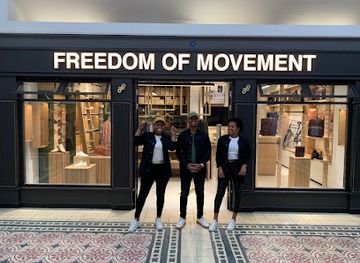
Clothing store
Freedom of Movement V&A Waterfront
Explore Freedom of Movement V&A Waterfront for trendy local fashion and a unique shopping experience in Cape Town's vibrant waterfront.
6 min walk · 0.5 km from neighbourhood centre

V&A Waterfront essentials
Getting There
Getting Around
Safety
Emergency Situations
Do's and Don'ts
Local Tips

From Eve
Local phrases worth knowing
You don't need to get them perfect. A few words go a long way, and locals appreciate the effort.
Basics
| English | Local | Say it |
|---|---|---|
| Hello | Molo | [moh-loh] |
| Goodbye | Hamba kahle | [hahm-bah kah-leh] |
| Yes | Ewe | [eh-weh] |
| No | Cha | [chah] |
| Please/You're welcome | Nceda | [n-chay-dah] |
| Thank you | Enkosi | [en-koh-see] |
| Excuse me/Sorry | Uxolo | [oo-koh-loh] |
| How are you? | Unjani? | [oon-jah-nee] |
| Fine. And you? | Ndiyaphila. Wena? | [n-dee-yah-pee-lah. way-nah] |
| Do you speak English? | Ukhuluma isiNgisi? | [oo-khoo-loo-mah ee-see-ng-ee-see] |
| I don't understand | Andiqondi | [ahn-dee-kohn-dee] |
Eating & Drinking
| English | Local | Say it |
|---|---|---|
| I'd like to see the menu, please | Ndifuna ukubona imenyu, ndiyacela | [n-dee-foo-nah oo-koo-boh-nah ee-mehn-yoo, n-dee-yah-chay-lah] |
| I don't eat meat | Andifuni ukudla inyama | [ahn-dee-foo-nee oo-koo-dlah ee-nyah-mah] |
| Cheers! | Ooza! | [oh-zah] |
| I would like to pay, please | Ndifuna ukulipha, ndiyacela | [n-dee-foo-nah oo-koo-lee-pah, n-dee-yah-chay-lah] |
Emergencies
| English | Local | Say it |
|---|---|---|
| Help! | Nceda! | [n-chay-dah] |
| Go away! | Hamba! | [hahm-bah] |
| Call the Police! | Vula amapolisa! | [voo-lah ah-mah-poh-lee-sah] |
| Call a doctor! | Vula udokotela! | [voo-lah oo-doh-koh-teh-lah] |
| I'm lost | Ndikhohlwe | [n-dee-koh-khluh-weh] |
| I'm ill | Ndisithwele | [n-dee-see-tlweh-leh] |
Shopping
| English | Local | Say it |
|---|---|---|
| I'd like to buy... | Ndifuna ukuthenga... | [n-dee-foo-nah oo-koo-teh-ngah] |
| I'm just looking | Ndibona kuphela | [n-dee-boh-nah koo-peh-lah] |
| How much is it? | Izenzani le? | [ee-zen-zah-nee leh] |
| That's too expensive | Leyo iningi | [leh-yoh ee-nee-ngi] |
| Can you lower the price? | Uzakubuyisa iphesa? | [oo-zah-koo-boo-yee-sah ee-peh-sah] |
Time & Numbers
| English | Local | Say it |
|---|---|---|
| What time is it? | Yintoni ixesha? | [yin-toh-nee ee-kheh-shah] |
| It's one o'clock | Kukhulu kweye-kumashumi amane | [koo-khoo-loo kweh-yeh-koo-mah-shoo-mee ah-mah-neh] |
| Half past (10) | Kuqala ekuseni | [koo-kah-lah eh-koo-seh-nee] |
| Morning | Ebusuku | [eh-boo-soo-koo] |
| Afternoon | Emini | [eh-mee-nee] |
| Evening | Ebusika | [eh-boo-see-kah] |
| Yesterday | Izolo | [ee-zoh-loh] |
| Today | Namhlanje | [nahm-hlahn-jeh] |
| Tomorrow | Kusasa | [koo-sah-sah] |
| 1 | Nye | [nyeh] |
| 2 | Kubili | [koo-bee-lee] |
| 3 | Kuthathu | [koo-tah-too] |
| 4 | Kune | [koo-neh] |
| 5 | Kunye | [koo-nyeh] |
| 6 | Kwane | [kwah-neh] |
| 7 | Kwethe | [kweh-theh] |
| 8 | Kwaxo | [kwah-koh] |
| 9 | Kwelishumi | [kweh-lee-shoo-mee] |
| 10 | Kwemashumi amane | [kweh-mah-shoo-mee ah-mah-neh] |
Transport & Directions
| English | Local | Say it |
|---|---|---|
| Where's a/the...? | Kutheni i... | [koo-theh-nee ee] |
| What's the address? | Yeyiphi i-adressi? | [yeh-yee-pee ee-ah-dreh-see] |
| Can you show me (on the map)? | Uza kunyathela mna (entabeni)? | [oo-zah koo-nyah-theh-lah m-nah (ehn-tah-beh-nee)] |
| When's the next (bus)? | Kusaphela isonto esizayo? | [koo-sah-pheh-lah ee-sohn-toh eh-see-zah-yoh] |
| A ticket (to ....) | Ithikithi (kusuka ...) | [ee-thee-kee-thee (koo-soo-kah)] |
History of V&A Waterfront
The Birth of the Victoria Basin
The Waterfront’s name recalls Queen Victoria and her son Prince Alfred, whose 1860 visit to Cape Town is associated with the early development of the city’s modern harbour. The Victoria Basin was created as sheltered port infrastructure in the nineteenth century, giving vessels protection from the open waters of Table Bay and supporting Cape Town’s expanding maritime trade. Warehouses, workshops, coal facilities and other port buildings grew around the basin, establishing the industrial character that remained central to the area for generations. Although the working harbour was never a conventional urban quarter, its docks connected Cape Town to international shipping routes and shaped the city’s relationship with the sea.
Port Expansion and Industrial Change
As ships became larger and harbour operations intensified, Cape Town developed additional dock infrastructure, including the Duncan Dock area to the east of the older basin. The Waterfront’s land was consequently used for cargo handling, repair work, storage and administration rather than public recreation. Buildings such as the Clock Tower and surviving harbour structures belong to this era of maritime expansion, when the port was an important workplace and logistical gateway. Changes in shipping technology and the movement of heavy cargo operations towards newer facilities gradually reduced the older basin’s industrial role, creating the opportunity for a different relationship between city and harbour.
From Working Docks to Public Waterfront
The Victoria & Alfred Waterfront development emerged from the redevelopment of the historic harbour precinct in the late twentieth century, with the first public retail and leisure phases opening in 1990. The project retained and adapted selected port buildings while introducing shops, restaurants, entertainment venues and visitor facilities beside active harbour operations. This approach turned a restricted industrial edge into one of Cape Town’s most accessible public-facing spaces without eliminating its maritime identity. The result also reflected a broader international movement to reconnect city centres with former docklands, combining heritage conservation with commercial redevelopment.
A Contemporary Cultural Destination
During the twenty-first century, the Waterfront expanded its cultural role through institutions and public spaces that broadened its purpose beyond shopping and dining. The Watershed established a prominent platform for South African craft and design, while Zeitz MOCAA opened in 2017 in a dramatically remodelled former grain silo, bringing a major contemporary African art museum to the harbour. The precinct now combines tourism, retail, hospitality, conservation, working-port activity and cultural programming. Its polished presentation has attracted investment and visitors while also making the Waterfront part of wider debates about access to the foreshore, public space and Cape Town’s changing urban identity.
V&A Waterfront in Photos
Browse through our photo collection highlighting the charm and character of the destination.
Neighbourhoods near V&A Waterfront
The closest neighbourhoods to V&A Waterfront, if you have time for more than one stop.
-

-
-

-


Swipe for more neighbourhoods
Explore more

Explore more of Cape Town
Cape Town blends Table Mountain views, Cape Malay culture, historic landmarks, beaches, vineyards and creative city life along South Africa’s dramatic coast.
Explore Cape Town