

Eixample (Girona) Travel Guide - Free
Explore Eixample in Girona with Evendo's free guide. Find the best shops, historic streets, restaurants, and gems on web or mobile.


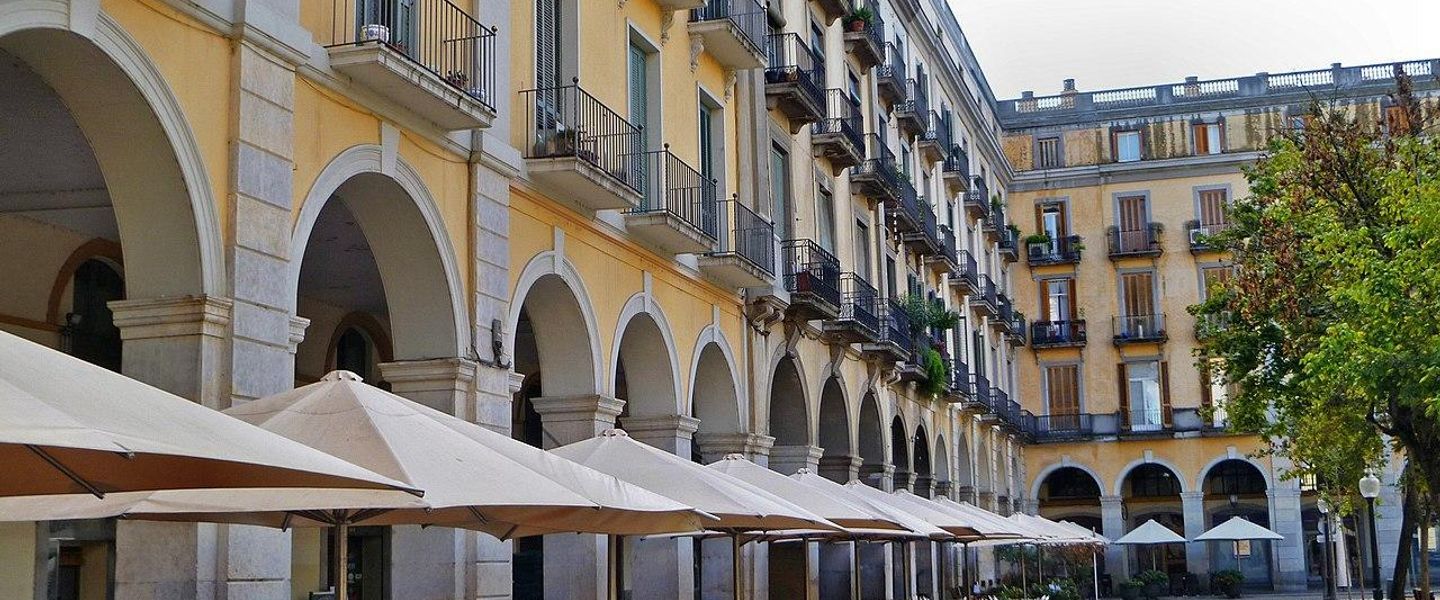


Explore Eixample Girona for leafy avenues, local cafés, modernist streets, the railway station and easy walks towards the old city and Devesa.
A Planned Extension Beyond the Old City
Eixample is Girona’s practical, outward-looking centre: a predominantly residential and commercial district that spreads beyond the historic walls and connects the Barri Vell with the railway station, the southern approaches and newer parts of the city. Its streets are broader and more regular than the medieval lanes across the Onyar, with apartment blocks, local shops, schools, offices and cafés shaping an everyday urban landscape rather than a concentrated sightseeing quarter.Read more about Eixample
Streets, Squares and Daily Life
Gateway to Girona
Explore Eixample on the map
A handpicked selection of must-see spots in Eixample, mapped for you.
Best hotels in Eixample
Eixample essentials
Getting There
Getting Around
Safety
Emergency Situations
Do's and Don'ts
Local Tips

From Eve
Local phrases worth knowing
You don't need to get them perfect. A few words go a long way, and locals appreciate the effort.
Basics
| English | Local | Say it |
|---|---|---|
| Hello | Hola | [oh-lah] |
| Goodbye | Adiós | [ah-dee-ohs] |
| Yes | Sí | [see] |
| No | No | [noh] |
| Please/You're welcome | Por favor/De nada | [por fah-bor/deh nah-dah] |
| Thank you | Gracias | [grah-thyahs] |
| Excuse me/Sorry | Perdón/Lo siento | [pehr-dohn/loh syehn-toh] |
| How are you? | ¿Cómo estás? | [koh-moh ehs-tahs] |
| Fine. And you? | Bien. ¿Y tú? | [byehn. ee too] |
| Do you speak English? | ¿Hablas inglés? | [ah-blahs een-glehs] |
| I don't understand | No entiendo | [noh ehn-tyehn-doh] |
Eating & Drinking
| English | Local | Say it |
|---|---|---|
| I'd like to see the menu, please | Me gustaría ver la carta, por favor | [meh goo-stah-ree-ah behr lah kahr-tah, por fah-bor] |
| I don't eat meat | No como carne | [noh koh-moh kahr-neh] |
| Cheers! | ¡Salud! | [sah-lood] |
| I would like to pay, please | Me gustaría pagar, por favor | [meh goo-stah-ree-ah pah-gahr, por fah-bor] |
Emergencies
| English | Local | Say it |
|---|---|---|
| Help! | ¡Ayuda! | [ah-yoo-dah] |
| Go away! | ¡Vete! | [veh-teh] |
| Call the Police! | ¡Llama a la policía! | [yah-mah ah lah poh-lee-see-ah] |
| Call a doctor! | ¡Llama a un médico! | [yah-mah ah oon may-dee-koh] |
| I'm lost | Estoy perdido/a | [ehs-toy pehr-dee-doh/ah] |
| I'm ill | Estoy enfermo/a | [ehs-toy ehn-fehr-moh/ah] |
Shopping
| English | Local | Say it |
|---|---|---|
| I'd like to buy... | Me gustaría comprar... | [meh goo-stah-ree-ah kohm-prahr] |
| I'm just looking | Solo estoy mirando | [soh-loh ehs-toy mee-rahn-doh] |
| How much is it? | ¿Cuánto cuesta? | [kwan-toh kwehs-tah] |
| That's too expensive | Es demasiado caro | [ehs deh-mah-syah-doh kah-roh] |
| Can you lower the price? | ¿Puedes bajar el precio? | [pweh-dehs bah-hahr ehl pree-syoh] |
Time & Numbers
| English | Local | Say it |
|---|---|---|
| What time is it? | ¿Qué hora es? | [keh oh-rah ehs] |
| It's one o'clock | Es la una | [ehs lah oo-nah] |
| Half past (10) | Las diez y media | [lahs dyehs ee meh-dee-ah] |
| Morning | Mañana | [mah-nyah-nah] |
| Afternoon | Tarde | [tahr-deh] |
| Evening | Noche | [noh-cheh] |
| Yesterday | Ayer | [ah-yehr] |
| Today | Hoy | [oy] |
| Tomorrow | Mañana | [mah-nyah-nah] |
| 1 | Uno | [oo-noh] |
| 2 | Dos | [dohs] |
| 3 | Tres | [trehs] |
| 4 | Cuatro | [kwa-troh] |
| 5 | Cinco | [theen-koh] |
| 6 | Seis | [says] |
| 7 | Siete | [syeh-teh] |
| 8 | Ocho | [oh-choh] |
| 9 | Nueve | [nweh-veh] |
| 10 | Diez | [dyehs] |
Transport & Directions
| English | Local | Say it |
|---|---|---|
| Where's a/the...? | ¿Dónde está...? | [dohn-deh ehs-tah] |
| What's the address? | ¿Cuál es la dirección? | [kwal ehs lah dee-rehk-syon] |
| Can you show me (on the map)? | ¿Puedes mostrarme (en el mapa)? | [pweh-dehs mohs-trar-meh (ehn ehl mah-pah)] |
| When's the next (bus)? | ¿Cuándo es el próximo (autobús)? | [kwan-doh ehs ehl proh-ksee-moh (ow-toh-boos)] |
| A ticket (to ....) | Un billete (a ....) | [oon bee-ye-teh (ah ....)] |
History of Eixample
Expansion Beyond the Medieval Walls
Eixample developed as Girona grew beyond the tightly confined medieval city. For centuries, fortifications and the river crossings helped define the urban limits, but population growth and changing economic conditions eventually encouraged building outside the old enclosure. The district’s regular streets and larger plots reflect this later phase of urban planning rather than the irregular medieval pattern of the Barri Vell. Its formation was part of Girona’s gradual transformation from a fortified regional city into a more open commercial and residential centre, with new roads, public buildings and housing extending towards the south and east.
Railways and the New City
The arrival of the railway in the nineteenth century accelerated Eixample’s importance. Girona became connected to the main rail corridor linking Barcelona with the northern Catalan and French routes, and the station area became a significant gateway for passengers, goods and workers. Streets leading from the station encouraged commercial activity and helped shift the city’s centre of gravity beyond the old walls. The railway also reinforced Eixample’s role as a connecting district: its urban identity was shaped not by one monumental quarter, but by circulation between the historic centre, expanding suburbs and the wider region.
Twentieth-Century Residential Growth
During the twentieth century, Eixample acquired much of its present residential character. Apartment buildings, schools, offices and small businesses filled the planned streets as Girona’s population and administrative importance increased. The area became a place of ordinary urban life, with shops and services supporting nearby households rather than a district organised around a single trade or institution. Its architecture records several periods of growth, including early apartment blocks, later reinforced-concrete buildings and remodelled commercial frontages. This layered development gives the neighbourhood a more contemporary appearance than the historic quarters beside the Onyar.
A Contemporary Civic and Commercial Quarter
In recent decades, Eixample has remained one of Girona’s principal everyday districts while benefiting from its proximity to the historic centre, the station and major roads. Improvements to public spaces, pedestrian routes and transport connections have strengthened its role as a meeting point between old and new Girona. The neighbourhood’s shops, cafés and professional services continue to serve residents, commuters and visitors, while nearby markets and cultural facilities draw people from across the city. Its significance lies in this continuity: Eixample is less a preserved historic enclave than a working urban extension that explains how Girona functions beyond its famous medieval skyline.
Eixample in Photos
Browse through our photo collection highlighting the charm and character of the destination.
Neighbourhoods near Eixample
The closest neighbourhoods to Eixample, if you have time for more than one stop.
-

-


Swipe for more neighbourhoods
Explore more
Explore more of Girona
Girona, Spain, blends Roman walls, medieval lanes, Jewish heritage, riverside houses and Catalan cuisine in a richly layered city escape near the Costa Brava.
Explore Girona