

Barri Vell (Old Town) (Girona) Travel Guide - Free
Explore Barri Vell (Old Town) in Girona with Evendo's free guide. Find the best shops, historic streets, restaurants, and gems on web or mobile.


Explore Barri Vell in Girona, Spain, for medieval lanes, the Jewish Call, cathedral views, Roman walls, museums, restaurants and riverside streets.
Ancient Streets and Layered History
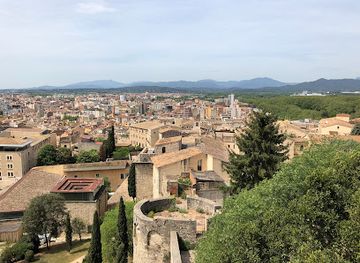
Barri Vell, Girona’s Old Town, occupies the steep eastern side of the River Onyar and gathers the city’s most concentrated layers of history within a walkable maze of stone lanes, steps and small squares. The district grew around the Roman settlement of Gerunda and still centres on the Força Vella, the ancient fortress whose walls and towers define the upper city. Roman, medieval, Jewish, ecclesiastical and modern traces overlap here rather than appearing as separate historical periods.Read more about Barri Vell (Old Town)
The Upper City
Life Along the Lanes
Best attractions in Barri Vell (Old Town)
Barri Vell’s attractions are concentrated within a remarkably small area. The Cathedral of Santa Maria dominates the upper city with its broad staircase, Romanesque cloister, Gothic nave and treasury, while the nearby Basilica of Sant Feliu combines a striking tower with centuries of religious history. The narrow lanes of the Call lead towards the Jewish History Museum, whose displays explain the community that once lived here. Visitors can also inspect the medieval Arab Baths, walk through the atmospheric grounds of Sant Pere de Galligants and climb the Passeig de la Muralla for broad views across Girona and the surrounding hills. At street level, Carrer de la Força, Plaça dels Jurats and the shaded approaches around the Onyar offer a slower way to read the district’s architecture, courtyards and changing elevations.
-
Historical landmark
Muralles de Girona
Explore the historical Muralles de Girona, a stunning fortress showcasing ancient architecture and breathtaking views of the enchanting Girona landscape.
8 min walk · 0.6 km from neighbourhood centre
-
Basilica
Basílica de Sant Feliu
Discover the rich history and architectural beauty of Basílica de Sant Feliu, a must-visit pilgrimage site in the heart of Girona.
6 min walk · 0.5 km from neighbourhood centre
-
Local history museum
Museu d'Història de Girona
Explore Girona's captivating history at the Museu d'Història de Girona, a must-visit for anyone wanting to understand the city's rich cultural heritage.
5 min walk · 0.4 km from neighbourhood centre
-
Scenic spot
Torre de Santo Domingo
Experience breathtaking views and rich history at Torre de Santo Domingo in Girona, a scenic gem for all travelers.
8 min walk · 0.6 km from neighbourhood centre


Best landmarks in Barri Vell (Old Town)
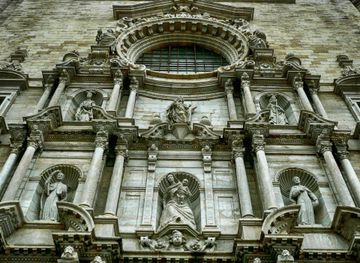
The Cathedral of Santa Maria is Barri Vell’s most commanding landmark, its monumental staircase and imposing façade rising above the former fortified town. Close by, the Força Vella preserves the sense of the Roman and medieval stronghold that shaped Girona’s growth, while sections of the Passeig de la Muralla reveal later defensive adaptations and panoramic views. The Basilica of Sant Feliu, with its mix of architectural periods and prominent bell tower, marks the lower approach to the historic centre. The Arab Baths and the Romanesque Monastery of Sant Pere de Galligants add important medieval structures beyond the cathedral precinct. Within the Call, the narrow alignment of Carrer de la Força and its adjoining lanes is itself a landmark: the surviving urban form conveys the scale and density of Girona’s medieval Jewish quarter more effectively than a single isolated building could.
-
Historical landmark
Muralles de Girona
Discover the ancient fortifications of the Muralles de Girona, a captivating historical landmark boasting breathtaking views and rich Catalonian history.
8 min walk · 0.6 km from neighbourhood centre
-
 Hotel
Hotel Historic
Discover the enchanting Hotel Historic in Girona, where history meets modern comfort in the heart of Spain's cultural gem.
6 min walk · 0.5 km from neighbourhood centre
-
Garden
Jardins dels Alemanys
Explore the serene beauty and historical significance of Jardins dels Alemanys in Girona, a perfect escape for nature lovers and history enthusiasts alike.
8 min walk · 0.6 km from neighbourhood centre
-
Store
Barri Vell de Girona
Explore the historic charm of Barri Vell de Girona, a captivating journey through the medieval heart of Girona with stunning architecture and rich culture.
3 min walk · 0.3 km from neighbourhood centre


Explore Barri Vell (Old Town) on the map
A handpicked selection of must-see spots in Barri Vell (Old Town), mapped for you.
Best hotels in Barri Vell (Old Town)
Best restaurants in Barri Vell (Old Town)
Dining in Barri Vell ranges from traditional Catalan cooking and bakeries to contemporary restaurants, tapas bars and cafés occupying adapted medieval buildings. The streets around Carrer de la Força, the Cathedral approach and the Rambla de la Llibertat offer the greatest concentration, while small squares provide outdoor tables when conditions permit. Menus commonly draw on Girona and wider Catalan ingredients, with seasonal vegetables, cured meats, fish, rice dishes and local wines appearing alongside more international cooking. Independent cafés are useful for a daytime pause, while restaurants in the upper quarter make atmospheric use of stone walls and compact rooms. Because the district is also residential, dining is interwoven with ordinary local life rather than confined to a single food market or entertainment zone; checking current opening arrangements is sensible, particularly outside the main season.
-
Restaurant
Brots de Vi
Experience authentic Mediterranean cuisine and exquisite local wines at Brots de Vi in the heart of Girona.
4 min walk · 0.3 km from neighbourhood centre
-
French
La Vedette
Experience the best of French cuisine at La Vedette in Girona - where exquisite flavors meet charming ambiance.
6 min walk · 0.5 km from neighbourhood centre
-
Restaurant
Divinum
Experience exquisite Mediterranean cuisine at Divinum in Girona – where tradition meets innovation in every delicious dish.
5 min walk · 0.4 km from neighbourhood centre
-
Mediterranean
Restaurant Mimolet
Experience authentic Mediterranean cuisine at Restaurant Mimolet in Girona – where every dish tells a story.
6 min walk · 0.5 km from neighbourhood centre


Best bars in Barri Vell (Old Town)
Barri Vell is more suited to an evening of wine, vermouth, conversation and small plates than to large-scale clubbing. Bars and cafés around the Rambla de la Llibertat, Carrer de la Força and the lower lanes attract a mix of residents, students and visitors, while the area around Plaça dels Jurats can host cultural events and performances. The old quarter’s compact taverns often make use of historic interiors, and the riverfront provides an easy route between quieter upper streets and livelier central areas. Nightlife thins out as the streets climb towards the Cathedral, where residential buildings and heritage sites set a calmer tone after dark. Larger club nights are generally associated with other parts of Girona, so Barri Vell is best understood as a place for relaxed evening drinking, dining and occasional cultural programming rather than a dedicated nightclub district.
-
Grill
The River Cafè Girona
Savor delicious grilled dishes and refreshing drinks at The River Cafè Girona, where culinary delight meets breathtaking views.
6 min walk · 0.5 km from neighbourhood centre
-
Bar
Bar Restaurant La Terra
Experience the vibrant flavors of Girona at Bar Restaurant La Terra, where delicious hamburgers and exceptional espresso await.
4 min walk · 0.3 km from neighbourhood centre
-
Tapas Bar
Zanpanzar
Experience authentic Spanish tapas at Zanpanzar, a vibrant bar in Girona offering a taste of local culture and cuisine.
4 min walk · 0.3 km from neighbourhood centre
-
Bar
La Pedra
Experience the warm ambiance and exquisite drinks at La Pedra, a charming bar in the heart of Girona, Spain, perfect for unwinding after a day of exploration.
4 min walk · 0.3 km from neighbourhood centre


Best nightclubs in Barri Vell (Old Town)
Barri Vell is more suited to an evening of wine, vermouth, conversation and small plates than to large-scale clubbing. Bars and cafés around the Rambla de la Llibertat, Carrer de la Força and the lower lanes attract a mix of residents, students and visitors, while the area around Plaça dels Jurats can host cultural events and performances. The old quarter’s compact taverns often make use of historic interiors, and the riverfront provides an easy route between quieter upper streets and livelier central areas. Nightlife thins out as the streets climb towards the Cathedral, where residential buildings and heritage sites set a calmer tone after dark. Larger club nights are generally associated with other parts of Girona, so Barri Vell is best understood as a place for relaxed evening drinking, dining and occasional cultural programming rather than a dedicated nightclub district.
-
Jazz
Sunset Jazz Club
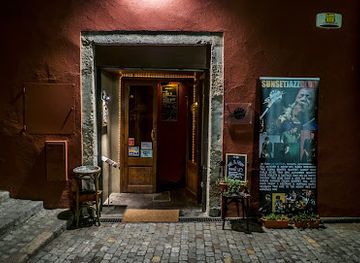
Discover the enchanting Sunset Jazz Club in Girona, where live music and exquisite cheese pairings create an unforgettable nightlife experience.
6 min walk · 0.5 km from neighbourhood centre
-
Cocktail bar
Casino Girona
Explore the vibrant nightlife of Girona at Casino Girona, a premier cocktail bar and disco club with a lively atmosphere and expertly crafted drinks.
2 min walk · 0.2 km from neighbourhood centre
-
Piano bar
Lola Cafè - Girona
Discover the enchanting live music experience at Lola Cafè, Girona's premier piano bar, where every night is a celebration of sound and social connection.
4 min walk · 0.3 km from neighbourhood centre
-
Disco club
Salero Girona
Dive into the festive nightlife of Girona at Salero, where music, dance, and unforgettable memories await you in a vibrant disco setting.
1 min walk · 0.1 km from neighbourhood centre


Best shops in Barri Vell (Old Town)
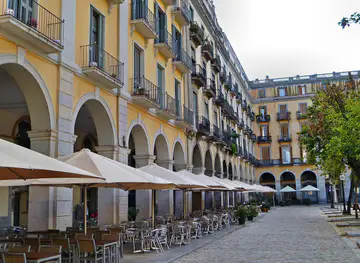
Shopping in Barri Vell is concentrated along the Rambla de la Llibertat, Carrer de la Força and the connecting lanes leading towards the Cathedral. Independent bookshops, small galleries, craft retailers, jewellery shops, fashion boutiques and businesses selling locally themed goods occupy historic premises beside cafés and restaurants. The selection is aimed partly at visitors, but the old quarter also retains useful everyday retail and food shops, particularly around its lower streets. Rather than a large modern shopping centre, the appeal lies in browsing compact stores and arcades while moving between squares and heritage buildings. Catalan food products, ceramics, design objects and Girona-related souvenirs are common categories, although stock varies by business. For a broader conventional retail selection, visitors usually continue into the newer central streets across the Onyar, outside Barri Vell’s medieval core.
-
Coffee shop
Federal Cafe
Experience the delightful ambiance and exquisite flavors at Federal Cafe, Girona's top spot for brunch, coffee, and culinary inspiration.
4 min walk · 0.3 km from neighbourhood centre
-
Coffee shop
+Brots
Experience the warmth and flavor of Girona at +Brots, your perfect coffee shop retreat in the heart of the city.
4 min walk · 0.3 km from neighbourhood centre
-
Restaurant
Idle Hands Girona
Discover Idle Hands Girona: A charming restaurant and record store offering delightful meals and a unique atmosphere in the heart of Girona.
5 min walk · 0.4 km from neighbourhood centre
-
Coffee shop
Hidden Coffee Roasters - Girona
Experience the finest coffee and a cozy atmosphere at Hidden Coffee Roasters in Girona, a perfect stop for coffee lovers exploring this historic city.
3 min walk · 0.2 km from neighbourhood centre


Barri Vell (Old Town) essentials
Getting There
Getting Around
Safety
Emergency Situations
Do's and Don'ts
Local Tips

From Eve
Local phrases worth knowing
You don't need to get them perfect. A few words go a long way, and locals appreciate the effort.
Basics
| English | Local | Say it |
|---|---|---|
| Hello | Hola | [oh-lah] |
| Goodbye | Adiós | [ah-dyohs] |
| Yes | Sí | [see] |
| No | No | [noh] |
| Please/You're welcome | Por favor/De nada | [por fah-vor/deh nah-dah] |
| Thank you | Gracias | [grah-syahs] |
| Excuse me/Sorry | Perdón/Lo siento | [pehr-dohn/loh syen-toh] |
| How are you? | ¿Cómo estás? | [koh-moh ehs-tahs] |
| Fine. And you? | Bien. ¿Y tú? | [byen. ee too] |
| Do you speak English? | ¿Hablas inglés? | [ah-blahs een-glehs] |
| I don't understand | No entiendo | [noh ehn-tyen-doh] |
Eating & Drinking
| English | Local | Say it |
|---|---|---|
| I'd like to see the menu, please | Me gustaría ver la carta, por favor | [meh goos-tah-ree-ah behr lah kahr-tah, por fah-vor] |
| I don't eat meat | No como carne | [noh koh-moh kahr-neh] |
| Cheers! | ¡Salud! | [sah-lood] |
| I would like to pay, please | Me gustaría pagar, por favor | [meh goos-tah-ree-ah pah-gar, por fah-vor] |
Emergencies
| English | Local | Say it |
|---|---|---|
| Help! | ¡Ayuda! | [ah-yoo-dah] |
| Go away! | ¡Vete! | [veh-teh] |
| Call the Police! | ¡Llama a la policía! | [yah-mah ah lah poh-lee-see-ah] |
| Call a doctor! | ¡Llama a un médico! | [yah-mah ah oon meh-dee-koh] |
| I'm lost | Estoy perdido | [ehs-toy pehr-dee-doh] |
| I'm ill | Estoy enfermo | [ehs-toy ehn-fehr-moh] |
Shopping
| English | Local | Say it |
|---|---|---|
| I'd like to buy... | Me gustaría comprar... | [meh goos-tah-ree-ah kohm-prahr...] |
| I'm just looking | Solo estoy mirando | [soh-loh ehs-toy meer-ahn-doh] |
| How much is it? | ¿Cuánto cuesta? | [kwan-toh kwehs-tah] |
| That's too expensive | Esto es demasiado caro | [ehs-toh ehs deh-mah-syah-doh kahr-oh] |
| Can you lower the price? | ¿Puedes bajar el precio? | [pweh-dehs bah-hahr ehl pree-syoh] |
Time & Numbers
| English | Local | Say it |
|---|---|---|
| What time is it? | ¿Qué hora es? | [keh oh-rah ehs] |
| It's one o'clock | Es la una en punto | [ehs lah oo-nah ehn poon-toh] |
| Half past (10) | Las diez y media | [lahs dyehs ee meh-dee-ah] |
| Morning | Mañana | [mah-nyah-nah] |
| Afternoon | Tarde | [tahr-deh] |
| Evening | Noche | [noh-cheh] |
| Yesterday | Ayer | [ah-yehr] |
| Today | Hoy | [oy] |
| Tomorrow | Mañana | [mah-nyah-nah] |
| 1 | Uno | [oo-noh] |
| 2 | Dos | [dohs] |
| 3 | Tres | [trehs] |
| 4 | Cuatro | [kwah-troh] |
| 5 | Cinco | [theen-koh] |
| 6 | Seis | [seys] |
| 7 | Siete | [syeh-teh] |
| 8 | Ocho | [oh-choh] |
| 9 | Nueve | [nweh-veh] |
| 10 | Diez | [dyehs] |
Transport & Directions
| English | Local | Say it |
|---|---|---|
| Where's a/the...? | ¿Dónde está...? | [dohn-deh ehs-tah] |
| What's the address? | ¿Cuál es la dirección? | [kwahl ehs lah dee-rehk-syon] |
| Can you show me (on the map)? | ¿Puedes mostrarme (en el mapa)? | [pweh-dehs mohs-trar-meh (ehn ehl mah-pah)] |
| When's the next (bus)? | ¿Cuándo es el próximo (autobús)? | [kwan-doh ehs ehl proh-ksy-moh (ow-toh-boos)] |
| A ticket (to ....) | Un billete (para ...) | [oon bee-yeh-teh (pah-rah)] |
History of Barri Vell (Old Town)
Roman Foundations at Gerunda
Girona began as the Roman settlement of Gerunda, established in the first century BC on the strategic route linking the coast with the interior. The high ground now occupied by Barri Vell offered defensive advantages above the Onyar and became the nucleus around which the later city developed. Parts of the Força Vella preserve the line of the earliest fortified settlement, although the visible walls have been altered and rebuilt over many centuries. Roman street planning and masonry remain important to understanding why Girona’s historic centre occupies this elevated, tightly enclosed position.
The Força Vella and Medieval Girona
During the early medieval period, Girona’s fortified upper city was strengthened and gradually filled with churches, residences, workshops and civic buildings. The Força Vella became the defensive and political core, while the Cathedral of Santa Maria and the Basilica of Sant Feliu anchored religious life on either side of the old quarter. The steep terrain encouraged an intricate network of lanes and steps, many of which survive. Medieval expansion pushed activity beyond the original fortress, but the walled upper town remained the defining centre of Girona’s authority and urban identity.
The Jewish Quarter and the Call
From the Middle Ages until the expulsion of Jews from the Crown of Aragon in 1492, Girona possessed one of Catalonia’s most important Jewish communities. The Call occupied a compact area around streets such as Carrer de la Força and its adjoining lanes, close to the cathedral and the fortress. Scholars and religious figures associated with Girona’s Jewish community contributed to the intellectual life of medieval Catalonia, while the quarter’s buildings reflected ordinary domestic and commercial activity as well as religious practice. The community’s disappearance transformed the area, whose surviving urban fabric now offers one of the clearest records of medieval Jewish Girona.
Churches, Baths and Monastic Institutions
The centuries after the medieval period left Barri Vell with a dense collection of ecclesiastical and civic landmarks. The Arab Baths, whose surviving structure is medieval rather than an intact Roman or Islamic bathhouse, became part of the heritage landscape near the Cathedral and Sant Pere de Galligants. Religious institutions shaped the upper city’s buildings, landholdings and daily rhythms, while the Cathedral underwent major phases of construction before its celebrated nave was completed in the eighteenth century. Monasteries, chapels and fortified buildings continued to give the quarter a distinctly institutional character.
War, Fortifications and Urban Change
Girona’s strategic position brought repeated military danger, and the old city’s fortifications were repeatedly adapted. The city endured several sieges, including the prolonged siege of 1809 during the Peninsular War, which caused severe hardship and destruction across Girona. In later decades, changing military technology reduced the practical importance of the medieval walls, while commercial and residential life extended more strongly towards the river and newer districts. Barri Vell retained its narrow historic fabric even as Girona modernised around it, preserving a marked contrast between the upper old town and the more open streets beyond.
Conservation and Contemporary Renewal
During the twentieth century, Barri Vell shifted from an old residential and institutional quarter to a carefully conserved historic district with a strong cultural and visitor economy. Restoration of the walls, Jewish quarter, religious buildings and riverside approaches made its architectural inheritance more accessible, while museums and heritage institutions gave new uses to historic structures. The quarter remains a lived-in part of Girona rather than a single monument: local residences, student life, independent businesses and tourism now coexist within the medieval street pattern. Conservation continues to balance fragile stone buildings and public access with the needs of everyday urban life.
Barri Vell (Old Town) in Photos
Browse through our photo collection highlighting the charm and character of the destination.
Neighbourhoods near Barri Vell (Old Town)
The closest neighbourhoods to Barri Vell (Old Town), if you have time for more than one stop.
-

-


Swipe for more neighbourhoods
Explore more
Explore more of Girona
Girona, Spain, blends Roman walls, medieval lanes, Jewish heritage, riverside houses and Catalan cuisine in a richly layered city escape near the Costa Brava.
Explore Girona