

Ermita de San Antonio de la Florida, Madrid Travel Guide
Free Guide: Goya's luminous fresco miracle in a riverside chapel, where 18th-century Madrid's souls dance under a painted dome of divine drama and human vitality.


A brief summary of Ermita de San Antonio de la Florida
Goya's luminous fresco miracle in a riverside chapel, where 18th-century Madrid's souls dance under a painted dome of divine drama and human vitality.
Tucked in Madrid's Moncloa district, this petite 18th-century hermitage captivates with Goya's breathtaking frescoes depicting the miracle of San Antonio. A hidden jewel of Spanish art, it offers an intimate encounter with genius amid serene gardens, far from the city's bustle yet rich in cultural depth.
On-site amenities
 Restrooms
 Seating areas
 Information boards
- Address
- Gta. de San Antonio de la Florida, 5, Moncloa - Aravaca, 28008 Madrid
- Phone
- Website
Getting there
Metro
Bus
Walk
Discover more about Ermita de San Antonio de la Florida
A Sanctuary of Goya's Masterpiece
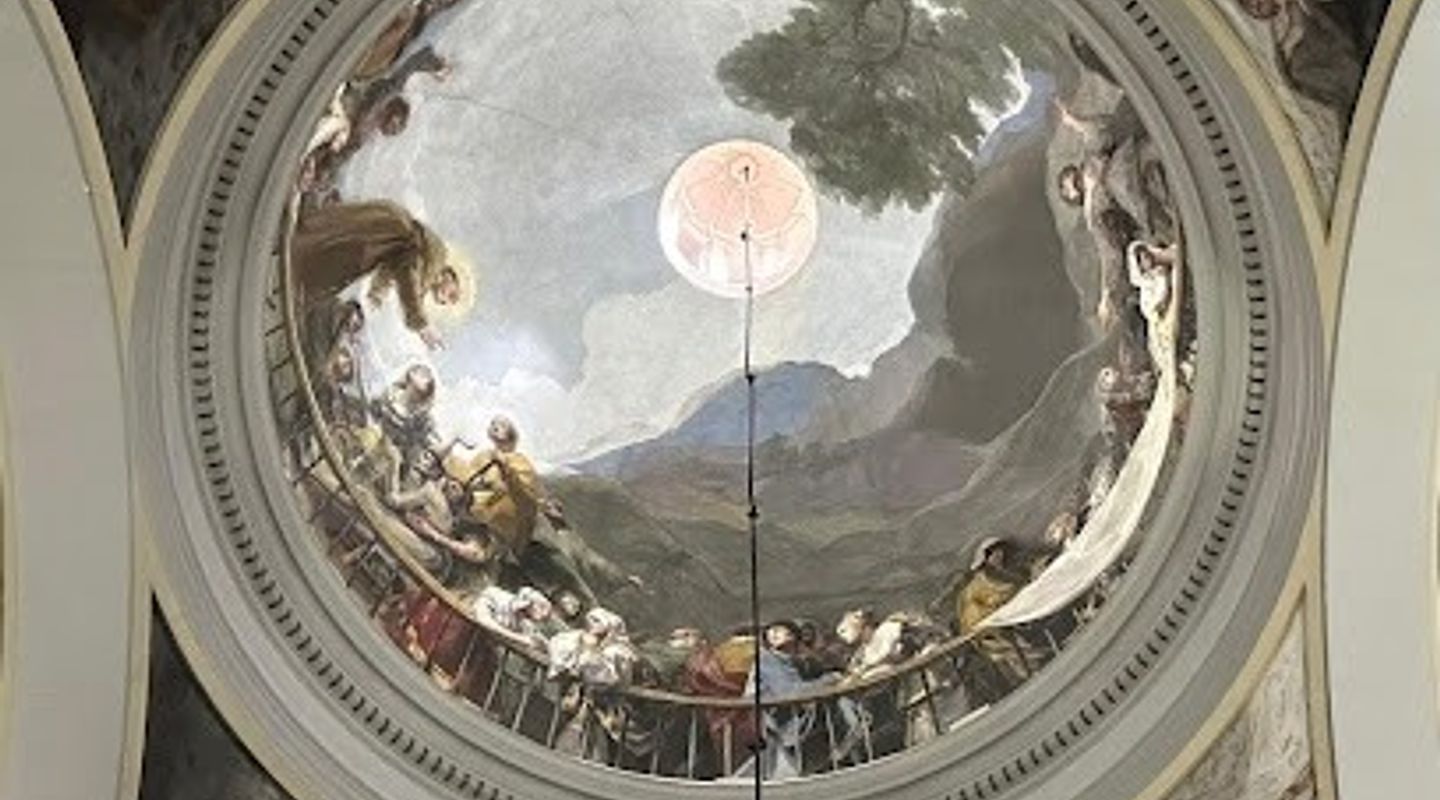
The Ermita de San Antonio de la Florida stands as a modest yet extraordinary landmark in Madrid's Moncloa-Aravaca district. Built in 1798, this small neoclassical chapel houses Francisco de Goya's final and most ambitious fresco cycle, painted between 1798 and 1800. The dome and vaults burst with vibrant scenes of the miracle of San Antonio de Padua, where the saint raises a murdered man to identify his killer. Goya's innovative technique—using calcium light to mimic fresco while applying oil paints—creates luminous figures that seem to float in ethereal space, blending realism with supernatural drama.
Historical Foundations and Royal Patronage
Commissioned by King Carlos IV to replace an earlier hermitage destroyed by floods, the new structure was designed by architect Francisco Madero. Goya, then in his early 50s and deaf from illness, poured his genius into the project as an act of devotion during a personal crisis. The hermitage became his pantheon in 1929 when his remains were interred here, discovered with a note reading 'Yo soy Goya' etched on his skull. This site preserves not just art but a tangible link to one of Spain's greatest painters, who captured the tension between enlightenment and emerging romanticism.
Artistic Innovation and Visual Splendor
Step inside, and the cupola dominates: over 300 square meters of frescoes teeming with over 100 figures in dynamic poses. Angels hover, saints gesture commandingly, and everyday Madrileños populate the scene with remarkable individuality—fishermen, washerwomen, and picnickers witnessing the divine intervention. Goya's use of light and shadow infuses the composition with movement, while subtle social commentary emerges in the diverse crowd, reflecting Madrid's vibrant street life. The side chapels feature additional frescoes of San Antonio's life, culminating in a poignant nativity scene.
Serene Setting and Cultural Role
Surrounded by lush gardens along the Manzanares River, the hermitage offers a tranquil escape. Managed as a national monument, it underscores Spain's commitment to preserving Goya's legacy outside the Prado's grand halls. Visitors experience the intimacy of a working chapel where masses still occur, blending reverence with artistic awe. The site's understated exterior belies its interior riches, making it a pilgrimage for art lovers seeking authenticity over spectacle.
Legacy in Madrid's Artistic Landscape
This landmark distinguishes itself by showcasing Goya's late style—bold, humanistic, and technically daring—before his darker Black Paintings phase. It complements Madrid's royal art collections while standing alone as a testament to public religious art. The hermitage invites contemplation of themes like faith, justice, and mortality, resonating across centuries in this quiet corner of the capital.
Evendo Review Centre
 Google
Guest reviews
Best time to go
Quietest: Jan, Feb & Mar · before 10am or from 6pm
Busy times are Evendo estimates for a typical year, to help you plan. Actual crowds vary with events, school holidays and the weather.
Explore Ermita de San Antonio de la Florida on the map
A handpicked selection of must-see spots near Ermita de San Antonio de la Florida, mapped for you.
Get your free copy of our complete guide to Ermita de San Antonio de la Florida, delivered straight to you.
Everything on this page, from opening hours and how to get there to Eve’s tips and the best time to go, in one PDF you can read offline, print or share.
Already have an account? Sign in
Your Ermita de San Antonio de la Florida guide is ready.
We'll send it to · Not you? Sign out

Getting your guide ready…
We are putting together a fresh copy of the Ermita de San Antonio de la Florida guide. This can take up to a minute.
This can take a few moments. If your browser asks, choose Allow so the download can start. You'll find the guide in your Downloads folder.
Nothing happened? Download it again
Sorry, the guide is taking longer than usual. Please try again in a minute, or get it by email instead.
Unlock the best of Ermita de San Antonio de la Florida
Skip-the-line tickets, guided tours with entry, and walking tours of the area, booked in a few clicks.
 Tour with entry
Self-Guided Tours In Madrid With 100 Captivating Audio Stories
from $3.18 Tour with entry
Madrid Mystery Quest: Self-Guided Surreal Adventure Game
from $7.17 Tour with entry
Madrid Parks & Riverside Bike Tour
from $74.49 Tour with entry
5-6 pax Tuk Tuk Tour 120 mins + Natural Limonade
from $276.69

Other nearby places you may find interesting
The closest places of the same kind, if this one is not quite what you had in mind.
-
-
-
-
-


Swipe for more places
More to explore near Ermita de San Antonio de la Florida
-
 Best experiences near Ermita de San Antonio de la Florida
-
 Best hotels near Ermita de San Antonio de la Florida
-
 Best landmarks near Ermita de San Antonio de la Florida
-
 Best attractions near Ermita de San Antonio de la Florida
-
 Best shops near Ermita de San Antonio de la Florida
-
 Best restaurants near Ermita de San Antonio de la Florida
-
 Best bars near Ermita de San Antonio de la Florida


Do you manage this location?
Take control to get all the benefits, like improved information, better appearance, and stronger visibility across AI-powered discovery.
Explore more

Explore more of Madrid
Discover Madrid: A city of art, culture, and culinary delights, where history and modern vibrancy meet in the heart of Spain.
Explore Madrid
Explore more of Spain
Discover Spain: A vibrant tapestry of culture, history, and breathtaking landscapes, where every city offers a unique adventure and unforgettable experiences.
Explore Spain
