
Plaza Cibeles, Madrid Travel Guide
Madrid's grand plaza where Cybele's fountain presides over triumphs, gatherings, and the ceaseless rhythm of urban life in the Spanish capital.
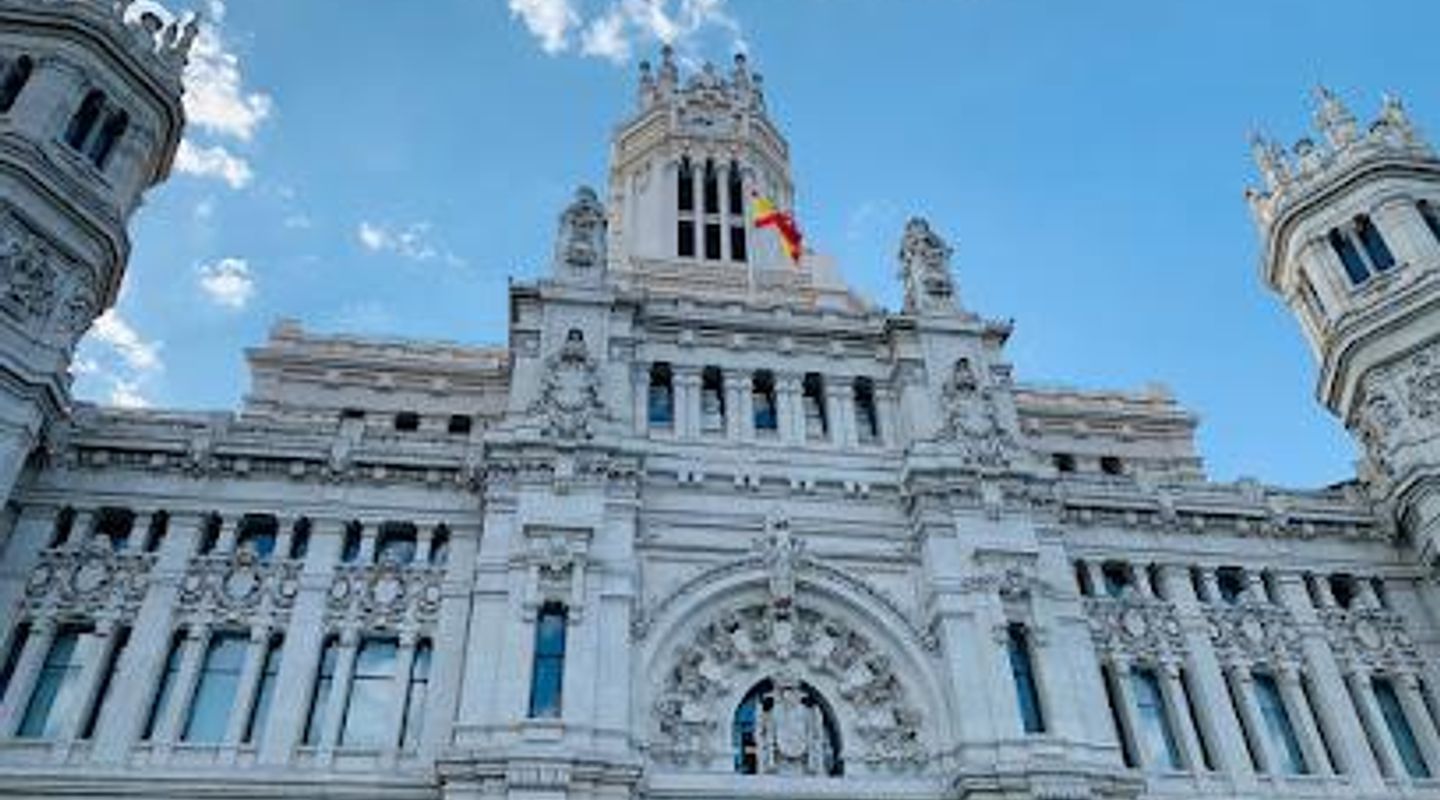
At the pulsing core of Madrid, Plaza de Cibeles captivates with its majestic fountain of Cybele, the ancient goddess riding a lion-drawn chariot. This grand square, framed by elegant architecture, serves as the city's ceremonial stage for celebrations, protests, and everyday gatherings. The Palacio de Cibeles rises nearby, blending neoclassical splendor with modern vitality, while the fountain's waters reflect Madrid's enduring spirit. A must-see for capturing the essence of the Spanish capital's grandeur and energy.
A brief summary to Plaza Cibeles
- Madrid, Centro, Madrid, 28014, ES
- Free
-
 Outdoor
- Mobile reception: 5 out of 5

Know before you go
Hi, I'm Eve. Here are a few practical things to know before exploring Plaza Cibeles.
- Visit at night when the fountain and palacio lights create a stunning glow, perfect for photography without daytime crowds.
- Time your visit around Real Madrid match days; the plaza erupts in celebration if they win, offering an authentic local experience.
- Combine with a walk to nearby Prado Museum or Retiro Park for a full afternoon exploring Madrid's cultural core.
- Watch for traffic when crossing; use pedestrian signals and stay alert in this busy intersection.
Do you manage this location?
Take control to get all the benefits, like improved information, better appearance, and stronger visibility across AI-powered discovery. Learn more about listing your business on Evendo
Activate your presenceOther nearby places you may find interesting
The closest places of the same kind, if this one is not quite what you had in mind.
Explore Plaza Cibeles on the Map
A handpicked selection of must-see spots near Plaza Cibeles, mapped for you.
Unlock the Best of Plaza Cibeles
Buy tickets
-
No tickets available
Book tours with entry


Getting There
-
Metro
Take Metro Line 1 or 2 to Banco de España station, 3-min walk; €1.50-2 single ticket, frequent service every 3-5 min.
-
Bus
EMT buses 1, 2, 5, 9, 10, 14, 27, 34, 37, 45, 53 from central Puerta del Sol; 5-10 min ride, €1.50, runs every 5-10 min.
-
Walking
From Puerta del Sol, 15-min walk northeast via Carrera de San Jerónimo; free, scenic through historic streets.
-
Taxi
From Sol or Gran Vía, 5-min ride; €6-8 daytime fare, available 24/7 but traffic-dependent.
For the on-the-go comforts that matter to you
-
 Restrooms
-
 Seating Areas
-
 Sheltered Areas
-
 Trash Bins
-
 Information Boards
Discover more about Plaza Cibeles
Historical Foundations
Plaza de Cibeles emerged in the late 18th century as part of Madrid's urban expansion under King Charles III. The centerpiece, the Fountain of Cibeles, was crafted by sculptor Ventura Rodríguez between 1777 and 1782. It depicts Cybele, the Phrygian goddess of nature and fertility, enthroned in a chariot pulled by lions—a symbol of strength and abundance rooted in ancient mythology. Positioned at the intersection of Madrid's key arteries, the plaza quickly became a vital hub, witnessing the city's growth from a royal residence to a bustling metropolis.Architectural Marvels
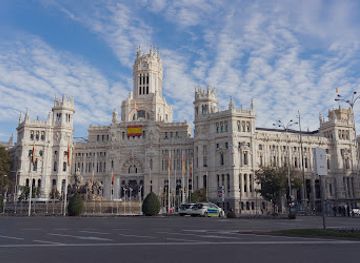
Dominating the eastern side stands the Palacio de Cibeles, originally the General Post Office, designed by Antonio Palacios in 1907. This eclectic masterpiece fuses plateresque, baroque, and modernista elements, with its towering facade adorned by intricate sculptures and a grand clock. In 2007, it transformed into the Palacio de Comunicaciones, housing Madrid's city hall and a cultural center. Across the square, the Banco de España's imposing neoclassical structure adds to the ensemble, its columns and pediments evoking 19th-century prestige. These buildings create a harmonious backdrop that defines Madrid's architectural identity.Cultural and Symbolic Role
Cibeles transcends its physical form as Madrid's emotional epicenter. Real Madrid fans converge here after Champions League triumphs, draping the fountain in white jerseys amid ecstatic chants. Political rallies, royal proclamations, and New Year's Eve fireworks have etched it into collective memory. The goddess Cybele, revered in Roman times, mirrors the plaza's role as a nurturing force for the city's lifeblood. Nearby institutions like the Prado Museum enhance its cultural orbit, drawing art lovers into the neighborhood's rich tapestry.Daily Life and Atmosphere
By day, locals and visitors crisscross the plaza, pausing to admire the fountain's dynamic composition or snap photos against the palacio's glow. Traffic hums around its edges, yet pedestrian zones invite lingering. At dusk, the illuminated fountain casts a magical sheen, transforming the space into a romantic rendezvous point. The vibe shifts with seasons—spring blooms soften the stone, while winter lights amplify festive cheer. It's a living monument where Madrid's vibrancy unfolds in real time.Artistic and Mythological Depth
Cybele's sculpture captures motion in stone: her outstretched arm commands the lions, symbolizing dominion over nature. Flanking allegories of the Tagus and Manzanares rivers tie it to Spain's geography. The plaza's design reflects Enlightenment ideals of order and beauty, influencing subsequent European urban planning. Today, it embodies Madrid's blend of tradition and progress, a testament to how public spaces evolve while anchoring identity.












Your all‑in‑one travel companion app
Explore expert travel guides, compare and book tours, experiences, hotels, and more—all from the palm of your hand. Download now for seamless trip planning wherever your wanderlust takes you.


Explore More of Madrid
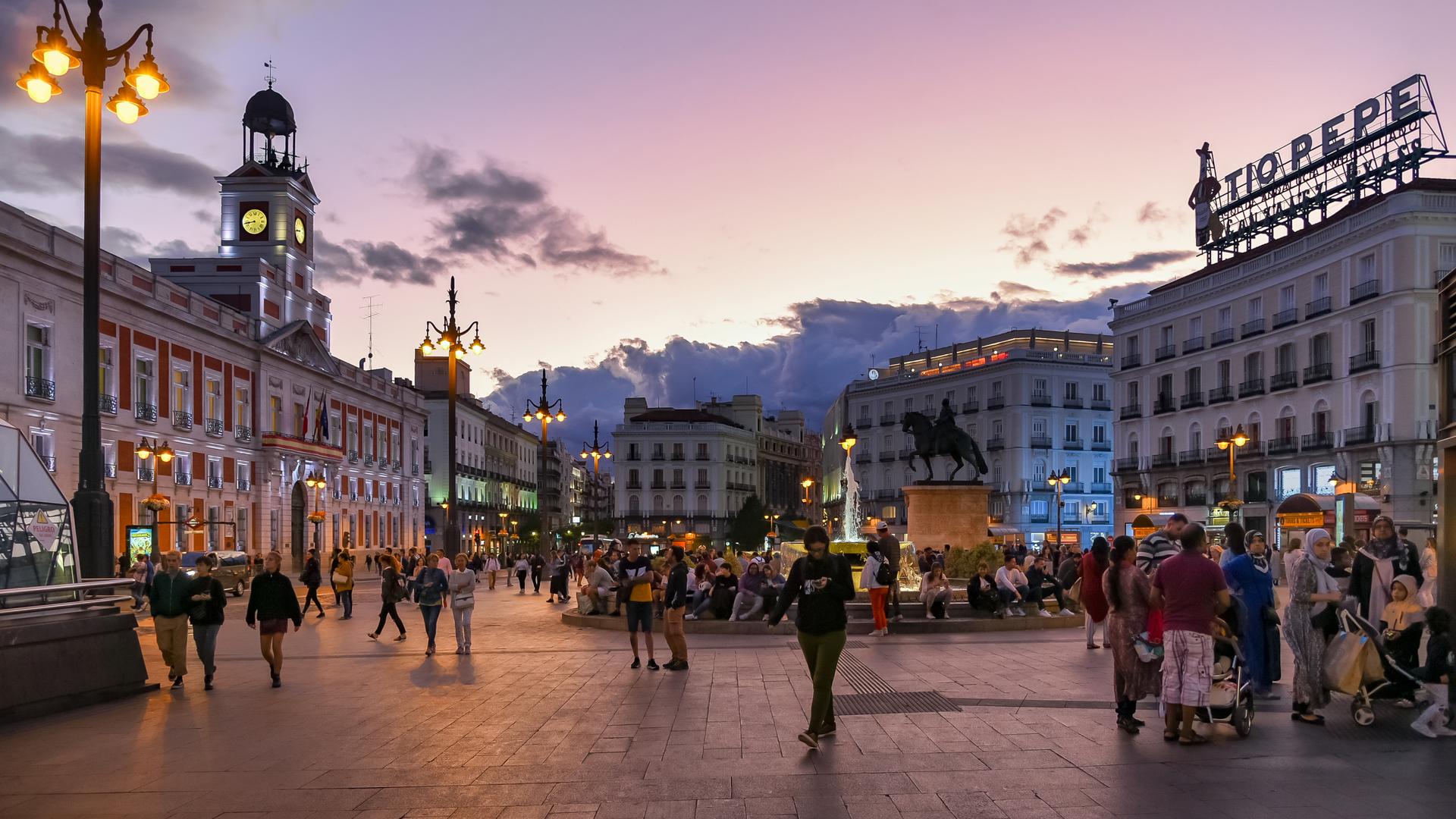
Looking beyond Plaza Cibeles? Discover Madrid for broader travel guides, local hot-spots, and regional highlights.
Explore Madrid
Madrid's rooftop observatory atop Palacio de Cibeles, unveiling 360-degree sweeps of Prado museums, Retiro greenery, Gran Vía energy, and mountain horizons from a Plateresque palace pinnacle.
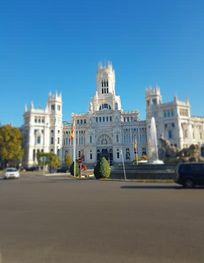
Madrid's grand plaza where Cybele's fountain presides over neoclassical palaces and football euphoria, anchoring the city's central artery with monumental presence.
