
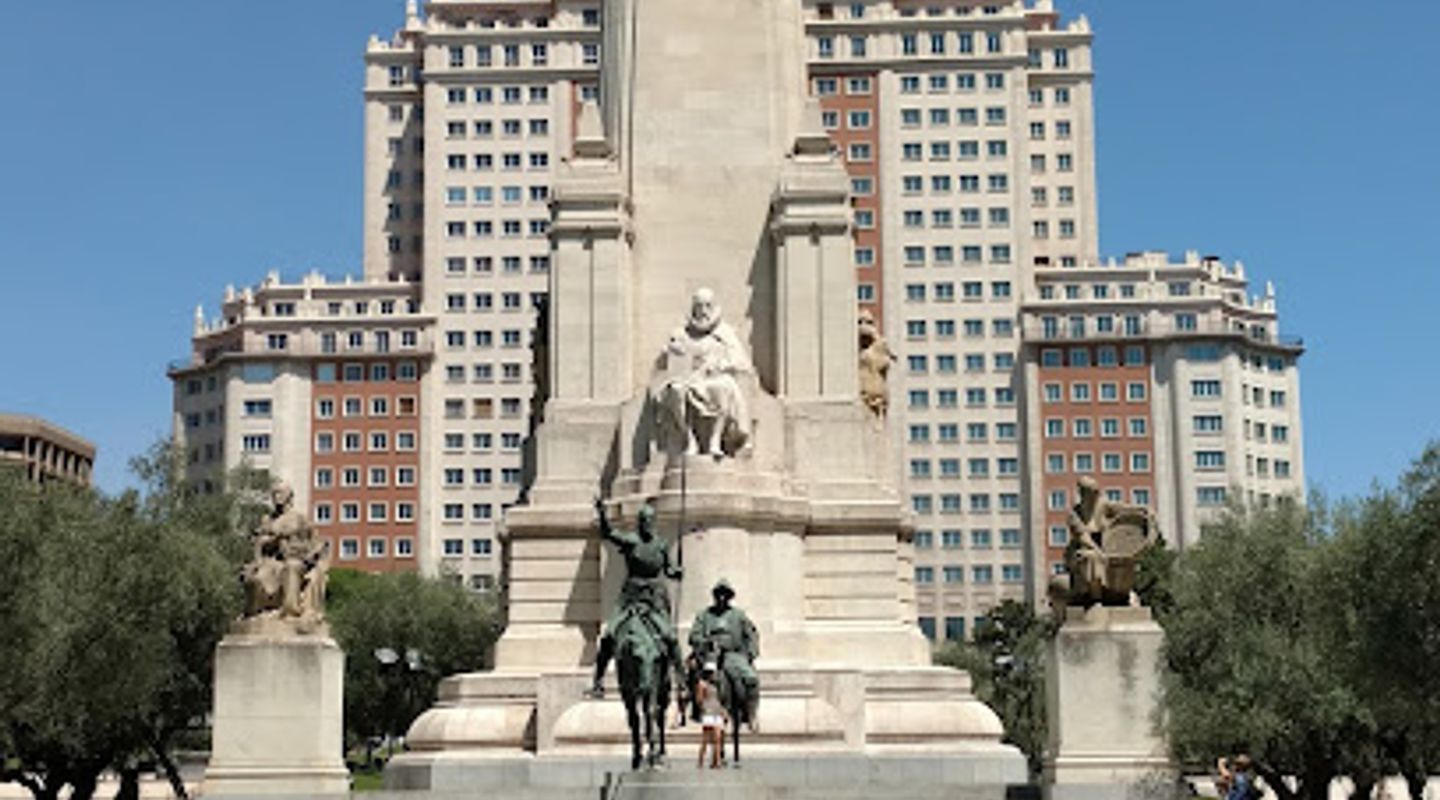
Plaza de España, Madrid Travel Guide
Grand square with Cervantes monument, twin towers, and fountains anchoring Madrid's westside cultural pulse amid urban avenues and literary icons.
Madrid's Plaza de España stands as a grand public square where neoclassical monuments to Cervantes and Don Quixote tower over fountains and gardens. Flanked by twin skyscrapers and the iconic Warner Bros. sign, it pulses with urban energy, drawing crowds for photos, strolls, and city vibes amid historical grandeur.
A brief summary to Plaza de España
- Pl. de España, Madrid, Moncloa - Aravaca, Madrid, 28008, ES
- Free
-
 Outdoor
- Mobile reception: 5 out of 5

Know before you go
Hi, I'm Eve. Here are a few practical things to know before exploring Plaza de España.
- Visit at dusk when monuments light up, transforming the square into a dramatic backdrop for photos without midday crowds.
- Combine with a short walk to the nearby Temple of Debod for Egyptian ruins and sunset city panoramas.
- Watch for Cervantes-themed events or book stalls, especially during literary festivals in the area.
- Opt for a horse-drawn carriage ride around the plaza for a nostalgic tour of its monuments and gardens.
Do you manage this location?
Take control to get all the benefits, like improved information, better appearance, and stronger visibility across AI-powered discovery. Learn more about listing your business on Evendo
Activate your presenceOther nearby places you may find interesting
The closest places of the same kind, if this one is not quite what you had in mind.




Explore Plaza de España on the Map
A handpicked selection of must-see spots near Plaza de España, mapped for you.
Getting There
-
Walking
From Malasana center, 25-30 minute walk west via Gran Vía; free, direct on footpaths, ideal for soaking in neighborhood transition.
-
Metro
Metro Line 3 or 10 from nearby stations to Plaza de España stop; 10-15 minutes, €1.50-2 single ticket, frequent service every 3-5 minutes.
-
Bus
Bus lines 1, 44, or 133 from Malasana edges; 15-20 minutes, €1.50 fare, multiple stops en route with traffic-dependent timing.
-
Taxi
Taxi ride across Gran Vía; 10 minutes, €8-12 depending on traffic, available on-demand from any Malasana street.
For the on-the-go comforts that matter to you
-
 Restrooms
-
 Drink Options
-
 Food Options
-
 Seating Areas
-
 Trash Bins
-
 Information Boards
Discover more about Plaza de España
Historical Foundations
Plaza de España emerged in the early 20th century as part of Madrid's ambitious urban expansion under the Primo de Rivera dictatorship. Designed by architects Julián and Joaquín Otamendi, construction began in 1927 and concluded in 1931, transforming a former riverbed into a monumental civic space. The square honors Miguel de Cervantes, Spain's literary giant, with a massive 1950 monument sculpted by Rafael García Cabezas. Towering 26 meters high, it depicts Cervantes enthroned between bronze figures of Don Quixote and Sancho Panza, symbols of Spain's Golden Age literature.Architectural Highlights
At the plaza's core, twin neoclassical towers rise 100 meters, once Spain's tallest buildings, housing offices and evoking imperial grandeur with their domed cupolas and ornate facades. A central fountain, surrounded by formal gardens and flowerbeds, provides a serene focal point amid the bustle. The site's scale impresses: 36,800 square meters of open space framed by radiating avenues, blending Beaux-Arts symmetry with Spanish monumentalism. Nearby, the Cine Gran Vía adds cinematic flair, while the Warner Bros. logo atop one tower nods to Madrid's film heritage.Cultural and Literary Significance
The Cervantes monument anchors the plaza's identity, with reliefs illustrating scenes from Don Quixote on its base. This chivalric tale, published in 1605 and 1615, critiques idealism and reality, mirroring Spain's complex history. The square hosts literary events and book fairs, reinforcing its role as a cultural crossroads. Its proximity to Gran Vía positions it as a gateway between Madrid's commercial artery and the stately Casa de Campo park.Daily Life and Atmosphere
Plaza de España buzzes with locals and visitors: street performers, cyclists, and tourists snapping photos of the statues against the skyline. Fountains murmur softly, pigeons flock, and horse-drawn carriages circle for rides. Evenings bring illuminated monuments glowing against the night, creating a romantic urban tableau. The vibe shifts from daytime hustle to twilight leisure, with nearby cafes spilling onto sidewalks.Surrounding Attractions
Integrated into Madrid's west side, the plaza links to the Temple of Debod, an ancient Egyptian gift relocated here in 1972, offering sunset views over the city. The Teleférico cable car departs nearby, soaring over Casa de Campo. Its location in Moncloa-Aravaca district makes it a hub for exploring royal palaces and university grounds, embodying Madrid's fusion of history, literature, and modernity.Enduring Legacy
Over decades, Plaza de España has witnessed protests, celebrations, and daily rituals, evolving from Franco-era symbol to democratic gathering spot. Renovations preserve its patina while adapting to contemporary use, ensuring it remains a vital lung for Madrid's 3 million residents and millions of tourists annually.












Your all‑in‑one travel companion app
Explore expert travel guides, compare and book tours, experiences, hotels, and more—all from the palm of your hand. Download now for seamless trip planning wherever your wanderlust takes you.


Explore More of Madrid
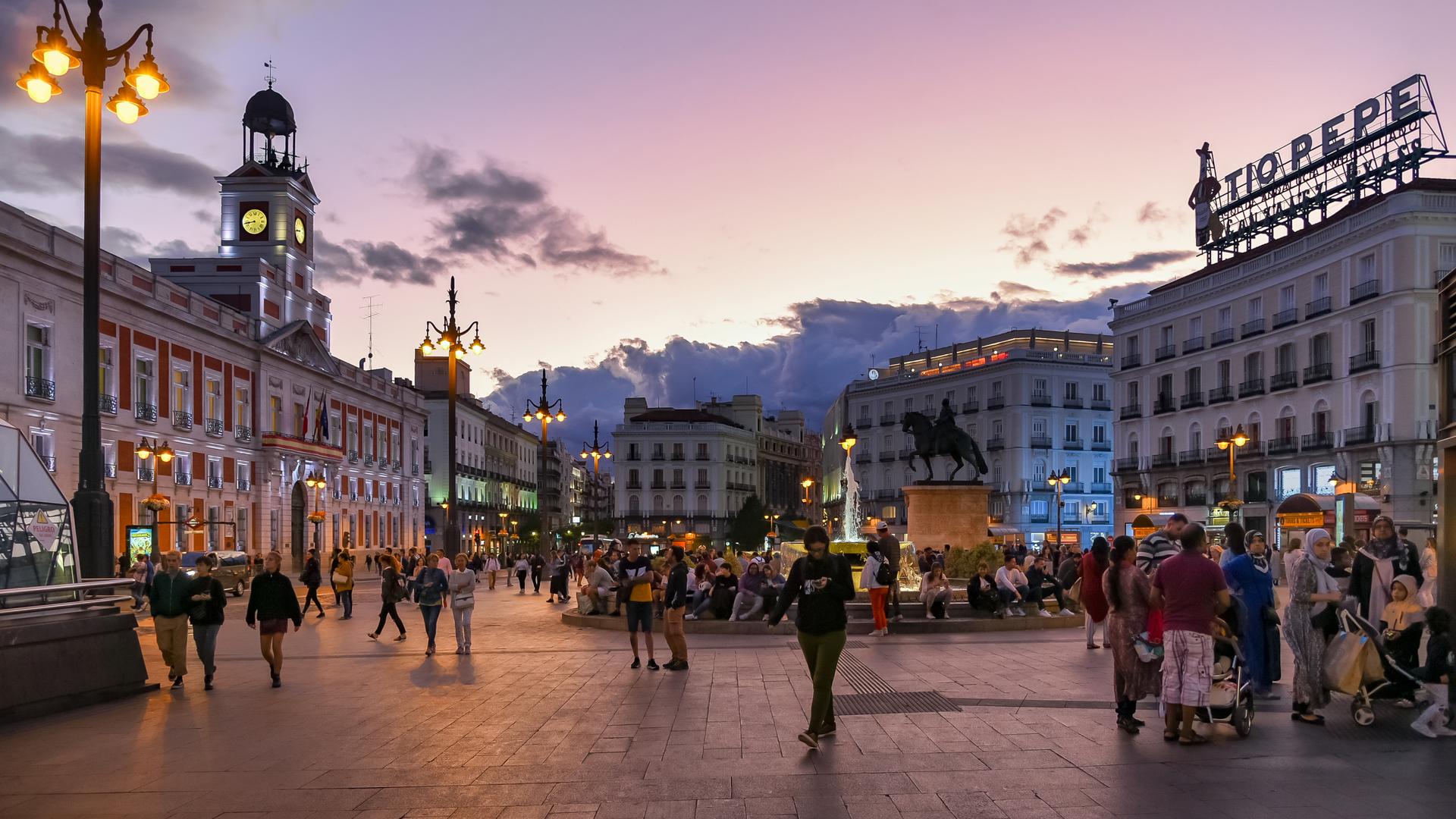
Looking beyond Plaza de España? Discover Madrid for broader travel guides, local hot-spots, and regional highlights.
Explore Madrid
Gran Vía's electric core at No. 66: stylish hotel outpost amid Madrid's theater lights, rooftop vistas, and boulevard pulse—urban Madrid distilled.
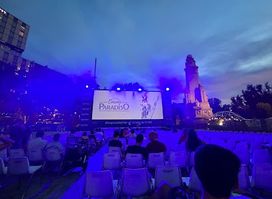
Outdoor films light up Plaza de España's grand expanse, where Madrid's summer nights blend blockbuster screens with plaza picnics amid skyscrapers and literary giants.
