

Puerta de Alcalá, Madrid Travel Guide
Free Guide: Neoclassical triumph arch at Madrid's Plaza de la Independencia, gateway between Retiro Park and urban avenues, sculpted with royal emblems and virtues for Carlos III's 1764 entry.


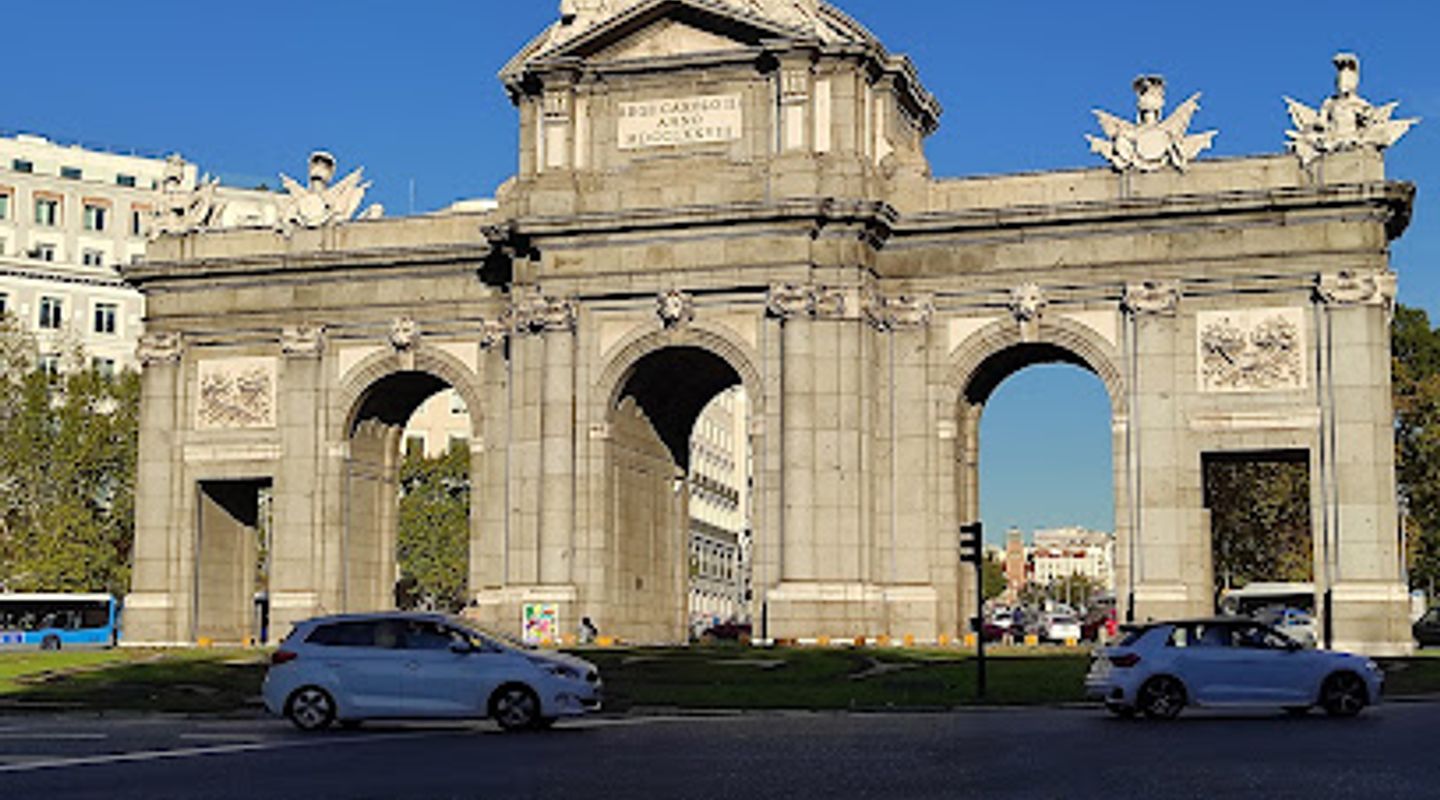
A brief summary of Puerta de Alcalá
Neoclassical triumph arch at Madrid's Plaza de la Independencia, gateway between Retiro Park and urban avenues, sculpted with royal emblems and virtues for Carlos III's 1764 entry.
Madrid's grand neoclassical triumphal arch stands majestically at Plaza de la Independencia, a symbol of Spanish resilience and architectural splendor. Crafted in the 18th century to honor King Carlos III, its five arches and detailed sculptures draw visitors to this iconic gateway between Retiro Park and the city center, offering panoramic city views and a deep connection to Madrid's royal past.
On-site amenities
 Restrooms
 Seating areas
 Information boards
Opening hours
- Every dayOpen 24 hours
Opening hours as listed on the venue’s Google Business Profile. Hours can change for services and special events, so check with the venue before you go.
- Address
- Pl. de la Independencia, s/n, Retiro, 28001 Madrid
- Website
Getting there
Walking
Bus
Taxi
Bicycle
Discover more about Puerta de Alcalá
Historical Foundations
The Puerta de Alcalá emerged from the vision of King Carlos III in 1764, designed by Italian architect Francesco Sabatini as a grand entrance to Madrid. Replacing an earlier 17th-century structure, it commemorates the king's entrance into the city that year. Constructed from stone sourced locally, the arch embodies Enlightenment ideals with its balanced proportions and classical motifs, standing as one of four royal gates historically flanking the Spanish capital.
Architectural Splendor
Sabatini's neoclassical masterpiece features five imposing arches, topped by a pediment adorned with the Bourbon coat of arms. Sculptures by Francisco Gutiérrez and Manuel Bergosa depict allegories of Fame, Strength, and other virtues, while military trophies and medallions honor Carlos III. The structure's symmetry and restrained ornamentation contrast with the more florid Baroque style of its predecessor, influencing Madrid's urban aesthetic and serving as a model for later public monuments.
Central Position and Surroundings
Positioned at Plaza de la Independencia, the gate marks the boundary between Retiro district and Salamanca, linking the verdant expanses of Parque del Retiro with the bustling avenues of Calle de Alcalá and Paseo de la Castellana. Flanked by the symbolic bear and strawberry tree statues representing Madrid's coat of arms, the plaza hosts ceremonial events, transforming the site into a living civic heart where history meets contemporary life.
Cultural and Symbolic Role
Beyond its physical presence, Puerta de Alcalá resonates in Spanish culture, immortalized in Joaquín Rodrigo's 'Farruca' from his Sinfonía española and countless films. It witnessed key moments like the 1808 French invasion and modern celebrations, evolving from a functional gate to a potent emblem of national pride. Visitors experience its layered meanings through the interplay of light on its surfaces at different times of day.
Visitor Experience
Approaching from Retiro Park, the arch reveals itself dramatically against the skyline, inviting exploration of its intricate details up close. The open plaza allows unobstructed photography and contemplation, while nearby paths lead into the park's gardens or toward Cibeles Fountain. Its enduring appeal lies in blending monumental scale with intimate artistic discovery, offering a tangible link to Madrid's evolution from walled city to modern metropolis.
Legacy in Madrid's Landscape
Today, the Puerta integrates seamlessly into daily Madrileño life, framing views of the city and serving as a backdrop for protests, festivals, and quiet reflection. Its preservation reflects ongoing commitment to heritage, ensuring future generations encounter the same awe as 18th-century passersby. This enduring landmark encapsulates Madrid's spirit: resilient, elegant, and forever forward-looking.
Evendo Review Centre
 Google
Guest reviews
Best time to go
Quietest: Jan, Feb & Dec · before 3am
Busy times are Evendo estimates for a typical year, to help you plan. Actual crowds vary with events, school holidays and the weather.
Explore Puerta de Alcalá on the map
A handpicked selection of must-see spots near Puerta de Alcalá, mapped for you.
Get your free copy of our complete guide to Puerta de Alcalá, delivered straight to you.
Everything on this page, from opening hours and how to get there to Eve’s tips and the best time to go, in one PDF you can read offline, print or share.
Already have an account? Sign in
Your Puerta de Alcalá guide is ready.
We'll send it to · Not you? Sign out

Getting your guide ready…
We are putting together a fresh copy of the Puerta de Alcalá guide. This can take up to a minute.
This can take a few moments. If your browser asks, choose Allow so the download can start. You'll find the guide in your Downloads folder.
Nothing happened? Download it again
Sorry, the guide is taking longer than usual. Please try again in a minute, or get it by email instead.
Unlock the best of Puerta de Alcalá
Skip-the-line tickets, guided tours with entry, and walking tours of the area, booked in a few clicks.


Other nearby places you may find interesting
The closest places of the same kind, if this one is not quite what you had in mind.
-
-
-
-
-


Swipe for more places
More to explore near Puerta de Alcalá

 Best experiences near Puerta de Alcalá
 Best hotels near Puerta de Alcalá
 Best landmarks near Puerta de Alcalá
 Best attractions near Puerta de Alcalá
 Best shops near Puerta de Alcalá
 Best restaurants near Puerta de Alcalá
 Best bars near Puerta de Alcalá
Do you manage this location?
Take control to get all the benefits, like improved information, better appearance, and stronger visibility across AI-powered discovery.
Explore more
Explore more of Salamanca
Discover Salamanca in Madrid, a neighborhood where luxury meets culture. Explore high-end shopping, exquisite dining, and art galleries in a prestigious setting.
Explore Salamanca
Explore more of Madrid
Discover Madrid: A city of art, culture, and culinary delights, where history and modern vibrancy meet in the heart of Spain.
Explore Madrid
