

Cine Doré, Madrid Travel Guide
Free Guide: Madrid's 1922 art deco cinema screens rare film restorations in a preserved auditorium, blending Spanish heritage with global cinema retrospectives for dedicated audiences.


A brief summary of Cine Doré
Madrid's 1922 art deco cinema screens rare film restorations in a preserved auditorium, blending Spanish heritage with global cinema retrospectives for dedicated audiences.
Step into Cine Doré, Madrid's cherished 1920s movie palace where art deco elegance meets classic cinema. This Filmoteca Española venue screens restored masterpieces and rare films in an intimate, atmospheric setting that transports you to cinema's golden age. A must-visit for film lovers exploring Madrid's cultural heart.
On-site amenities
 Restrooms
 Drink options
 Food options
 Seating areas
- Address
- C. de Sta. Isabel, 3, Centro, 28012 Madrid
- Phone
- Website
Getting there
Walking
Metro
Bus
Discover more about Cine Doré
Iconic Art Deco Legacy
Cine Doré stands as a testament to early 20th-century cinematic grandeur, opened in 1922 by businessman Ernesto Cobeña in Madrid's Centro district. Designed in striking art deco style, its facade and interiors feature geometric motifs, ornate plasterwork, and a compact yet opulent auditorium that seats around 500. Originally named after the Lumière brothers' invention, it quickly became a hub for silent films, vaudeville acts, and early talkies, hosting luminaries of Spanish cinema during its heyday.
Revival as Cultural Institution
After decades of challenges including the Spanish Civil War and post-war decline, Cine Doré was rescued in the 1960s by the Ministry of Culture. Transformed into the flagship venue of the Filmoteca Española, it reopened in 1963 with a mission to preserve and showcase Spain's film heritage. Architects preserved its original charm while modernizing projection systems, ensuring the venue remains a living archive. Today, it anchors the Filmoteca's operations, complemented by museums of cinematography nearby.
Programming and Screenings
The cinema's repertoire emphasizes restoration and retrospectives, featuring nitrate prints, 35mm classics, and digital remasters of Spanish and international films. Cycles highlight directors like Buñuel, Saura, or Almodóvar alongside global auteurs and thematic series on film noir, experimental works, or silent era gems with live musical accompaniment. Small auditoriums offer parallel programs, creating a dynamic schedule that appeals to cinephiles seeking rarities unavailable in multiplexes.
Atmosphere and Visitor Experience
Inside, the vibe blends nostalgic reverence with scholarly intimacy. Dimly lit lobbies adorned with vintage posters lead to the main sala, where red velvet seats and a starlit ceiling evoke old Hollywood glamour. Screenings draw dedicated crowds—students, critics, and locals—fostering a communal spirit rare in modern theaters. Pre-show mingling in adjacent spaces adds to the cultural immersion, making visits feel like events rather than mere movies.
Architectural and Historical Highlights
Beyond screenings, Cine Doré's architecture captivates. The marquee glows invitingly at night, while interiors boast tiled floors, mirrored bars, and a mezzanine balcony ideal for spotting details like original lighting fixtures. Its location amid Centro's historic fabric enhances appeal, linking it to Madrid's cinematic past near sites like the Prado. For enthusiasts, guided context comes alive through the films themselves, revealing evolutions in Spanish storytelling and technique.
Enduring Cultural Role
Cine Doré endures as more than a theater—it's a portal to cinema history, sustaining Madrid's reputation as a film capital. Its commitment to preservation ensures lost works resurface, educating new generations while honoring pioneers. Visitors leave enriched, carrying stories from screens that have flickered for a century.
Evendo Review Centre
 Google
Guest reviews
Best time to go
Quietest: Jan, Feb & Mar · before 10am
Busy times are Evendo estimates for a typical year, to help you plan. Actual crowds vary with events, school holidays and the weather.
Explore Cine Doré on the map
A handpicked selection of must-see spots near Cine Doré, mapped for you.
Get your free copy of our complete guide to Cine Doré, delivered straight to you.
Everything on this page, from opening hours and how to get there to Eve’s tips and the best time to go, in one PDF you can read offline, print or share.
Already have an account? Sign in
Your Cine Doré guide is ready.
We'll send it to · Not you? Sign out

Getting your guide ready…
We are putting together a fresh copy of the Cine Doré guide. This can take up to a minute.
This can take a few moments. If your browser asks, choose Allow so the download can start. You'll find the guide in your Downloads folder.
Nothing happened? Download it again
Sorry, the guide is taking longer than usual. Please try again in a minute, or get it by email instead.
Other nearby places you may find interesting
The closest places of the same kind, if this one is not quite what you had in mind.
-
-
-
-
-


Swipe for more places
More to explore near Cine Doré

 Best experiences near Cine Doré
 Best hotels near Cine Doré
 Best landmarks near Cine Doré
 Best attractions near Cine Doré
 Best shops near Cine Doré
 Best restaurants near Cine Doré
 Best bars near Cine Doré
Do you manage this location?
Take control to get all the benefits, like improved information, better appearance, and stronger visibility across AI-powered discovery.
Explore more
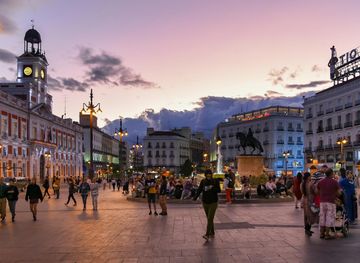
Explore more of Sol
Experience the vibrant pulse of Madrid in Sol: where historic landmarks, shopping, and lively nightlife converge in the city's bustling heart.
Explore Sol
Explore more of Madrid
Discover Madrid: A city of art, culture, and culinary delights, where history and modern vibrancy meet in the heart of Spain.
Explore Madrid
