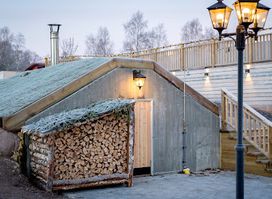
Lessebo Hand Paper Mill, Blekinge Travel Guide
Sweden's oldest hand paper mill since 1693: witness artisans craft watermarked masterpieces in a 1897 stone haven amid Småland's forests.
Step into 300 years of papermaking tradition at Lessebo Hand Paper Mill, Sweden's oldest continuously operating hand paper producer. Founded in 1693 on the site of an ironworks, this living museum in Småland crafts exquisite watermarked papers using techniques unchanged since the 17th century. Watch artisans at work, explore the historic stone building from 1897, and discover papers favored by literary giants like August Strindberg. A cultural gem in the Kingdom of Crystal, blending craftsmanship, history, and education in a serene rural setting.
A brief summary to Lessebo Hand Paper Mill
- Storgatan 79, Lessebo, 365 33, SE
- Click to display
- Click to display
- Duration: 0.5 to 1.5 hours
- Free
-
 Indoor
- Mobile reception: 5 out of 5
- Monday 10:30 am-4 pm
- Tuesday 10:30 am-4 pm
- Wednesday 10:30 am-4 pm
- Thursday 10:30 am-4 pm
- Friday 10:30 am-4 pm

Know before you go
Hi, I'm Eve. Here are a few practical things to know before exploring Lessebo Hand Paper Mill.
- Opt for a guided demonstration to see the full papermaking process from rag to finished sheet.
- Purchase custom watermarked paper or souvenirs directly from the mill's shop.
- Visit midweek to avoid weekend closures and enjoy quieter artisan interactions.
- Combine with nearby Kingdom of Crystal glassworks for a full day of Småland crafts.
Do you manage this location?
Take control to get all the benefits, like improved information, better appearance, and stronger visibility across AI-powered discovery. Learn more about listing your business on Evendo
Activate your presenceOther nearby places you may find interesting
The closest places of the same kind, if this one is not quite what you had in mind.
Explore Lessebo Hand Paper Mill on the Map
A handpicked selection of must-see spots near Lessebo Hand Paper Mill, mapped for you.
Getting There
-
Bus
Regional buses from Växjö to Lessebo stop near Storgatan, 25-40 minutes journey, services hourly on weekdays with reduced frequency weekends, fares 50-80 SEK.
-
Car
Drive from Växjö via Route 23, 30-45 minutes, free street parking available nearby though limited on Saturdays, watch for pedestrian zones in village center.
-
Train
Trains from Växjö Central to Lessebo station, 25-35 minutes, multiple daily departures, tickets 60-100 SEK, 10-minute flat walk to mill along main road.
-
Walking
From Lessebo station or bus stop, 10-15 minute paved sidewalk stroll along Storgatan, fully accessible but hilly in spots after rain.
For the on-the-go comforts that matter to you
-
 Restrooms
-
 Drink Options
-
 Food Options
-
 Seating Areas
-
 Information Boards
Discover more about Lessebo Hand Paper Mill
Origins in Iron and Ink
Lessebo Hand Paper Mill traces its roots to 1662, when the site first hummed with the forges of an ironworks amid Småland's dense forests and shallow lakes. By 1693, production shifted to paper, driven by demand from Karlskrona's naval base for cartridge and writing papers. The first sheets bore watermarks—a mirrored monogram—marking the dawn of Sweden's handmade paper heritage. Artisans employed traditional methods: stamping rags into pulp with water-powered wheels, forming sheets in molds, and drying them on winds powered by the local stream.Charter and Craft Evolution
In 1719, the mill received its royal charter from the National Board of Trade, cementing its status as an official producer. Techniques evolved with Dutch 'hollanders' in the 1740s, replacing stampers for finer pulp preparation, yet the core hand-forming process endured. A new stone building rose in 1731, housing stamping rooms, papermaking areas, and stacked drying lofts, all driven by dual waterwheels channeling stream water through wooden rännor. This era produced exclusive, high-quality paper for local and naval markets, its texture and watermark a hallmark of luxury.Industrial Shift and Handmade Revival
The 1836 arrival of a steam-powered paper machine split the operation: one for mass production, another preserving handmade artistry. Through ownership changes, including Johan Lorens Aschan's tenure until 1856, the hand mill persisted in dedicated spaces with steam-heated kyps and hollanders. Post-1856, new facilities in 'Schweizerstil' buildings revived full operations by 1861. Even as industrial paper dominated, handmade sheets remained vital for watercolor, writing, and custom orders bearing bespoke watermarks.Literary Legacy and Cultural Imprint
Lessebo's papers etched themselves into Swedish literature, favored by August Strindberg for their superior quality. Produced nearly identically since 1693, these sheets capture the tactile essence of pre-industrial craft: crisp edges, embedded fibers, and subtle watermarks evoking monograms or heralds. The mill's output graced diaries, artworks, and official documents, embodying Småland's resourceful spirit amid forests yielding rags and hydropower.Modern Safeguard of Tradition
After a brief hiatus, Studieförbundet Vuxenskolan acquired the mill in 2019 via Bildningsbruket AB, rehiring veteran papermakers and training apprentices. Housed in a 1897 stone edifice within the larger Lessebo Paper compound, it now serves as a cultural hub in the Kingdom of Crystal. Commercial production of watercolor and writing papers continues alongside educational visits, ensuring the craft's survival. Sensory details abound: the rhythmic slosh of pulp in vats, steam's warm mist, and the faint, earthy scent of fresh sheets.Enduring Allure of Handcraft
Today, visitors witness the full cycle—from rag sorting to watermark pressing—in a space where history feels alive. The mill's persistence amid industrialization highlights handmade paper's unique virtues: durability, artistry, and individuality. Positioned between lakes Läen and Öjen, it invites reflection on sustainability, as local forests and water sustain both past and present labors.More to explore near Lessebo Hand Paper Mill













Your all‑in‑one travel companion app
Explore expert travel guides, compare and book tours, experiences, hotels, and more—all from the palm of your hand. Download now for seamless trip planning wherever your wanderlust takes you.


Explore More of Blekinge
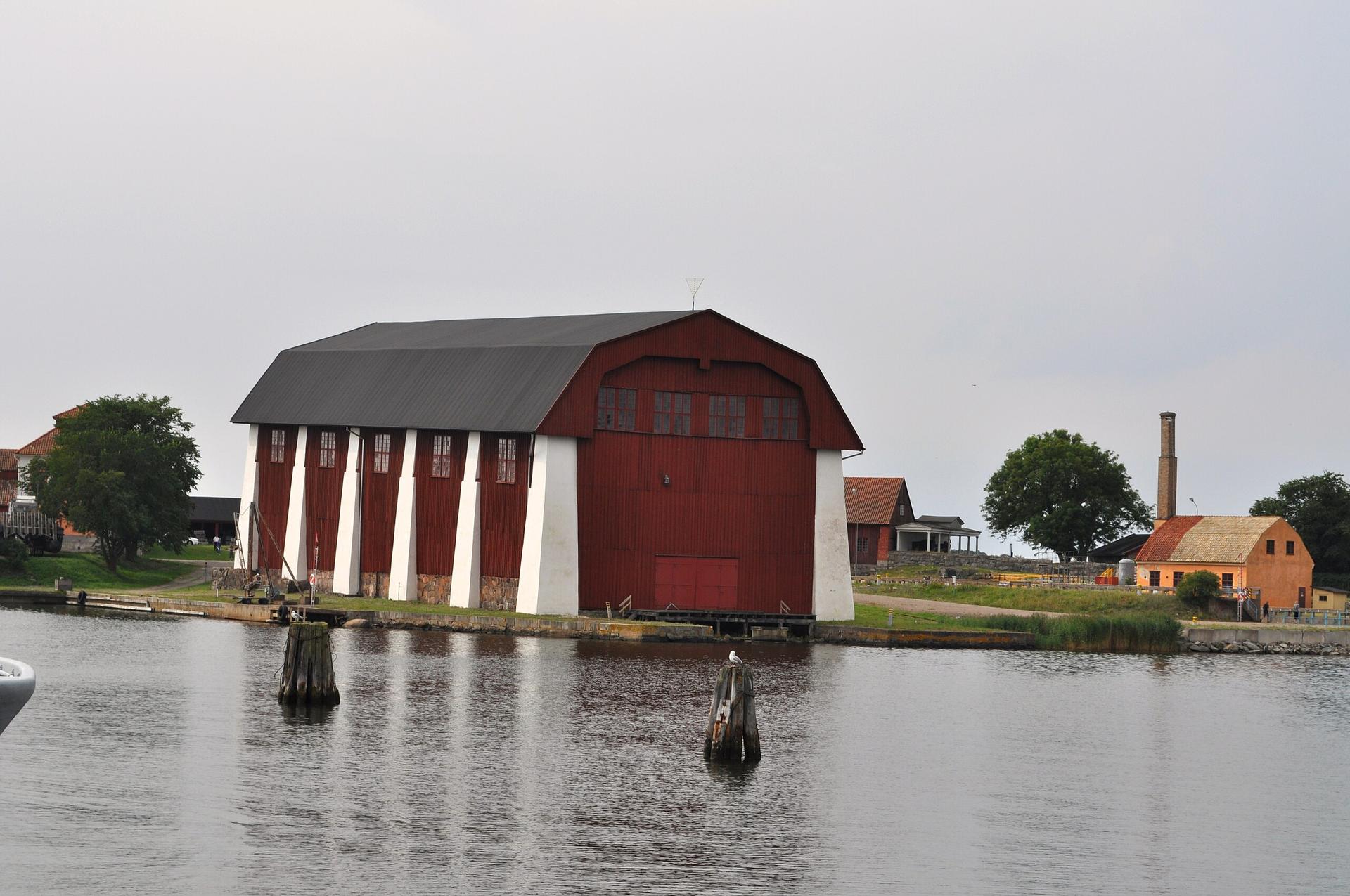
Looking beyond Lessebo Hand Paper Mill? Discover Blekinge for broader travel guides, local hot-spots, and regional highlights.
Explore Blekinge