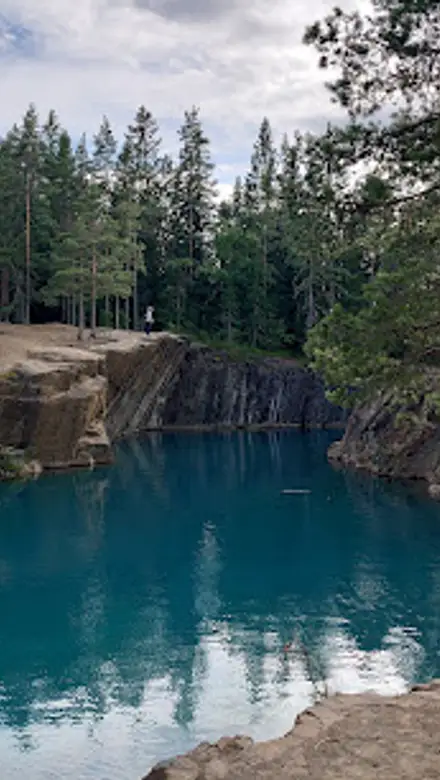
Östra Silvberg gruva Travel Guide
Free Guide: A water‑filled medieval silver pit and industrial landscape where turquoise depths, rusted relics and a quiet ruined churchyard meet the Dalarna forest.


A brief summary of Östra Silvberg gruva
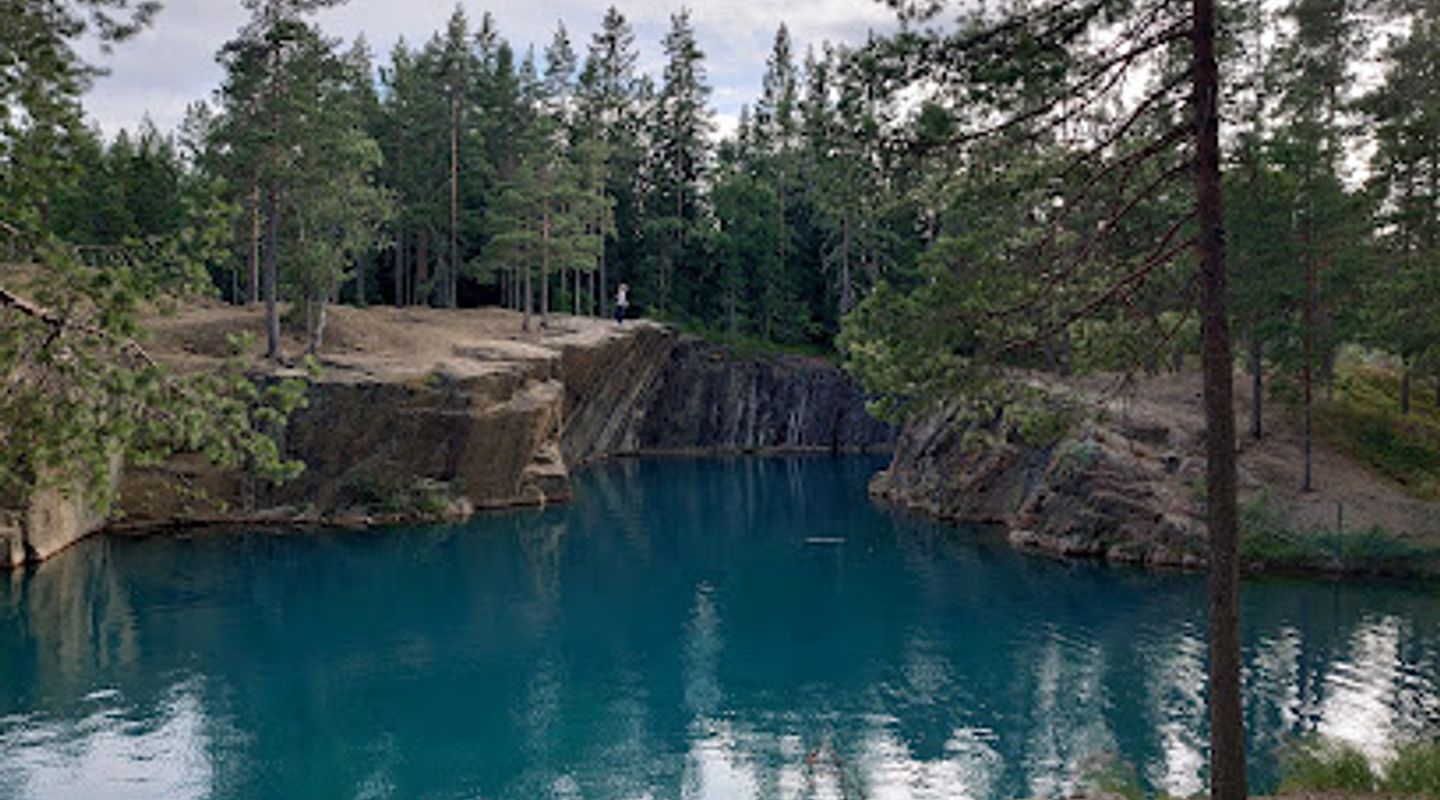
A water‑filled medieval silver pit and industrial landscape where turquoise depths, rusted relics and a quiet ruined churchyard meet the Dalarna forest.
Östra Silvberg gruva is a centuries‑old, water‑filled open pit and historic mining landscape near Borlänge in Dalarna, once a major silver site from the 1400s and later worked for sulfur and zinc. The site’s deep, turquoise pit, rust‑coloured spoil heaps and scattered industrial remains sit beside a ruined churchyard and tranquil forest, offering striking contrasts between industrial history and quiet natural scenery.
On-site amenities
 Restrooms
 Seating areas
 Trash bins
 Information boards
Opening hours
- Every dayOpen 24 hours
Opening hours as listed on the venue’s Google Business Profile. Hours can change for services and special events, so check with the venue before you go.
- Address
- 783 91 Borlänge
- Phone
- Website
Getting there
By car
Public bus + walk
Cycling
Discover more about Östra Silvberg gruva
Ancient mine with a dramatic centrepiece
Östra Silvberg gruva began as a medieval silver mine and expanded through later centuries into a deep open pit; the largest hollow—often called Storgruvan—now stands filled with intensely coloured water whose turquoise surface mirrors sky and trees. Around the water lie layered spoil heaps, collapsed workings and a handful of surviving industrial relics that mark successive phases of extraction from silver in the 1400–1500s to later sulfur and zinc operations.
Industrial traces and surviving structures
Walking the area you’ll notice discrete remnants of past technologies: the foundations of a once‑extensive aerial ropeway, an old transformer tower from the early 20th century and rusting earthworks that outline shafts and channels. These fragments are part of a cultural landscape legally protected for its historic value; the varphögar (slag and tailings piles) themselves are treated as artefacts and form a distinctive, ochre banding across the slopes.
Landscape shaped by mining and time
The mine’s long history has produced a layered topography: steep pit rims, terraces cut into bedrock and scattered mounds where waste rock was dumped. Vegetation has reclaimed much of the site; young birch and pine soften terraced scars while moss and lichens dress exposed stone. The mix of industrial rawness and regenerating nature creates a quietly dramatic scene—one where still water and acidic‑stained ground testify to human impact as much as to the landscape’s resilience.
Stories beneath the surface
Records link the site to the region’s early mining boom; the mine once reached great depths and for a time contributed to Sweden’s medieval silver output. Later investors chased other riches and in the 18th–19th centuries worked ore types such as pyrite and later zinc. Short, intense campaigns of modernised mining left a last imprint in the early 20th century when costly infrastructure was installed and later removed, leaving foundations and memories rather than functioning plant.
Safety, environment and visitor character
The pit’s enchanting cyan hue belies dangerous water chemistry and depth: Storgruvan is deep and not a bathing place, and areas close to the rim are cordoned for safety. The site includes basic seasonal visitor facilities and signboards that explain both natural and industrial features; paths vary from compact earth tracks to rough ground near spoil heaps. The atmosphere is reflective—part open‑air industrial museum, part sylvan ruin—best visited with respect for protection rules and clear awareness of hazards.
How the place is experienced today
Today Östra Silvberg is visited as a cultural landscape and scenic stop: people come to view the turquoise pit, explore the churchyard ruins and trace the outlines of former structures while picnicking on the fringes. Birdsong and wind in young trees can feel at odds with rust and concrete, producing a memorable contrast. The site’s layered past—medieval silver, industrial nineteenth‑century workings and twentieth‑century attempts at modern extraction—remains readable in the land itself, making the area compelling for anyone interested in mining history, industrial archaeology or stark scenic beauty.
Evendo Review Centre
 Google
Guest reviews
Best time to go
Quietest: Jan, Feb & Dec · before 7am
Busy times are Evendo estimates for a typical year, to help you plan. Actual crowds vary with events, school holidays and the weather.
Explore Östra Silvberg gruva on the map
A handpicked selection of must-see spots near Östra Silvberg gruva, mapped for you.
Get your free copy of our complete guide to Östra Silvberg gruva, delivered straight to you.
Everything on this page, from opening hours and how to get there to Eve’s tips and the best time to go, in one PDF you can read offline, print or share.
Already have an account? Sign in
Your Östra Silvberg gruva guide is ready.
We'll send it to · Not you? Sign out

Getting your guide ready…
We are putting together a fresh copy of the Östra Silvberg gruva guide. This can take up to a minute.
This can take a few moments. If your browser asks, choose Allow so the download can start. You'll find the guide in your Downloads folder.
Nothing happened? Download it again
Sorry, the guide is taking longer than usual. Please try again in a minute, or get it by email instead.
Other nearby places you may find interesting
The closest places of the same kind, if this one is not quite what you had in mind.
-
-
-
-
-


Swipe for more places
More to explore near Östra Silvberg gruva

 Best experiences near Östra Silvberg gruva
 Best hotels near Östra Silvberg gruva
 Best landmarks near Östra Silvberg gruva
 Best attractions near Östra Silvberg gruva
 Best shops near Östra Silvberg gruva
 Best restaurants near Östra Silvberg gruva
 Best bars near Östra Silvberg gruva
Do you manage this location?
Take control to get all the benefits, like improved information, better appearance, and stronger visibility across AI-powered discovery.
Explore more
Explore more of Dalarna
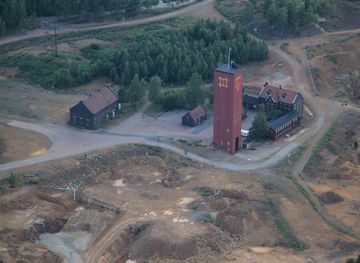
Discover Dalarna: Sweden's enchanting region of lakes, forests, and rich cultural heritage, perfect for nature lovers and cultural enthusiasts alike.
Explore Dalarna
Explore more of Sweden
Discover Sweden's breathtaking landscapes, vibrant cities, and rich cultural heritage. From the Northern Lights to historic castles, experience the essence of Scandinavia.
Explore Sweden