Gävlebocken Travel Guide
Free Guide: Gävle’s giant seasonal straw goat — a joyous folk symbol, dramatic civic spectacle and famously combustible holiday landmark.


A brief summary of Gävlebocken
Gävle’s giant seasonal straw goat — a joyous folk symbol, dramatic civic spectacle and famously combustible holiday landmark.
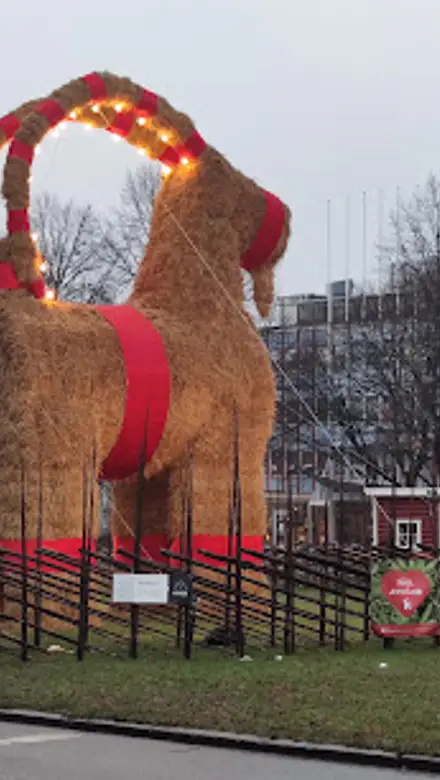
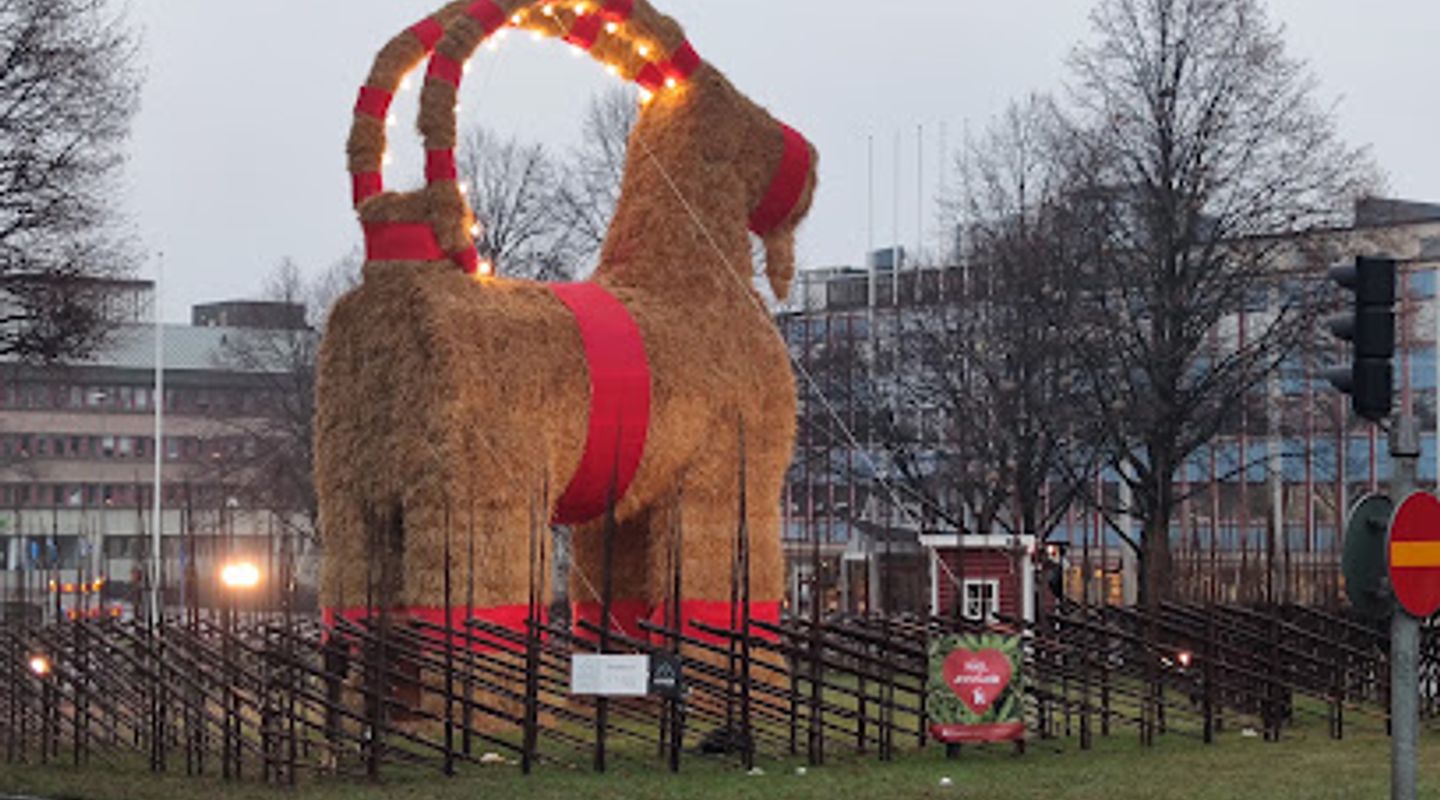
A towering straw yule goat erected each Advent on Slottstorget in central Gävle, the Gävlebocken is a local holiday icon with a colourful and combustible history dating back to 1966. Built by community groups, it’s both a playful nod to Nordic folk customs and a civic spectacle — famous for elaborate construction, seasonal decorations and a long record of attempts to vandalise or burn it down, which have become part of its story.
On-site amenities
 Seating areas
 Information boards
 Trash bins
 Drink options
 Food options
- Address
- Södra Kungsgatan 5, 802 51 Gävle
- Phone
- Website
Getting there
Public bus
Regional train + short walk
Taxi or ride-hail
Discover more about Gävlebocken
Origins and civic tradition
The Gävlebocken began as a grassroots advertising idea in 1966 and quickly became an annual civic ritual in Gävle. Conceived to draw shoppers to the southern district, the first giant straw goat was sketched by a local advertising figure and realised with help from the fire brigade; that inaugural goat established the pattern of community organisations designing and funding the structure each year. Over decades the responsibility for construction has passed between merchants’ associations and local school and civic groups, turning the goat into a planned public project rather than a single organiser’s stunt.
Construction, scale and craftsmanship
The goat is a large, timber-and-straw figure built on a timber frame and bound with rope and twine; dimensions have varied but the structure is consistently monumental, requiring careful engineering to support a heavy, weather-exposed straw skin. Building the goat is a short, intensive process carried out in early winter: teams cut and layer bundles of straw, secure the outer coat and add finishing details—curved horns, a recognisable silhouette and seasonal decorations—so the figure reads as both folk-art and town emblem when lit by square-side lighting at night.
A history shaped by spectacle and sabotage
An unusual part of the goat’s identity is its turbulent record: through the years the Gävlebocken has been vandalised, dismantled and in many instances set on fire, incidents that have prompted evolving protective measures. Organisers have experimented with guards, cameras, volunteer watches, insurance and material treatments to extend the goat’s life each season. Those ups and downs have given the goat an almost mythic presence in the town’s winter calendar: it is as much defined by efforts to preserve it as by the craft that creates it.
Square setting and seasonal atmosphere
Placed in the open space of Slottstorget, the goat occupies a central public square framed by municipal buildings, shops and café terraces. In the deep light of northern winter the straw surface takes on warm tones, contrasting with crisp air and street lamps; daytime views emphasise texture and scale, while evenings present the goat as a silhouette backlit for festive photography and family gatherings. The square’s compact urban context turns the goat into a focal point for seasonal markets, performances and civic events.
Cultural layers and curious rituals
The Gävlebocken draws on older Nordic yule-goat customs — a small household figure long associated with winter rituals — and amplifies them into a civic symbol that mixes playfulness with local pride. Over time secondary rituals grew around the goat: special plaques, commemorative programmes and even public bets on its survival. These added layers have made the structure a living emblem that links contemporary community spectacle with folk-rooted imagery.
What to notice when you’re here
When you view the goat, pay attention to the joinery of the frame, the way straw bundles overlap to shed moisture, and the decorative details that vary year to year. The goat’s presence is strongest at dusk, when lights warm the straw; listen for town announcements during the unveiling in early Advent and notice the signs and small displays placed around the square that record the goat’s long, eventful history.
Evendo Review Centre
 Google
Guest reviews
Best time to go
Quietest: Feb, Mar & Apr · before 8am
Busy times are Evendo estimates for a typical year, to help you plan. Actual crowds vary with events, school holidays and the weather.
Explore Gävlebocken on the map
A handpicked selection of must-see spots near Gävlebocken, mapped for you.
Get your free copy of our complete guide to Gävlebocken, delivered straight to you.
Everything on this page, from opening hours and how to get there to Eve’s tips and the best time to go, in one PDF you can read offline, print or share.
Already have an account? Sign in
Your Gävlebocken guide is ready.
We'll send it to · Not you? Sign out

Getting your guide ready…
We are putting together a fresh copy of the Gävlebocken guide. This can take up to a minute.
This can take a few moments. If your browser asks, choose Allow so the download can start. You'll find the guide in your Downloads folder.
Nothing happened? Download it again
Sorry, the guide is taking longer than usual. Please try again in a minute, or get it by email instead.
Other nearby places you may find interesting
The closest places of the same kind, if this one is not quite what you had in mind.
-
-
-
-
-


Swipe for more places
More to explore near Gävlebocken

 Best experiences near Gävlebocken
 Best hotels near Gävlebocken
 Best landmarks near Gävlebocken
 Best attractions near Gävlebocken
 Best shops near Gävlebocken
 Best restaurants near Gävlebocken
 Best bars near Gävlebocken
Do you manage this location?
Take control to get all the benefits, like improved information, better appearance, and stronger visibility across AI-powered discovery.
Explore more
Explore more of Gästrikland
Discover Gästrikland: From serene lakes and dense forests to vibrant towns and rich history, this Swedish province offers the perfect blend of nature and culture.
Explore Gästrikland
Explore more of Sweden
Discover Sweden's breathtaking landscapes, vibrant cities, and rich cultural heritage. From the Northern Lights to historic castles, experience the essence of Scandinavia.
Explore Sweden