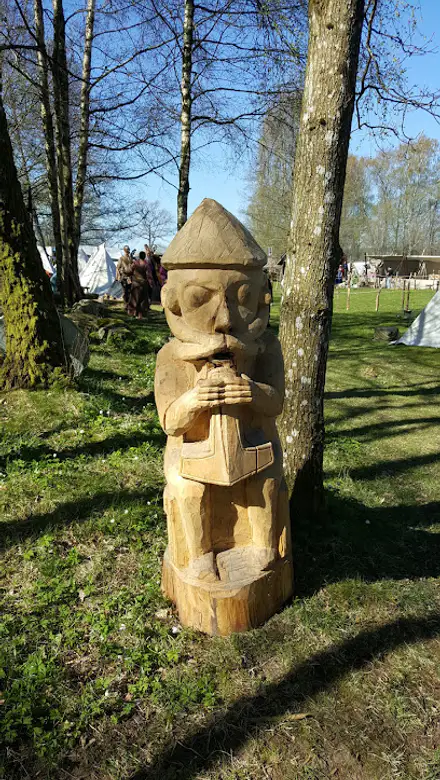
Ale Vikingagård Travel Guide
Free Guide: A volunteer-run, reconstructed Viking longhouse and living-history farmstead where craft, combat and market traditions bring the Viking Age to life.


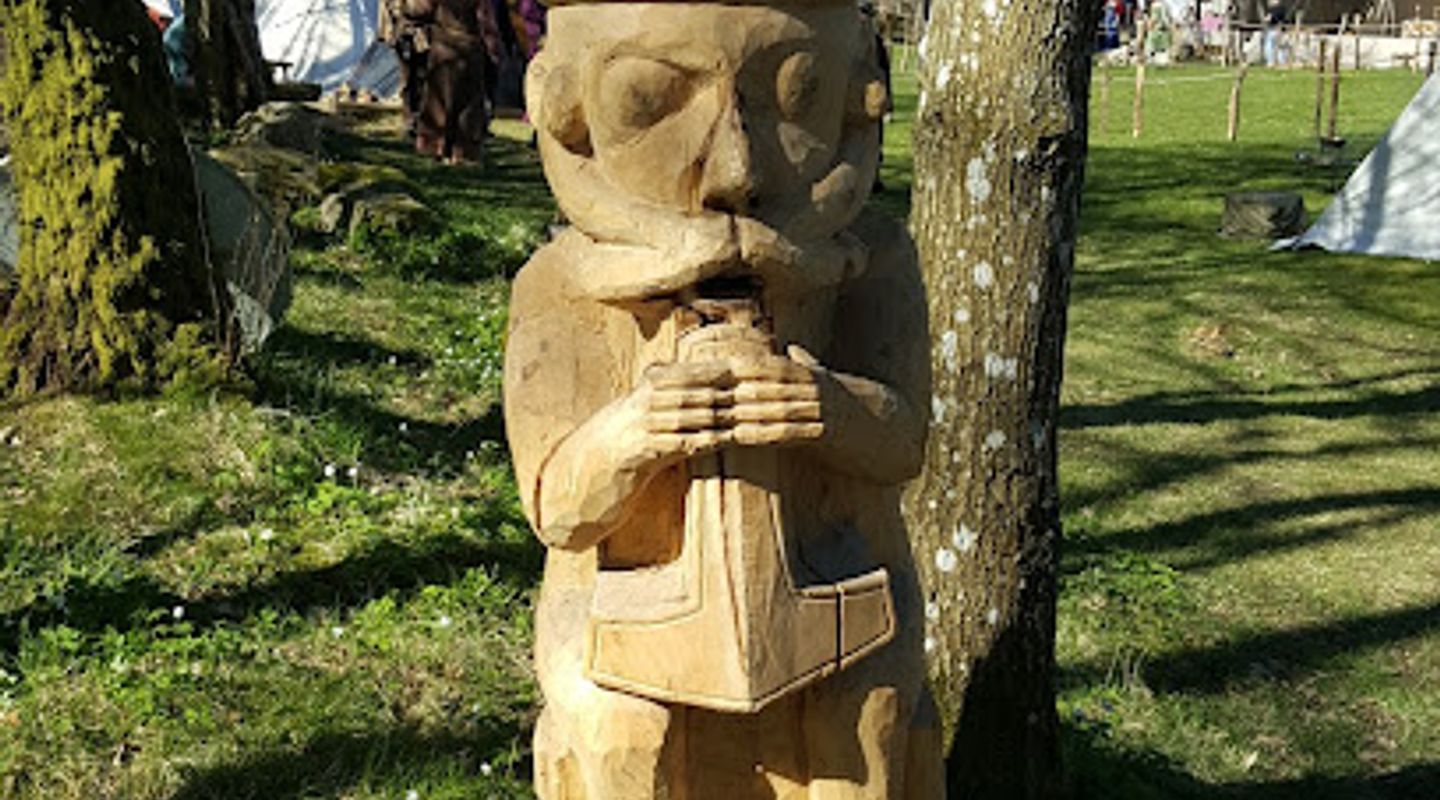
A brief summary of Ale Vikingagård
A volunteer-run, reconstructed Viking longhouse and living-history farmstead where craft, combat and market traditions bring the Viking Age to life.
Ale Vikingagård is a reconstructed Viking-age longhouse and farmstead near Alafors, Sweden, run by a local reenactment association that opens the courtyard to the public and stages seasonal markets and living-history events. The site recreates a 9th–10th-century chieftain’s longhouse based on archaeological models, offers hands-on demonstrations at special events, and gives visitors a sense of daily life, craft and combat in the Viking era while set against a riverside forested backdrop.
On-site amenities
 Seating areas
 Information boards
 Picnic areas
 Trash bins
Opening hours
- Every dayOpen 24 hours
Opening hours as listed on the venue’s Google Business Profile. Hours can change for services and special events, so check with the venue before you go.
- Address
- Olof Persgården Häljered, 446 35 Alafors
- Website
Getting there
Regional bus
Car (private)
Bicycle
Discover more about Ale Vikingagård
What the site is and why it feels alive
Ale Vikingagård is a volunteer-run reconstruction of a Viking-age farmstead centred on a large longhouse inspired by archaeological finds from the 9th–10th centuries. The layout and timber-work are deliberately simple and robust: smoked wood, thatch and exposed beams combine to give the buildings an immediate, tactile presence. The farmstead’s yard is kept accessible to passers-by, and during events the longhouse and surrounding pens are populated with period crafts, weapon demonstrations and the smells of open-fire cooking.
Crafts, demonstrations and everyday material culture
The site emphasises practical skills that defined rural life in the Viking Age. You’ll see and sometimes try traditional skills such as archery, bread baking on a stone hearth, wool working and leather or wood carving. Tools and reconstructions are chosen to illustrate how communities made clothing, household goods and implements with limited resources; woven patterns, sewn garments and hand-forged nails are presented with an emphasis on technique rather than theatrical spectacle.
Seasonal markets and the social calendar
Ale Vikingagård’s calendar is punctuated by market weekends and special events that bring the site’s living-history focus into sharp relief. These gatherings recreate the hustle of a rural fair—sellers with handcrafts, simple food stalls, and staged combat displays that demonstrate how martial skill and ceremony could coexist with domestic routines. The estate’s festive activities range from spring market openings to traditional winter holiday markets where glögg and baked goods are commonly offered.
Landscape, setting and sensory details
The farm sits against a backdrop of mixed woodland and fields with views toward the Göta River corridor; this landscape helps explain the site’s original strategic and economic logic. On a calm day you’ll hear birds and the occasional clop of hooves during events; the air carries woodsmoke and the tang of baking, and the longhouse interior—when open—feels dim, warm and close, its surfaces darkened by time and controlled smoke.
The people who keep the past active
Ale Vikingagård is operated by an association dedicated to reenactment and living history. Members maintain the buildings, organise demonstrations and host visitors; their approach is collaborative and educational, blending craft skills with historical discussion. The project is community-rooted rather than commercial—its continuity depends on volunteers, donations and event income—so the site’s character is personal and hands-on rather than polished for mass tourism.
Visitor experience and what to expect on arrival
Visitors should expect an open courtyard area that can be explored freely and a longhouse that may be locked when no event is running; interpretation is delivered mainly during market days and scheduled demonstrations. The pace is relaxed: you’ll move between activity speakers, workstations and display areas rather than a formal museum route. The experience is most vivid during demonstrations when craft processes and combat displays animate the farmstead and offer direct, sensory learning about Viking-age technologies and daily rhythms.
Evendo Review Centre
 Google
Guest reviews
Best time to go
Quietest: Jan, Feb & Mar · before 7am or at 9pm
Busy times are Evendo estimates for a typical year, to help you plan. Actual crowds vary with events, school holidays and the weather.
Explore Ale Vikingagård on the map
A handpicked selection of must-see spots near Ale Vikingagård, mapped for you.
Get your free copy of our complete guide to Ale Vikingagård, delivered straight to you.
Everything on this page, from opening hours and how to get there to Eve’s tips and the best time to go, in one PDF you can read offline, print or share.
Already have an account? Sign in
Your Ale Vikingagård guide is ready.
We'll send it to · Not you? Sign out

Getting your guide ready…
We are putting together a fresh copy of the Ale Vikingagård guide. This can take up to a minute.
This can take a few moments. If your browser asks, choose Allow so the download can start. You'll find the guide in your Downloads folder.
Nothing happened? Download it again
Sorry, the guide is taking longer than usual. Please try again in a minute, or get it by email instead.
Other nearby places you may find interesting
The closest places of the same kind, if this one is not quite what you had in mind.
-
-
-
-
-


Swipe for more places
More to explore near Ale Vikingagård

 Best experiences near Ale Vikingagård
 Best hotels near Ale Vikingagård
 Best landmarks near Ale Vikingagård
 Best attractions near Ale Vikingagård
 Best shops near Ale Vikingagård
 Best restaurants near Ale Vikingagård
 Best bars near Ale Vikingagård
Do you manage this location?
Take control to get all the benefits, like improved information, better appearance, and stronger visibility across AI-powered discovery.
Explore more
Explore more of Götaland
Discover Götaland: Explore Southern Sweden's Rich History, Breathtaking Landscapes, and Vibrant Culture
Explore Götaland
Explore more of Sweden
Discover Sweden's breathtaking landscapes, vibrant cities, and rich cultural heritage. From the Northern Lights to historic castles, experience the essence of Scandinavia.
Explore Sweden