

Lina myr, Gotaland Travel Guide
Discover the ghost of Gotland's last great moor: a drained wetland where rich birdlife once thrived amid limestone landscapes and medieval echoes near Roma Kloster.
Lina Myr, once Gotland's largest and last great moor, sprawls across a vast, now-drained landscape near Romakloster. This former wetland, rich in biodiversity with over 100 bird species and unique flora, was transformed starting in 1947 through drainage efforts. Today, it offers a glimpse into ecological change, medieval history ties to nearby Roma Kloster, and serene rural scenery amid limestone terrain. Explore remnants of lakes Lina Träsk and Råby Träsk, connected by the Hörsneån stream, in this quiet corner of northern Gotland.
A brief summary to Lina myr
- Romakloster, 622 58, SE
- Duration: 0.5 to 1.5 hours
- Free
-
 Outdoor
- Mobile reception: 4 out of 5

Know before you go
Hi, I'm Eve. Here are a few practical things to know before exploring Lina myr.
- Visit in summer for lingering bird sightings like curlews, best at dawn or dusk when the open fields come alive.
- Combine with Roma Kloster exploration; the adjacent sites offer contrasting views of nature and medieval heritage.
- Bring binoculars for wildlife spotting and sturdy shoes for uneven, post-drainage terrain.
Do you manage this location?
Take control to get all the benefits, like improved information, better appearance, and stronger visibility across AI-powered discovery. Learn more about listing your business on Evendo
Activate your presenceOther nearby places you may find interesting
The closest places of the same kind, if this one is not quite what you had in mind.
Explore Lina myr on the Map
A handpicked selection of must-see spots near Lina myr, mapped for you.
Getting There
-
Bus
Take the regional bus from Visby to Romakloster via route 20 or similar, 45-60 minutes from city center, services every 2-3 hours daily, fares 50-80 SEK depending on distance.
-
Car
Drive from Visby along road 140 northwest, 30-40 minutes covering 30km, free roadside parking available near Romakloster with gravel access, watch for rural speed limits.
-
Bicycle
Cycle from Visby on designated paths paralleling road 140, 2-2.5 hours for fit riders, flat terrain suitable year-round but windy, bike rentals in Visby around 200 SEK per day.
-
Taxi
Taxi from Visby or Slite, 30-45 minutes, costs 600-900 SEK for up to 4 passengers, available on demand but book ahead outside peak hours.
For the on-the-go comforts that matter to you
-
 Trash Bins
-
 Information Boards
Discover more about Lina myr
Vanished Wetland of Gotland
Lina Myr stood as Gotland's final expansive moor, covering 900-920 hectares in the island's northern half, roughly ten kilometers from the west coast. Nearly rectangular in shape, it rested on a limestone bedrock typical of Gotland's Silurian geology, formed 400 million years ago in a warm, shallow sea. The moor featured two significant lakes—Lina Träsk, also called Flatmen, and Råby Träsk—spanning about 50 hectares combined. These were linked by the Hörsneån stream, Gotland's longest river, which flows into Gothemsån and empties into the sea near Åminne, south of Slite.Water fed the area mainly from spring meltwater via Källungeån from the west and Landån from the south, with low annual precipitation shaping its character as predominantly low moor and swamp. The central zone burst with lush reed vegetation, supporting a vibrant ecosystem before human intervention.Drainage and Transformation
In the mid-20th century, water level reductions began in 1947, systematically drying the moor for agricultural use. This marked the end of Lina Myr as a wetland, converting its watery expanse into usable land. The process erased much of the original hydrology, though traces persist in the altered terrain and remaining waterways. Nearby Roma Kloster, a medieval site, borders the area, hinting at historical human presence since the Middle Ages, with the moor possibly dating to that era.The drainage reflected broader efforts to reclaim land on Gotland, where mires and lakes once dotted the landscape post-Ice Age. Geological studies highlight how the island's post-glacial rebound elevated higher parts above ancient Baltic ice lakes around 15,000 years ago, setting the stage for such wetlands.Flora and Fauna Legacy
Before drainage, Lina Myr boasted exceptional biodiversity. Its flora thrived in the nutrient-rich low moor conditions, while the birdlife ranked among Sweden's top eight wetland sites in 1940 inventories. Approximately 100 species bred there, with 57 regularly present in the 1930s and 1940s. Highlights included breeding populations of meadow pipits, black-headed gulls, shoveler ducks, northern lapwings, wood sandpipers, redshanks, curlews, corncrakes, spotted crakes, red-backed shrikes, red-breasted flycatchers, black woodpeckers, and cuckoos.Less common breeders like little gulls, dunlins, little terns, wrynecks, nightjars, and marsh harriers also nested. Today, many species have vanished with the wetland, but curlews and corncrakes persist in reduced numbers, underscoring the site's enduring ecological value amid the changed environment.Geological and Hydrological Foundations
Gotland's limestone underpins Lina Myr's story, deposited during the Silurian period amid coral reefs in an ancient sea linking to what is now the Indian Ocean. Post-glacial processes sculpted the terrain: ice masses ground and deposited moraine, followed by isostatic rebound that lifted the island. The moor formed in a depression, sustained by seasonal inflows rather than rain, creating a dynamic habitat.Streams like Hörsneån carved paths through the landscape, supporting freshwater mussels historically found here, as noted in early 20th-century records. The site's elevation varied slightly—13.1 meters in the south, 10.6 in the north—reflecting subtle topographic shifts over millennia.Cultural Ties to Roma Kloster
Adjacent to Roma Kloster in Romakloster village, Lina Myr intertwined with local history. Medieval records link the area to the cloister, with undrained mires nearby preserving ancient land use patterns. Picture stones and archaeological finds from the region evoke Gotland's Viking and medieval past, though the moor itself served more as a natural backdrop than a cultural centerpiece.This proximity invites reflection on how wetlands shaped rural life, providing resources like reeds and wildlife while challenging expansion until modern drainage techniques prevailed.












Your all‑in‑one travel companion app
Explore expert travel guides, compare and book tours, experiences, hotels, and more—all from the palm of your hand. Download now for seamless trip planning wherever your wanderlust takes you.


Explore More of Gotaland
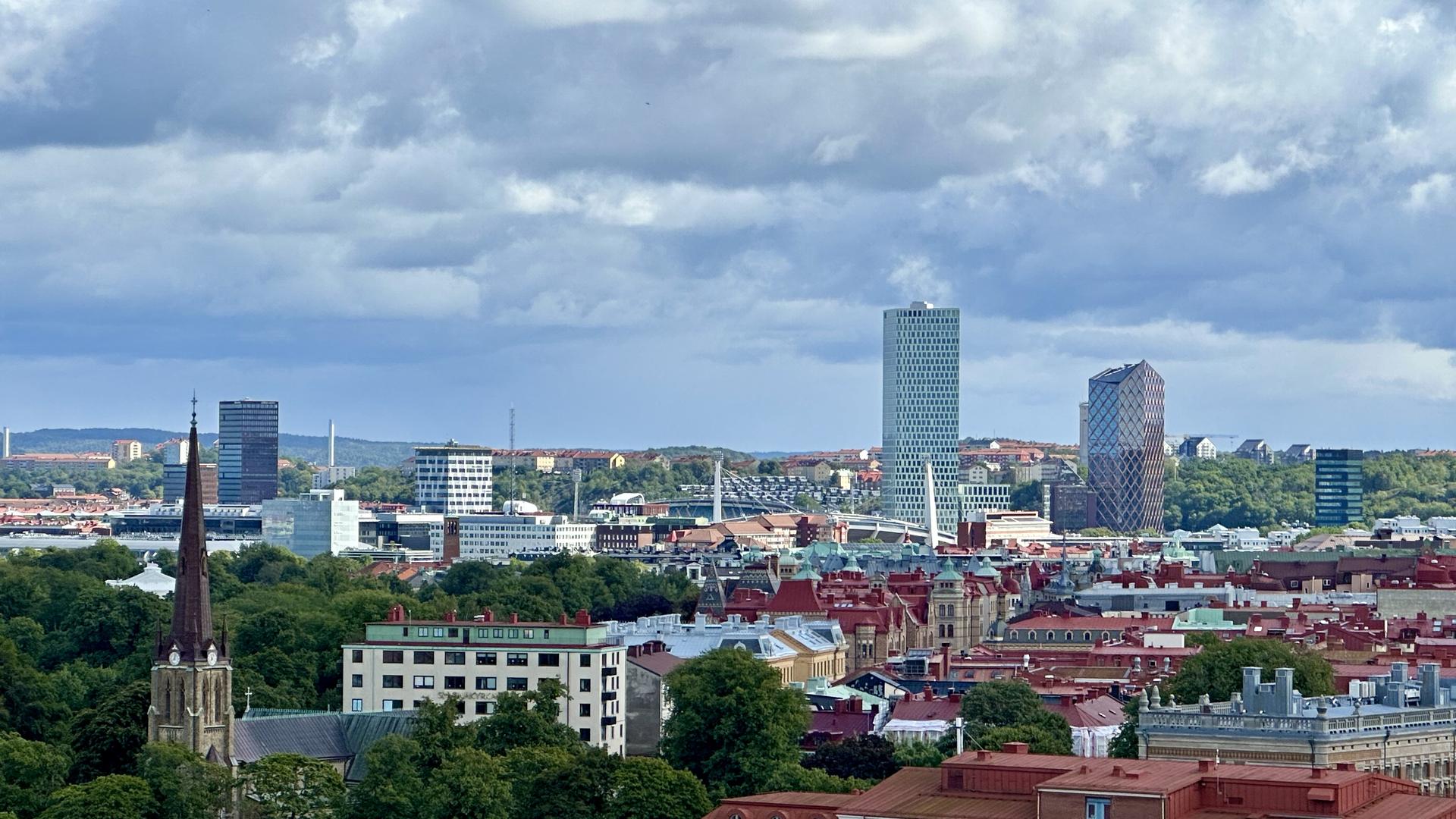
Looking beyond Lina myr? Discover Gotaland for broader travel guides, local hot-spots, and regional highlights.
Explore Gotaland
Gotland's blooming fen haven: orchids, birdsong, and grazed meadows in a 17-hectare protected wetland paradise near Visby.
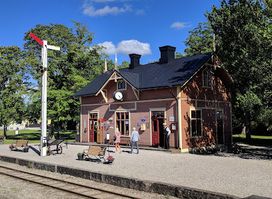
Step aboard a time capsule on Gotland's narrow-gauge heritage railway, chugging 6.5 km through idyllic countryside on lovingly restored vintage trains.
