
Morups Tånge, Halland Travel Guide
A rugged Kattegat headland of cobbled beaches, grazing dune heath and renowned shorebird concentrations south of Glommen.
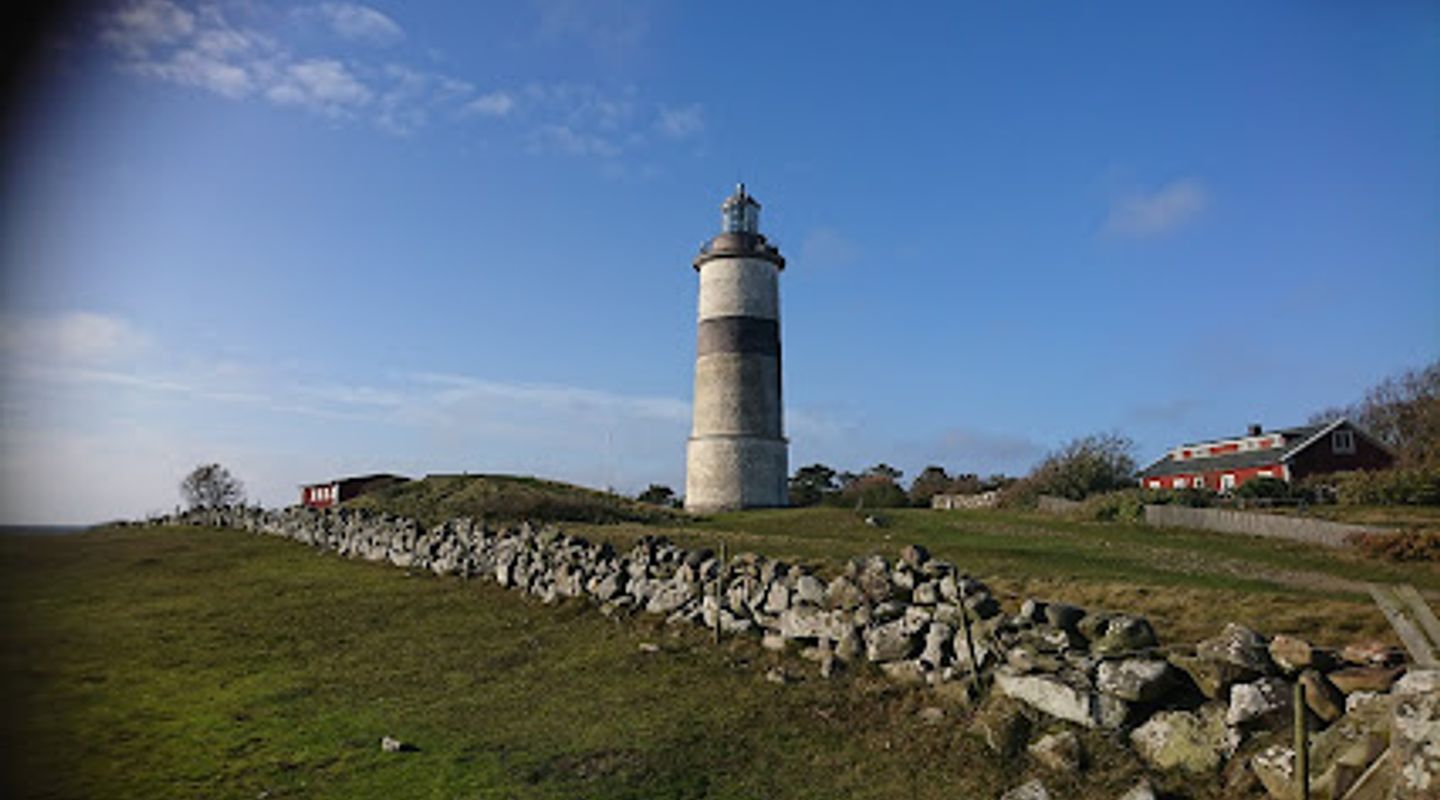
A windswept headland and protected nature reserve south of Glommen on Sweden’s Kattegat coast, Morups Tånge combines rocky shores, flower-rich coastal meadows and grazing dune heath. Renowned for birdlife and seasonal shorebird gatherings, the reserve offers textured landscapes of cobble beaches, salt-tolerant flora and a small historic lighthouse set against open sea skies.
A brief summary to Morups Tånge
- LÅNGAVEKA 115, Glommen, 311 98, SE
- Click to display
- Duration: 0.5 to 3 hours
- Free
-
 Outdoor
- Mobile reception: 3 out of 5

Know before you go
Hi, I'm Eve. Here are a few practical things to know before exploring Morups Tånge.
- Bring binoculars and a field guide for shorebirds; the best bird activity is during migration and at low tide.
- Wear sturdy footwear for uneven cobble beaches and possibly wet grass; windproof layers are useful year-round.
- Respect protected zones and stay on marked paths to avoid disturbing nesting or feeding birds and fragile plants.
- Visit at different tides—low tide exposes feeding flats and high tide offers dramatic coastal silhouettes.
Do you manage this location?
Take control to get all the benefits, like improved information, better appearance, and stronger visibility across AI-powered discovery. Learn more about listing your business on Evendo
Activate your presenceOther nearby places you may find interesting
The closest places of the same kind, if this one is not quite what you had in mind.
Explore Morups Tånge on the Map
A handpicked selection of must-see spots near Morups Tånge, mapped for you.
Getting There
-
By car
Drive from central Falkenberg or nearby towns to the Glommen area; expect a travel time of approximately 20–40 minutes depending on start point and season. Parking is limited to designated lay-bys near the reserve; during peak season parking can fill and roadside parking is restricted. No tolls apply; usual regional fuel or charging costs apply.
-
By bicycle
Cycle from the Kattegattleden coastal route to the reserve in roughly 15–40 minutes from nearby villages depending on your pace and start point. Sections include quiet country roads and short gravel tracks; a hybrid or gravel bike is recommended. Seasonal weather can make some tracks muddy.
-
By public transport
Take regional bus services to the Glommen stop and walk from there; typical bus journeys from Falkenberg take around 20–40 minutes with limited frequency outside peak daytime hours. Service frequency varies by season, so check local timetables before travel. The final approach includes uneven terrain and may be unsuitable for some mobility-restricted travelers.
For the on-the-go comforts that matter to you
-
 Seating Areas
-
 Information Boards
-
 Trash Bins
Discover more about Morups Tånge
Shoreline of stones and sea
Morups Tånge stretches into the Kattegat as a largely stony promontory where cobbles, boulders and bands of tangle-strewn beach meet the open sea. The tidal fringe and pebble-swept shores create a tactile coastline: smooth grey stones warmed by the sun, clumps of wrack smelling faintly of iodine, and shallow pools that collect crustaceans and small fish. The landform’s craggy profile funnels wind and light, making the headland feel both exposed and elemental.A patchwork of coastal habitats
Behind the strandline the reserve broadens into a mosaic of habitats. Flower-rich, seasonally damp coastal meadows give way to grazed dune heaths and relict sand patches; each niche supports specialised plants and invertebrates adapted to salt spray and shallow soils. Stone surfaces are often dusted with lichens and resilient mosses that add muted colour to the greys and rusts of the rocks. In spring and summer the meadows ring with insect life and migrant plants carrying the brief, intense colours of the coastal season.Birdlife and seasonal gatherings
Morups Tånge is one of the Halland coast’s notable bird locations, especially for waders and shorebirds during migration and autumn passage. The southern coves and tidal flats act as feeding grounds where small sandpipers, plovers and larger waders concentrate when the sea recedes, and gulls and terns wheel offshore. The reserve’s variety of shore substrates—sand, mud and stones—creates different feeding opportunities across tides and seasons.Human traces and maritime history
Human presence at Morups Tånge is quiet and restrained: a small lighthouse and scattered historic markers nod to the headland’s role in local coastal navigation. Buildings are subordinate to the natural setting; they punctuate the landscape rather than dominate it. Paths worn by generations of visitors and fishers fold through the grass and over the stone, offering repeated vantage points to study the sea and sky without disturbing the reserve’s core ecological features.Sensory character and seasonal moods
The reserve’s personality changes with wind and light. On calm days the sea’s surface can be a slate sheet flecked with sunlight; in wind it becomes a frothing, kinetic band that amplifies gull calls and shifts the rhythm of the place. Mornings bring cool, briny air and low sun over the water; late summer evenings soften the meadows and highlight the ochres of dried vegetation. The reserve’s sounds are elemental—wind, water, birds and the occasional creak of coastal vegetation.Conservation and visitor experience
Protected for its coastal habitats and birdlife, Morups Tånge is managed to conserve grazing dune heath, meadow flora and the mosaic of shore habitats that sustain shorebirds and rare invertebrates. Visitor access is arranged to limit disturbance to sensitive areas: paths and designated observation points let people experience the reserve’s contrasts—rock and grass, sea and sky—while conserving the places where wildlife depends on quiet and intact habitat. The experience here rewards slow observation, an attention to seasonal detail and respect for the reserve’s fragile edges.












Your all‑in‑one travel companion app
Explore expert travel guides, compare and book tours, experiences, hotels, and more—all from the palm of your hand. Download now for seamless trip planning wherever your wanderlust takes you.


Explore More of Halland
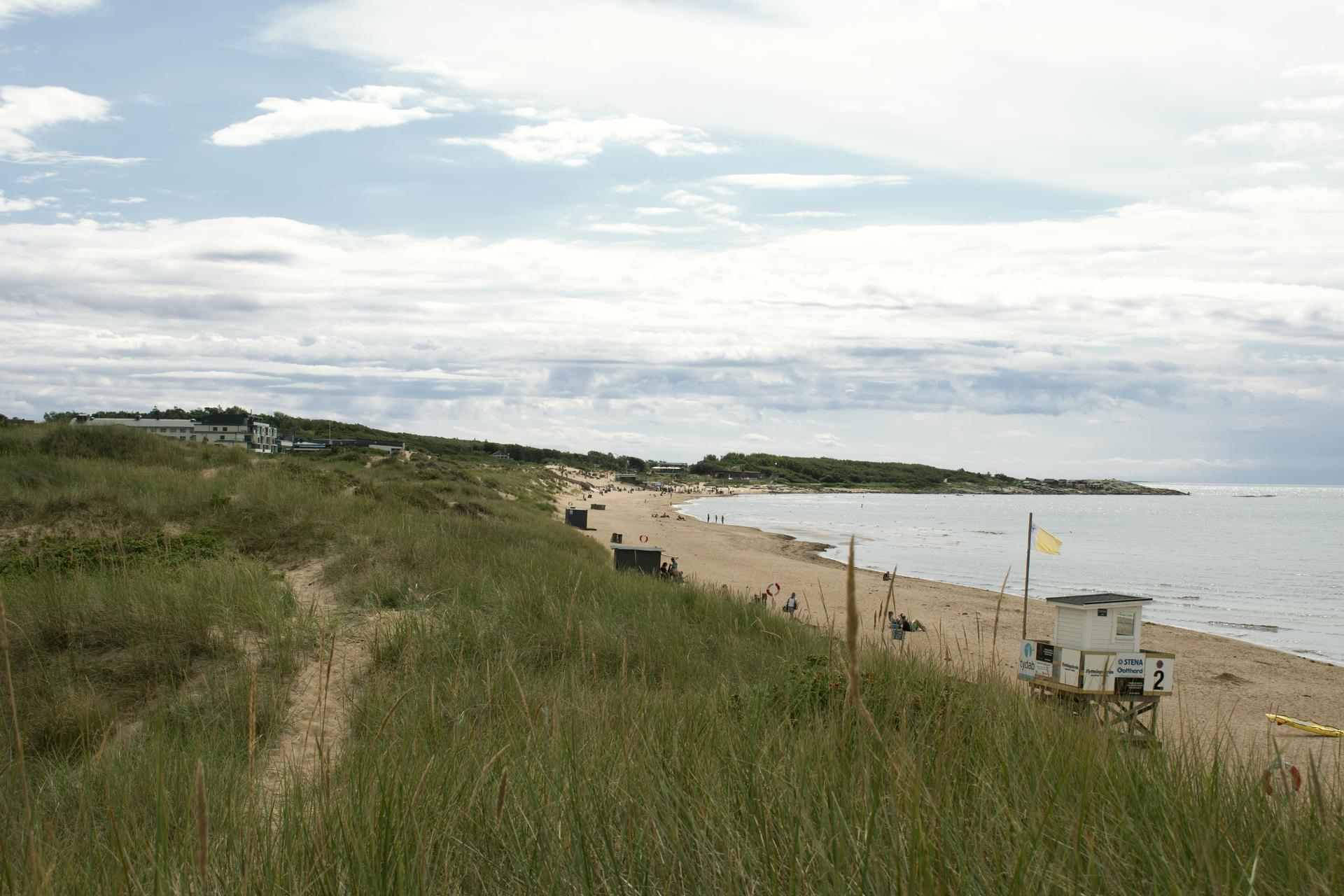
Looking beyond Morups Tånge? Discover Halland for broader travel guides, local hot-spots, and regional highlights.
Explore Halland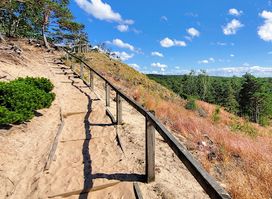
A compact coastal reserve where high sand hills, wind-formed pines and a long sandy shore create an intimate, wild west‑coast landscape.

Discover Falkenberg's photographic soul in its historic first cinema, brimming with cameras, archives, and coastal tales that capture time itself.
