Valla gård, Linköping, Linkoping Travel Guide
Timeless manor estate whispering 13th-century secrets amid Linköping's pastoral embrace, where history meets open skies and pony trails.
Valla Gård is a historic manor estate on the outskirts of Linköping, Sweden, with roots tracing back to the 13th century. Donated to the city in 1933 by Henric Westman, the estate features a grand 1859 neo-classical herrgård and surrounding farm buildings that offer a glimpse into rural Swedish life. Adjacent to Gamla Linköping open-air museum, it blends preserved heritage with educational programs, including youth activities through its pony club and folk high school connections. Visitors can explore the grounds, admire the architecture, and immerse in centuries of local history amid pastoral landscapes.
A brief summary to Valla gård, Linköping
- Stratomtavägen 19A, Linköping, 583 30, SE
- Click to display
- Duration: 1 to 3 hours
- Free
-
 Outdoor
- Mobile reception: 4 out of 5
- Monday 9:30 am-8 pm
- Tuesday 9:30 am-8 pm
- Wednesday 9:30 am-8 pm
- Thursday 9:30 am-8 pm
- Friday 9:30 am-8 pm
- Saturday 8 am-3 pm
- Sunday 8 am-3 pm

Know before you go
Hi, I'm Eve. Here are a few practical things to know before exploring Valla gård, Linköping.
- Visit on weekends for pony club activities, offering hands-on interaction with horses and farm life.
- Combine with a stroll into adjacent Gamla Linköping for a full day of open-air heritage exploration.
- Arrive early morning for tranquil grounds before groups arrive, ideal for photography.
Do you manage this location?
Take control to get all the benefits, like improved information, better appearance, and stronger visibility across AI-powered discovery. Learn more about listing your business on Evendo
Activate your presenceOther nearby places you may find interesting
The closest places of the same kind, if this one is not quite what you had in mind.
Explore Valla gård, Linköping on the Map
A handpicked selection of must-see spots near Valla gård, Linköping, mapped for you.
Getting There
-
Bus
Bus 11 or 12 from Linköping Centralstation to Valla stop, 20-25 minutes, runs every 15-30 minutes weekdays, SEK 30-40 single ticket, flat terrain walk from stop.
-
Bicycle
Cycle via designated paths from city center, 15-20 minutes covering 5km, free, bike racks available, suitable for all fitness levels on paved routes.
-
Car
Drive from E4 via Stratomtavägen, 10-15 minutes, free street parking nearby but limited weekends, gravel access road may be uneven after rain.
-
Walking
Pedestrian route from Gamla Linköping entrance, 10-15 minutes along marked trails, free, easy grassy paths with some inclines, not stroller-friendly in wet weather.
For the on-the-go comforts that matter to you
-
 Restrooms
-
 Drink Options
-
 Food Options
-
 Seating Areas
-
 Picnic Areas
-
 Trash Bins
-
 Information Boards
Discover more about Valla gård, Linköping
Ancient Origins of Valla
The name Valla echoes from Sweden's Iron Age, denoting a smooth, grassy plain ideal for gatherings. First documented in 1251 as "Wallum" in a letter from King Valdemar, son of Birger Jarl, the site hosted a pivotal riksförsamling—a national assembly of nobles—marking one of Sweden's earliest political meetings. By 1313, nearby meadows were willed to Linköping Cathedral, weaving Valla into the city's ecclesiastical fabric. Over centuries, the area evolved from communal lands into private holdings, shaped by noble families and clergy.Herrgård's Rise in the 19th Century
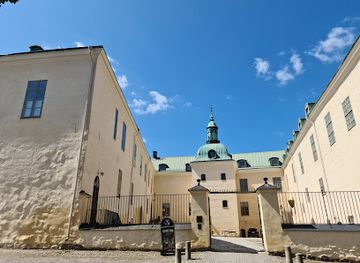
Valla consolidated into a single estate by the mid-1700s under the Sparschuch family, serving as residences for cathedral priests and military officers. Prosperity bloomed in the 1800s with the Westmans, who transformed it into a model farm. The centerpiece, a stately herrgård completed in 1859, stands in neo-antique style designed by local architect A. T. Gellerstedt. Its symmetrical facade, with pilasters and pediments, evokes classical grandeur amid Östergötland's flatlands. Ida and Leonard Westman, followed by son Henric, infused the property with agricultural innovation and preservation ethos.Generous Legacy and City Stewardship
On his 80th birthday in 1933, Henric Westman donated Valla Gård and its lands to Linköpings stad via the Westman-Wernerska stiftelsen, ensuring perpetual public benefit. Post-donation, the estate weathered WWII as a military camp, then briefly as a hostel, before revival in 1953 by youth agricultural groups like JUF and 4H. Today, it anchors community life, linked to Valla folkhögskola and the Valla Ponyklubb, fostering education in farming, horsemanship, and rural traditions.Surrounding Farmstead Echoes
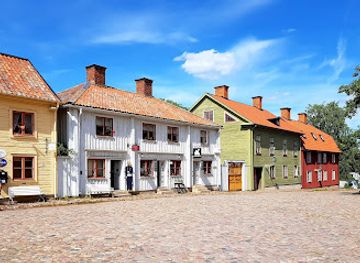
Dotting the estate are torp and statarbyggnader—crofter cottages and worker dwellings—from the 1700s, once tied to Valla's operations. These humble timber structures, with thatched roofs and whitewashed walls, contrast the herrgård's opulence, illustrating social hierarchies of agrarian Sweden. Relocated elements near Gamla Linköping enhance the site's museum-like ambiance, preserving everyday artifacts of bygone eras.Atmosphere of Timeless Serenity
Wander Valla's expansive grounds, where meadows stretch under wide skies, dotted by ancient oaks and grazing ponies. The air carries scents of hay and earth, with birdsong punctuating quiet afternoons. Seasonal shifts paint the scene: spring blooms, summer greens, autumn golds, winter snows blanketing the paths. This living heritage site invites reflection on Sweden's rural soul, bridging medieval assemblies to modern stewardship.












Your all‑in‑one travel companion app
Explore expert travel guides, compare and book tours, experiences, hotels, and more—all from the palm of your hand. Download now for seamless trip planning wherever your wanderlust takes you.


Explore More of Linkoping
Looking beyond Valla gård, Linköping? Discover Linkoping for broader travel guides, local hot-spots, and regional highlights.
Explore Linkoping
A modest 1970s brown-brick parish church at the heart of Skäggetorp, serving as a warm, practical hub for worship and community life.

A hands‑on, locally focused museum of Östergötland’s steam and narrow‑gauge railway heritage, rich in locomotives, workshops and technical archives.