

Närkes runinskrifter 29 Travel Guide
Free Guide: An intimate 11th‑century runestone in a Närke field — rare names, mixed runes and the unique compound fulldrængila carved into weathered granite.


A brief summary of Närkes runinskrifter 29
An intimate 11th‑century runestone in a Närke field — rare names, mixed runes and the unique compound fulldrængila carved into weathered granite.
Apelbodastenen (Närkes runinskrifter 29) is a dark‑grey granite Viking Age runestone standing on an arable islet near Apelboda in Glanshammar, Närke. Carved in the Younger Futhark and dated to the 11th century, its runic band and preserved ornamentation commemorate a man named Björn and was raised by his brother Bofriðr; the stone is notable for rare name-forms and the unique compound fulldrængila.
On-site amenities
 Information boards
 Seating areas
- Address
- 815, 705 97 Glanshammar
- Website
Getting there
Car
Regional bus + walk
Bicycle
Discover more about Närkes runinskrifter 29
Stone and setting
Apelbodastenen is a dark‑grey granite slab, standing roughly 2.15 metres high on a small raised patch of field close to the farmstead historically known as Apelboda, in the parish of Glanshammar in Närke. The stone’s vertical profile and placing on an agricultural islet give it a quietly solitary presence: from close up you see the weathered surface, lichen‑streaked edges and the carved band that runs around the slab’s face where the runes are concentrated.
Carving, alphabet and ornament
The inscription is executed in the Younger Futhark and laid out in a band along the stone’s edge; the runes remain largely legible despite centuries of exposure. In the stone’s central field there is a modest ornamental motif, and the carver has mixed standard runes with short‑twig variants — an approach common in late Viking Age inscriptions — producing small but telling differences in how s, a and n are rendered. The overall effect is both functional and decorative: a message that is also a piece of stone craftsmanship.
Names, phrasing and unusual words
The runic text records a memorial formula: it was raised by a man whose name is rendered as Bofriðr in memory of his brother Björn (Biorn). Bofriðr is otherwise unattested in surviving runic records, making the name noteworthy to scholars of Viking Age onomastics. The stone also preserves the compound word fulldrængila — a strengthened form of drængila, an adverb that elsewhere means ‘manfully’ or ‘as befits a good man’ — a rare lexical feature on Swedish runestones and a linguistic curiosity for anyone interested in Old Norse usage.
History of discovery and conservation
The stone was rediscovered in the late 19th century when a farmer uncovered it while collecting building stone; it had lain fallen and was accidentally broken when quarried for farm use. Following its discovery the pieces were examined by antiquarians and later repaired and re‑erected, with conservation work undertaken in the 20th century to stabilise the repairs and protect the inscription. Traces of older repair techniques are part of its physical story and can be seen where cracks were joined and gaps filled.
Read it as landscape and memory
Apelbodastenen occupies a liminal place between farmed land and the past. It is not a museum object behind glass but a carved text in the landscape: its message is terse and personal, a brother’s memorial set into the everyday environment where fields and lanes still shape the view. From the stone you can sense how runic monuments once punctuated travel routes, farmsteads and assembly places, offering brief, durable testimonies of names, relationships and values.
Why the stone matters today
Scholars value this runestone for its linguistic detail and its preservation of uncommon name‑forms and expressions; for visitors it offers a direct physical link to the late Viking Age and the craft of runecarving. The stone’s modest scale and open setting make it an intimate encounter with material culture: read the bands slowly, notice the mix of rune types and imagine the very human act of remembrance that set this slab upright in the tenth or eleventh century.
Evendo Review Centre
 Google
Guest reviews
Best time to go
Quietest: Jan, Feb & Dec · before 6am or from 7pm
Busy times are Evendo estimates for a typical year, to help you plan. Actual crowds vary with events, school holidays and the weather.
Explore Närkes runinskrifter 29 on the map
A handpicked selection of must-see spots near Närkes runinskrifter 29, mapped for you.
Get your free copy of our complete guide to Närkes runinskrifter 29, delivered straight to you.
Everything on this page, from opening hours and how to get there to Eve’s tips and the best time to go, in one PDF you can read offline, print or share.
Already have an account? Sign in
Your Närkes runinskrifter 29 guide is ready.
We'll send it to · Not you? Sign out

Getting your guide ready…
We are putting together a fresh copy of the Närkes runinskrifter 29 guide. This can take up to a minute.
This can take a few moments. If your browser asks, choose Allow so the download can start. You'll find the guide in your Downloads folder.
Nothing happened? Download it again
Sorry, the guide is taking longer than usual. Please try again in a minute, or get it by email instead.
Other nearby places you may find interesting
The closest places of the same kind, if this one is not quite what you had in mind.
-
-
-
-

-


Swipe for more places
More to explore near Närkes runinskrifter 29
-
 Best experiences near Närkes runinskrifter 29
-
 Best hotels near Närkes runinskrifter 29
-
 Best landmarks near Närkes runinskrifter 29
-
 Best attractions near Närkes runinskrifter 29
-
 Best shops near Närkes runinskrifter 29
-
 Best restaurants near Närkes runinskrifter 29
-
 Best bars near Närkes runinskrifter 29


Do you manage this location?
Take control to get all the benefits, like improved information, better appearance, and stronger visibility across AI-powered discovery.
Explore more
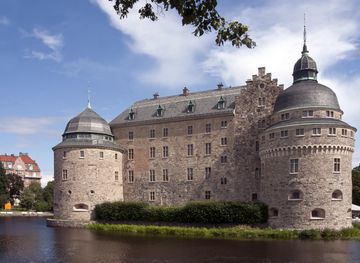
Explore more of Närke
Discover Närke, Sweden's heartland, where natural beauty meets rich history and vibrant culture, offering a tranquil yet enriching experience for every traveler.
Explore Närke
Explore more of Sweden
Discover Sweden's breathtaking landscapes, vibrant cities, and rich cultural heritage. From the Northern Lights to historic castles, experience the essence of Scandinavia.
Explore Sweden
