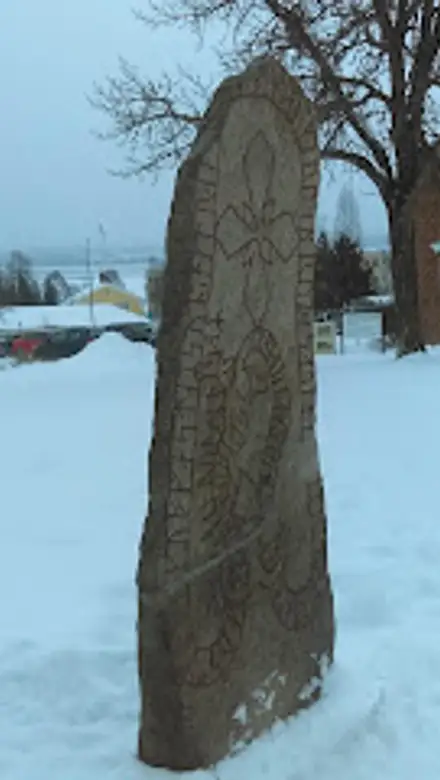
Frösö Runestone Travel Guide
Free Guide: A compact 11th‑century rune slab on Frösön that names a bridge, a conversion and the earliest written mention of Jämtland.


A brief summary of Frösö Runestone
A compact 11th‑century rune slab on Frösön that names a bridge, a conversion and the earliest written mention of Jämtland.
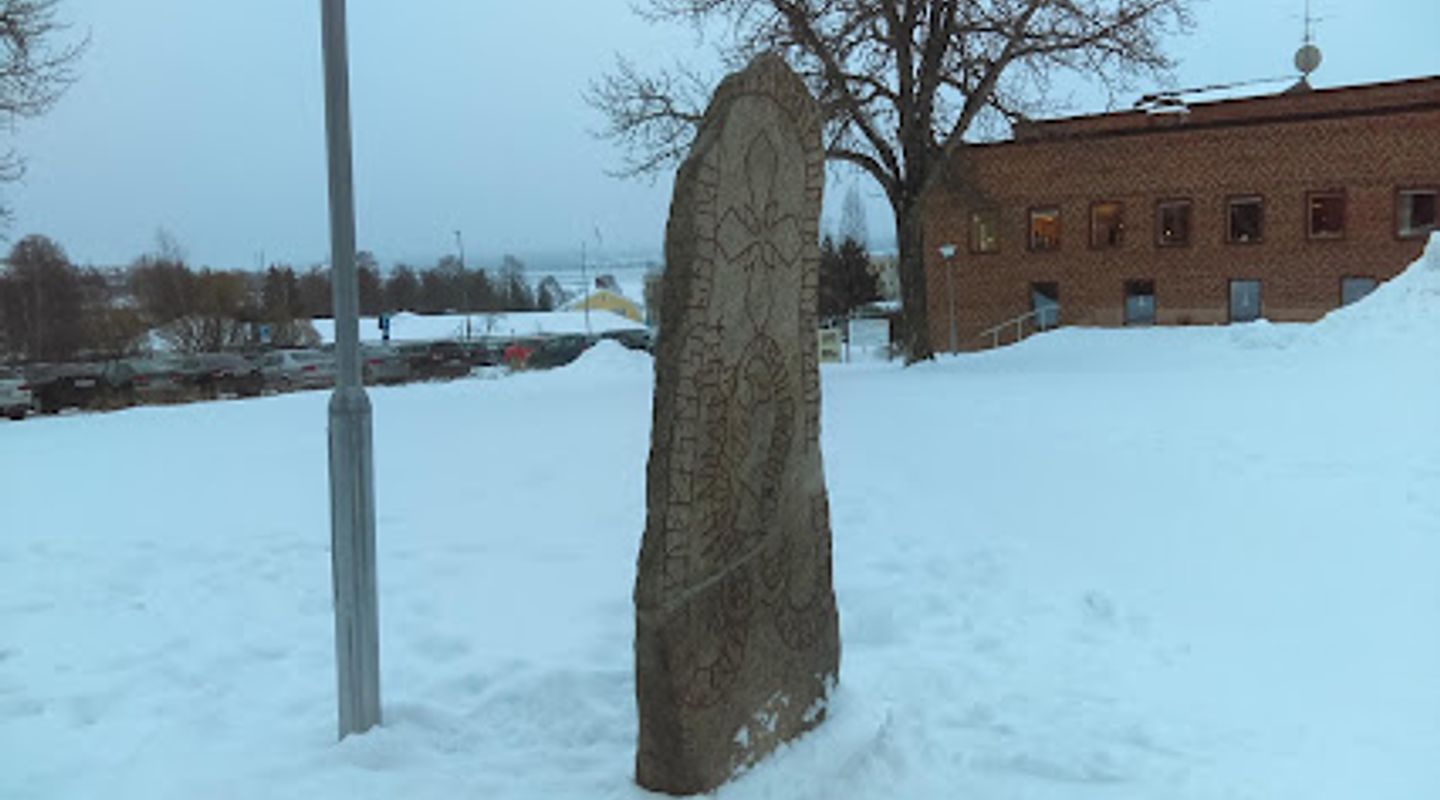
The Frösö Runestone is a solitary Viking-Age monument on Frösön, raised around 1030–1050 AD and celebrated as the northernmost raised runestone in Scandinavia. Its inscription records a bridge, the Christianisation of Jämtland and the names of those responsible, and the carved serpent motif ties the stone to local lake legends. Positioned on a lawn near the county council building, the stone is compact but rich in regional history and myth.
On-site amenities
 Seating areas
 Information boards
 Trash bins
Opening hours
- Every dayOpen 24 hours
Opening hours as listed on the venue’s Google Business Profile. Hours can change for services and special events, so check with the venue before you go.
- Address
- Unnamed Road, 832 42 Frösön
- Website
Getting there
Local bus
Taxi or rideshare
Walk from central Östersund
Discover more about Frösö Runestone
A stone at the edge of a lake
The Frösö Runestone stands on Frösön, the island in Lake Storsjön, where land and water frame a single slab of carved stone that dates to the early 11th century. Raised at a ferry point originally, the stone’s surface is filled with runic text and an entwined serpent motif; its setting beside the lawn of the county seat gives the impression of an ancient message placed deliberately at a communal threshold. The contrast between the simple grassy plot and the dense meaning of the inscription makes the stone feel both intimate and monumental.
An inscription that records changing times
Carved between roughly 1030 and 1050 AD, the runic text is unusual because it commemorates actions rather than a personal memorial: it records that Austmaðr (Östman), son of Guðfastr, had the stone raised, a bridge built and claims he Christianised Jämtland, with Ásbjörn named as bridge builder and Trjónn and Steinn as the carvers. That sequence—stone, bridge, conversion—encapsulates a moment of structural and spiritual transition in the region and anchors the island within the wider story of Scandinavia’s conversion era.
Imagery, language and local identity
Alongside the runes, the carved serpent and intertwined designs speak to Norse visual language and local legend. The serpent motif has been woven into regional myth—connected in local storytelling to the great lake beast of Storsjön—so the imagery reads as both artistic ornament and talismanic carving. Linguistically, the inscription preserves early forms of place and personal names, and it contains the earliest known written reference to Jämtland, giving the stone clear cultural and linguistic significance for the area.
A compact monument with big stories
Physically modest, the runestone’s power comes from its concentrated record: bridge-building, names, and the claim of Christianising an entire district. Although moved slightly from its original ferry-tip location to accommodate modern bridges, the stone retains a direct relationship with water, travel and the communal routes of its era. Up close, the weathered grooves and taper of the runes invite careful looking; at a short distance the full composition—the serpent, runic bands and carved names—resolves into a narrative device placed in the landscape.
Conservation and context
As the only runestone in Jämtland and the northernmost raised runestone in Scandinavia, the Frösö Runestone is treated as a cultural artefact within a living community. Its lawned setting beside modern civic buildings highlights the continuity of civic space from medieval ferry point to contemporary county seat. The stone’s conservation balances public access with protection from wear, and interpretive panels nearby provide transcription and translation so the runes remain legible to visitors while the original carving is preserved.
How the stone feels to visit
Visiting the runestone is a quiet experience of proximity to the past: wind off the lake, the low profile of the stone against the sky, and the tactile suggestion of human hands at work a thousand years ago. Because it stands in an open public place rather than a cloistered museum, the stone reads as part of everyday civic life—an old marker that still points to the island’s role in connecting people, water and belief across centuries.
Evendo Review Centre
 Google
Guest reviews
Best time to go
Quietest: Jan, Feb & Dec · before 7am or at 9pm
Busy times are Evendo estimates for a typical year, to help you plan. Actual crowds vary with events, school holidays and the weather.
Explore Frösö Runestone on the map
A handpicked selection of must-see spots near Frösö Runestone, mapped for you.
Get your free copy of our complete guide to Frösö Runestone, delivered straight to you.
Everything on this page, from opening hours and how to get there to Eve’s tips and the best time to go, in one PDF you can read offline, print or share.
Already have an account? Sign in
Your Frösö Runestone guide is ready.
We'll send it to · Not you? Sign out

Getting your guide ready…
We are putting together a fresh copy of the Frösö Runestone guide. This can take up to a minute.
This can take a few moments. If your browser asks, choose Allow so the download can start. You'll find the guide in your Downloads folder.
Nothing happened? Download it again
Sorry, the guide is taking longer than usual. Please try again in a minute, or get it by email instead.
Other nearby places you may find interesting
The closest places of the same kind, if this one is not quite what you had in mind.
-
-
-
-
-


Swipe for more places
More to explore near Frösö Runestone

 Best experiences near Frösö Runestone
 Best hotels near Frösö Runestone
 Best landmarks near Frösö Runestone
 Best attractions near Frösö Runestone
 Best shops near Frösö Runestone
 Best restaurants near Frösö Runestone
 Best bars near Frösö Runestone
Do you manage this location?
Take control to get all the benefits, like improved information, better appearance, and stronger visibility across AI-powered discovery.
Explore more
Explore more of Norrland
Experience the Magic of Norrland: Northern Lights, Midnight Sun, and Rich Cultural Heritage in Sweden's Northernmost Wonderland.
Explore Norrland
Explore more of Sweden
Discover Sweden's breathtaking landscapes, vibrant cities, and rich cultural heritage. From the Northern Lights to historic castles, experience the essence of Scandinavia.
Explore Sweden