
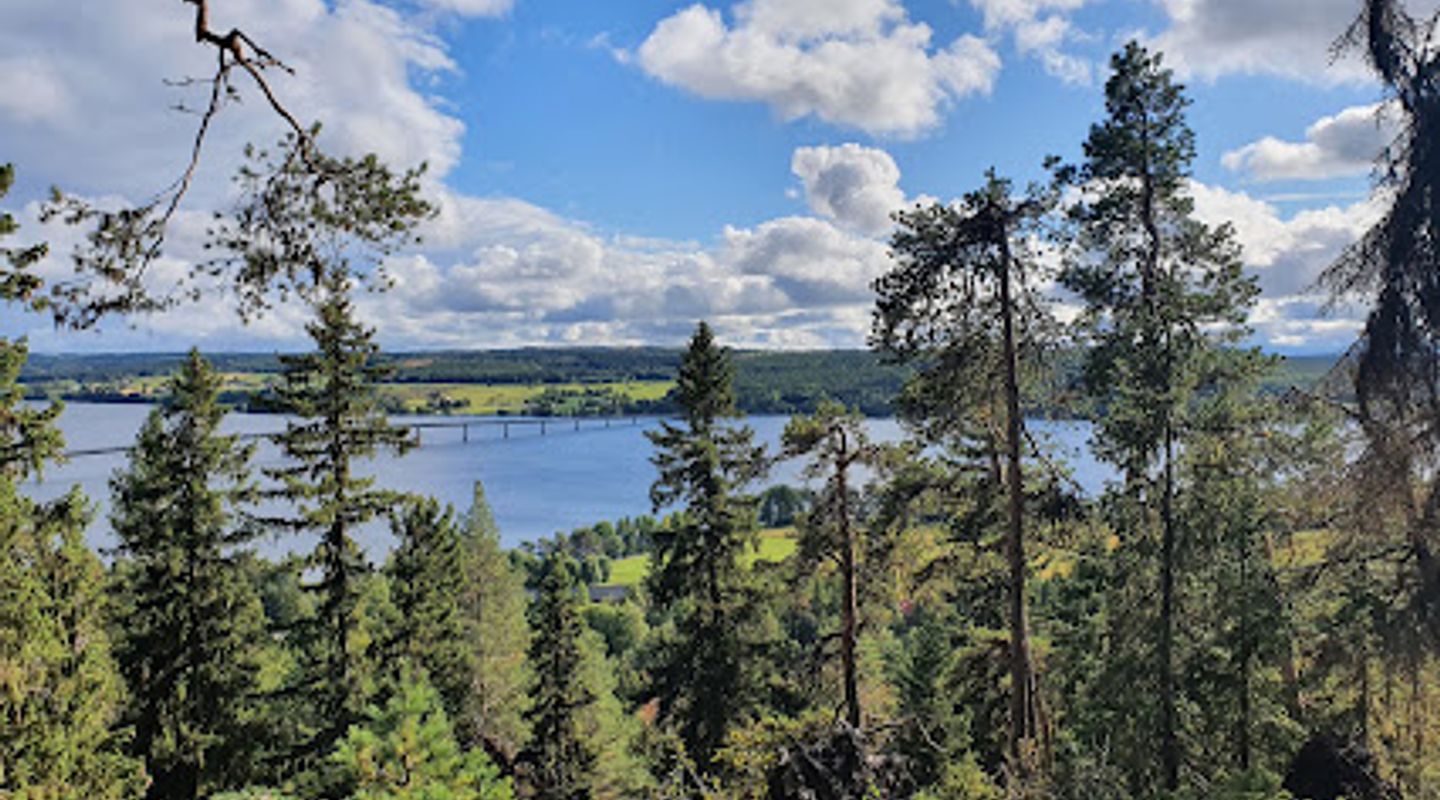
Mjälleborgen, Norrland Travel Guide
A vast Roman-Iron-Age hillfort on Öneberget — earthworks, timber traces and centuries of regional significance set in Frösön’s open landscape.
Mjälleborgen is an ancient hillfort on Öneberget at Frösön, one of Sweden’s northernmost fornborgar; a vast earth-and-stone terrace with traces of timber palisades and longhouses that mark the island’s role as a regional power centre from the Roman Iron Age through the early medieval period.
A brief summary to Mjälleborgen
- Frösövägen, Frösön, 832 47, SE
- Click to display
- Duration: 0.5 to 2 hours
- Free
-
 Outdoor
- Mobile reception: 4 out of 5

Know before you go
Hi, I'm Eve. Here are a few practical things to know before exploring Mjälleborgen.
- Site is outdoors and accessible year-round; dress for variable weather and uneven ground when exploring the earthworks.
- Bring a map or photograph guide if you want to pick out specific features — the remains are low and best appreciated in good light.
- Combine a visit with other Frösön cultural sites to place the hillfort in the island’s broader historic landscape.
Do you manage this location?
Take control to get all the benefits, like improved information, better appearance, and stronger visibility across AI-powered discovery. Learn more about listing your business on Evendo
Activate your presenceOther nearby places you may find interesting
The closest places of the same kind, if this one is not quite what you had in mind.
Explore Mjälleborgen on the Map
A handpicked selection of must-see spots near Mjälleborgen, mapped for you.
Getting There
-
Public bus and short walk
Local regional buses serve central Östersund; from the nearest main bus stop on Frösön allow 15–25 minutes on foot across varied terrain to reach Öneberget. Frequency varies seasonally and services are typically hourly to half-hourly; walking involves unpaved sections and slight slopes so allow comfortable footwear. No paid tickets are required for the on-site access itself, only the regular bus fare which depends on the regional public-transport tariff.
-
Car
Driving from Östersund takes roughly 10–20 minutes depending on start point; there is informal roadside stopping near Frösövägen with a short, uneven approach path up to the mound. Parking is limited and not formalised; avoid blocking access and be prepared for a short walk over grass or field tracks. There is no entrance fee.
-
Bicycle
Cycling from central parts of Frösön or Östersund typically takes 10–25 minutes along local roads and bike paths; expect a short off-road push or secure your bike at the road and walk the final slope. Terrain includes gentle hills and farm tracks; bicycle use is season-dependent in winter when snow and ice can make the approach difficult.
For the on-the-go comforts that matter to you
-
 Seating Areas
-
 Information Boards
Discover more about Mjälleborgen
Origin and archaeological footprint
Mjälleborgen was constructed on the flattish northern slope of Öneberget during the Roman Iron Age (roughly the 300–400s AD). The defensive complex is represented today by a long, broad terrace of earth and stone—about 120 metres in length and up to 10 metres wide—anchored on one side by the steep natural cliff of the hill and on the other by man-made ramparts and fill. Archaeological excavation has revealed that the internal structure relied on substantial timber construction and that the terrace was likely ringed by a palisade, making the visible earthworks the remnant of a once-dominant fortified enclosure.Role in regional power and economy
The scale of Mjälleborgen and its deliberate siting show it was more than a simple farm stronghold: it functioned as a control point for the surrounding Storsjöbygden and for trade and production networks in the region, particularly during a period when iron production and trade were intensifying. The fortress’s vantage overlooks arable lowlands and routes that connected inland Jämtland with Trøndelag and Medelpad, signalling the settlement’s strategic importance for controlling movement and resources in the wider landscape.Phases of use and material traces
Evidence shows the site was built in the late Roman Iron Age and experienced episodes of destruction by fire during the 4th–6th centuries, followed by later occupation phases; within the enclosure archaeologists have identified the remains of longhouses dated to the 6th–8th centuries. These layers of building, burning and rebuilding reflect long-term, intermittent use rather than a single short-lived fortification, and place Mjälleborgen within a broader pattern of fortified sites and settled farmsteads across the region.Landscape and setting today
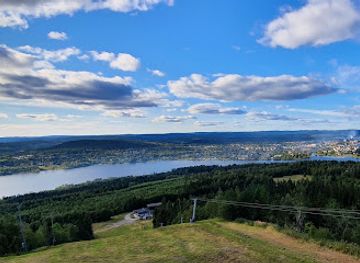
Standing on Öneberget the earthworks sit within an open agricultural and cultural landscape on Frösön with expansive views over Storsjön and the western slopes toward the Scandinavian mountains. The contrast between the low, flattened terrace and the steep natural escarpments gives a clear sense of how the original builders exploited topography: the natural cliff provided protection on one side while the terrace created a defended, usable plateau on the other.What you can study at the site
Although there are no reconstructed ramparts or visitor buildings at the ruin itself, the exposed terrace, scatter of stone and the slight hollows and soil contrasts remain legible to the eye and to anyone curious about earthwork fortifications. Traces of timber post-holes and hearths recovered by archaeologists tell of longhouses and daily activity within the enclosure, connecting the visible groundscape to the people who organised and inhabited the site centuries ago.Historic continuity and cultural significance
Mjälleborgen is part of a dense cultural landscape on Frösön that includes medieval farm remains, grave mounds and later historic sites. As one of the largest prehistoric structural works in northern Sweden, it is a tangible link to the island’s emergence as a regional centre in prehistory and the early medieval period; its remains are an important element in the region’s protected cultural heritage.












Your all‑in‑one travel companion app
Explore expert travel guides, compare and book tours, experiences, hotels, and more—all from the palm of your hand. Download now for seamless trip planning wherever your wanderlust takes you.


Explore More of Norrland
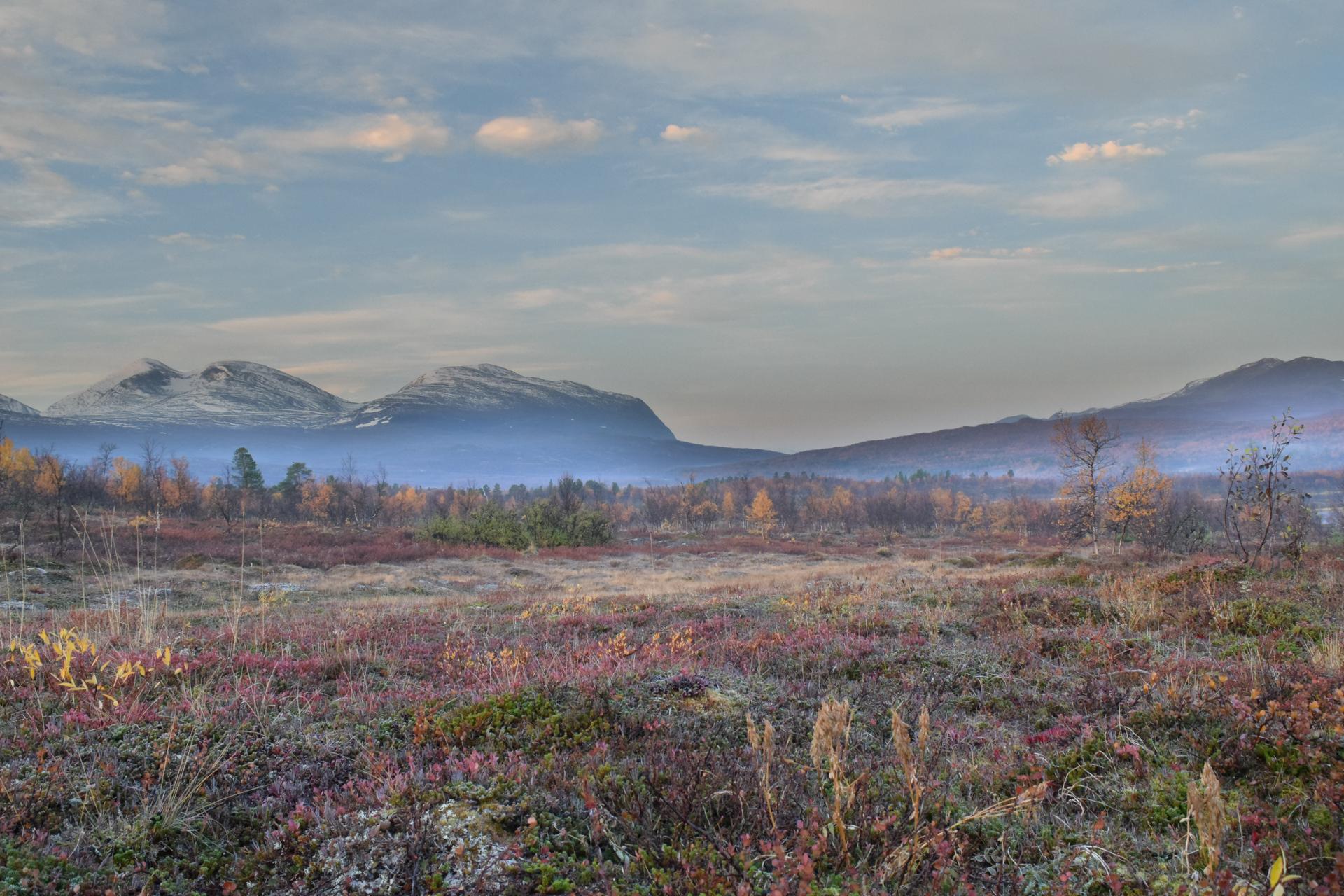
Looking beyond Mjälleborgen? Discover Norrland for broader travel guides, local hot-spots, and regional highlights.
Explore Norrland
A windswept Frösön ridge with wide panoramas over Storsjön, Östersund and the distant Jämtland fells — simple, scenic and quietly northern.
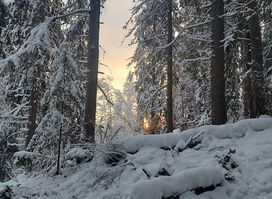
A short, family-friendly Frösön loop that mixes easy woodland paths with a steep ridge and an ancient hillfort for a taste of local nature and history.
