

Tysjöarna, Östersund Travel Guide
Free Guide: A limestone-fed wetland near Östersund where marl flats, tufa springs and spring waders form a quietly vivid nature reserve.


A brief summary of Tysjöarna
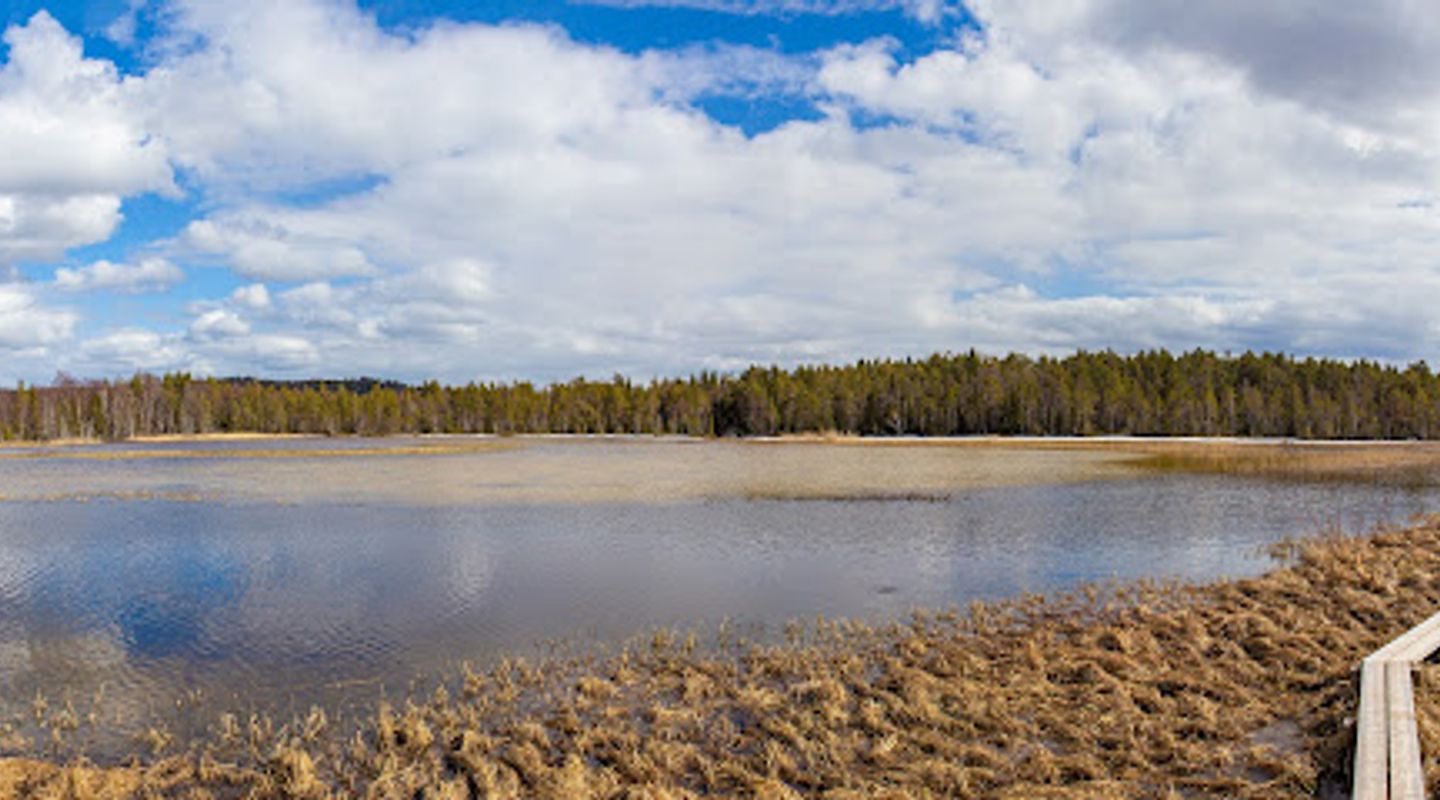
A limestone-fed wetland near Östersund where marl flats, tufa springs and spring waders form a quietly vivid nature reserve.
Tysjöarna is a low, calcareous wetland and lake complex just outside Östersund, Sweden, known for expansive marl fields, tufa-forming springs and rich birdlife. Two lime lakes linked by a signposted 7 km trail weave through calcareous fens, wet woodland and open marsh; boardwalks and three bird towers give good views without disturbing habitat. The reserve hosts orchids and waders in spring and is protected under strict nature-reserve regulations.
On-site amenities
 Restrooms
 Seating areas
 Sheltered areas
 Trash bins
 Information boards
- Address
- 836 71 Ås
- Website
Getting there
By car
By regional bus
By bicycle
Discover more about Tysjöarna
A calcium-rich wetland landscape
Tysjöarna is defined by its limestone-influenced hydrology: two lime lakes sit amid broad marl flats, calcareous fens and patches of wet forest where springs deposit fine tufa and create a high-pH environment. These chemical conditions produce rare soils and a striking mosaic of habitats — shallow, shimmering shallows, soft sedge meadows and hummocky fen — that differ visibly from typical boreal forest surroundings.
Plants that reveal the place
Where groundwater bubbles up and the ground stays alkaline, plant life changes: orchids and calciphile species thrive. Look for nodding orchids, meadow herbs and species tied to mineral-rich, moist ground; in sheltered edges reed and willow give way to mossy fen carpets. The floral richness is subtle rather than flashy, best experienced close to ground level where small flowers and moss textures reveal the reserve’s character.
Birdlife and the rhythm of the seasons
Tysjöarna is a staging and breeding area for waders and waterfowl. In spring the shoreline life intensifies as long‑legged waders, ringed plovers and passage migrants probe the shallow margins; cranes and swans add their calls to the early-morning soundscape. Three bird towers and observation platforms are placed to offer views of feeding and resting birds while minimising disturbance to the wetlands beneath.
Trails, boardwalks and quiet observatories
A roughly 7 km signposted route links the two lakes and passes through different wetland types; sections of nailed boardwalk and an accessible ramp at the northern entrance reduce trampling and keep feet dry across fragile substrates. Rest areas, an outdoor toilet and occasional footbridges are provided along main approaches, while quieter side paths lead to the towers and spring-fed hollows.
Conservation rules and fragile features
As a protected nature reserve with habitats of international interest, Tysjöarna has strict regulations to protect wildlife and sensitive ground: disturbing or harming mammals, birds, amphibians and reptiles, damaging nests or collecting eggs is prohibited, and low-impact behaviour is required to preserve the fen’s delicate chemistry and tufa formations. The reserve also forms part of broader conservation networks recognising its marl and fen values.
The sensory experience here
Sounds are a strong part of the reserve’s personality: the abrupt trumpet of a swan, the metallic peep of a wader, and, in spring mornings, an emergent chorus from reed and shallow water. Visually the site is one of low horizons and close-to-the-ground detail — subtle shifts in sedge tone, the pale sweep of marl flats and the crystalline sheens around spring orifices. Visits reward patience and a slow pace.
Evendo Review Centre
 Google
Guest reviews
Best time to go
Quietest: Jan, Feb & Nov · before 5am or at 9pm
Busy times are Evendo estimates for a typical year, to help you plan. Actual crowds vary with events, school holidays and the weather.
Explore Tysjöarna on the map
A handpicked selection of must-see spots near Tysjöarna, mapped for you.
Get your free copy of our complete guide to Tysjöarna, delivered straight to you.
Everything on this page, from opening hours and how to get there to Eve’s tips and the best time to go, in one PDF you can read offline, print or share.
Already have an account? Sign in
Your Tysjöarna guide is ready.
We'll send it to · Not you? Sign out

Getting your guide ready…
We are putting together a fresh copy of the Tysjöarna guide. This can take up to a minute.
This can take a few moments. If your browser asks, choose Allow so the download can start. You'll find the guide in your Downloads folder.
Nothing happened? Download it again
Sorry, the guide is taking longer than usual. Please try again in a minute, or get it by email instead.
Other nearby places you may find interesting
The closest places of the same kind, if this one is not quite what you had in mind.
-
-
-
-
-


Swipe for more places
More to explore near Tysjöarna

 Best experiences near Tysjöarna
 Best hotels near Tysjöarna
 Best landmarks near Tysjöarna
 Best attractions near Tysjöarna
 Best shops near Tysjöarna
 Best restaurants near Tysjöarna
 Best bars near Tysjöarna
Do you manage this location?
Take control to get all the benefits, like improved information, better appearance, and stronger visibility across AI-powered discovery.
Explore more
Explore more of Östersund
Discover Östersund, a scenic Swedish city known for its winter sports, vibrant cultural scene, and delicious local cuisine, nestled by the beautiful Lake Storsjön.
Explore Östersund
Explore more of Sweden
Discover Sweden's breathtaking landscapes, vibrant cities, and rich cultural heritage. From the Northern Lights to historic castles, experience the essence of Scandinavia.
Explore Sweden
