Bergkvara Castle Travel Guide
Free Guide: Weathered castle ruins set against a peaceful Småland lake — intimate, historical and quietly photogenic.


A brief summary of Bergkvara Castle
Weathered castle ruins set against a peaceful Småland lake — intimate, historical and quietly photogenic.
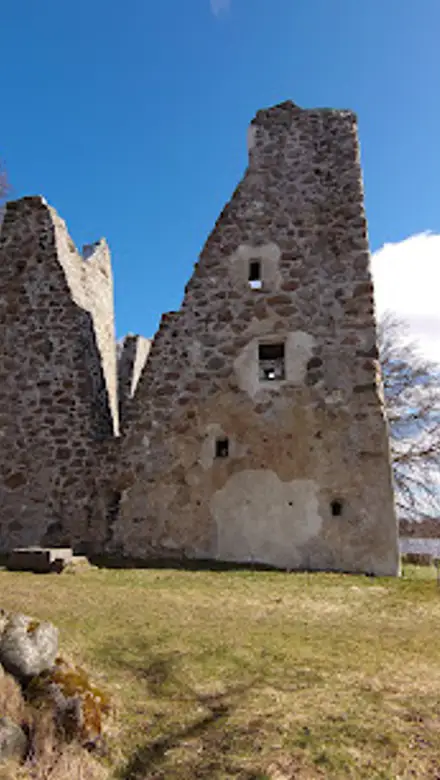
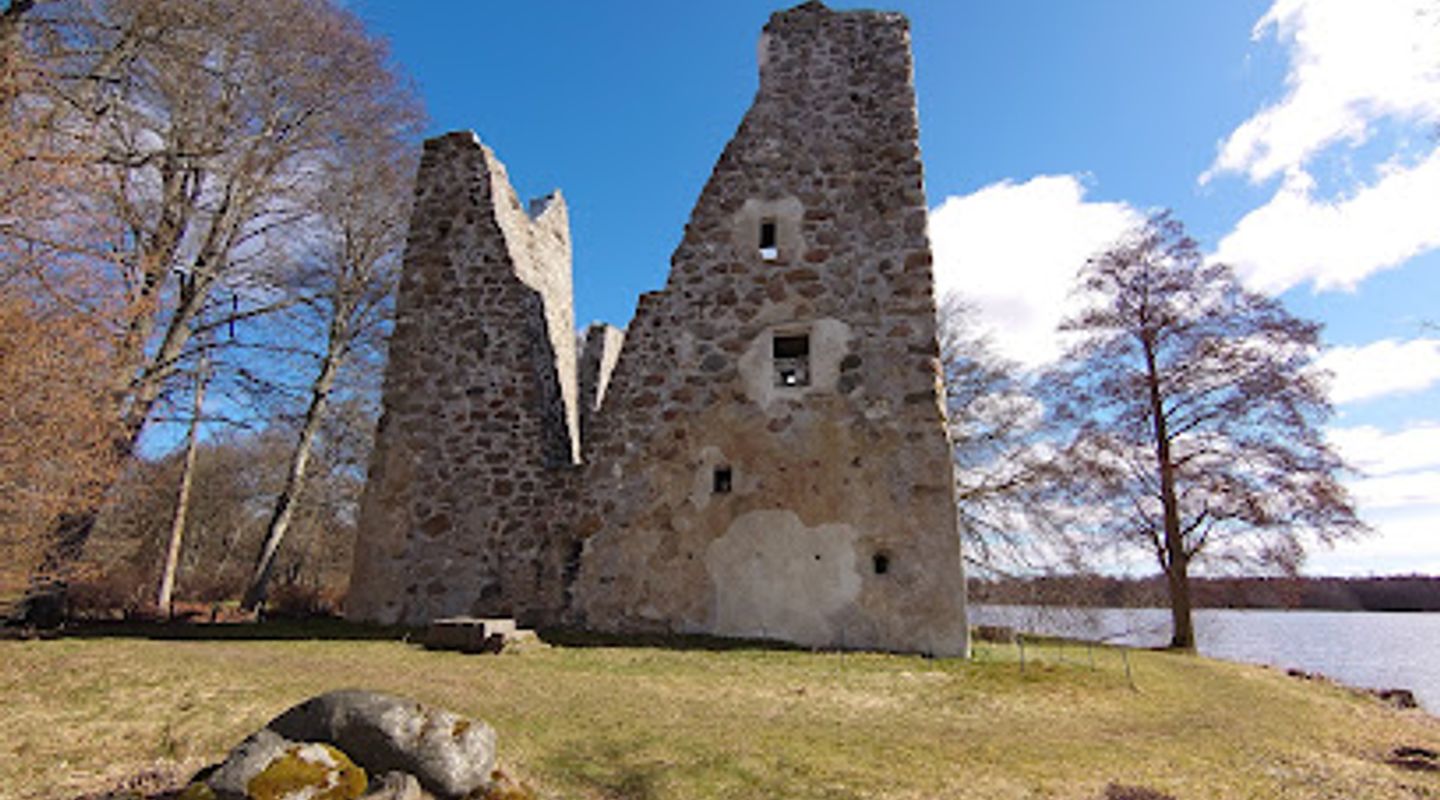
Bergkvara Castle is a romantic medieval ruined manor set on a small promontory at the edge of a lake near Växjö in Småland, Sweden. Once a fortified tower house founded in the 15th century, its weathered stone walls, scattered foundations and surrounding parkland evoke aristocratic seascapes of the late medieval period. The site is a peaceful blend of archaeology and woodland, appealing to walkers, history-lovers and photographers.
On-site amenities
 Seating areas
 Information boards
 Trash bins
- Address
- 352 50 Växjö
Getting there
Car
Local bus + walk
Cycle
Discover more about Bergkvara Castle
Where stone meets water: the site's character
Bergkvara Castle sits low and intimate beside a still lake, its ruined masonry tracing the outline of a once-formidable tower-residence. Today the surviving walls and earthworks read as fragments — corner towers reduced to stubs, foundation courses half-buried in moss and turf — but they retain the vertical presence of a structure that originally rose several storeys above the shore. Trees and meadow edge the ruins, and the quiet lap of water gives the place a reflective, slightly melancholy air that changes with light and season.
Origins and aristocratic ambition
The stronghold at Bergkvara evolved during the late Middle Ages, when prominent local noble households consolidated land and built tower houses as statements of power and security. Archaeological and historical studies show that the site was developed into a multi-storeyed residence in the 1400s, with substantial domestic and defensive features. The surviving footprint and scattered finds hint at a household shaped by regional politics, trade and the needs of an estate that once ranked among the larger private holdings in Småland.
Landscape and designed setting
Bergkvara is best understood as part of an aristocratic landscape rather than as an isolated fortification. Its position beside water, with surrounding parkland and fields, reflects the late-medieval preference for manor complexes that combined productive land with representational architecture. Paths and low banks around the ruins suggest historic approaches and garden terraces; seasonal wildflowers and native trees now soften the stonework, making the site feel both cultivated and returned to nature.
Material traces and visible archaeology
What remains at Bergkvara are hard, tactile indicators of past construction: dressed stone, mortar lines, the foundations of corner towers and the ghost-plan of internal rooms. These elements let you read construction phases and changing uses — from defensive measures to more domestic arrangements. Stone surfaces retain lichen and weathering patterns that document centuries of exposure; where mortar has flaked, old tool marks and reused masonry reveal practical adaptations over time.
Visitor experience and sensory detail
Walking among the ruins you’ll sense scale more than detail: low walls frame views across the lake, and wind through the reeds carries bird calls and the faint metallic scent of lake water. In summer the grass underfoot is springy; in autumn the site is ringed with russet and gold. Light plays strongly here — dawn and dusk accentuate the texture of stone and the silhouette of the ruin against the water, while mid-day light flattens surfaces and highlights the green of the surrounding woodland.
Continuity and quiet significance
Though not a fortress in active use for centuries, Bergkvara endures as a cultural and archaeological marker: a place where regional power, landscape design and rural life intersect. Its remains prompt questions about ownership, regional economy and how later generations reused material and memory. Today the castle functions as a contemplative, low-key landmark in the Växjö area, where history is legible in the ground and the stones themselves continue their slow conversation with the lake and weather.
Evendo Review Centre
 Google
Guest reviews
Best time to go
Quietest: Jan, Feb & Nov · before 7am or at 8pm
Busy times are Evendo estimates for a typical year, to help you plan. Actual crowds vary with events, school holidays and the weather.
Explore Bergkvara Castle on the map
A handpicked selection of must-see spots near Bergkvara Castle, mapped for you.
Get your free copy of our complete guide to Bergkvara Castle, delivered straight to you.
Everything on this page, from opening hours and how to get there to Eve’s tips and the best time to go, in one PDF you can read offline, print or share.
Already have an account? Sign in
Your Bergkvara Castle guide is ready.
We'll send it to · Not you? Sign out

Getting your guide ready…
We are putting together a fresh copy of the Bergkvara Castle guide. This can take up to a minute.
This can take a few moments. If your browser asks, choose Allow so the download can start. You'll find the guide in your Downloads folder.
Nothing happened? Download it again
Sorry, the guide is taking longer than usual. Please try again in a minute, or get it by email instead.
Other nearby places you may find interesting
The closest places of the same kind, if this one is not quite what you had in mind.
-
-

-
-
-


Swipe for more places
More to explore near Bergkvara Castle

 Best experiences near Bergkvara Castle
 Best hotels near Bergkvara Castle
 Best landmarks near Bergkvara Castle
 Best attractions near Bergkvara Castle
 Best shops near Bergkvara Castle
 Best restaurants near Bergkvara Castle
 Best bars near Bergkvara Castle
Do you manage this location?
Take control to get all the benefits, like improved information, better appearance, and stronger visibility across AI-powered discovery.
Explore more

Explore more of Småland
Experience the natural beauty, rich history, and cultural charm of Småland, a picturesque region in southern Sweden perfect for outdoor adventures and family-friendly activities.
Explore Småland
Explore more of Sweden
Discover Sweden's breathtaking landscapes, vibrant cities, and rich cultural heritage. From the Northern Lights to historic castles, experience the essence of Scandinavia.
Explore Sweden