

Klosters kyrka Travel Guide
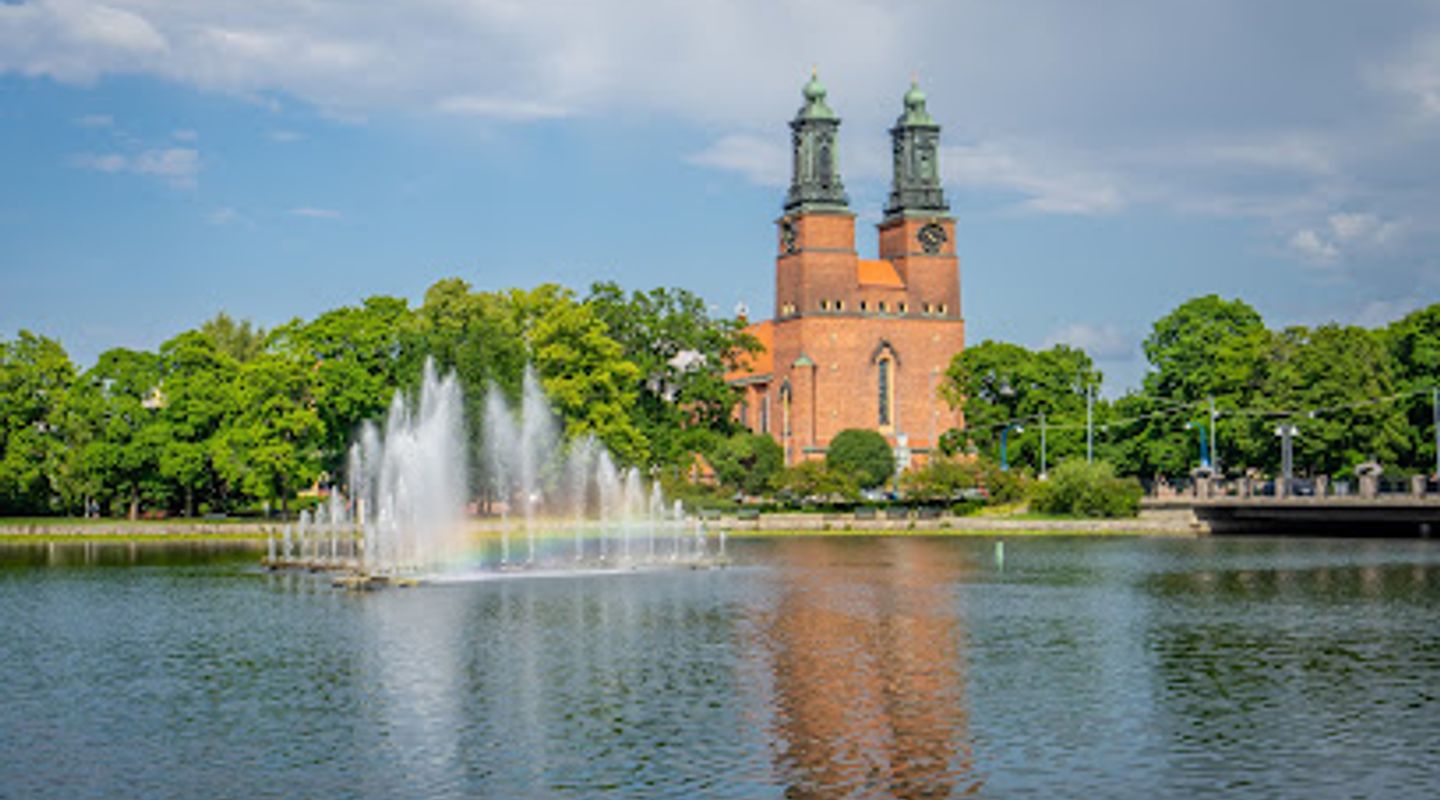
Free Guide: A monumental 1929 riverside church in central Eskilstuna, notable for twin towers, lofty vaults and a rare 17th‑century Flemish altarpiece.


A brief summary of Klosters kyrka
A monumental 1929 riverside church in central Eskilstuna, notable for twin towers, lofty vaults and a rare 17th‑century Flemish altarpiece.
Klosters kyrka is a monumental 20th‑century church set on the banks of the Eskilstunaån in central Eskilstuna. Designed by Otar Hökerberg and consecrated in 1929, the building is notable for its twin towers, lofty vaults and a 17th‑century Flemish altarpiece by Martin de Vos. With room for around 600 worshippers, the church combines dramatic scale with detailed craftsmanship, making it a striking example of civic ecclesiastical architecture in Södermanland.
On-site amenities
 Information boards
 Seating areas
- Address
- Strandgatan 20, 633 43 Eskilstuna
- Phone
- Website
Getting there
Local bus
Taxi or rideshare
Walk from central district
Discover more about Klosters kyrka
Architectural presence on the riverbank
Klosters kyrka sits prominently beside the Eskilstunaån, its twin towers and high roofline forming a familiar landmark in the townscape. The exterior proportions are deliberate and civic: the nave stretches to a considerable length while the two towers rise to make the church visible from several approaches in the central district. The massing is balanced and composed so that the building reads as both monumental and approachable, its silhouette punctuating the riverside panorama.
Interior scale and decorative highlights
Inside, the space opens into lofty vaults and a high taknock that give the nave a cathedral‑like volume; the interior heights were designed to lift the eye and the voice. Vaulting and arches frame the chancel, where an earlier altarpiece—painted in the 1600s by Martin de Vos—commands attention with its colour and narrative subject. Timber finishes, carved details and liturgical furnishings contribute crafted warmth against the cool sweep of stone and plaster.
Art, craft and a layered history
Although the church building was consecrated in 1929, some of its important fittings come from earlier periods, creating a layered historical experience. The Flemish altarpiece is a rare surviving element that predates the structure, while other donated pieces and memorials reflect local families and parish history. The combination of modern‑era construction with older liturgical art gives the interior an unusual dialogue between 17th‑century painting and early 20th‑century ecclesiastical design.
Sound and ritual life
The spatial volume makes Klosters kyrka an acoustic space for choirs, organ music and congregational singing; sound magnifies within the vaults and tends to linger pleasantly. Services and concerts use that acoustic character to dramatic effect, whether in clear single‑voice passages or full choral textures. The presence of ringing bells within the towers contributes to the church’s ritual rhythm in the neighbourhood.
Setting and visitor experience
Placed close to pedestrian routes along the river, the church’s site encourages pause: stone steps, paved forecourts and nearby trees frame views of the façade and towers. Light moves across the interior as the day progresses, picking out carved details and the painted altarpiece in different ways. Visiting outside service times allows appreciation of scale, artwork and architecture in quiet; at ceremonial moments the building takes on a fuller, more expressive character.
Notable proportions and measurements
Klosters kyrka is engineered for scale: the building’s reported length and breadth and the towers’ significant height create an experience of vertical aspiration and horizontal sweep. Seating for roughly six hundred people makes it one of the larger parish churches in the region, intended both for communal worship and larger civic or musical events. The combination of generous capacity, prominent towers and a treasured altarpiece secures the church’s role as both an architectural and cultural focal point in central Eskilstuna.
Evendo Review Centre
 Google
Guest reviews
Best time to go
Quietest: Jan, Feb & Mar · before 7am or from 9pm
Busy times are Evendo estimates for a typical year, to help you plan. Actual crowds vary with events, school holidays and the weather.
Explore Klosters kyrka on the map
A handpicked selection of must-see spots near Klosters kyrka, mapped for you.
Get your free copy of our complete guide to Klosters kyrka, delivered straight to you.
Everything on this page, from opening hours and how to get there to Eve’s tips and the best time to go, in one PDF you can read offline, print or share.
Already have an account? Sign in
Your Klosters kyrka guide is ready.
We'll send it to · Not you? Sign out

Getting your guide ready…
We are putting together a fresh copy of the Klosters kyrka guide. This can take up to a minute.
This can take a few moments. If your browser asks, choose Allow so the download can start. You'll find the guide in your Downloads folder.
Nothing happened? Download it again
Sorry, the guide is taking longer than usual. Please try again in a minute, or get it by email instead.
Other nearby places you may find interesting
The closest places of the same kind, if this one is not quite what you had in mind.
-
-
-
-
-


Swipe for more places
More to explore near Klosters kyrka

 Best experiences near Klosters kyrka
 Best hotels near Klosters kyrka
 Best landmarks near Klosters kyrka
 Best attractions near Klosters kyrka
 Best shops near Klosters kyrka
 Best restaurants near Klosters kyrka
 Best bars near Klosters kyrka
Do you manage this location?
Take control to get all the benefits, like improved information, better appearance, and stronger visibility across AI-powered discovery.
Explore more
Explore more of Södermanland
Discover Södermanland: A serene Swedish province offering rich history, stunning nature, and vibrant cultural experiences just south of Stockholm.
Explore Södermanland
Explore more of Sweden
Discover Sweden's breathtaking landscapes, vibrant cities, and rich cultural heritage. From the Northern Lights to historic castles, experience the essence of Scandinavia.
Explore Sweden
