Stenbock Palaces, Stockholm Travel Guide
Free Guide: Sweden's understated seat of power: a 17th-century Baroque palace on Riddarholmen, now the Prime Minister's office blending history with modern governance.


A brief summary of Stenbock Palaces
Sweden's understated seat of power: a 17th-century Baroque palace on Riddarholmen, now the Prime Minister's office blending history with modern governance.
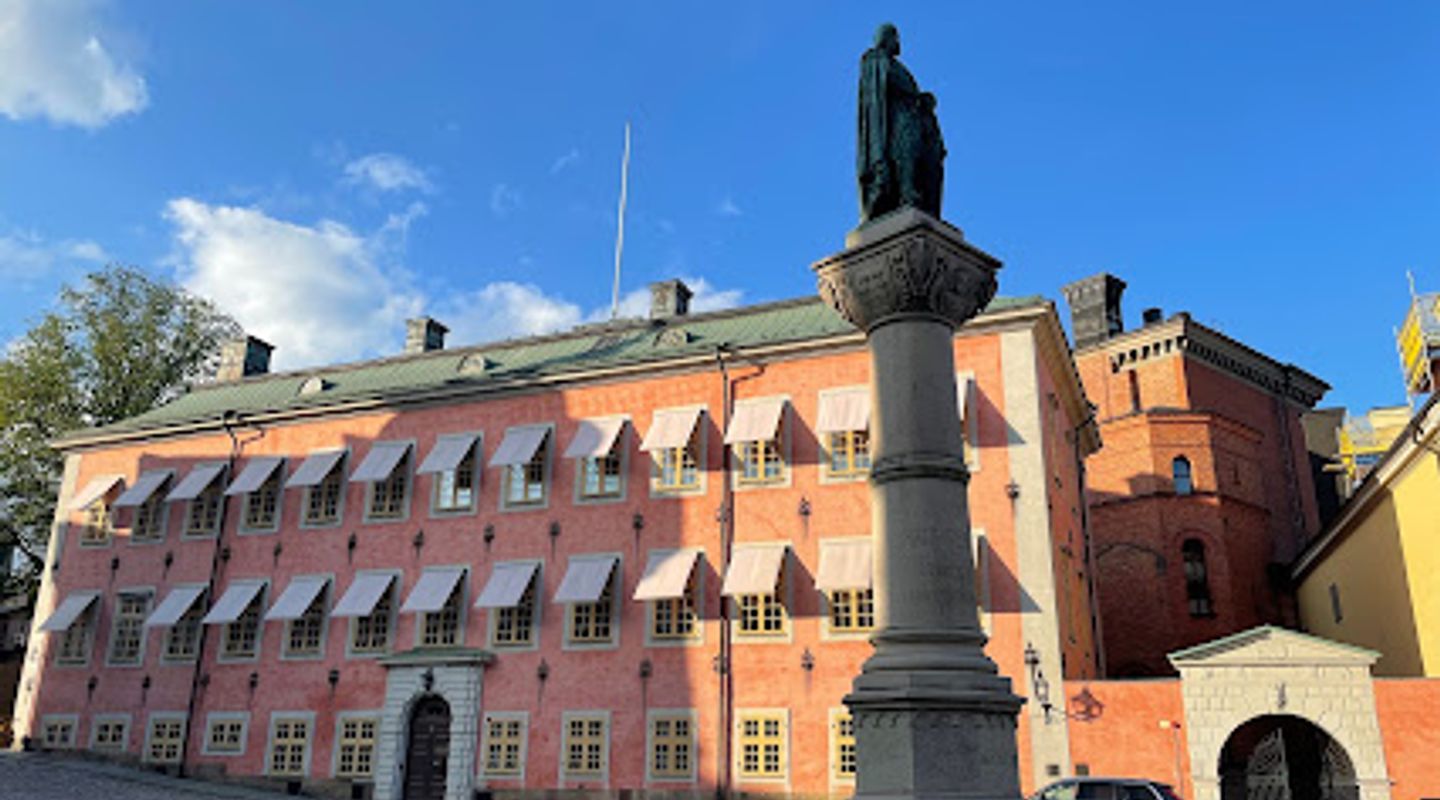
Stenbock Palace stands as a elegant Baroque landmark on Riddarholmen in Stockholm's Gamla Stan, originally built in the 1640s as a private residence for Count Gustaf Otto Stenbock. Now serving as the official office of the Swedish Prime Minister, this historic building hosts weekly cabinet meetings and embodies Sweden's blend of ancient architecture and modern governance. While interiors remain off-limits to the public, the restrained facade and prime location offer striking views amid the island's aristocratic heritage.
On-site amenities
 Seating areas
 Trash bins
 Information boards
- Address
- Birger Jarls Torg 4, 111 28 Stockholm
Getting there
Walking
Public Ferry
Bus
Taxi
Discover more about Stenbock Palaces
Baroque Origins on Riddarholmen
Constructed in the 1640s during Sweden's era as a European great power, Stenbock Palace emerged as the private residence of Count Gustaf Otto Stenbock, a prominent military commander. The original structure reflected Baroque influences blended with Swedish traditions, featuring a symmetrical facade and robust proportions typical of the period. Over centuries, the palace endured modifications, including a significant redesign in the 1670s by Nicodemus Tessin the Elder, shifting it toward Roman Baroque elegance with refined detailing and harmonious lines.Positioned on the compact islet of Riddarholmen—once a medieval monastery site turned aristocratic enclave—the palace integrates seamlessly into a cluster of 17th-century noble residences. Its location near Riddarholmen Church enhances the island's atmospheric cohesion, where cobblestone paths and waterfront vistas evoke Stockholm's layered past.
From Noble Seat to State Property
The Stenbock family held the palace through generations until 1889, when the Swedish government acquired it, marking its transition from private luxury to public service. Initially housing administrative offices, including the National Archives until 1865, the building adapted to evolving state needs. A major renovation in the 1980s modernized interiors for contemporary use while preserving the exterior's historical integrity, ensuring the palace's endurance amid urban changes.This evolution mirrors Sweden's shift from monarchy-dominated rule to democratic institutions. Unlike grand royal complexes, Stenbock Palace maintains a understated presence, its courtyard offering intimate glimpses of ornate doorways and sculpted elements that hint at opulent rooms within.
Contemporary Role in Governance
Since the 1980s, Stenbock Palace has functioned as the Prime Minister's official office and the site of weekly Thursday cabinet meetings, where national policies take shape. Here, ministers, diplomats, and officials convene in spaces that bridge 17th-century grandeur with practical administration. The building symbolizes continuity, its walls witnessing Sweden's political maturation from noble estates to parliamentary democracy.Public access remains restricted, emphasizing security over tourism, yet the palace's significance elevates it beyond mere architecture. It stands as the executive nerve center, contrasting with nearby ceremonial sites like the Royal Palace.
Architectural Restraint and Island Context
Stenbock Palace's facade exemplifies restrained Baroque style: pilasters, pediments, and subtle ornamentation create dignity without ostentation. Viewed from Birger Jarls Torg, the central square adorned with Birger Jarl's statue, it anchors the east side alongside the plainer Hessenstein Palace. To the west, Wrangel Palace's medieval tower adds drama, framing the ensemble around the square.Riddarholmen's microcosm of history—palaces, church, and panoramic bay views—makes the palace a pivotal node. Sunset light casts warm hues on its stonework, while the Riddarfjärden bay provides reflective waters that amplify the scene's serenity.
Enduring Legacy Amid Neighbors
Flanked by landmarks like Riddarholmen Church, the burial site of monarchs, and the House of Nobility's heraldic halls, Stenbock Palace contributes to Riddarholmen's noble tapestry. Its survival through fires and wars underscores resilient craftsmanship. Today, it invites contemplation of power's quiet forms, where history informs the present without fanfare.
Evendo Review Centre
 Google
Guest reviews
Best time to go
Quietest: Jan, Feb & Mar · before 8am or from 11pm
Busy times are Evendo estimates for a typical year, to help you plan. Actual crowds vary with events, school holidays and the weather.
Explore Stenbock Palaces on the map
A handpicked selection of must-see spots near Stenbock Palaces, mapped for you.
Get your free copy of our complete guide to Stenbock Palaces, delivered straight to you.
Everything on this page, from opening hours and how to get there to Eve’s tips and the best time to go, in one PDF you can read offline, print or share.
Already have an account? Sign in
Your Stenbock Palaces guide is ready.
We'll send it to · Not you? Sign out

Getting your guide ready…
We are putting together a fresh copy of the Stenbock Palaces guide. This can take up to a minute.
This can take a few moments. If your browser asks, choose Allow so the download can start. You'll find the guide in your Downloads folder.
Nothing happened? Download it again
Sorry, the guide is taking longer than usual. Please try again in a minute, or get it by email instead.
Unlock the best of Stenbock Palaces
Skip-the-line tickets, guided tours with entry, and walking tours of the area, booked in a few clicks.

Other nearby places you may find interesting
The closest places of the same kind, if this one is not quite what you had in mind.
-
-
-
-
-


Swipe for more places
More to explore near Stenbock Palaces

 Best experiences near Stenbock Palaces
 Best hotels near Stenbock Palaces
 Best landmarks near Stenbock Palaces
 Best attractions near Stenbock Palaces
 Best shops near Stenbock Palaces
 Best restaurants near Stenbock Palaces
 Best bars near Stenbock Palaces
Do you manage this location?
Take control to get all the benefits, like improved information, better appearance, and stronger visibility across AI-powered discovery.
Explore more

Explore more of Stockholm
Discover Stockholm: A captivating blend of history, culture, and natural beauty spread across 14 picturesque islands in Sweden's stunning capital city.
Explore Stockholm
Explore more of Sweden
Discover Sweden's breathtaking landscapes, vibrant cities, and rich cultural heritage. From the Northern Lights to historic castles, experience the essence of Scandinavia.
Explore Sweden